
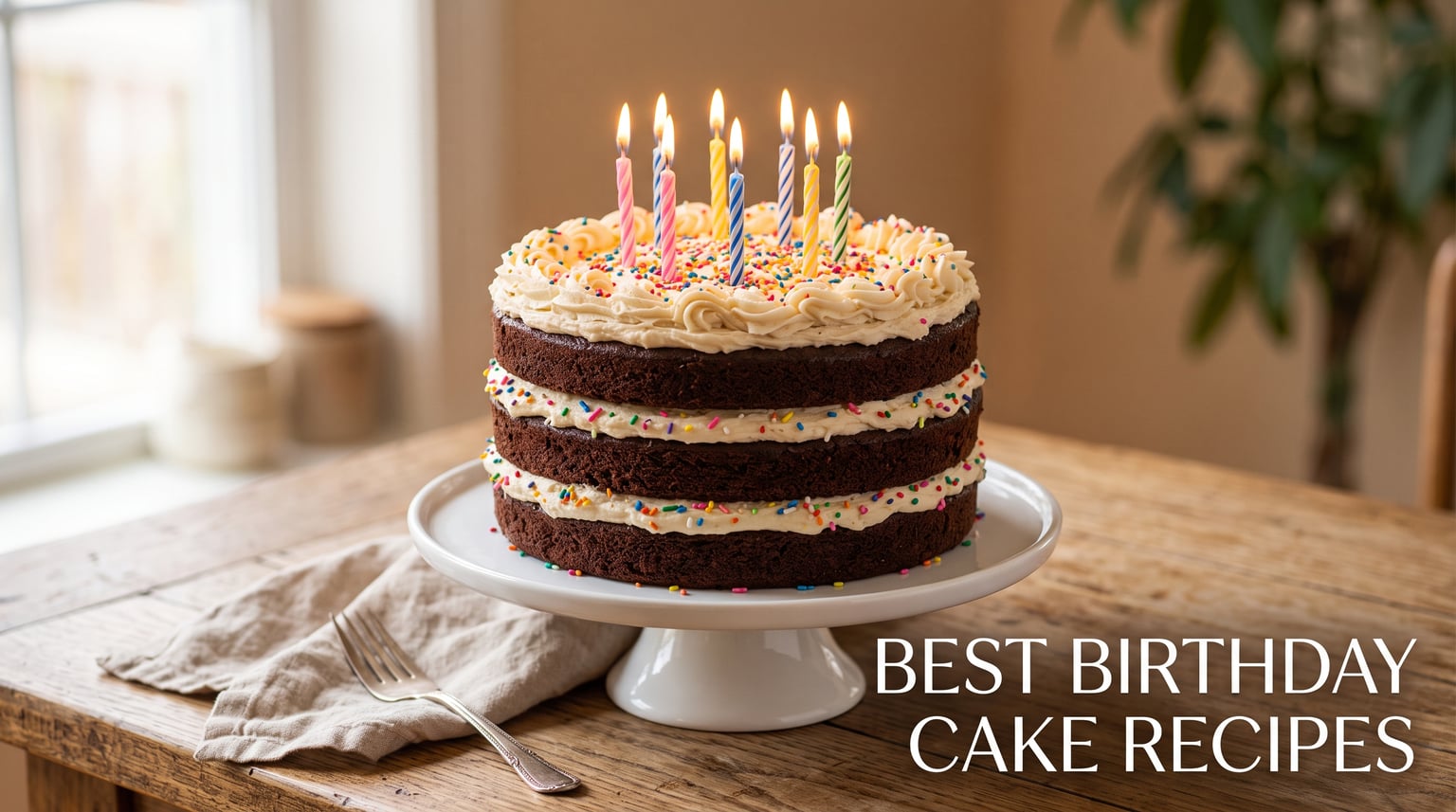
The best birthday cake recipes do more than look festive. They give the birthday person a flavor they will actually want to eat, fit the time you have before the party, and leave enough room for candles, singing, and a second slice.
This guide narrows the choice to eight homemade birthday cake directions, from a deep chocolate layer cake to a cheerful funfetti cake and a low-stress no-bake option. I have also included the from-scratch method, frosting choices, make-ahead help, and the fixes home bakers look for when a cake is dry, dense, or sunken.
Birthday cakes are a shared tradition, not a pastry-school exam. A neat sheet cake or a simple Bundt cake can feel just as special as a tall layer cake when the crumb is tender, the frosting suits the flavor, and the cake arrives on the table without panic.
Table of Contents
The best birthday cake recipes match the guest, schedule, and frosting plan.
The most popular birthday choices are chocolate and vanilla because both work with familiar fillings, buttercream frosting, sprinkles, and candles. Chocolate wins when the guest wants a rich, crowd-pleasing dessert, while vanilla gives you a lighter base for berries, jam, or colorful decoration.
Before choosing a recipe, decide whether you need a showpiece, a dependable party dessert, or a small cake for a quiet celebration. That one decision keeps a birthday cake from becoming more complicated than it needs to be.
- Choose chocolate layer cake for a classic, rich celebration cake that works with chocolate, vanilla, peanut butter, or cream cheese frosting.
- Choose vanilla layer cake for a flexible homemade birthday cake with fruit filling, chocolate frosting, or a sprinkle-covered finish.
- Choose funfetti for children, sprinkle fans, and anyone who wants the cake itself to look like a party.
- Choose carrot cake for an old-fashioned flavor and a tangy cream cheese frosting pairing.
- Choose a Bundt or sheet cake when transport, cutting, and a relaxed decorating plan matter more than tall layers.
- Choose gluten-free or no-bake when a guest’s needs or a hot kitchen changes the plan.
Quick tip: Match the pan to your available time. Two even layers are easier to fill and frost than three, and a sheet cake is the easiest option for a larger birthday party.
A good cake also needs a frosting plan before it goes into the oven. American buttercream is sturdy and sweet, cream cheese frosting adds tang to spice cakes, and a chocolate frosting can make a plain vanilla cake feel more decadent.
The best birthday cake recipes include eight dependable celebration styles.
These are recipe directions rather than copies of anyone else’s formula. Use them to pick the flavor and format first, then follow a trusted full recipe that matches your pan size and dietary requirements.
A chocolate layer cake is the safest rich, crowd-pleasing birthday choice.
A chocolate birthday cake is a strong first pick when you do not know every guest’s preference. Its cocoa-forward flavor stands up well to a creamy chocolate frosting, and the dark crumb makes pale piping, crushed cookies, berries, or a ring of sprinkles look intentional.
For a moist cake recipe, measure flour carefully, mix only until the dry ingredients disappear, and start checking for doneness near the recipe’s first stated bake time. A toothpick test is useful, but a few moist crumbs are different from wet batter.
Make this a layer cake if you have time to cool the layers fully and chill the crumb coat. Choose a chocolate sheet cake when the party is large or when you want to cut neat squares directly from the pan.
- Best frosting match: chocolate buttercream for a full chocolate experience, or vanilla buttercream for contrast.
- Best filling match: a thin layer of chocolate frosting, raspberry preserves, or peanut butter buttercream.
- Best decoration: a smooth top with one border and candles rather than elaborate piping.
A vanilla layer cake is the most flexible homemade birthday cake.
Vanilla birthday cake has a soft, buttery profile that welcomes almost any decoration. Good vanilla extract matters because there are few other flavors competing for attention, and room-temperature butter, eggs, and dairy help the batter mix evenly.
Vanilla cake is especially useful when the birthday person has a favorite filling. Strawberry preserves, lemon curd, berries, cookies-and-cream crumbs, or a thin chocolate ganache layer can each give the same base a different personality.
Keep the frosting relatively simple if you are adding a filling. A thin buttercream dam around the edge of each layer helps keep soft fillings from pressing out when the cake is stacked.
- Best frosting match: vanilla buttercream, chocolate buttercream, or a whipped-style frosting if the cake will stay chilled.
- Best filling match: berry preserves or a chocolate layer for contrast.
- Best decoration: fresh berries, a chocolate drip only after the cake is cold, or a generous sprinkle border.
A funfetti cake is the clearest choice for a playful birthday celebration.
Funfetti birthday cake begins with a vanilla-style batter and gets its party look from sprinkles folded in at the end. The sprinkles should be mixed gently so the batter stays fluffy and their color does not streak through the crumb.
Use sprinkles made for baking instead of very small nonpareils when possible, because the latter can bleed faster. A pale frosting lets the colored pieces show when the cake is sliced, which gives this simple flavor a bigger reveal.
This is one of the best birthday cake recipes for kids, but it is not only for kids. A clean white frosting, a few bold colors, and a confident candle arrangement can make it feel fun rather than fussy for any age.
- Best frosting match: vanilla buttercream or a light chocolate frosting.
- Best filling match: frosting alone, because the sprinkles already add visual interest.
- Best decoration: more sprinkles pressed around the sides after the crumb coat has chilled.
A carrot cake gives adults an old-fashioned, warmly spiced option.
Carrot cake belongs on a birthday table when the guest prefers spice, texture, and a less candy-like finish. Grated carrot brings moisture, while warm spices and optional nuts or raisins create a more layered flavor than a plain vanilla cake.
Cream cheese frosting is the classic pairing because its tang balances the cake’s sweetness. Keep the cake cool after frosting, especially if the room is warm, and take it out shortly before serving so the frosting is pleasant to eat.
A two-layer carrot cake is easier to handle than a tall stack because the cake is often softer than a standard butter cake. Decorate with a simple border, chopped nuts if appropriate for your guests, or small carrot-shaped frosting accents.
- Best frosting match: cream cheese frosting.
- Best filling match: frosting or a restrained layer of fruit preserves.
- Best decoration: a naked-style side finish with a clean, frosted top.
A Bundt cake delivers a celebration look with less assembly work.
A Bundt cake is a practical answer when you want homemade flavor but not the pressure of leveling, filling, and stacking layers. Its molded shape does much of the visual work, and a glaze, powdered sugar, or piped frosting can highlight the ridges without perfect technique.
Chocolate, vanilla, lemon, and funfetti-style batters can all work in a Bundt format when the recipe is written for that pan. Grease every groove thoroughly and let the cake rest for the time the recipe directs before turning it out, since unmolding too early can tear the crust.
Use a stand or platter with a wide base, because the center opening offers an easy place for berries, candies, or a cluster of candles. This format travels well and makes serving simple at a crowded gathering.
- Best frosting match: chocolate glaze, vanilla glaze, or a modest amount of buttercream.
- Best filling match: none needed.
- Best decoration: berries or sprinkles placed in the center well after the glaze sets.
A cookies-and-cream cake makes a familiar flavor feel like a special occasion.
Cookies-and-cream works when the guest likes a vanilla birthday cake but wants more texture. Crushed chocolate sandwich cookies can go into a frosting or filling, while a vanilla or chocolate cake base keeps the slices easy to recognize and serve.
Keep cookie pieces out of delicate piping tips, where they can clog the opening. Instead, use smooth frosting for borders and press cookie crumbs onto the sides or scatter them over the top just before the candles go in.
This choice is useful for a mixed-age birthday party because the flavor is immediately familiar. It also avoids the need for a complicated decorative theme, since the cookie contrast already makes the cake look finished.
- Best frosting match: vanilla buttercream folded with fine cookie crumbs.
- Best filling match: smooth frosting with a layer of coarser cookie pieces.
- Best decoration: cookie halves around the top edge and crumbs on the sides.
A gluten-free chocolate cake can still be a rich birthday centerpiece.
A gluten-free birthday cake should begin with a tested gluten-free recipe rather than a casual flour swap. Gluten-free baking depends on the recipe’s specific flour blend, moisture balance, and structure, so substitutions can change the crumb more than they would in a standard cake.
Chocolate is an especially forgiving flavor direction because cocoa can bring depth to a cake with a different flour blend. Read every ingredient label, including sprinkles, baking powder, chocolate, and flavorings, if the cake is for someone who must avoid gluten.
Use clean bowls, pans, spatulas, and decorating tools if cross-contact is a concern. Serve the gluten-free cake with a clean knife and separate serving utensil so a careful baking plan is not undone at the party table.
- Best frosting match: buttercream or a simple chocolate frosting made from verified ingredients.
- Best filling match: jam or frosting, with labels checked first.
- Best decoration: fruit, verified sprinkles, or chocolate shavings.
A no-bake birthday cake is the best route when the oven is unavailable.
No-bake birthday cake recipes are helpful in hot weather, small kitchens, or weeks when oven time is already spoken for. A chilled cookie-crust cake, an icebox-style cake, or a stacked rice cereal treat can still carry candles and look celebratory.
The key is planning enough chilling time for the structure to set. A no-bake cake is not a last-minute shortcut if it relies on a creamy filling, because a soft dessert needs time in the refrigerator before it can be sliced cleanly.
Decorate just before serving when the topping includes cookies, fruit, or whipped components. This keeps crunchy toppings crisp and prevents fruit juices from making the surface slippery.
- Best frosting match: whipped topping or a chilled, creamy finish that suits the recipe.
- Best filling match: cookie layers, chocolate, fruit, or a creamy mixture.
- Best decoration: a candle cluster, cookie crumbs, and fruit added near serving time.
Warning: Do not make a dietary claim from appearance alone. For gluten-free, dairy-free, reduced-sugar, or allergy-aware birthday party desserts, follow a recipe designed for that need and check the labels on every ingredient and decoration.
A birthday cake from scratch works best with a simple, repeatable method.
Most butter cakes follow the same basic sequence: prepare pans, cream butter and sugar, add eggs and vanilla, alternate dry and wet ingredients as the recipe directs, then bake and cool. The exact formula changes by recipe, but patient mixing and full cooling matter across chocolate, vanilla, and funfetti cakes.
Step 1: Prepared pans give the cake a clean start.
Read the recipe before measuring, set the rack where it belongs, and prepare the stated number and size of pans. Grease and line pans when the recipe calls for it, because a well-made cake is no help if it tears during release.
Bring butter, eggs, and dairy to room temperature when a butter cake recipe asks for it. Ingredients at a similar temperature combine more smoothly, which supports an even, fluffy cake crumb.
Step 2: Creaming butter and sugar builds air into a butter cake.
The creaming method means beating softened butter with sugar until the mixture looks lighter in color and texture. That captured air helps a butter-based cake rise, so rushing this stage can contribute to a close, dense result.
Add eggs one at a time if the recipe directs it, scraping the bowl as needed. Vanilla extract usually joins at this stage, where it can distribute through the fat-rich mixture before the flour goes in.
Step 3: Gentle mixing protects a tender cake crumb.
Whisk the dry ingredients together first when the recipe calls for it so baking powder, baking soda, salt, cocoa, or spices are evenly dispersed. Then mix only until the final streaks of flour disappear; extended mixing develops more structure and can make a cake tough.
Baking powder and baking soda are not interchangeable. Use the leavener named in the recipe, because each reacts differently and the cake’s flavor, color, and rise depend on that balance.
Step 4: Correct doneness keeps the center baked without drying the edges.
Begin checking at the lower end of the recipe’s bake-time range, not after it has already gone beyond that range. A cake is generally ready when the center springs back lightly, the edges begin to pull from the pan, and a tester comes out clean or with a few moist crumbs.
Oven temperatures vary, so repeated baking with the same oven may teach you that your cakes finish earlier or later than the recipe suggests. Do not open the door repeatedly at the start, when a rising cake needs steady heat.
Step 5: Complete cooling makes frosting easier and cleaner.
Let the layers cool in their pans briefly as directed, then turn them onto a rack to cool completely before frosting. Warm layers melt buttercream frosting, slide under their own weight, and pull crumbs through the finish.
If your schedule allows, wrap the cooled layers and chill them before leveling and decorating. Cold cake layers are firmer, easier to move, and less likely to shed crumbs while you work.
Step 6: A crumb coat turns a homemade finish into a tidy one.
Spread a very thin layer of frosting over the entire cake to trap loose crumbs, then chill it until the coating is firm. Add the final frosting layer after that pause, using an offset spatula, spoon, or bench scraper according to the tools you have.
Perfectly smooth sides are optional. Swirls, spoon marks, sprinkles, chocolate shavings, and a simple top border all look celebratory and are far more forgiving than trying to copy a bakery display.
Beginner tip: If a layer cracks, place it in the middle of the cake, use frosting as a patch, and chill before continuing. The finished cake is judged by the slice and the celebration, not by the hidden side of a layer.
A make-ahead plan and quick fixes prevent most birthday-cake stress.
Busy schedules are one of the biggest reasons people abandon a homemade birthday cake. Break the work into stages: bake the layers ahead, cool and wrap them, make the frosting later, and decorate when you have a clear block of time.
A two-day plan gives a layer cake room to cool and set.
On the first day, bake the cake layers, cool them completely, and wrap them tightly. On the second day, make the filling and frosting, assemble the cake, and keep it in the storage conditions that suit its ingredients.
A frosted buttercream cake can often sit briefly at a comfortable room temperature for serving, but fillings and frostings that need refrigeration should stay chilled. Follow the recipe’s storage directions, especially for cream cheese frosting, whipped components, custards, or fresh fruit.
A dry cake usually needs less baking time and gentler measuring.
Overbaking is the usual culprit, so start checking early and remove the cake when the center is done rather than waiting for every crumb on the tester to disappear. Measuring flour with care also matters, because packing a measuring cup can add more flour than the recipe intended.
Frosting does add moisture and protection, but it cannot fully repair a badly overbaked layer. For a slightly dry cake, use a generous filling, keep the cake covered, and serve it with fruit or a scoop of ice cream if that fits the party plan.
A dense cake often comes from cold ingredients or overmixing.
Cold butter will not cream properly, and flour mixed too long can produce a heavy texture. Start with room-temperature ingredients when specified, cream the butter and sugar fully, then stop mixing the moment the batter is combined.
Also check that the leavener is fresh and that the pan size matches the recipe. A batter spread too thin or crowded into a pan can bake unevenly and make a good formula seem unreliable.
A sunken center needs a check on structure, heat, and timing.
Cakes can dip in the middle when the batter has not set before the oven door opens, when the oven runs cool, when the cake is underbaked, or when the leavening balance is off. Use the pan size and ingredient measurements stated in the recipe, preheat fully, and wait until the cake is close to done before opening the door.
If one layer sinks slightly, do not discard it automatically. Level the top if needed, place it where frosting can support it, and use a simple decoration that keeps attention on the celebration.
A soft frosting becomes manageable after a brief chill.
Buttercream that looks loose can need a short rest in the refrigerator before it is spread or piped. If the cake itself is warm, pause the project and cool the layers first rather than trying to fix melted frosting with extra sugar.
For cream cheese frosting and other softer finishes, chill between steps and choose a low, relaxed design. A sheet cake with swirls and sprinkles is often a smarter format than a tall stacked cake when the frosting is soft.
The answers below settle the most common birthday cake questions.
What is the most popular cake for birthdays?
Chocolate and vanilla are the most popular birthday cake choices because they appeal to many guests and work with many frostings and fillings. Chocolate suits people who want a rich, familiar dessert, while vanilla is a flexible base for fruit, chocolate, sprinkles, and buttercream. A funfetti variation is a popular choice when the cake should look as festive as it tastes.
What is the 1234 rule for cakes?
The 1234 cake rule is a classic butter-cake ratio: 1 cup butter, 2 cups sugar, 3 cups flour, and 4 eggs. It is a useful memory aid, not a substitute for a full recipe, because the liquid, leavening, pan size, oven temperature, and mixing method also affect the finished cake.
What type of cake is best for a birthday cake?
The best type depends on the guest and the party plan. Choose chocolate for a rich crowd-pleaser, vanilla for a flexible layer cake, funfetti for a playful celebration, carrot cake for a warmly spiced option, or a Bundt or sheet cake when easy transport and serving matter most.
What is the best homemade birthday cake?
The best homemade birthday cake is one that fits your baking confidence and the birthday person’s favorite flavor. For many parties, a two-layer chocolate or vanilla cake with a simple buttercream frosting is the strongest choice because it is familiar, easy to decorate, and flexible enough for sprinkles, fruit, or a favorite filling.
The best birthday cake recipes are the ones you can make with confidence.
The best birthday cake recipes are not automatically the tallest, the most decorated, or the most difficult. Pick a flavor that makes the birthday person happy, choose a format that fits your time, and let a simple frosting finish do the rest.
If you are new to birthday cake from scratch, start with a two-layer chocolate or vanilla cake and a basic buttercream. Once you know your pan, oven, and frosting rhythm, funfetti, carrot cake, cookies-and-cream, and more ambitious layer combinations become far less intimidating.
Make the plan early, cool the cake completely, and put the candles in at the last moment. That is enough to turn a homemade cake into the center of a birthday celebration in 2026.