
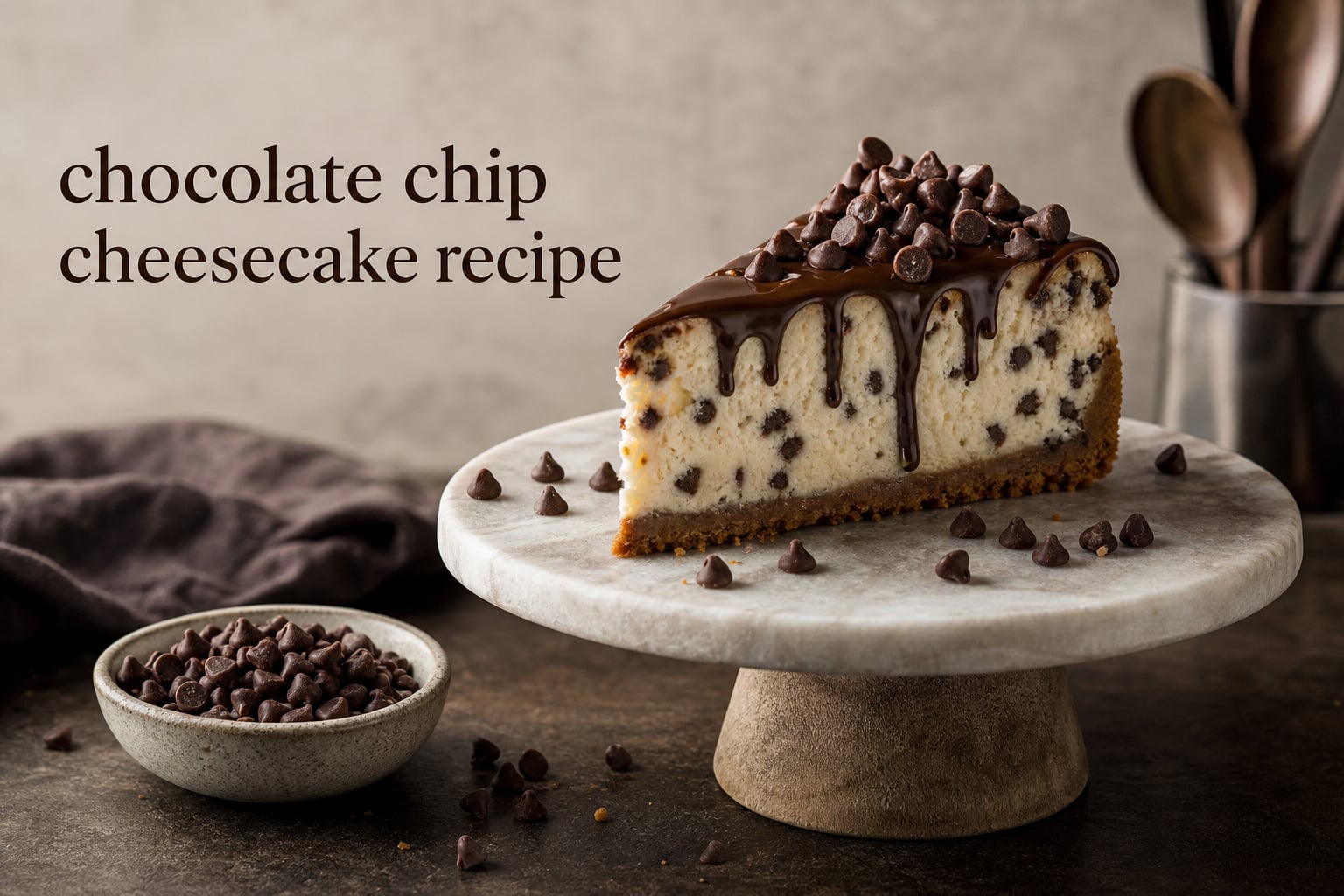
This chocolate chip cheesecake recipe makes a rich, creamy cream cheese cheesecake with a buttery graham cracker crust and mini chocolate chips in every slice. It is designed for a 9-inch springform pan and serves about 12 people, so it works especially well as a birthday cheesecake, holiday baking project, or make-ahead party dessert.
The details that matter most are simple: start with room-temperature dairy, mix at low speed once the eggs go in, and give the finished cake a long chill. Those choices answer the problems bakers raise most often—cracks, a dense filling, chips that sink, and slices that refuse to come out cleanly.
I like the contrast of a lightly crisp crust, a smooth vanilla filling, and small pockets of semisweet chocolate. A simple chocolate ganache is optional, but it turns the top into a polished finish when the cheesecake is headed to a dinner party or special occasion.
Table of Contents
This chocolate chip cheesecake recipe takes about 30 minutes of hands-on work.
Plan for 10 minutes to bake the crust, 55 to 65 minutes to bake the filled cheesecake, a gradual cooldown, and at least 8 hours of chilling. Bake it at 325°F in a water bath for the most even, rich and creamy result.
Press the graham cracker crust into a 9-inch springform pan and bake it briefly.
Beat softened cream cheese and sugar until smooth, then mix in sour cream, vanilla, and eggs at low speed.
Toss mini chocolate chips with flour, fold them into the cheesecake filling, and bake the pan in a hot-water bath.
Cool the cheesecake slowly, refrigerate it overnight, then top with ganache if you like.
These ingredients make one 9-inch chocolate chip cheesecake.
Use full-fat block cream cheese rather than the soft spread sold in tubs. The firmer block style creates a filling that sets cleanly and has the familiar tang expected from a baked cheesecake.
This graham cracker crust needs three ingredients.
1 3/4 cups finely crushed graham cracker crumbs
2 tablespoons granulated sugar
5 tablespoons unsalted butter, melted
Fine, even crumbs pack into a crust that slices instead of crumbling. If you make the crumbs from whole crackers, crush them until no large pieces remain.
This cheesecake filling stays smooth with full-fat dairy.
24 ounces full-fat cream cheese, softened
3/4 cup granulated sugar
1/2 cup full-fat sour cream, at room temperature
2 teaspoons vanilla extract
3 large eggs, at room temperature
1 cup mini semisweet chocolate chips
1 tablespoon all-purpose flour
Mini chocolate chips distribute through the filling more evenly than regular chips, which agrees with the repeated advice from experienced home bakers. The flour is not there to make the cake bready; it gives the chips a light coating that helps them remain suspended.
This optional ganache uses two simple ingredients.
4 ounces semisweet chocolate, finely chopped
1/2 cup heavy cream
Ganache should be added only after the cake is fully chilled. It is a good finishing touch, not a cover for a warm or under-set center.
These tools make water bath baking safer and simpler.
Use a 9-inch springform pan, a large roasting pan, heavy-duty aluminum foil, a mixing bowl, a hand or stand mixer, a rubber spatula, and a kettle or saucepan for hot water. A thin sharp knife and a wire rack help with the cooldown and final release.
Wrap the outside bottom and sides of the springform pan in two wide layers of foil before it goes into the roasting pan. The foil reduces the chance that water reaches the graham cracker crust, which is the usual cause of a soggy base.
These steps make a smooth chocolate chip cheesecake from crust to chill.
Step 1: Bake the crust until it smells toasted.
Heat the oven to 325°F and place a rack in the center. Stir the graham cracker crumbs, sugar, and melted butter until every crumb looks moistened.
Press the mixture firmly across the bottom of the pan and about 1 inch up the sides. A flat-bottomed measuring cup makes the base level and compact.
Bake for 10 minutes, then transfer the pan to a wire rack. Leave the oven on while the crust cools slightly.
Step 2: Beat the cream cheese and sugar until no lumps remain.
Put the softened cream cheese in a large bowl and beat it at medium-low speed until smooth. Add the sugar and continue just until the mixture looks creamy, stopping once or twice to scrape the bowl and beaters.
Add the sour cream and vanilla, then mix only until they disappear into the batter. Scraping the bottom is important because a hidden pocket of unmixed cream cheese can leave an uneven slice.
Keep the mixer at low speed from this point forward. Fast whipping adds air, and that air expands in the oven before collapsing, which is one common path to a cracked top.
Step 3: Add the eggs gently for a tender cheesecake filling.
Add one egg and mix on low just until blended. Repeat with the remaining eggs, taking a moment to scrape the bowl after the last one.
The batter should look thick, glossy, and uniform rather than foamy. Do not keep beating to chase every tiny bubble; the slow bake and rest will take care of much of that texture.
Step 4: Fold in coated mini chocolate chips to limit sinking.
Put the mini chocolate chips and flour in a small bowl and toss until the chips have a thin, even dusting. Fold them into the filling with a rubber spatula rather than running the mixer again.
Pour the filling over the warm-to-cool crust and smooth the top. Tap the pan lightly on the counter a few times to bring up larger air bubbles, but do not bang it hard enough to disturb the crust.
Step 5: Bake the cheesecake in a protected water bath.
Place the foil-wrapped springform pan in the center of the roasting pan. Set both pans on the oven rack, then carefully pour hot water into the roasting pan until it reaches about halfway up the outside of the springform pan.
Adding the water after the pan is in the oven is less awkward and lowers the chance of splashing water onto the filling. The surrounding water moderates the oven heat, helping the edges bake without the center overcooking.
Bake for 55 to 65 minutes. The outer 2 to 3 inches should look set, while the center should still have a small, gentle wobble when the pan is nudged.
Step 6: Cool the cheesecake slowly to protect the top.
Turn off the oven, crack the door open a few inches, and leave the cheesecake in the water bath for 45 minutes. This gradual temperature change is one of the most useful no-fail cheesecake habits because it reduces the sudden contraction that can split the surface.
Remove the springform pan from the roasting pan and take off the foil. Run a thin knife around the inside edge of the pan once; this helps the cake pull away from the side as it cools instead of tearing on top.
Let it cool on a wire rack until it is no longer warm, about 1 hour. Cover it loosely and refrigerate for at least 8 hours, preferably overnight.
These baking fixes solve the most common chocolate chip cheesecake problems.
Prevent cracks by avoiding overmixing and overbaking.
Room-temperature ingredients, low-speed mixing after the eggs, and a water bath all work toward the same goal: a filling that rises and cools gently. Take the cake out when the center has a modest wobble, not when it looks completely firm from edge to edge.
If a crack still appears, the cheesecake is still good to serve. Cover the chilled top with chocolate ganache, whipped cream, or a ring of mini chips rather than trying to patch the crack while the cake is hot.
Keep chocolate chips from sinking by choosing mini chips and coating them.
Use mini chips, toss them with the tablespoon of flour, and fold them into a thick filling at the end. Regular-size chips are heavier, so they are more likely to head toward the crust during baking.
A small amount of sinking is normal in a baked chocolate dessert. The goal is an even scattering, not the impossible task of holding every chip at the exact same height.
Save the crust from sogginess by sealing the pan and baking it first.
Two layers of foil around the outside of the springform pan provide a barrier in the water bath. Prebaking also gives the graham cracker crust structure before the wet filling goes on top.
If you do not want to use a water bath, set a pan of hot water on the lower rack and bake the cheesecake on the rack above it. The humid oven can help, although it does not protect against cracks as reliably as water surrounding the pan.
Fix a dense texture by checking ingredient temperature and mixing time.
Dense cheesecake usually traces back to cold cream cheese that never became smooth or a filling that was beaten too much after eggs were added. Allow time for the dairy to soften and stop the mixer as soon as each addition blends in.
Chilling is part of the texture, not an optional delay. A chilled dessert that rests overnight tastes more settled and cuts with less dragging than one served just a few hours after baking.
Cut neat slices by warming and wiping the knife.
Dip a long thin knife in hot water, dry it, and make one clean cut. Wipe and rewarm the blade between slices to keep the chocolate chips and creamy filling from smearing across the next piece.
This ganache and these variations change the cheesecake without changing its method.
For the ganache, heat the heavy cream until steaming but not boiling, pour it over the chopped chocolate, and let it stand for 2 minutes. Stir from the middle outward until smooth, cool it until slightly thickened, and spread it over the fully chilled cheesecake.
For a cookie-style version, swap the graham crackers for finely crushed chocolate sandwich cookies and leave out the added sugar in the crust. For a peanut butter note, stir a modest amount of creamy peanut butter into the filling only if you are comfortable with a slightly softer set and a stronger flavor.
Fresh berries, lightly sweetened whipped cream, or a small spoonful of chocolate sauce work well at serving time. The cake is rich, so thin slices and a tart fruit garnish make a balanced birthday dessert or party dessert plate.
This cheesecake stores well when it stays covered and cold.
Keep the cheesecake covered in the refrigerator and serve it within 4 to 5 days. Store toppings separately if they are watery, since moisture can soften the surface and crust.
To freeze it, chill the cake fully, place it on a parchment-lined sheet until firm, then wrap individual slices or the whole cheesecake tightly. Thaw it overnight in the refrigerator rather than on the counter for the best texture.
For make-ahead plans, bake and chill the cheesecake a day before the event, then add ganache and garnishes close to serving. That schedule gives the filling time to firm without turning the final assembly into a rush.
These chocolate chip cheesecake questions have straightforward answers.
How do you make a chocolate chip cheesecake?
Bake a graham cracker crust, mix softened cream cheese with sugar, sour cream, vanilla, and eggs, then fold in flour-coated mini chocolate chips. Bake the filling at 325°F in a water bath until the edges are set and the center wobbles slightly, cool it gradually, and chill it for at least 8 hours.
What is the secret to making good cheesecake?
Use room-temperature full-fat cream cheese and eggs, mix gently after adding the eggs, and avoid overbaking. A slow cooldown and overnight chill also produce a smoother, creamier texture.
Can I freeze chocolate chip cheesecake?
Yes. Chill it completely first, freeze it until firm, wrap it tightly, and thaw it overnight in the refrigerator. Freezing individual slices makes serving easier.
What is the difference between New York style and regular cheesecake?
New York-style cheesecake is typically taller, denser, and more cream-cheese-forward, often with extra eggs or rich dairy. This recipe is a baked cream cheese cheesecake with sour cream for a creamy texture and chocolate chips folded through the filling.
How do you prevent chocolate chips from sinking in cheesecake?
Choose mini chocolate chips, toss them with a small amount of flour, and fold them into a thick room-temperature filling just before baking. Regular chips and thin, warm batter make sinking more likely.
This chocolate chip cheesecake recipe rewards patience more than fancy technique.
Make the crust firm, blend the room-temperature filling without whipping in extra air, fold in flour-coated mini chocolate chips, and bake until the center still moves gently. The slow oven rest and overnight chill are what turn the filling into a clean-slicing, creamy dessert.
When you need a dependable chocolate chip cheesecake recipe for a celebration in 2026, make it the day before and let the refrigerator do its work. Add ganache if you want a more decadent chocolate dessert, then serve each slice with a warm, clean knife.