
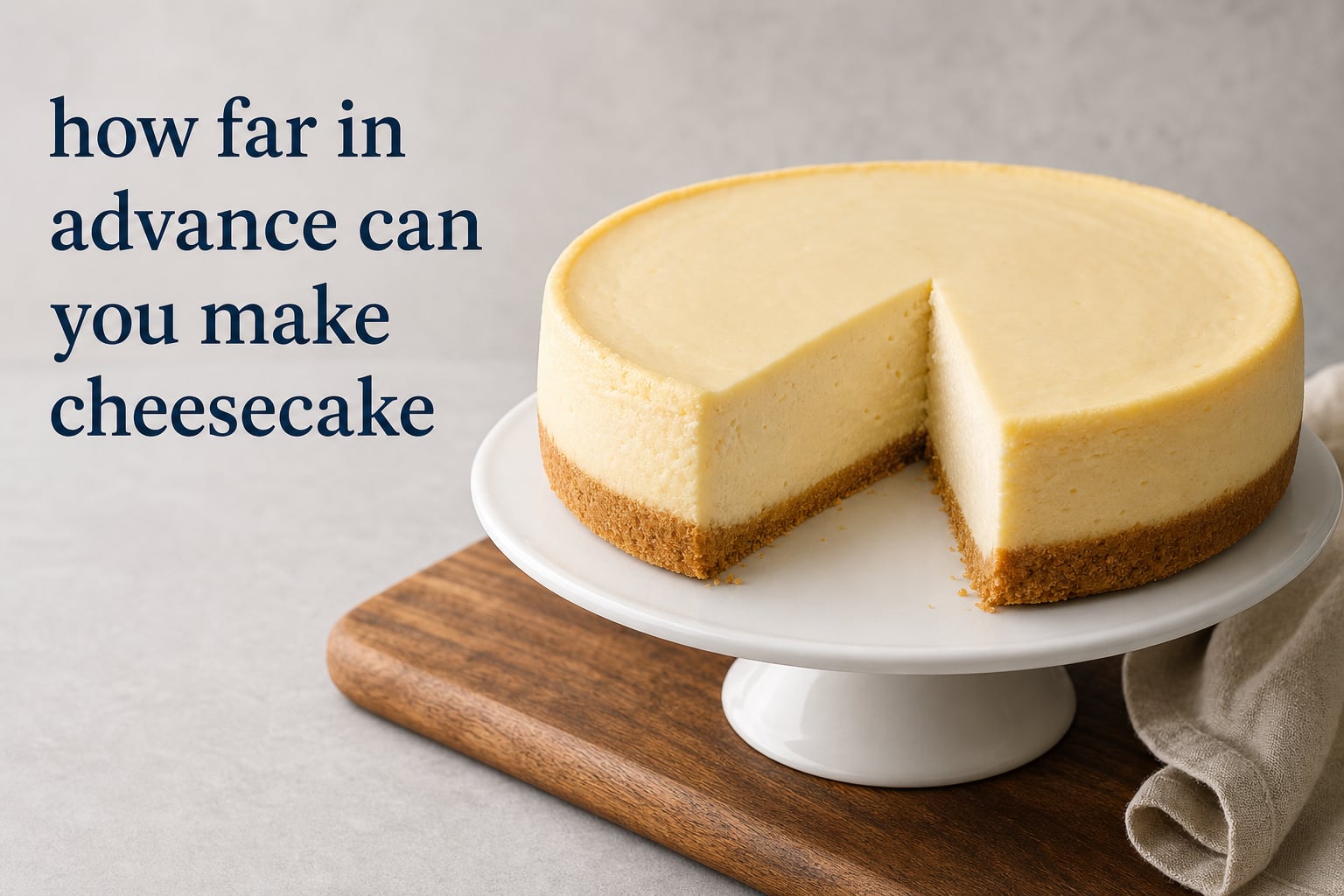
Planning dessert for a holiday gathering or dinner party often means juggling multiple dishes on serving day. That’s where cheesecake becomes your best friend. I’ve baked dozens of cheesecakes for events, and the answer to how far in advance you can make cheesecake might surprise you. The good news? Cheesecake is one of the most make-ahead-friendly desserts you can prepare, giving you flexibility whether you’re hosting Thanksgiving, Christmas, or a weekend birthday party.
Understanding the right timing helps you serve a dessert that’s actually better after resting, with flavors that have had time to meld and a texture that’s reached its ideal consistency. Let me walk you through exactly how far ahead you can make your cheesecake, whether baked or no-bake, and how to store it properly.
Table of Contents
Quick Answer: How Far in Advance Can You Make Cheesecake?
Here’s the short answer for busy bakers:
Refrigerator storage: 2 to 5 days before serving (2-3 days is optimal for best texture)
Freezer storage: Up to 3 months for long-term make-ahead
No-bake cheesecake: 1 to 2 days ahead (shorter window than baked)
Thawing frozen cheesecake: Transfer to refrigerator overnight (8-12 hours)
With those basics covered, let me explain why these timelines work and how to execute them perfectly.
Refrigerator Storage Timeline: When Cheesecake Peaks
A classic baked cheesecake stored properly in the refrigerator stays fresh for 4 to 5 days. But here’s what most guides don’t tell you: cheesecake actually improves during the first 24 to 48 hours. The flavors meld together, the texture firms up to that perfect creamy density, and the slight chill makes each bite more satisfying.
My recommendation? Aim to make your baked cheesecake 1 to 2 days before your event. This timing hits the sweet spot where the dessert has rested enough for flavors to develop but hasn’t started losing quality. Day 2 is often when I find cheesecake tastes its absolute best.
Day-by-Day Breakdown
Day 1 (fresh): The cheesecake is firm but still settling. Flavors are bright but haven’t fully married. Perfectly fine to serve, especially if you’re short on time.
Day 2-3 (optimal): This is the peak window. The cream cheese and sugar have fully integrated, any vanilla or flavorings have permeated the filling, and the crust has slightly softened into a cohesive base rather than a separate layer.
Day 4-5 (acceptable): Still safe to eat and enjoyable, but you may notice the crust becoming softer. For events, I wouldn’t push past day 4 unless you’ve frozen it.
Day 5+ (risk zone): The USDA recommends consuming refrigerated cheesecake within 4-5 days. Beyond that, quality declines and food safety becomes a concern.
Signs Your Cheesecake Has Gone Bad
Before serving cheesecake that’s been stored, check for these warning signs:
An sour or off smell coming from the filling. Visible mold growing on the surface or around the edges. A slimy or watery texture on top of the filling. Discoloration or dark spots that weren’t there before.
If you notice any of these, discard the entire cheesecake. Food safety isn’t worth the risk.
How Far in Advance Can You Make Cheesecake: Baked vs No-Bake
Not all cheesecakes follow the same timeline. The preparation method affects how far ahead you can make your dessert.
Baked Cheesecake Timing
A traditional baked cheesecake gives you the most flexibility. Because the eggs and cream cheese have been cooked and set through baking, the structure is stable. You can make a baked cheesecake 2 to 3 days ahead with excellent results, and up to 5 days if you’re willing to accept some crust softening.
The baking process creates that dense, rich texture that holds up well to storage. Plus, baked cheesecake freezes beautifully if you need to go beyond the refrigerator window.
No-Bake Cheesecake Timing
No-bake cheesecake requires a tighter timeline. Because it relies on gelatin or whipped cream for structure rather than baked eggs, it’s more delicate. Make your no-bake cheesecake 1 to 2 days ahead maximum.
After 48 hours, no-bake cheesecakes often start weeping (releasing moisture) or becoming too soft. The texture just doesn’t hold up like a baked version. For no-bake, I always serve within 24 hours when possible.
Why the Difference Matters
The science is straightforward: heat from baking sets proteins in the eggs and creates a firm structure. No-bake versions depend on gelatin or the air incorporated into whipped cream, which is less stable over time. If you’re planning far ahead, choose a baked recipe for maximum flexibility.
Freezing Cheesecake for Long-Term Make-Ahead
Need to make your cheesecake more than a few days ahead? Freezing is your answer. I’ve frozen cheesecakes up to 3 months in advance with excellent results. The dense, high-fat content of cheesecake filling makes it one of the best desserts for freezing.
Step-by-Step Freezing Instructions
Step 1: Chill completely. After baking, let your cheesecake cool to room temperature, then refrigerate for at least 4 hours or overnight. Never freeze a warm cheesecake.
Step 2: Wrap tightly. This is the most critical step. Wrap the entire cheesecake in plastic wrap, making sure every surface is covered. Then wrap again in aluminum foil or place in a freezer-safe container. Double-wrapping prevents freezer burn and keeps out odors.
Step 3: Label and date. Write the date and flavor on the foil. Frozen cheesecake keeps for 1-3 months, but you’ll forget when you made it without a label.
Step 4: Freeze flat. Place the cheesecake on a flat surface in your freezer. Avoid stacking anything on top until fully frozen (about 4-6 hours).
Freezing Whole vs. Slices
You can freeze cheesecake either way, with different benefits:
Whole cheesecake: Best for events where you’ll serve the entire thing. Thaws evenly and looks presentation-ready.
Individual slices: Perfect for portion control or when you only need a few servings. Wrap each slice in plastic wrap, then foil, and freeze in a single layer. Thaw only what you need.
Preventing Freezer Burn
Freezer burn shows up as white, icy patches on the surface and creates a grainy texture. To prevent it, eliminate air exposure. Press plastic wrap directly against the cheesecake surface before wrapping. Use heavy-duty foil rather than thin varieties. Store in the coldest part of your freezer, not the door.
How to Thaw Frozen Cheesecake Properly
Rushing the thawing process ruins texture. Here’s the method I use every time:
The Refrigerator Method (Recommended): Transfer your wrapped cheesecake from freezer to refrigerator the night before serving. An entire cheesecake needs 8-12 hours to thaw completely. Individual slices thaw in 4-6 hours.
Why this works: Slow thawing in the fridge prevents condensation from forming on the surface. It keeps the texture consistent and avoids that soggy top layer that happens with counter thawing.
What to Avoid When Thawing
Never thaw cheesecake at room temperature. The temperature fluctuation causes condensation and can create food safety concerns. Don’t microwave frozen cheesecake. It creates hot spots and ruins the texture. Avoid refreezing thawed cheesecake. The texture degrades significantly after a second freeze.
Managing Condensation
If you see moisture on the surface after thawing, gently blot it with a paper towel. Don’t wipe, which can disturb the surface. Most condensation resolves if you let the cheesecake sit uncovered in the fridge for 30 minutes after unwrapping.
Room Temperature and Food Safety Rules
Cheesecake contains dairy and eggs, making it perishable. The USDA’s food safety guidelines are clear: cheesecake should not sit at room temperature for more than 2 hours.
This rule applies whether the cheesecake is fresh from the oven or has been refrigerated. After 2 hours in the danger zone (40-140°F), bacteria multiply rapidly. For summer gatherings or warm venues, reduce this to 1 hour.
Serving Window Guidance
When serving cheesecake at a party, plan your timing carefully. Remove from refrigerator 15-30 minutes before serving to let the flavors open up. But set a timer and return any leftovers to the fridge within 2 hours of that initial removal. If you’re hosting an outdoor event in warm weather, keep the cheesecake in a cooler with ice packs until serving time.
Make-Ahead Tips for Toppings and Crust
The filling isn’t the only part to consider when planning ahead. Toppings and crust need their own strategy.
When to Add Toppings
Add fresh toppings like fruit, whipped cream, or sauces the day you serve the cheesecake. Fresh berries release moisture and can make the surface soggy after just a few hours. Store toppings separately and garnish right before serving.
Freezing Cheesecake With Toppings
Some toppings freeze well; others don’t. Caramel and chocolate ganache freeze beautifully when applied to the cheesecake surface. Fruit toppings become watery and lose texture in the freezer. Avoid freezing cheesecake with whipped cream toppings. Add those after thawing.
Crust Preparation Timeline
Can you prep the crust ahead? Absolutely. Graham cracker or cookie crusts can be made 1-2 days before filling. Press the crust into your pan, wrap tightly, and store at room temperature or in the refrigerator. This works great for spreading out your prep work.
However, I don’t recommend baking the crust and leaving it unfilled for more than a day. It can absorb moisture from the air and lose that crisp texture.
Preventing Soggy Crust
One concern bakers often mention is crust quality after storage. Here’s what the baking community has discovered: crusts soften slightly after 2-3 days, which many people actually prefer. But if you want maximum crunch, serve within 24 hours. For longer storage, consider freezing rather than refrigerating to preserve crust texture.
Holiday and Event Preparation Timeline
Let me give you specific planning guides for common occasions:
Thanksgiving Timeline
Make baked cheesecake 2-3 days before Thanksgiving. If making a week ahead, freeze and thaw Wednesday night. No-bake versions should be made Wednesday for Thursday serving.
Christmas Timeline
For Christmas Day dessert, make your cheesecake December 22-23. Freeze if preparing earlier in the month. Thaw overnight December 24.
Dinner Party Timeline
For a Saturday dinner party, bake Thursday or Friday. This gives you Saturday free for other prep. The cheesecake will be at peak flavor.
Travel Considerations
Transporting cheesecake? If traveling less than 2 hours, keep it in a cooler with ice packs. For longer trips, freeze the cheesecake first and transport frozen. It will thaw gradually during travel and arrive ready to refrigerate.
Frequently Asked Questions
How far in advance can I make a no bake cheesecake?
You can make a no-bake cheesecake 1 to 2 days in advance. The texture is more delicate than baked cheesecake and doesn’t hold up well beyond 48 hours. For best results, serve within 24 hours of preparation.
How many days before Thanksgiving can you make a cheesecake?
You can make a baked cheesecake 2-3 days before Thanksgiving and store it in the refrigerator. For earlier preparation (up to 3 months ahead), freeze the cheesecake and thaw it in the refrigerator overnight before Thanksgiving Day.
Can I leave cheesecake in a springform pan overnight?
Yes, you can leave cheesecake in the springform pan overnight in the refrigerator. The pan provides structure and makes storage easier. Just cover the top tightly with plastic wrap to prevent the cheesecake from absorbing refrigerator odors.
Can I make a cheesecake 48 hours in advance?
Yes, 48 hours is an ideal timeframe for baked cheesecake. This gives the flavors time to meld and the texture to reach its peak. Many bakers consider day 2 the best time to serve cheesecake for optimal flavor and texture.
Can you freeze homemade cheesecake?
Yes, homemade cheesecake freezes excellently. Wrap it tightly in plastic wrap, then foil, and freeze for up to 3 months. Thaw overnight in the refrigerator for best results. The dense texture of cheesecake makes it one of the best desserts for freezing.
How long does cheesecake last in the fridge?
Properly stored cheesecake lasts 4-5 days in the refrigerator. For best quality, consume within 2-3 days. Always cover tightly with plastic wrap or store in an airtight container to maintain freshness and prevent flavor absorption from other foods.
Conclusion
Knowing how far in advance you can make cheesecake gives you flexibility for any event. Refrigerate baked cheesecake for 2-5 days (with days 2-3 being optimal), freeze for up to 3 months, and always thaw slowly in the refrigerator. No-bake versions need a tighter 1-2 day window. With proper wrapping and storage, you can prepare this make-ahead dessert well in advance and serve it at its absolute best, freeing you to focus on the rest of your celebration.