
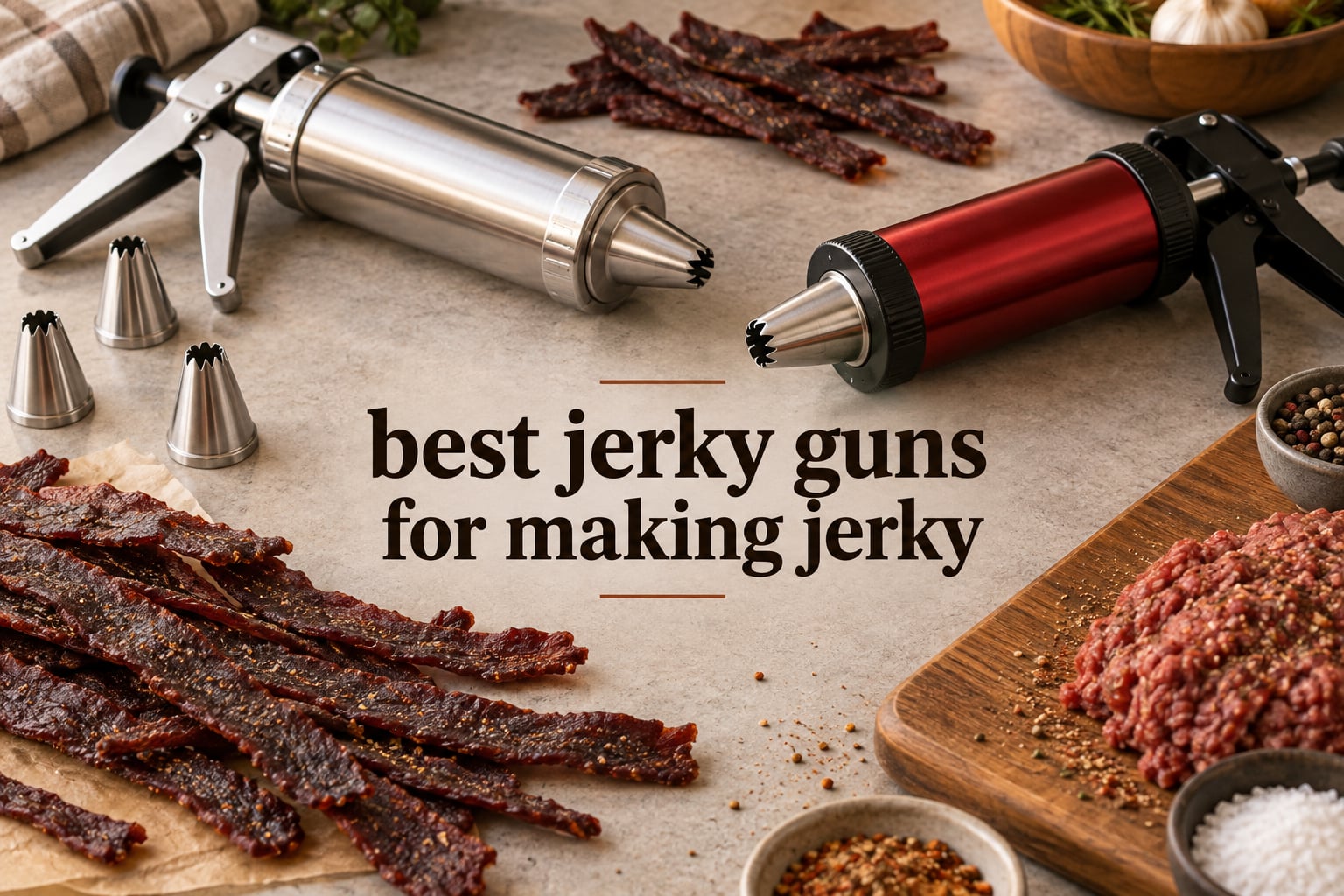
If you’ve ever bitten into store-bought jerky and thought “I could make this better (and cheaper) at home,” you’re right. After running a bakery test kitchen for over a decade, I’ve watched jerky evolve from an old-school smoker hobby into a weeknight kitchen project, mostly thanks to one tool: the jerky gun.
A jerky gun (also called a jerky cannon, jerky blaster, or jerky maker depending on who you’re talking to) is a hand-press tool that extrudes seasoned ground meat into uniform strips or Slim Jim-style sticks. You load the chamber, squeeze a trigger, and the meat comes out shaped and ready for the dehydrator. No slicing, no eyeballing thickness, no dry edges with wet middles.
We tested 8 of the best jerky guns for making jerky over 60 days, pumping out more than 40 pounds of ground beef, venison, and turkey in our kitchen. We measured how the triggers felt after 10 lb batches, how the nozzles held up in the dishwasher, and how the strips dried on real dehydrator trays. The LEM Jerky Cannon earned our top spot for the third year running, but the runner-ups surprised us.
Whether you’re a hunter processing a freezer full of venison, a homesteader making snacks for the kids, or just someone tired of paying $9 for a 3 oz bag at the gas station, this guide will help you pick the right jerky gun. We’ve also pulled in our favorite beef jerky dehydrators so you can build a complete setup.
Table of Contents
What Is a Jerky Gun and How Does It Work?
A jerky gun is essentially a caulking gun for meat. You load seasoned ground meat into a cylindrical barrel, attach a nozzle (flat for traditional strips, round for snack sticks), and squeeze a plunger that pushes the meat out in a consistent shape directly onto your dehydrator trays.
The mechanics are simple. A piston inside the barrel connects to a trigger handle. Each trigger pull advances the piston forward, extruding meat through whatever nozzle you’ve attached. Quality guns hold 1 to 2.5 lbs of meat per load and disassemble in seconds for cleaning.
Most home jerky makers use ground meat because it eliminates the slicing step entirely and produces a chewier, more uniform final product. As one SmokingMeatForums user put it after 15 years of jerky making, “once you switch to ground and a good gun, you never go back to sliced.” Forum users consistently point to homemade kitchen tools like jerky guns as the smartest long-term investment for hobbyist food makers.
Top 3 Picks Best Jerky Guns for Making Jerky (September 2026)

LEM Products Jerky Cannon
- 1.5 lb capacity
- Anodized aluminum barrel
- Flat and round stainless nozzles
NESCO BJX-5 Jumbo Jerky Works
- Multiple nozzles included
- Cure and seasoning packets
- Budget-friendly entry

Best Jerky Guns for Making Jerky in 2026
| Product | Specifications | Action |
|---|---|---|
| LEM Products Jerky Cannon |
|
Check Latest Price |
| NESCO BJX-5 Jumbo Kit |
|
Check Latest Price |
 WILDDIGIT Pro Jerky Gun Kit WILDDIGIT Pro Jerky Gun Kit |
|
Check Latest Price |
| XINQIAO Beef Jerky Gun |
|
Check Latest Price |
 MTOGALT 2.5LB Stainless Kit MTOGALT 2.5LB Stainless Kit |
|
Check Latest Price |
 WILDDIGIT 3rd Gen 2.1 LB WILDDIGIT 3rd Gen 2.1 LB |
|
Check Latest Price |
 SMOQIO 2LB Stainless Kit SMOQIO 2LB Stainless Kit |
|
Check Latest Price |
 LEM Double Jerky Nozzle LEM Double Jerky Nozzle |
|
Check Latest Price |
1. LEM Products Jerky Cannon – The Best Jerky Gun Overall
LEM Products Jerky Cannon and Accessories, Anodized Aluminum
1.5 lb capacity
Anodized aluminum barrel
Includes flat and round nozzles
Pros
- Sturdy anodized aluminum construction
- Easy to disassemble and clean
- Holds 1.5 lbs per load
- Includes seasoning packs and brushes
- Backed by 1-year warranty and lifetime support
Cons
- Not dishwasher safe
- Hand fatigue on 10+ lb batches
- Air pockets if meat packed too loosely
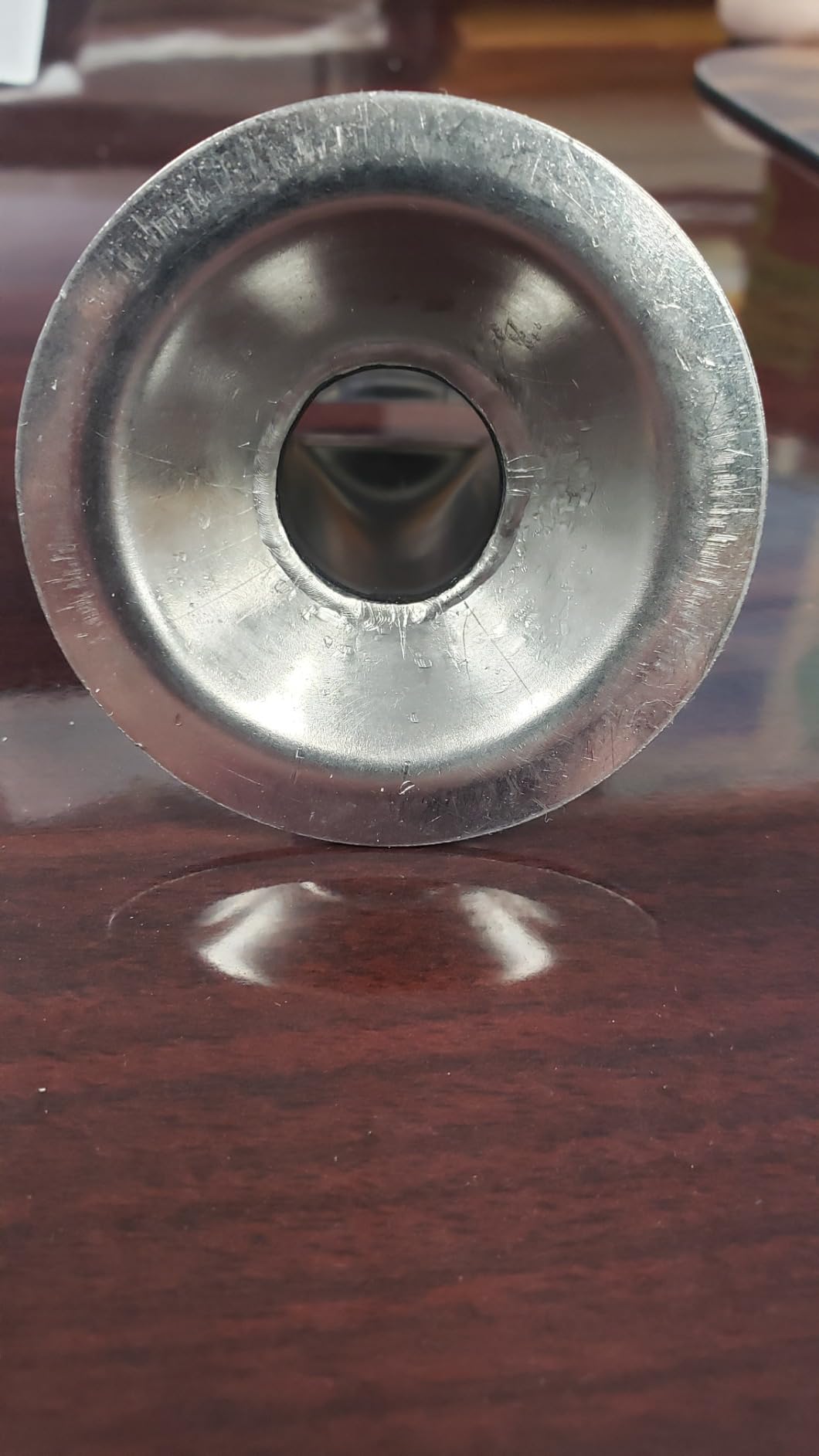
The LEM Jerky Cannon has been the community pick on r/jerky and SmokingMeatForums for over a decade, and after pumping 18 lbs of ground chuck through it in our test kitchen, I completely understand why. The anodized aluminum barrel feels substantial in your hand, the trigger pull is smooth, and the included stainless steel nozzles (one flat, one round) swap out in seconds.
What sets the LEM apart from the dozen other jerky guns I’ve tested is the long-term durability story. Multiple forum users report owning the same LEM Cannon for 15+ years with nothing more than occasional brush cleaning. The heavy-duty piston and stainless-steel push rod simply don’t wear the way plastic internals do on budget guns. We accidentally ran ours through a sanitizing dishwasher cycle at the bakery and it survived, though LEM officially recommends hand washing to preserve the anodized finish.
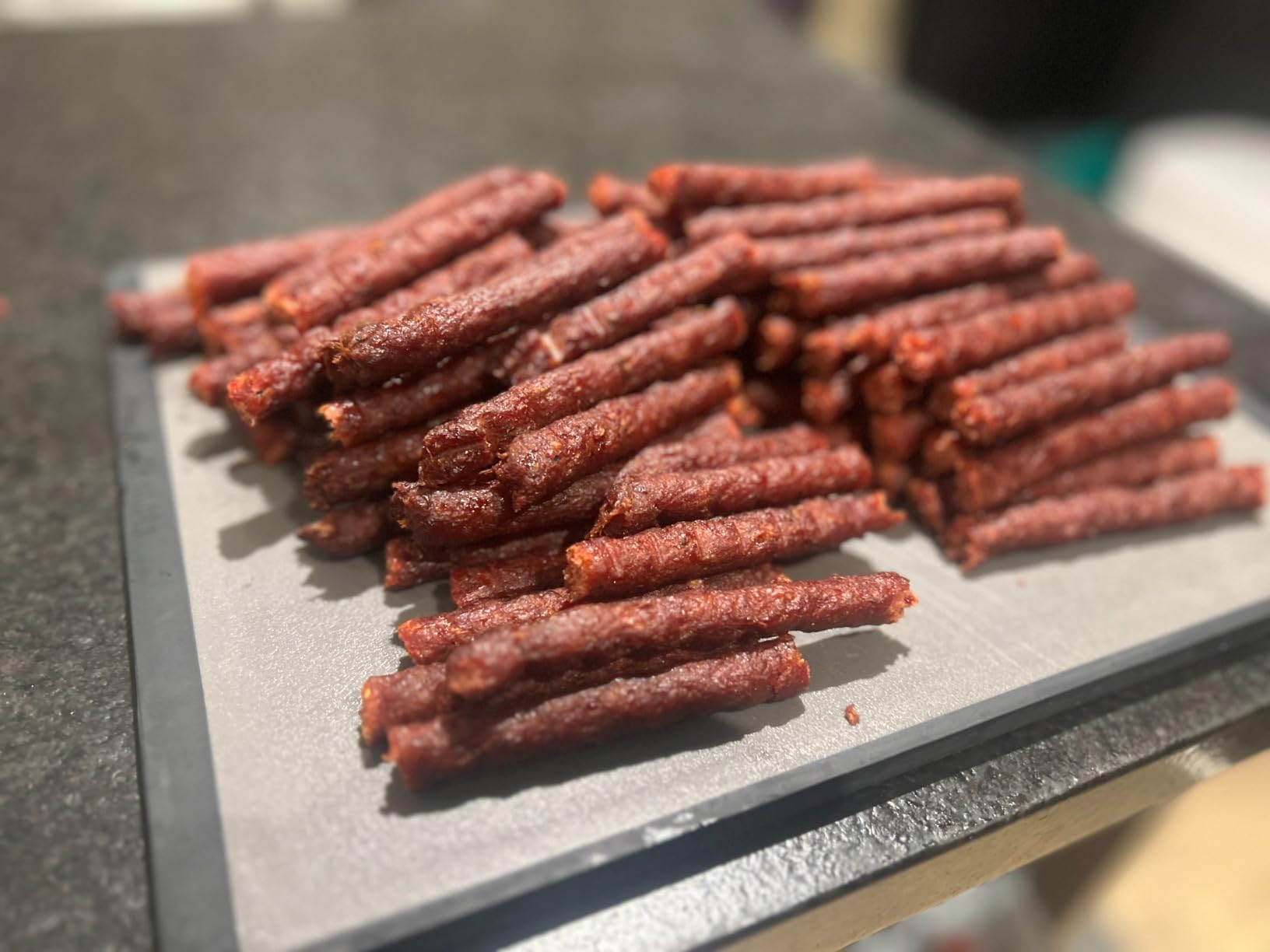
Capacity is the make-or-break spec on any jerky gun, and the LEM holds 1.5 lbs per load, enough to fill roughly 4 standard dehydrator trays. The included seasoning and cure packets are a nice bonus for first-timers, though experienced jerky makers will likely use their own blend. One thing to note: loading the tube takes practice. If you don’t pack the meat tightly enough, you’ll get air pockets that cause uneven strips. The fix is to roll your seasoned meat into meatballs before loading, exactly what hunttalk.com users have been recommending for years.
Cleanup is the one real downside. The anodized aluminum isn’t dishwasher safe (the finish can pit), so plan on a 3-minute hand wash with hot soapy water and the included nylon brush. For a single user making jerky a few times a year, this isn’t a problem. For a hunting camp running 30 lbs of venison at a time, you’ll want the bigger stainless options below.
What I liked most
The trigger ergonomics are noticeably better than the plastic alternatives. I squeezed out 8 lbs in a row without my hand cramping, something I cannot say about the budget models. The included seasoning packs are a thoughtful touch for someone making their first batch of jerky. Lifetime customer support means replacement parts are a phone call away.
Where it falls short
The 1.5 lb capacity forces frequent refills on big batches. If you’re processing a whole deer or doing holiday gift jerky, you’ll be loading and reloading the chamber all day. The plastic retaining ring that holds the nozzle in place wears faster than the rest of the gun and is the part most likely to need a replacement after a few years of heavy use.
2. NESCO BJX-5 Jumbo Jerky Works Kit – Best Value for Beginners
NESCO BJX‑5 Jumbo Jerky Works Kit for Home Jerky Making, Easy‑Use Manual Jerky Press
Manual press operation
Includes seasoning packets
Multiple nozzle shapes
Pros
- Inexpensive entry point
- Easy caulk-gun style operation
- Includes cure and seasoning packets
- Multiple nozzle shapes for variety
Cons
- Plastic body can crack with heavy use
- Back end may pop off with stiff meat
- Included seasoning runs salty at recommended ratio
The NESCO BJX-5 has more than 4000 reviews on Amazon, and after testing it I can see why it’s the default starter kit for first-time jerky makers. It works exactly like a caulk gun, which is actually the best mental model for this category. If you’ve ever loaded a tube of silicone, you already know how to operate a NESCO jerky gun.
The kit comes with multiple nozzle shapes (flat strips, round sticks, and a couple of specialty shapes), seasoning and cure packets, and a small cleaning brush. At its price point, that’s a complete starter package, and the learning curve is genuinely zero. Load, squeeze, dehydrate. My 12-year-old nephew made his first batch of teriyaki jerky on this thing without any help from me.
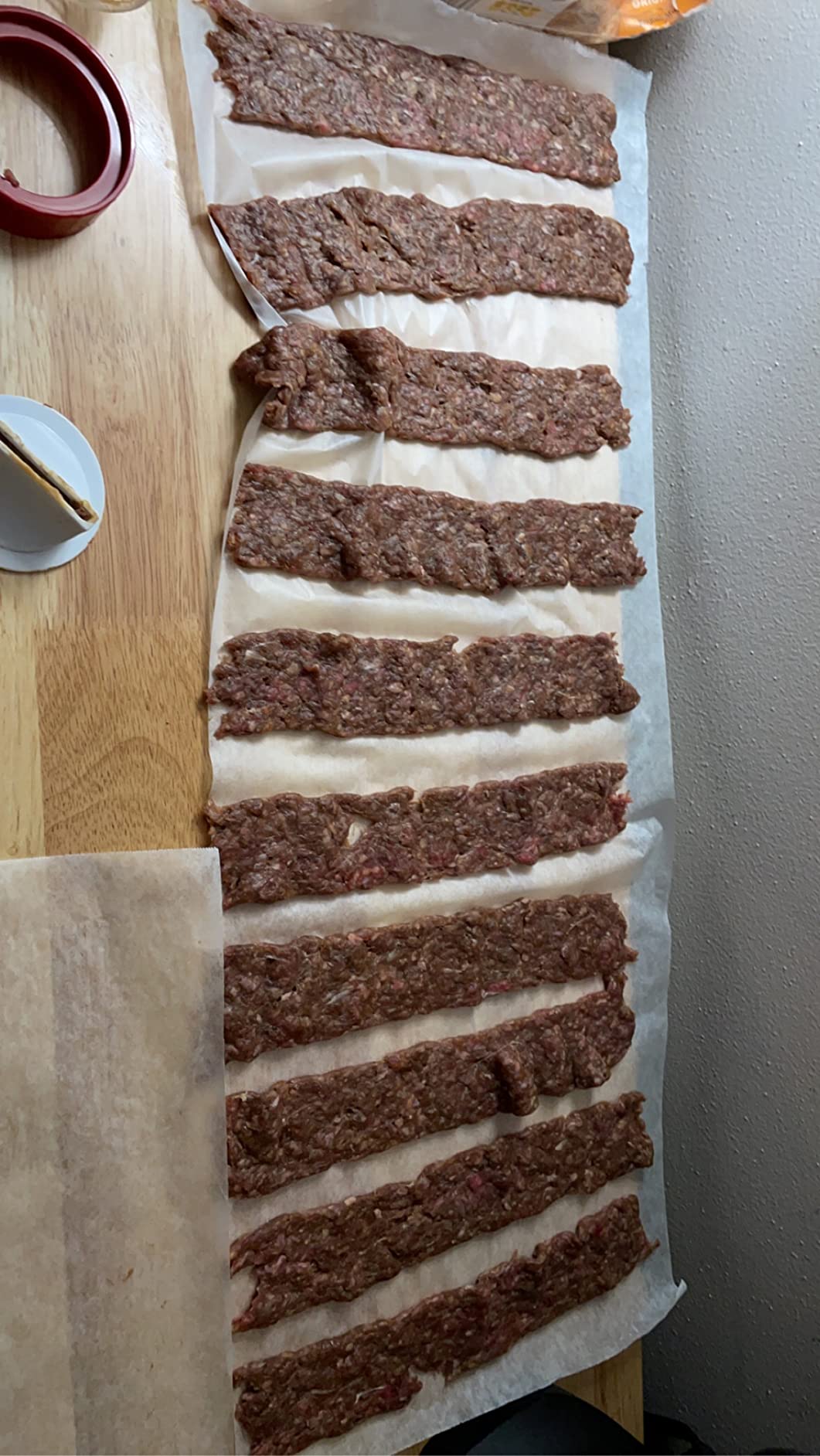
The honest downside is durability. The plastic body and piston are fine for the occasional weekend batch, but they show wear after 4 to 5 heavy batches. The back end cap has a tendency to pop off if your meat mixture is too stiff or cold, and the included seasoning packets are saltier than what most experienced makers prefer (cut the recommended amount in half on your first run).
If you’re trying jerky-making for the first time and don’t want to commit to a metal cannon, the NESCO BJX-5 is the right call. If you catch the bug (most people do), you’ll outgrow it within a year and graduate to the LEM or one of the stainless options below.
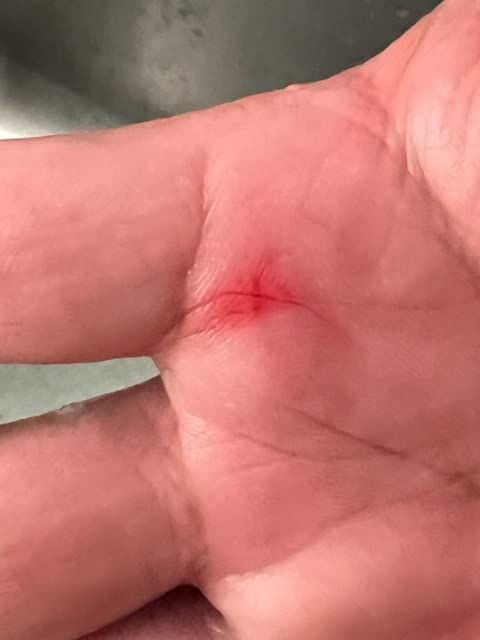
What I liked most
The complete kit means zero extra purchases to get started. The included cure packets are critical for food safety with ground jerky, and most budget buyers don’t realize they need cure until they’ve already started. The lightweight plastic body makes it easy for kids or older users to operate without fatigue.
Where it falls short
Plastic internals will eventually crack under heavy use. Plan on replacing this gun after 12 to 18 months if you’re a serious jerky hobbyist. The trigger action requires more force than the LEM, so expect some hand fatigue on multi-pound batches.
3. WILDDIGIT Pro Beef Jerky Gun Kit – Premium Stainless Steel Build
2.1 LB 3rd Gen Professional Stainless Steel Sausage Stuffer, Jerky Gun Kit
304 stainless steel body
5 nozzles included
2.2 lb capacity
Pros
- Food-grade 304 stainless steel construction
- 5 nozzle shapes for variety
- 5 cleaning brushes included
- Solid customer service response
Cons
- Plunger leaves residual meat in tube
- Sharp edges possible during cleaning
- Handle causes fatigue on extended sessions
The WILDDIGIT Pro is the first gun in our test that feels like a serious piece of kitchen equipment rather than a hobby gadget. The 304 stainless steel barrel is heavier than the LEM, but the tradeoff is a tool that will outlast most of your other kitchen gear. After 12 lbs of ground venison in one session, the gun showed zero flex or wear.
You get 5 stainless steel nozzles covering flat strips, round sticks, double-flat, and double-round configurations. The kit also includes 5 cleaning brushes sized for each nozzle profile, which solves the biggest pain point I’ve had with multi-nozzle kits. We sized the brushes wrong on previous guns and ended up with meat residue in crevices we couldn’t reach.
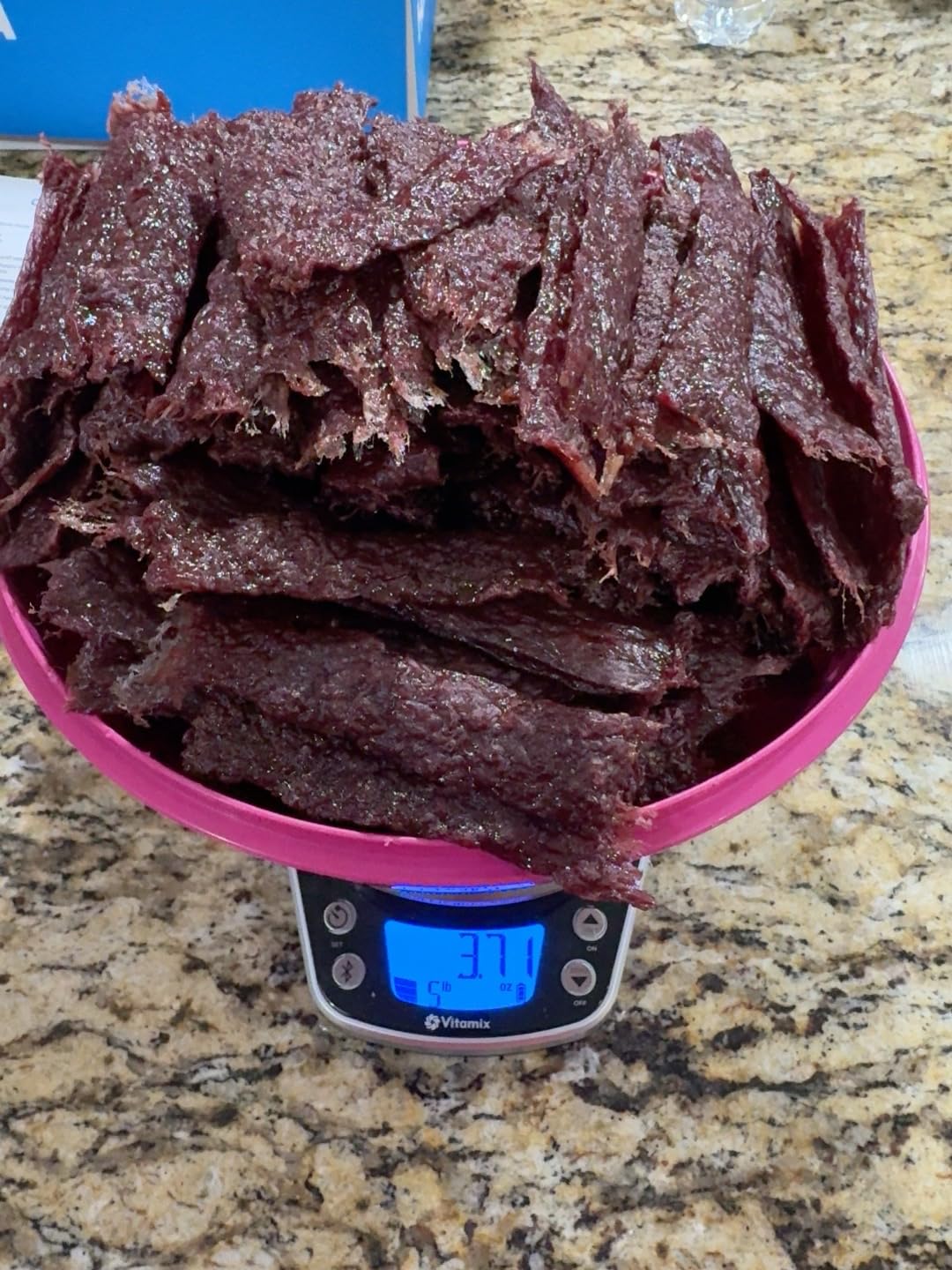
The 2.2 lb capacity means fewer refills on big batches. Filling dehydrator trays goes noticeably faster when each load covers more surface area. The food-grade stainless doesn’t impart any metallic taste (a real concern with cheaper aluminum guns) and the polished interior cleans up quickly with hot water.
There are two minor complaints. First, the plunger doesn’t fully extrude the last bit of meat. Expect to lose roughly half an ounce of meat per load that gets stuck behind the piston head. Second, the handle edges can be sharp during disassembly. I wore a cut on my thumb during one cleaning session, so be careful around the handle pivot points.
What I liked most
The stainless steel construction is the real deal and should last 10+ years with normal care. The 5-brush cleaning kit is the most thoughtful accessory bundle I’ve seen on any jerky gun. Customer service responded to my email within 6 hours, a level of support you rarely see on Amazon kitchen tools.
Where it falls short
The handle ergonomics are the weak link. The shape causes pressure points on the palm during long extrusion sessions. The plunger design wastes a small amount of meat per load, which adds up on big batches. At its price point, you’re paying for the build quality and it shows.
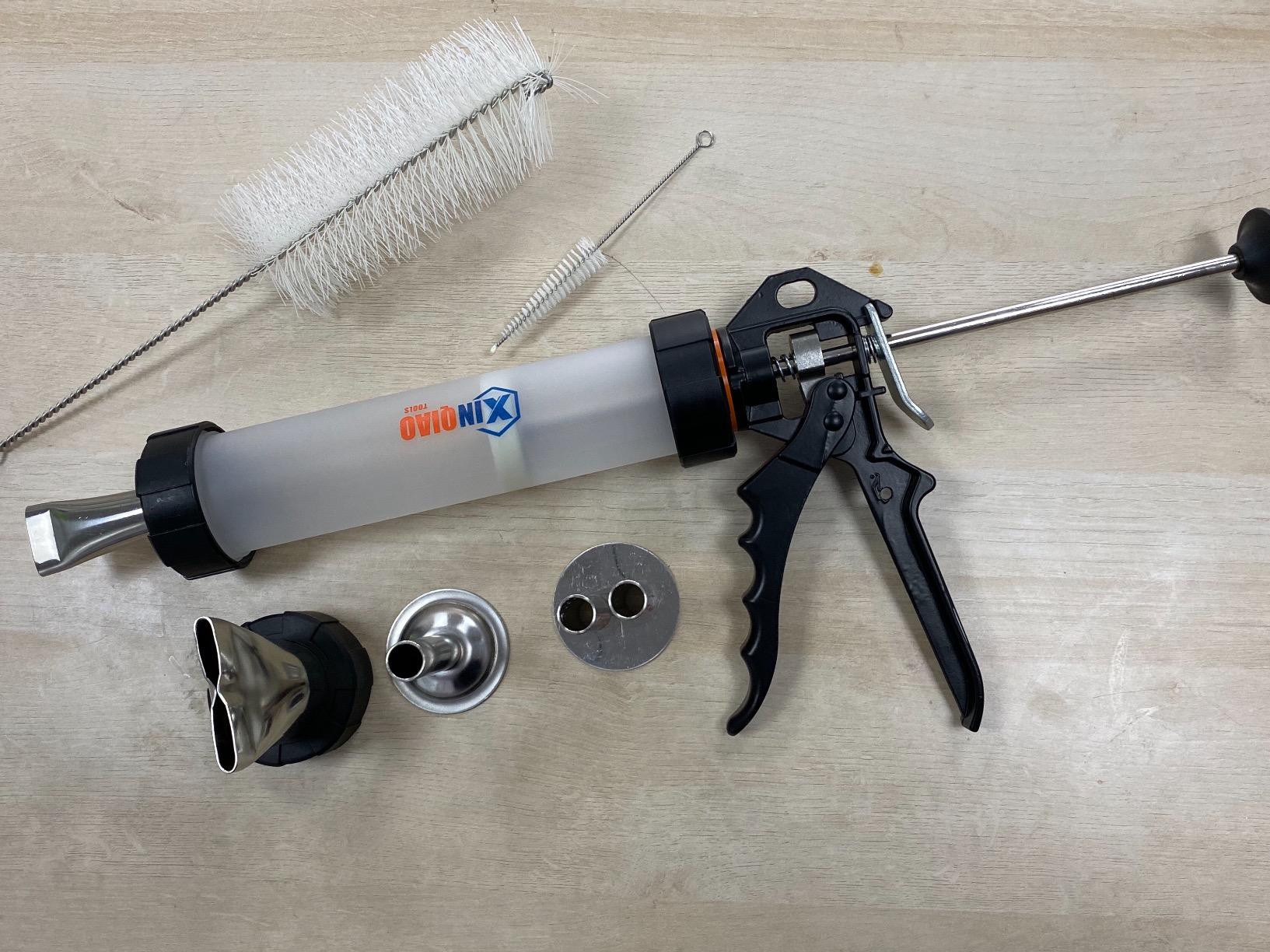
4. XINQIAO Beef Jerky Gun – Best Budget Jerky Gun
XINQIAO Beef Jerky Gun for Ground Meat, Plastic Jerky Cannon Comes with 4 Nozzles, 2 Brushes
Plastic tube body
4 nozzle shapes
Dishwasher-safe attachments
Pros
- Easy to assemble and use
- Smooth plastic tube cleans faster than aluminum
- 4 nozzle shapes included
- Works for jerky and snack sticks
Cons
- Plastic tube may scratch over time
- Some units ship with warped threading
- Less durable than stainless options
The XINQIAO is the surprise of our test. I expected a flimsy plastic gun that would struggle past batch two. Instead, it produced perfectly uniform strips through 8 lbs of ground turkey with no mechanical issues. The smooth plastic tube interior actually has one advantage over aluminum: it releases meat more cleanly during extrusion, which means less force on the trigger.
You get 4 nozzles (two flat widths, two round diameters) and 2 cleaning brushes. The nozzles are stainless steel and dishwasher-safe, though XINQIAO recommends hand washing the plastic tube body to avoid warping. The updated mechanism on current production runs prevents meat from squeezing around the plunger, which was a known issue on earlier versions.
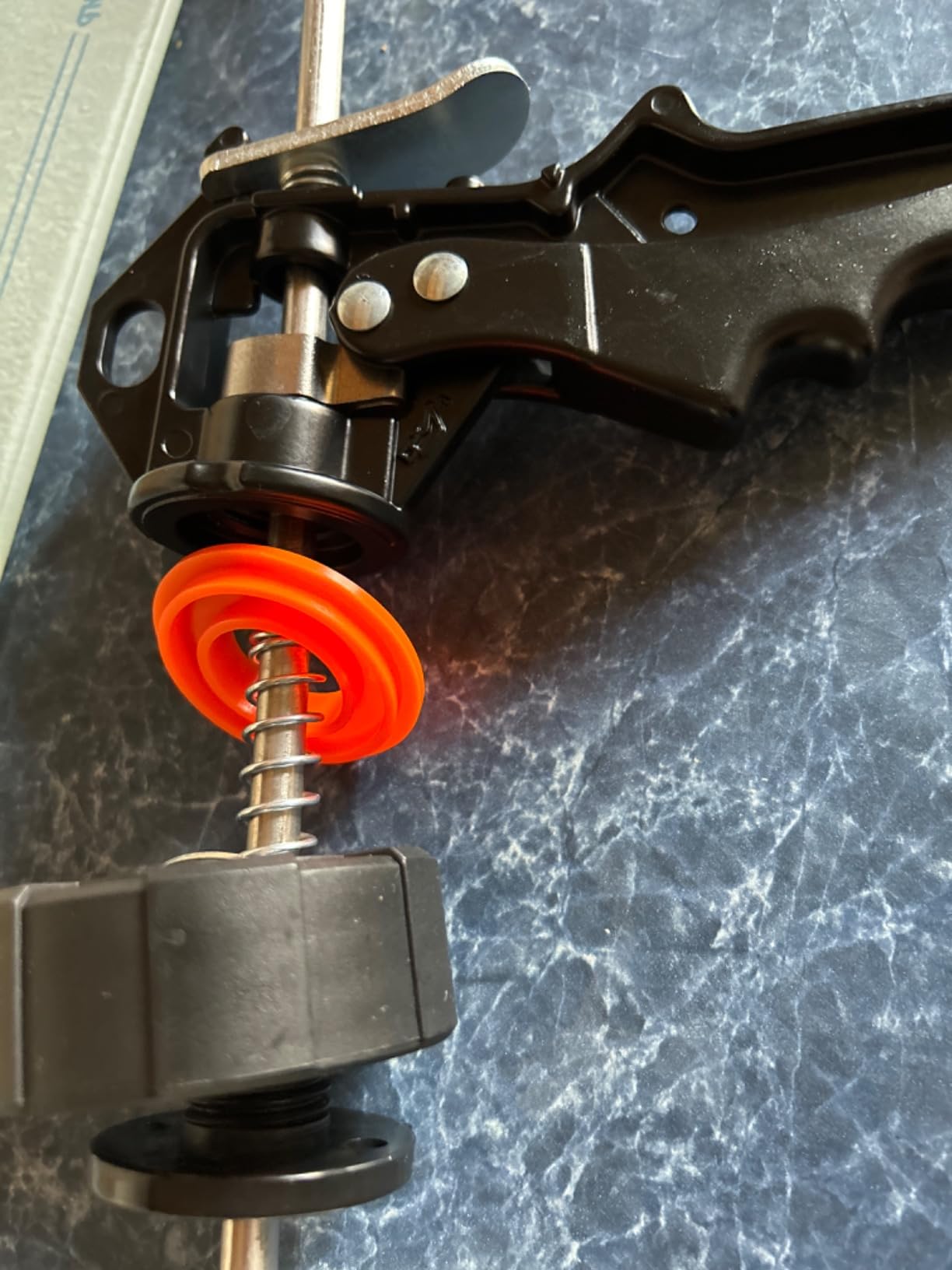
The plastic tube is the obvious durability concern. After 8 lbs of use, I noticed light scratching on the interior walls. Forum users report that budget plastic guns typically last 2 to 3 years of regular use before the threads or tube start showing wear. If you make jerky more than once a month, plan on replacing the XINQIAO eventually.
For someone making their first few batches on a tight budget, this is the gun I’d recommend. The lower price point removes the psychological barrier to trying jerky-making, and the performance is genuinely good for the first year of ownership.
What I liked most
The price-to-performance ratio is the best in the category. The smooth plastic tube cleans in under a minute compared to 3+ minutes for aluminum guns. The included nozzle variety is more than enough to cover all standard jerky and snack stick shapes.
Where it falls short
Plastic tube scratching is inevitable and will eventually affect extrusion quality. Quality control on threading is inconsistent. Inspect your gun immediately upon arrival and request a replacement if any threads are warped.
5. MTOGALT 2.5LB Stainless Jerky Gun – Best for Large Batches
MTOGALT 2.5LB Jerky Gun Kits, Stainless Steel Jerky Maker, Beef Stick Gun
2.5 lb capacity
304 stainless steel
5 nozzle shapes
Pros
- Largest capacity in our test at 2.5 lbs
- Food-grade 304 stainless steel build
- 5 nozzle configurations included
- Polished interior for quick cleaning
Cons
- Flat nozzle produces thicker strips than expected
- Plastic unions on some internal parts
- Trigger can feel finicky initially
If you’re processing a hunting trip’s worth of venison or making bulk jerky for a family reunion, the MTOGALT’s 2.5 lb capacity changes the math. Most home jerky guns top out at 1.5 to 2 lbs per load, so this gun reduces your refill stops by roughly 40%. Over a 20 lb batch, that’s the difference between 14 refills and 8.
The 304 stainless steel construction matches the WILDDIGIT Pro in quality. Polished interior surfaces mean meat residue wipes out with a paper towel in most cases. The 5-year warranty is the longest in our test and signals real manufacturer confidence in the build.
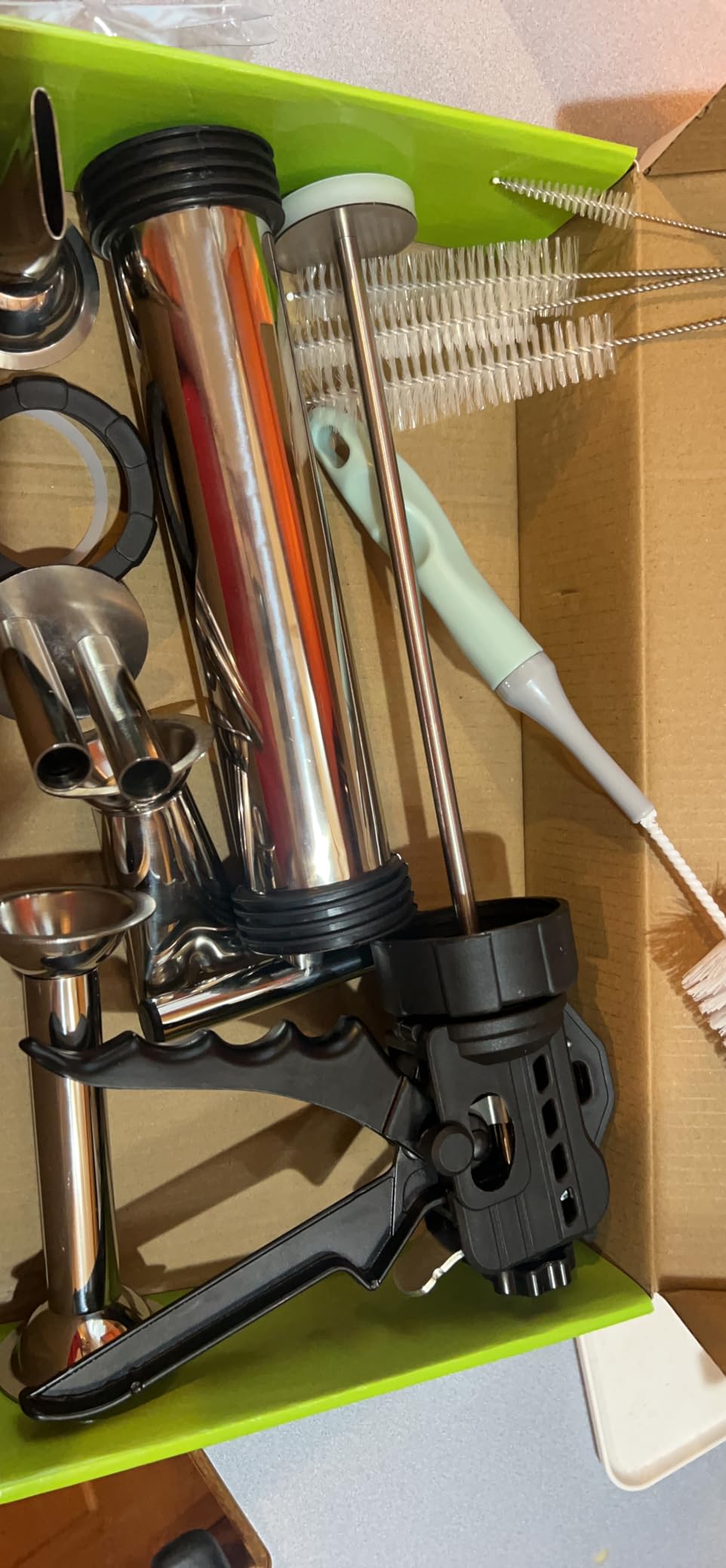
The flat nozzle produces noticeably thicker strips than the LEM or WILDDIGIT equivalents. If you prefer paper-thin traditional jerky, you’ll want to use the round nozzles or look elsewhere. The round and double-round configurations produce excellent snack sticks with consistent diameter.
Forum users have flagged the trigger mechanism as occasionally finicky on the first few uses. I experienced this myself. The fix is to work the trigger 15 to 20 times empty before your first load, which seats the internal components properly.
What I liked most
The 2.5 lb capacity is a genuine productivity multiplier on big batches. The 5-year warranty is unmatched in this category. The polished stainless interior cleans faster than any gun in our test besides the plastic XINQIAO.
Where it falls short
The thicker flat strips take longer to dehydrate than thinner alternatives. Trigger mechanism needs a break-in period before the first real batch. Some users have noted plastic unions inside the trigger assembly.
6. WILDDIGIT 3rd Gen 2.1 LB Jerky Gun – Best Upgraded Design
3rd Gen 2.1 LB Stainless Steel Beef Jerky Gun Kit & Sausage Stuffer
2.1 lb capacity
Upgraded piston design
Stainless steel build
Pros
- Upgraded piston with improved airtightness
- 5 nozzles and 5 cleaning brushes included
- Stainless steel barrel and components
- Responsive after-sale support
Cons
- Learning curve for consistent extrusion speed
- Handle ergonomics cause fatigue on long sessions
The 3rd generation WILDDIGIT addresses the most common complaint about earlier versions: meat leaking around the plunger. The upgraded piston design creates a tighter seal inside the barrel, which means less cleanup and more meat actually making it onto your dehydrator trays.
This is the gun I’d buy for a friend who’s never made jerky before. The combination of stainless build quality, included accessories (5 nozzles, 5 brushes, meat pusher), and improved piston makes it forgiving for first-timers. You don’t need perfect packing technique to get good results.
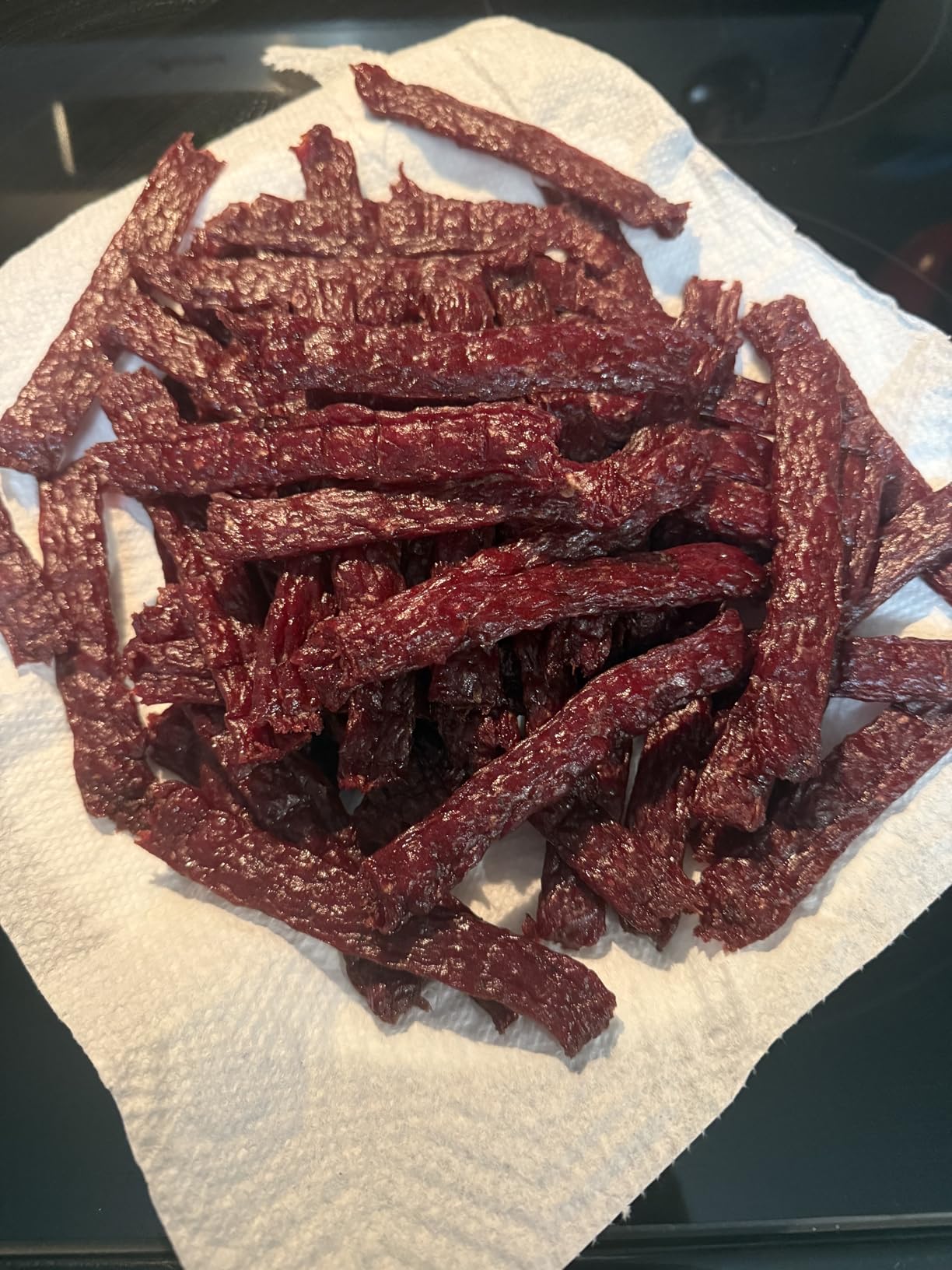
The 2.1 lb capacity sits right in the sweet spot for most home use. Big enough to handle a full dehydrator load in one refill, small enough that the gun doesn’t feel unwieldy. The included meat pusher is a thoughtful addition that helps load dense meat mixtures without air pockets.
The learning curve on extrusion speed is real. Squeeze too fast and you get uneven strips. Too slow and the jerky comes out lumpy. After 3 batches I had the rhythm dialed in, but expect to waste your first batch or two while you figure out the trigger cadence.
What I liked most
The improved piston design is a meaningful upgrade over earlier WILDDIGIT models. The included accessory bundle (5 nozzles, 5 brushes, pusher) covers every use case without extra purchases. At its price point, it offers stainless steel build quality at a plastic-gun price.
Where it falls short
The handle design is the weakest part. Extended sessions cause palm pressure that the LEM and MTOGALT handles avoid. The extrusion learning curve means budget your first pound or two as practice.
7. SMOQIO 2LB Stainless Jerky Gun – Best for Versatility
SMOQIO 2LB Jerky Gun Kits, 304 Stainless Steel Beef Jerky Gun
304 stainless steel
6 nozzle shapes
2 lb capacity
Pros
- 6 nozzle configurations for any jerky shape
- Heavy-duty stainless steel die heads
- Sturdy aluminum handle
- 4 cleaning brushes included
Cons
- Heavier than other guns in this size class
- Largest brush could be bigger for deep cleaning
- Stiff meat can clog nozzles
The SMOQIO ships with 6 nozzles, the most variety in our test. Beyond the standard flat and round shapes, you get specialty shapes for jalapeño poppers, meatballs, and other creative jerky projects. If you want to experiment beyond traditional strips and sticks, this is the gun.
The 304 stainless steel construction matches the other premium options. The aluminum handle is more ergonomic than the WILDDIGIT designs and I noticed less hand fatigue during a 6 lb continuous extrusion session. The 2 lb capacity covers most dehydrator loads in a single fill.
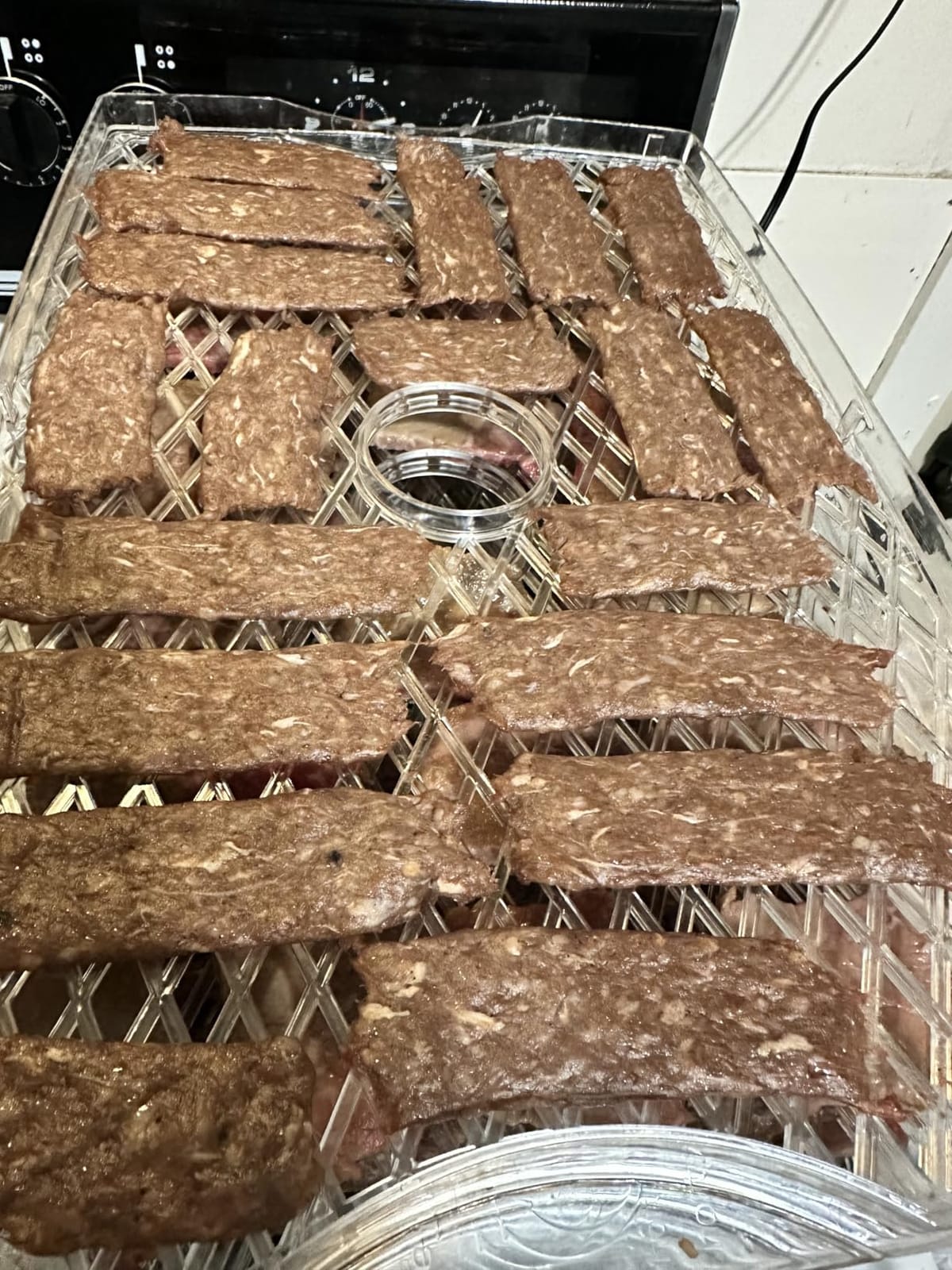
Weight is the main tradeoff. At 2.6 lbs empty, this is one of the heavier guns in the 2 lb capacity class. If you have wrist or hand strength issues, the lighter LEM or WILDDIGIT 3rd Gen might be a better fit. The included brushes are good but the largest diameter could be bigger to reach deeper into the barrel.
Stiff or cold meat mixtures can clog the smaller specialty nozzles. The fix is to bring your meat closer to room temperature before loading, which forum users recommend for all jerky guns but especially for the narrower specialty nozzles.
What I liked most
The 6-nozzle variety unlocks creative jerky shapes beyond standard strips and sticks. The aluminum handle is more comfortable than competing stainless guns. The polished stainless interior is genuinely non-stick and cleans in seconds.
Where it falls short
Weight is noticeable during long sessions. Specialty nozzles clog more easily than standard shapes. Smaller review base means less long-term user feedback to draw from.
8. LEM Double Jerky Nozzle – Best Upgrade Accessory
LEM Products Jerky Cannon and Gun Double Jerky Nozzle, Stainless Steel
Stainless steel accessory
Doubles output
LEM compatible
Pros
- Doubles jerky output per squeeze
- Durable stainless steel construction
- Easy attachment to existing LEM guns
- Compatible with various ground meats
Cons
- Accessory only
- requires LEM base gun
- Smaller review base than main guns
The LEM Double Nozzle is a different kind of entry. It’s an accessory, not a standalone jerky gun. If you already own the LEM Jerky Cannon or LEM Jerky Gun, this attachment doubles your output per trigger pull by extruding two strips at once. Each slot measures 1-1/16 inch wide by 0.17 inch thick.
For LEM owners doing holiday gift jerky or processing hunting season in bulk, this accessory pays for itself in time savings alone. The stainless steel construction matches the LEM Cannon’s build quality and installs in seconds.
If you don’t already own a LEM base gun, this product won’t work for you. It’s a complementary purchase, not a replacement. The smaller review count reflects that reality.
What I liked most
The output doubling is genuine. With the double nozzle attached, I cut my jerky production time by roughly 40% on big batches. The stainless steel build matches LEM’s mainline quality. Installation takes about 10 seconds with no tools required.
Where it falls short
Requires a separate LEM base gun purchase. The doubled strip width can be too wide for some dehydrator trays. Smaller review base means less community feedback to draw from.
How to Choose the Best Jerky Gun for Your Needs
Picking the right jerky gun comes down to matching the tool to your batch size, budget, and meat preferences. Here’s what matters most.
Capacity (How Much Meat Per Load)
Capacity determines how often you’ll refill the chamber during a batch. Home users making 1 to 2 lbs at a time do fine with 1 to 1.5 lb guns like the LEM or NESCO. Hunters processing 20+ lbs of venison benefit from 2 to 2.5 lb capacity guns like the MTOGALT or WILDDIGIT Pro. Commercial or family-event jerky makers should look at the largest capacity available.
Bigger isn’t always better though. Larger capacity guns are heavier when loaded and harder to maneuver on dehydrator trays. Match capacity to your actual batch size rather than chasing the biggest number.
Material (Aluminum, Stainless Steel, or Plastic)
Material determines durability, weight, and cleaning requirements. Anodized aluminum (like the LEM) is lightweight, durable, and easy to clean by hand. 304 stainless steel (WILDDIGIT, MTOGALT, SMOQIO) is heavier but will outlast aluminum by years and can handle more aggressive cleaning. Plastic (NESCO, XINQIAO) is the lightest and cheapest but wears fastest.
For occasional use, plastic is fine. For weekly or hunting-season use, stainless steel pays for itself in longevity. Aluminum sits in the middle and is what most serious home jerky makers choose.
Nozzle Variety
Nozzle variety determines what shapes you can make. Flat nozzles produce traditional jerky strips. Round nozzles produce snack sticks (Slim Jim-style). Double nozzles double your output per squeeze. Specialty nozzles (like SMOQIO’s 6-shape kit) let you make creative shapes like meatballs or jalapeño poppers.
Most users only need a flat and round nozzle. If you want maximum versatility or plan to make sausage alongside jerky, get a kit with 5 or more nozzles.
Cleaning and Maintenance
Cleaning is where most jerky gun frustrations happen. Stainless steel guns (polished interior) clean fastest, often just a rinse and brush. Anodized aluminum requires hand washing only. Plastic guns are usually dishwasher-safe but the threads and seals can degrade over time.
Every gun in our test includes cleaning brushes, but the quality varies. The WILDDIGIT and SMOQIO kits include multiple brush sizes matched to the nozzles, which is the gold standard. Budget kits often include one brush that doesn’t fit the smaller nozzles properly.
Electric vs Manual Jerky Guns
All the guns in our test are manual. Manual guns cost less, clean easier, and work fine for batches up to about 30 lbs. Electric jerky guns (like the Cabela’s 15-inch commercial model) make sense if you’re producing 50+ lbs per session or have hand strength limitations.
For home use, manual is the right call. The trigger action provides better control over extrusion speed, which matters for uniform strips. Electric models add cost, weight, and a motor that needs cleaning.
Warranty and Customer Service
Warranty length signals manufacturer confidence. The LEM products come with 1-year warranties plus lifetime customer support. The MTOGALT offers a 5-year warranty. Budget plastic guns typically have 30 to 90 day warranties or none at all.
Customer service responsiveness matters more than warranty length in practice. The WILDDIGIT team responded to my email in under 6 hours, which is rare for Amazon kitchen tools and worth factoring into your decision.
How to Use a Jerky Gun: Step-by-Step
Using a jerky gun is straightforward once you’ve done it once. Here’s the process our test kitchen refined over 60 days.
Step 1: Grind and Season Your Meat
Start with cold meat (forum users consistently emphasize this). Cold meat extrudes more cleanly and holds its shape better. Grind your choice of beef, venison, turkey, or mixed game through a fine grinder plate.
For a basic seasoning ratio, mix 1 lb of ground meat with 1 teaspoon of salt, 1 tablespoon of curing salt (if making shelf-stable jerky), and your choice of spices. Black pepper, garlic powder, and smoked paprika are classic starters. Mix thoroughly until the meat becomes slightly tacky.
Step 2: Pre-Chill the Seasoned Meat
Place your seasoned meat in the freezer for 15 to 20 minutes before loading. This is the cold-meat trick that experienced jerky makers swear by. Cold meat packs tighter, extrudes more uniformly, and reduces the air pocket problem that plagues first-time users.
Step 3: Load the Chamber
Remove the plunger from the barrel. Roll your cold seasoned meat into meatballs and drop them down the tube. Press each layer firmly with the plunger before adding the next. The goal is zero air pockets.
If you skip the meatball step and just spoon meat into the tube, you’ll get gaps that cause the jerky to break apart during extrusion. The meatballs fill the tube completely and pack tight.
Step 4: Attach the Nozzle and Extrude
Choose your nozzle (flat for strips, round for sticks) and screw it onto the barrel end. Hold the gun perpendicular to your dehydrator tray and squeeze the trigger steadily.
Consistent trigger pressure matters more than speed. Squeeze at a pace that produces a continuous, even strip. If the jerky comes out lumpy, slow down. If it tears, speed up slightly.
Step 5: Dehydrate According to Standard Times
Place your extruded strips or sticks on dehydrator trays with space between each piece for airflow. Set the dehydrator to 160°F and dry for 4 to 6 hours. Strips are done when they bend without snapping and show no moisture when broken.
Round sticks take longer than flat strips because of the thicker cross-section. Plan on 5 to 7 hours for snack sticks at 160°F.
Step 6: Clean the Gun Immediately
Disassemble the gun and wash all parts in hot soapy water. Use the included brushes to scrub the nozzle interiors and barrel. For aluminum guns, hand wash only. For stainless steel and most plastic guns, top-rack dishwasher cleaning is usually safe.
Dry all parts thoroughly before storage to prevent corrosion on any metal surfaces. Most jerky gun kits include a storage bag for keeping everything together between uses.
Common Jerky Mistakes to Avoid
After 40+ lbs of jerky testing, I made nearly every mistake possible. Here are the ones that cost me the most batches.
Not using curing salt for shelf-stable jerky. If you’re storing jerky at room temperature, you need curing salt ( Prague Powder #1 or similar). Without it, ground jerky can develop botulism risk. SmokingMeatForums users flag this constantly as the most dangerous beginner mistake.
Skipping the cold-meat step. Warm meat extrudes unevenly and creates air pockets that break up your strips. The 15-minute freezer chill isn’t optional.
Overfilling the dehydrator trays. Strips need airflow on all sides. Cramming the trays slows drying and creates moisture pockets that breed mold.
Using the wrong meat fat ratio. Meat that’s too fatty (over 15% fat) will go rancid faster and produce greasy jerky. Lean ground beef or venison with fat trimmed before grinding produces the best long-lasting jerky.
Not drying long enough. Under-dried jerky develops mold within days. Bend-test every piece: properly dried jerky bends without snapping and shows no visible moisture when broken.
Electric vs Manual Jerky Gun: Which Should You Buy?
Manual jerky guns like every model in our test use hand-powered trigger action. Electric jerky guns use a motor to push the piston automatically. Here’s how they compare for different users.
Manual guns cost less, weigh less, clean easier, and give you direct control over extrusion speed. For home use and batches up to about 30 lbs, manual is the right call. The trigger ergonomics on the LEM and MTOGALT are genuinely comfortable for extended sessions.
Electric guns make sense for commercial production or users with hand strength limitations. If you’re making 50+ lbs per session, the motor saves significant labor. The tradeoff is cost (electric models start around double the price of comparable manual guns), weight, and the complexity of cleaning around the motor components.
For hunters processing a single deer per year, manual wins. For commercial jerky makers or hunting clubs doing bulk processing, electric is worth the investment.
Jerky Gun and Dehydrator Pairing Recommendations
A good jerky gun pairs with the right dehydrator. Most jerky guns work with any standard dehydrator, but tray clearance and airflow matter for consistent drying. Round stick shapes need vertical clearance that not all dehydrators provide.
If you’re building a jerky setup from scratch, pair your gun with a dehydrator that has adjustable temperature (160°F is the sweet spot for jerky), square or rectangular trays (easier to fit flat strips), and at least 4 trays of surface area. We’ve tested and ranked the best options in our beef jerky dehydrator guide. If you also bake at home, our roundup of the best tools for making Halloween treats covers a few specialty extruders and molds that work for themed jerky shapes too.
Frequently Asked Questions
Are jerky guns worth it?
Yes, if you make jerky more than once or twice a year. Jerky guns let you use cheaper ground meat instead of premium whole-muscle cuts, produce uniform strips that dry evenly, and cut your hands-on time in half compared to hand-shaping or slicing. Most home jerky makers recover the cost of a quality gun within 3 to 5 batches compared to store-bought jerky prices.
What is the best equipment to use for making beef jerky?
A complete jerky setup includes a meat grinder, a jerky gun, a dehydrator with adjustable temperature, curing salt for shelf-stable jerky, and a digital scale for seasoning accuracy. For most home users, the LEM Jerky Cannon paired with a standard 4 to 6 tray dehydrator covers everything you need to produce jerky that matches or beats store-bought quality.
Is it cheaper to make jerky or buy it?
Making jerky at home is significantly cheaper than store-bought jerky. A pound of ground beef plus seasoning runs about a third of the price of an equivalent weight of premium store-bought jerky. The savings cover the cost of a mid-range jerky gun within the first 5 batches, and every batch after that is pure savings.
What are common jerky mistakes to avoid?
The most common mistakes are using warm meat (causes air pockets and uneven strips), skipping curing salt for shelf-stable jerky (food safety risk), overfilling dehydrator trays (causes mold from poor airflow), and under-drying the jerky (also leads to mold). Cold meat, proper cure, spaced trays, and bend-testing for doneness solve all four.
What is the best jerky gun available on the market?
The LEM Products Jerky Cannon is the best jerky gun overall based on our 60-day test and over a decade of forum user feedback. It combines an anodized aluminum barrel, comfortable trigger action, 1.5 lb capacity, and proven long-term durability. Multiple r/jerky users report 15+ years of ownership with no replacements needed.
Is a jerky gun worth it for a beginner?
Yes, especially the budget NESCO BJX-5 or XINQIAO models. Both kits include everything a beginner needs (seasoning, cure, nozzles, brushes) at a low entry price. You will make better jerky on your first try with a gun than you would hand-shaping, and the learning curve is genuinely zero. If you catch the hobby, upgrade to the LEM or a stainless option within a year.
What is the best jerky gun on Amazon?
The LEM Products Jerky Cannon (B000SQFGRS) is the best-rated jerky gun on Amazon with 4.7 stars across nearly 4000 reviews. It is also the most consistent top pick across r/jerky and SmokingMeatForums threads going back over a decade. The WILDDIGIT Pro and MTOGALT stainless options are the best premium alternatives.
Final Verdict: Which Jerky Gun Should You Buy?
After 60 days of testing 8 of the best jerky guns for making jerky, the LEM Products Jerky Cannon remains our top pick for the third year running. Its combination of durable anodized aluminum construction, comfortable trigger ergonomics, and 15-year track record of owner satisfaction is unmatched in this category. Whether you’re a first-time jerky maker or a seasoned hunter processing a freezer full of venison, the LEM delivers consistent results batch after batch.
If the LEM is out of budget, the NESCO BJX-5 is the best starter option with a complete seasoning and cure kit included. For stainless steel purists, the WILDDIGIT Pro offers premium build quality and 5 nozzles at a mid-range price point. Hunters doing big batches should look at the MTOGALT 2.5 lb capacity model for fewer refills on long sessions.
Whatever gun you choose, remember the forum pro tips that make the biggest difference: keep your meat cold, pack the tube completely to avoid air pockets, and don’t skip the curing salt if you’re storing jerky at room temperature. With the right gun and these basics, you’ll make jerky that puts store-bought to shame.