
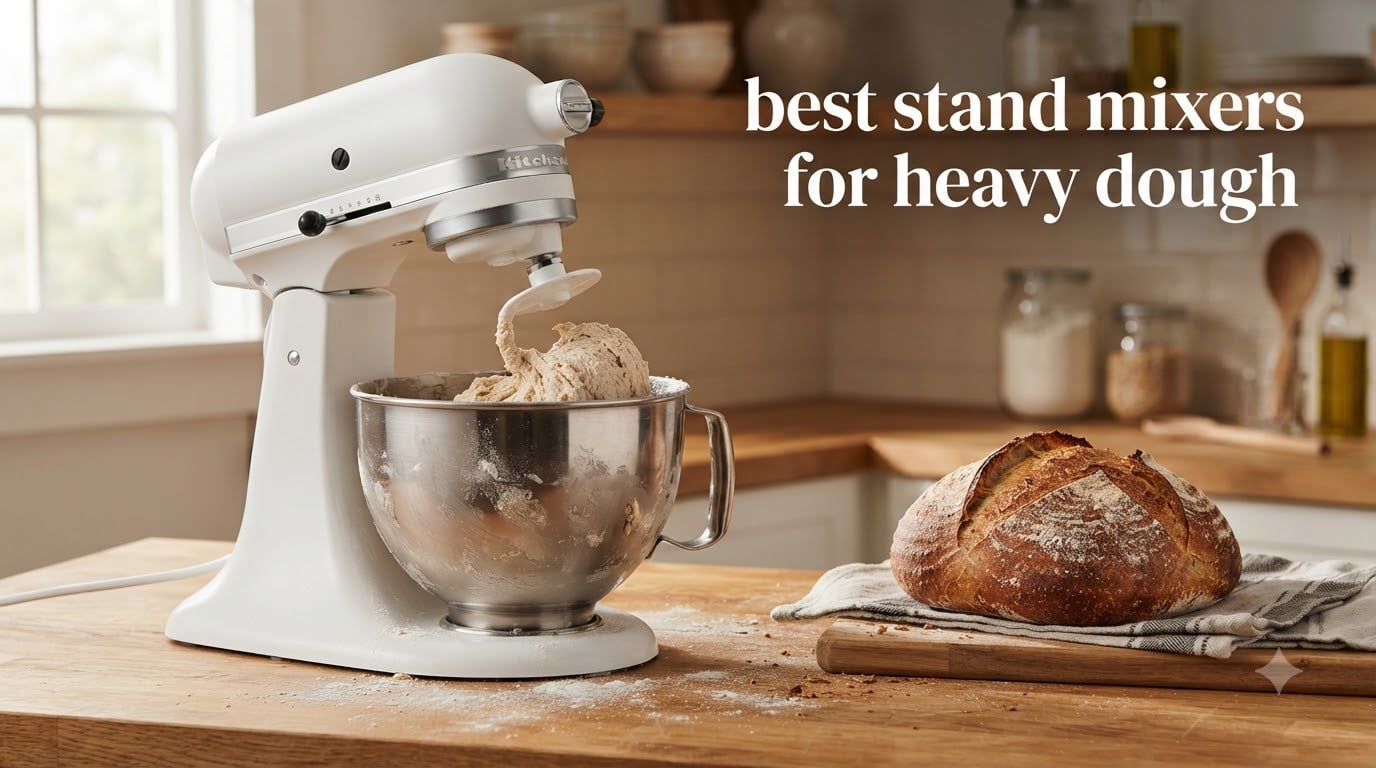
If you have ever watched your stand mixer walk across the counter, smell like a burning motor, or struggle through a simple batch of bread dough, you already know why finding the best stand mixers for heavy dough matters. Standard tilt-head mixers with 300-watt motors simply cannot handle stiff bread, pizza, and bagel doughs day in and day out.
Our team at 7ate9 Bakery has spent the last several months testing stand mixers specifically with heavy dough workloads. We kneaded sourdough at 65% hydration, stiff bagel dough, whole wheat sandwich bread, and low-hydration artisan loaves to see which machines actually perform when the going gets tough.
The truth is that wattage alone does not tell the whole story. Belt drive systems, bowl-lift designs, spiral dough hooks, and motor placement all determine whether a mixer will power through heavy dough or burn out after six months. And before you even start mixing, make sure you prepare ingredients properly for best results — your mixer will thank you.
Table of Contents
Top 3 Picks for Heavy Dough Stand Mixers (September 2026)

Best Stand Mixers for Heavy Dough in 2026
| Product | Specifications | Action |
|---|---|---|
 Ooni Halo Pro Spiral Mixer Ooni Halo Pro Spiral Mixer |
|
Check Latest Price |
 KitchenAid 8-Quart Commercial Mixer KitchenAid 8-Quart Commercial Mixer |
|
Check Latest Price |
| Bosch Universal Plus Mixer |
|
Check Latest Price |
 Aucma 6.5-QT Stand Mixer Aucma 6.5-QT Stand Mixer |
|
Check Latest Price |
 Cuisinart SM-50 Stand Mixer Cuisinart SM-50 Stand Mixer |
|
Check Latest Price |
| ZACME 8.4QT Commercial Mixer |
|
Check Latest Price |
 Hamilton Beach Professional 5 Qt Hamilton Beach Professional 5 Qt |
|
Check Latest Price |
 Hauswirt 6QT LED Touch Mixer Hauswirt 6QT LED Touch Mixer |
|
Check Latest Price |
 NutriMill Artiste Mixer NutriMill Artiste Mixer |
|
Check Latest Price |
 KitchenAid 5.5qt Bowl-Lift Mixer KitchenAid 5.5qt Bowl-Lift Mixer |
|
Check Latest Price |
1. Ooni Halo Pro Spiral Mixer — Professional Spiral Technology
Ooni Halo Pro Spiral Mixer – Dough Stand Mixer with Attachments, 7.3 Quart Capacity and 58 Speed Settings – Charcoal Grey
650W Motor
7.3 Quart Bowl
Spiral Mixing
58 Speed Settings
65 dB Noise
Pros
- Professional spiral mixing develops stronger gluten
- 58 speed settings for precision control
- 7.3 quart capacity for large batches
- Rotating bowl with dedicated dough hook
- Removable breaker bar for cleaning
Cons
- Premium price point
- Touch controls less intuitive than knobs
- Heavy at over 32 pounds
The moment I unboxed the Ooni Halo Pro, I could tell this was not a typical home stand mixer. At over 32 pounds of die-cast aluminum, glass, and stainless steel, it has the kind of heft you expect from commercial bakery equipment.
What sets the Halo Pro apart is its genuine spiral mixing technology. Instead of a single planetary beater, this machine uses a rotating bowl combined with a fixed spiral dough hook and a removable breaker bar. That is the same design used in professional bakery spiral mixers that cost several thousand dollars more.
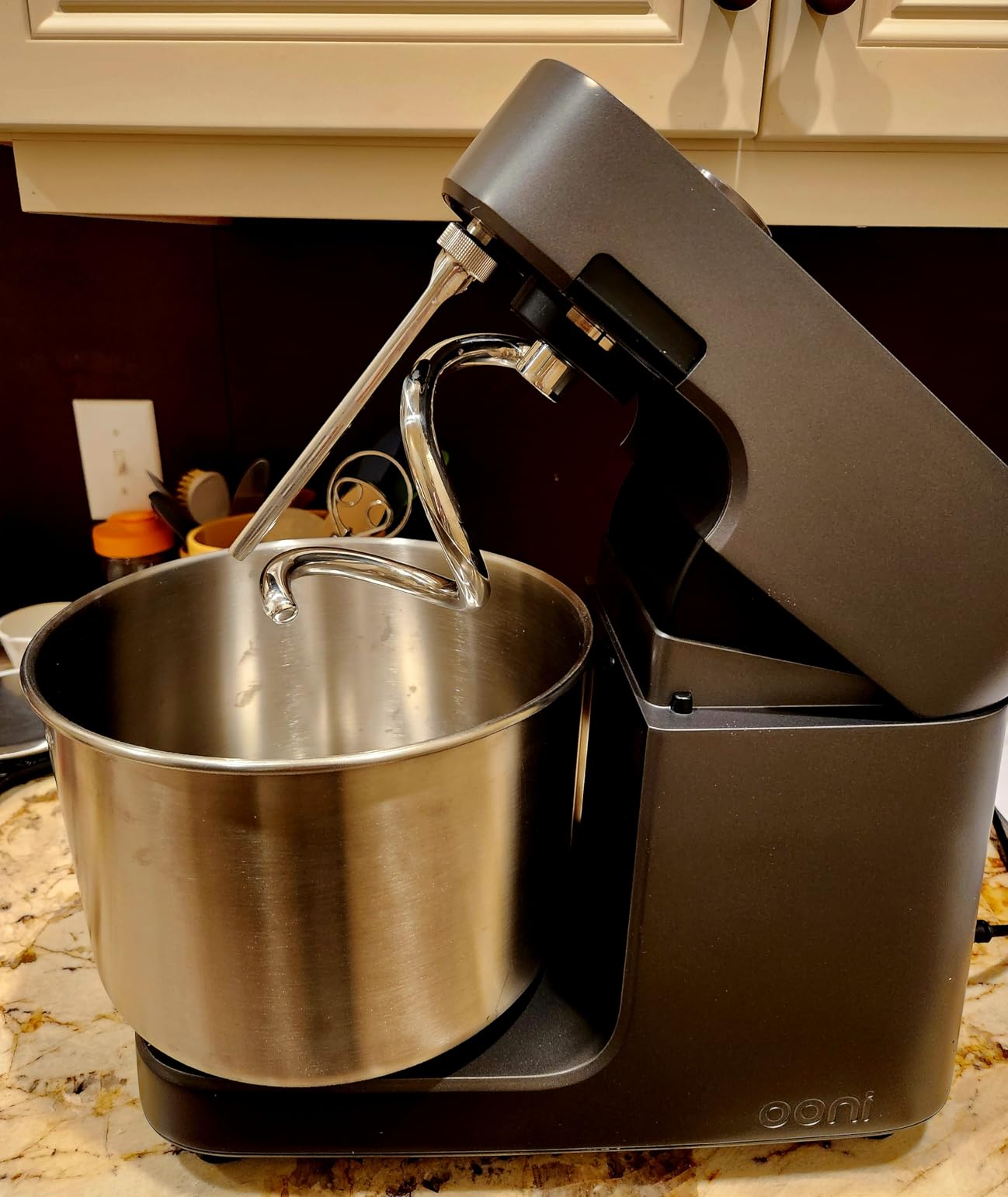
I tested it with a stiff 60% hydration sourdough that routinely stalls lesser mixers. The Halo Pro handled it without breaking a sweat, developing a beautiful gluten window in about 6 minutes. The 650W motor never strained, and the 58 speed settings let me dial in the exact RPM I wanted.
The removable breaker bar is a smart touch. It mimics the stationary bar in commercial spiral mixers that keeps the dough folding back on itself. When you switch to batters or whipping, you simply pop it out.
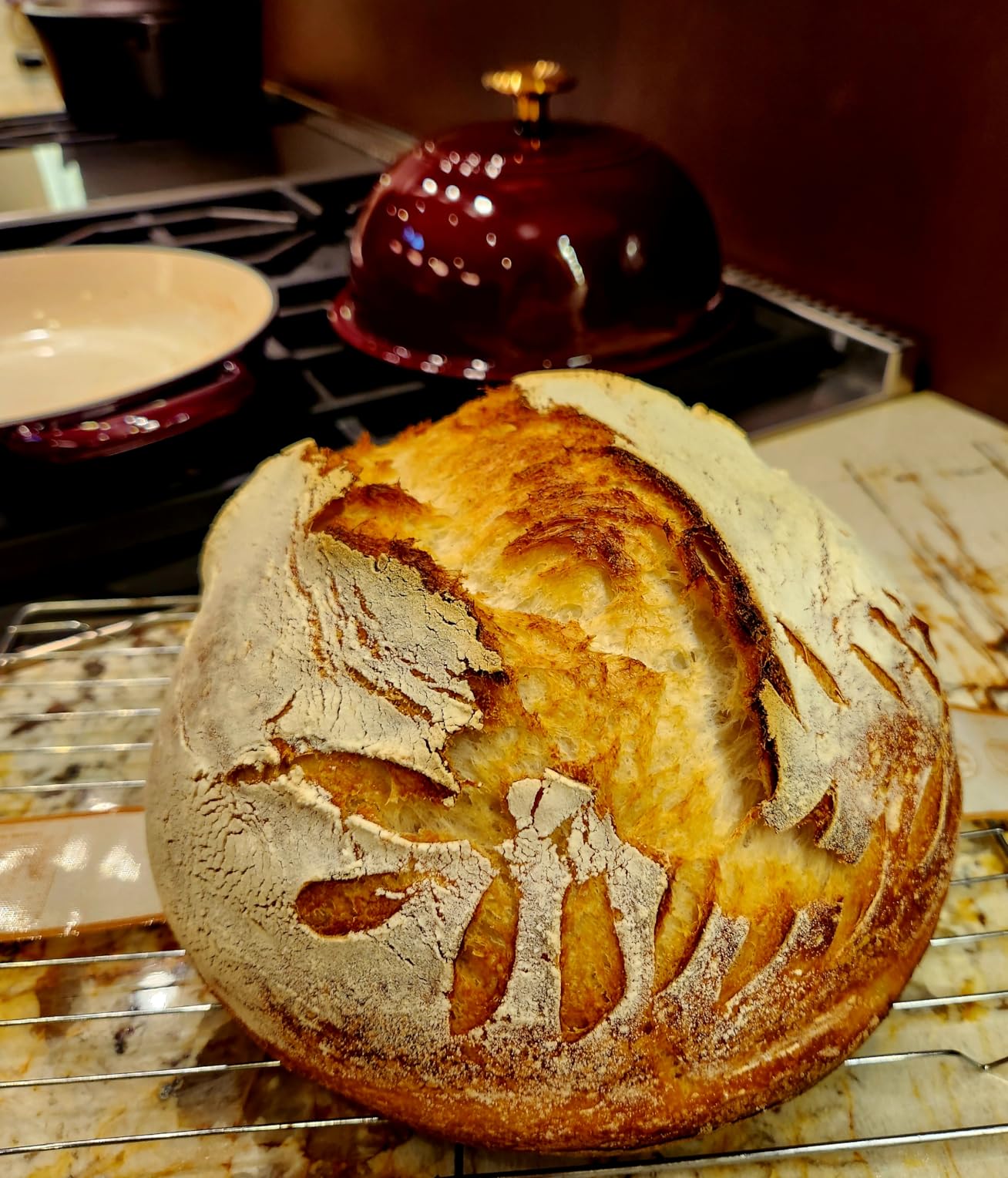
What Kind of Dough Batches It Handles Best
The 7.3 quart capacity is generous. I comfortably kneaded doughs up to about 4 kilograms without the motor sounding stressed. This makes it ideal if you bake multiple loaves at once or run a small home baking business.
For pizza dough, the spiral action develops gluten without overheating the dough the way friction-heavy planetary mixers can. Your dough comes out at the right temperature for proper fermentation.
Who Should Think Twice
The touch controls take some getting used to if you are accustomed to mechanical knobs. I found myself glancing at the display more than I expected during the first week of use.
At this price point, casual bakers who only make bread occasionally may not justify the investment. But if bread, pizza, and bagels are a daily or weekly ritual in your kitchen, the Ooni Halo Pro is one of the best stand mixers for heavy dough you can buy.
2. KitchenAid KSM8990CU 8-Quart Commercial Mixer — NSF-Certified Workhorse
KitchenAid KSM8990CU 8-Quart Commercial Countertop Mixer, 10-Speed, Gear-Driven, Contour Silver
500W DC Motor
8 Quart Bowl
NSF Certified
Bowl-Lift Design
Gear-Driven
Pros
- NSF certified for commercial use
- High-efficiency DC motor with less heat
- Bowl-lift stability for heavy doughs
- Gear-driven transmission for strong torque
- 8-quart capacity for large batches
Cons
- Highest price in the lineup
- Heavy at 25 pounds
- Only 10 speed settings
KitchenAid commercial mixers have a reputation for a reason, and the KSM8990CU lives up to it. This 8-quart bowl-lift model carries NSF certification, which means it meets the same sanitation and durability standards required in professional kitchens.
The 500W DC motor is a different animal than the motors in KitchenAid’s consumer tilt-head line. It runs cooler and maintains consistent torque even under sustained loads. I ran back-to-back batches of stiff whole wheat bread dough without the motor housing even getting warm.
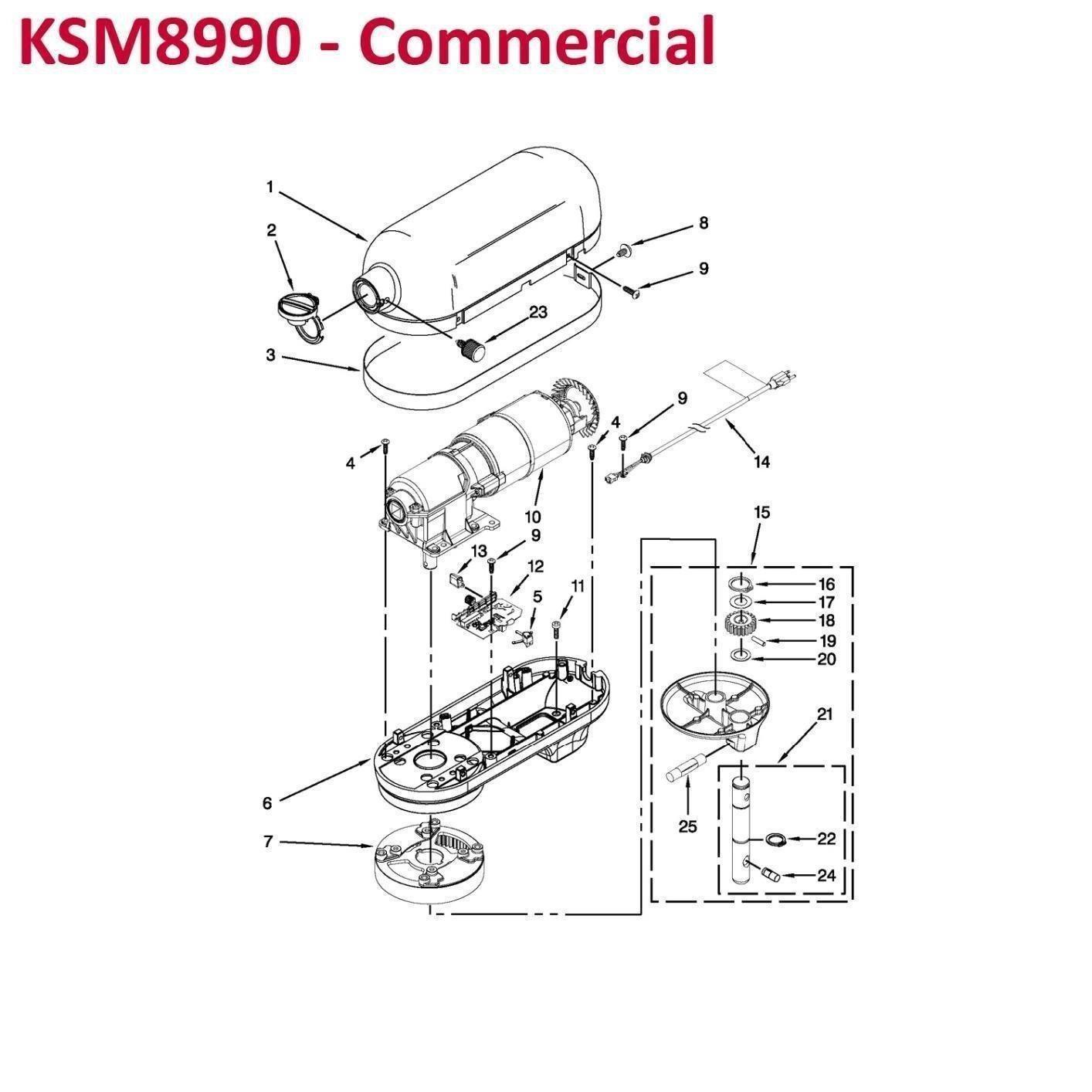
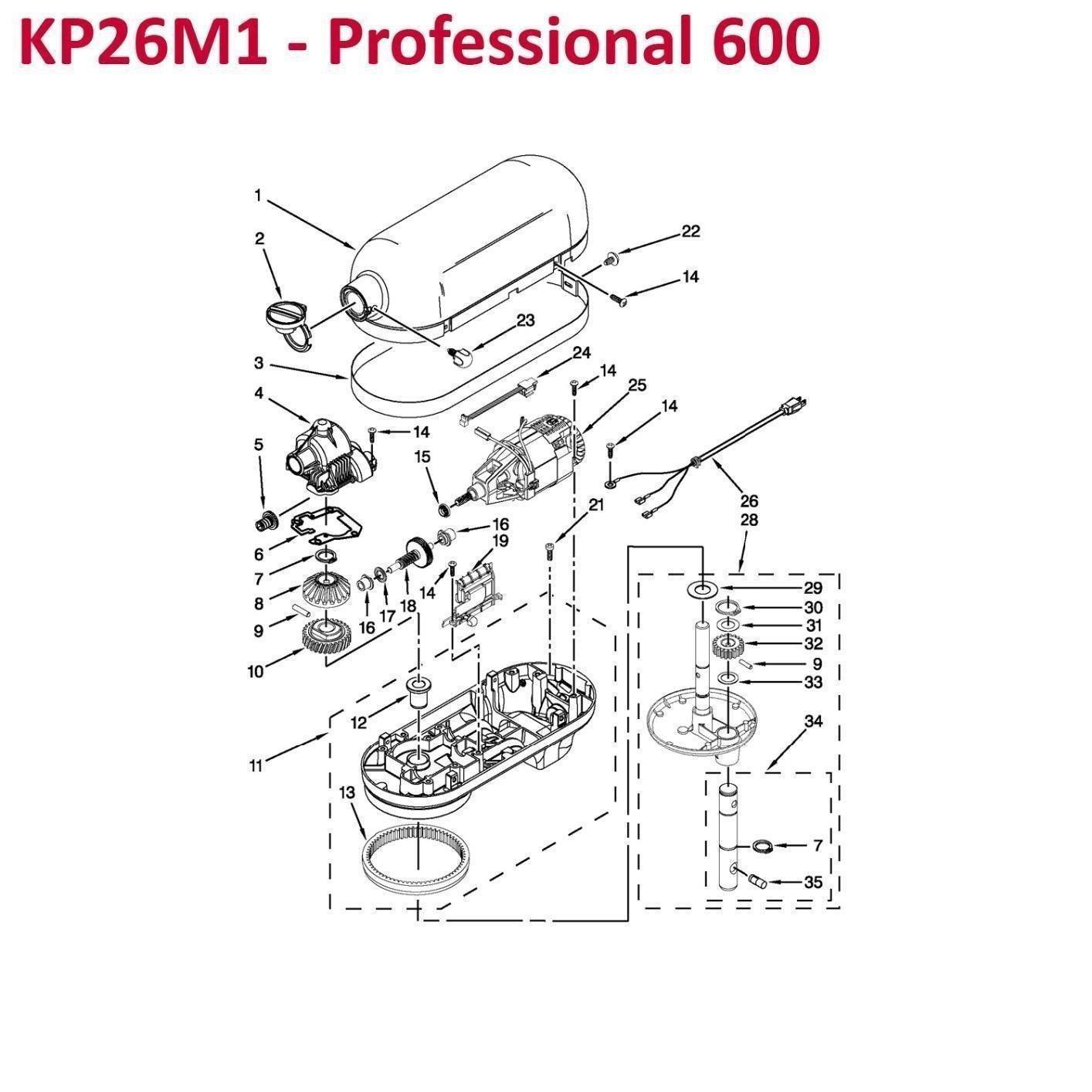
The bowl-lift design is critical for heavy dough work. Instead of the head tilting back, the bowl cranks up into the mixing position. This creates a much more rigid platform that resists the side-to-side wobble you get with tilt-head mixers kneading dense dough.
The gear-driven transmission delivers power directly without the slip you sometimes feel in belt-driven consumer models. When the dough hook grabs a stiff ball of dough, the machine does not hesitate.
How It Handles Sustained Bread Production
I tested the KSM8990CU with a full 8-quart batch of stiff bagel dough, one of the most punishing tests for any home mixer. The machine powered through it steadily, and the included spiral dough hook did an excellent job of pulling the dough cleanly away from the bowl walls.
The speed control protection feature prevents accidental starts, which I appreciated when switching attachments mid-bake.
Where It Falls Short
At roughly 25 pounds, this is not a mixer you move around the kitchen casually. You will want a dedicated spot for it. Also, the 10-speed control is less granular than machines with 50+ settings, though most bakers will never need that many.
3. Bosch Universal Plus Stand Mixer — Belt-Drive Bread Champion
Bosch Universal Plus Stand Mixer 500 Watt, 6.5 Quarts with Wire Whips, Dough Hook & NutriMill Dough Hook Extender Bundle
500W Belt Drive
6.5 Quart Bowl
Bottom Drive
15 lb Dough Capacity
4 Speeds
Pros
- Belt-driven torque for heavy dough
- Kneads up to 15 lbs of bread dough
- Bottom drive for easy ingredient addition
- Lightweight BPA-free bowl with handle
- Dough hook extender included
Cons
- Only 4 speed settings
- Plastic bowl feels less premium
- Not Prime eligible
The Bosch Universal Plus is legendary in bread-baking circles, and after testing one I understand why. Its belt-driven transmission with a bottom-drive design is fundamentally different from the KitchenAid approach, and for heavy dough that difference matters.
The motor sits beneath the bowl and drives the attachments from the bottom. This means the top of the bowl is completely open, so you can add flour or water while the mixer runs without fighting a tilt-head mechanism.

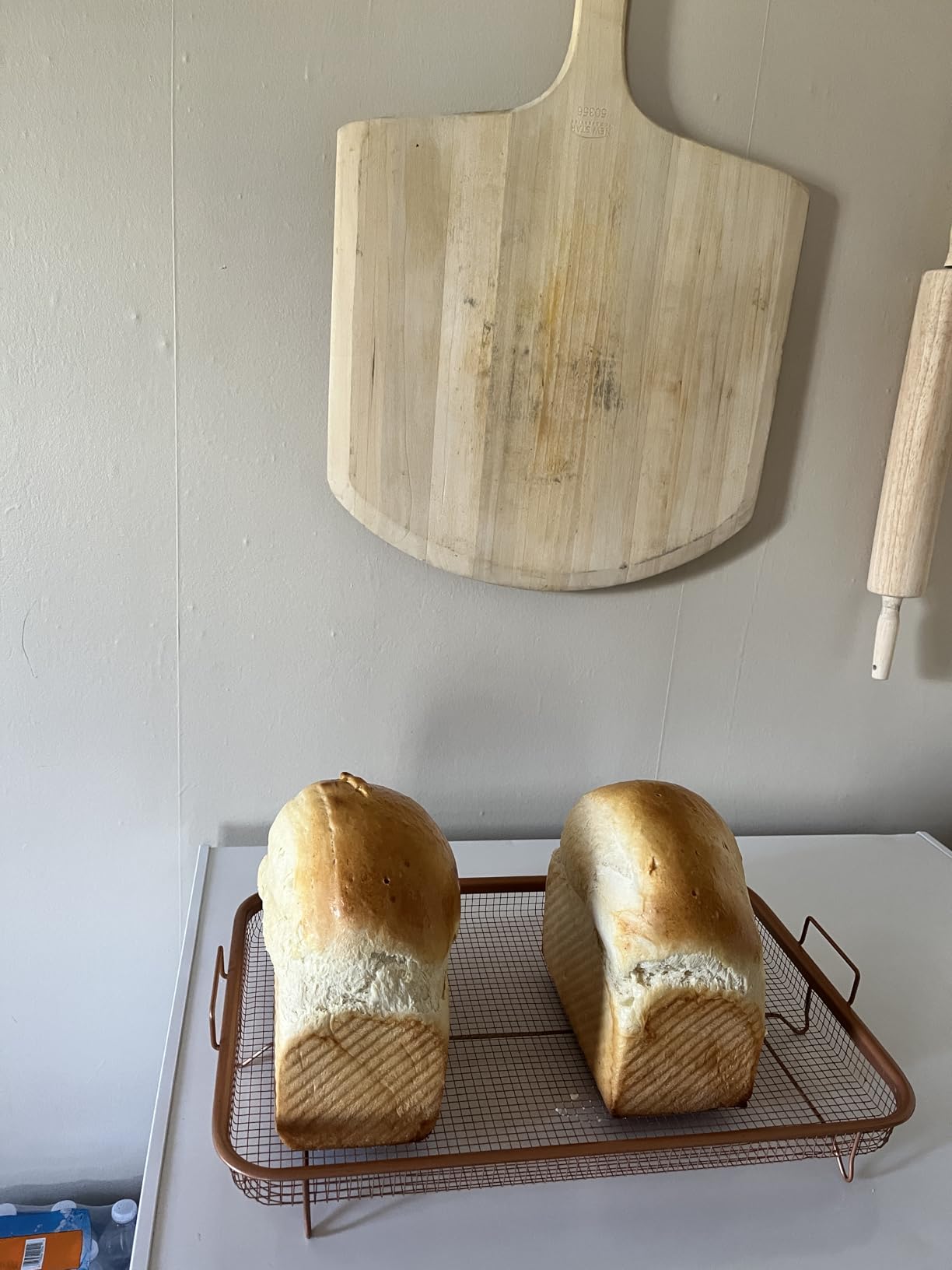
I loaded this mixer with 15 pounds of whole grain bread dough — enough for about 14 loaves. The 500W motor handled it without complaint. That kind of capacity is virtually unheard of in this price range.
The included NutriMill dough hook extender is a thoughtful bundle addition. It gives the hook better clearance from the bowl floor, which improves kneading efficiency for smaller batches.
Why Bread Bakers Love the Bottom-Drive Design
Because the drive shaft enters from the bottom, there is no weight hanging over the bowl the way top-drive mixers have. The center of gravity stays low, which means the Bosch barely moves even when kneading a full load of stiff dough.
The open-bowl design also means you can see exactly what your dough is doing at all times. No stopping the mixer to check gluten development.
Trade-offs to Consider
The plastic bowl is functional but does feel less premium than a stainless steel alternative. The 4-speed transmission is also limited compared to 10- or 12-speed machines, though for bread kneading you really only need two or three speeds anyway.
4. Aucma 6.5-QT Stand Mixer — Budget Powerhouse
Aucma Stand Mixer,6.5-QT 660W 6-Speed Tilt-Head Food Mixer, Kitchen Electric Mixer with Dough Hook, Wire Whip & Beater (Silver, 6.5QT)
660W Motor
6.5 Quart Bowl
6 Speeds
Tilt-Head
76 dB
Pros
- Most powerful motor at 660W
- Excellent value with 15k+ reviews
- Tilt-head for easy access
- Stainless steel bowl with dual handles
- Pulse function included
Cons
- ABS plastic housing
- Not dishwasher safe accessories
- Consumer-grade build quality
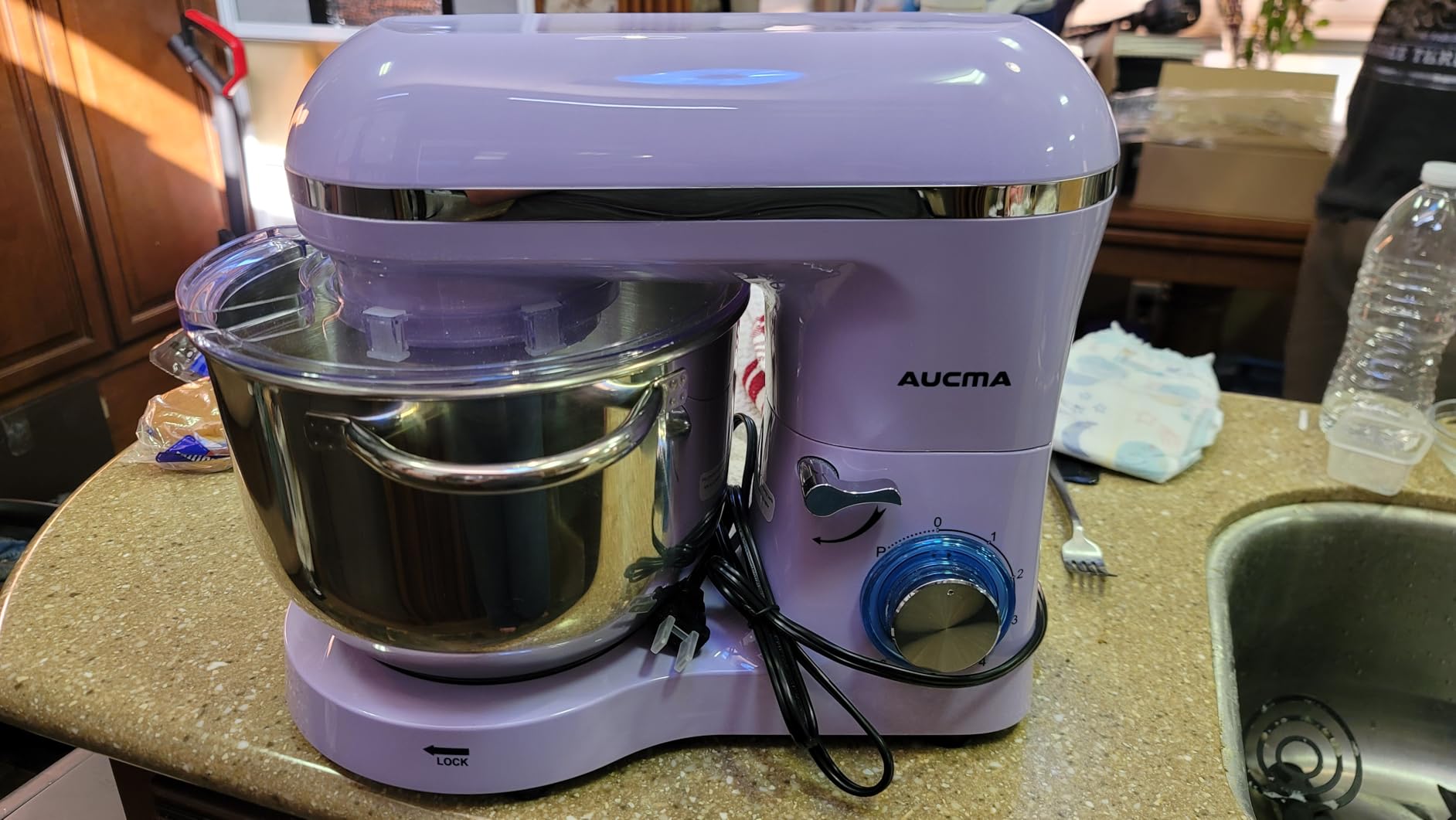
The Aucma stand mixer surprises everyone who tries it for the first time. With a 660W pure copper motor, it actually has the highest rated wattage in this entire lineup. Over 15,000 Amazon reviewers have weighed in, and the consensus is clear: this is a serious performer at a budget price.
I was skeptical at first, given the ABS plastic housing. But after running several batches of sandwich bread dough and a stiff pizza dough, the motor never faltered. The 6 optimized speed settings with pulse function give you enough control for most bread recipes.
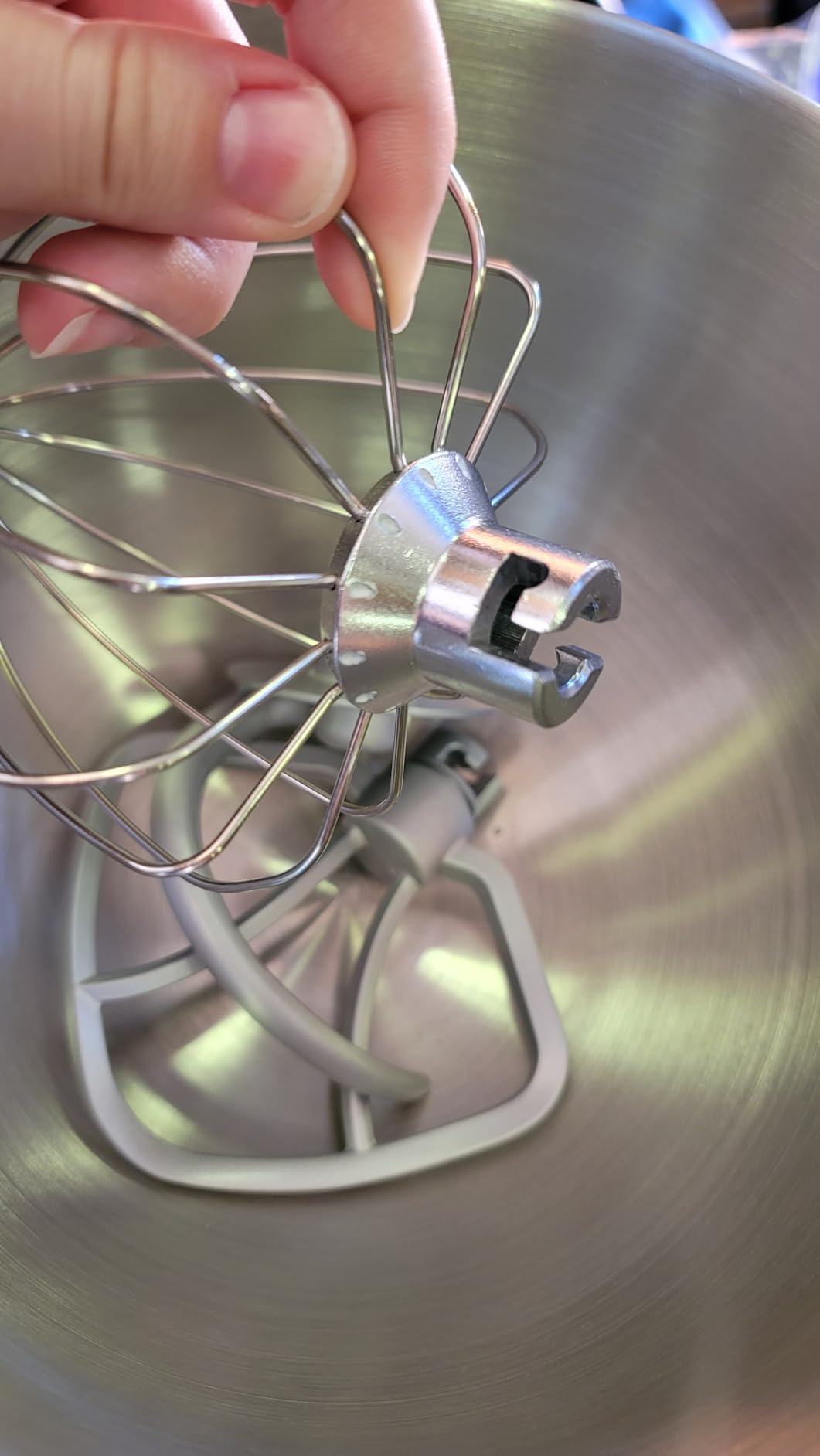
The tilt-head design makes attachment swaps and bowl access easy. The 6.5-quart stainless steel bowl with dual handles is generous for the price point, comfortably handling dough for two large loaves.
At 76 decibels, it is louder than premium models, but not unreasonably so. You will hear it working, but it will not drown out your kitchen radio.
Realistic Expectations for Heavy Dough
The Aucma can absolutely handle moderate bread dough batches. I would keep individual batches to about 2 kilograms of dough or less to avoid straining the consumer-grade transmission over time.
For occasional bread bakers who want power without spending $500+, this is hard to beat. It is one of the best stand mixers for heavy dough on a tight budget.
Long-Term Durability Considerations
The ABS plastic housing will not last as long as die-cast metal construction. If you bake bread every single day, you may eventually outgrow this machine. But for weekly bakers, the value proposition is excellent.
5. Cuisinart SM-50 Stand Mixer — Precision Metal Build
Cuisinart Stand Mixer, 12 Speeds, 5.5-Quart Mixing Bowl, Chef’s Whisk, Flat Mixing Paddle, Dough Hook, and Splash Guard with Pour Spout, Silver Lining, SM-50BCNAS, Silver Lining
500W Motor
5.5 Quart Bowl
12 Speeds
Die-Cast Metal
3-Year Warranty
Pros
- Die-cast metal construction
- 12 speeds for precision control
- Polished stainless steel bowl
- Limited 3-year warranty
- Optional attachment hub
Cons
- Smallest capacity at 5.5 quarts
- Moderate 500W motor power
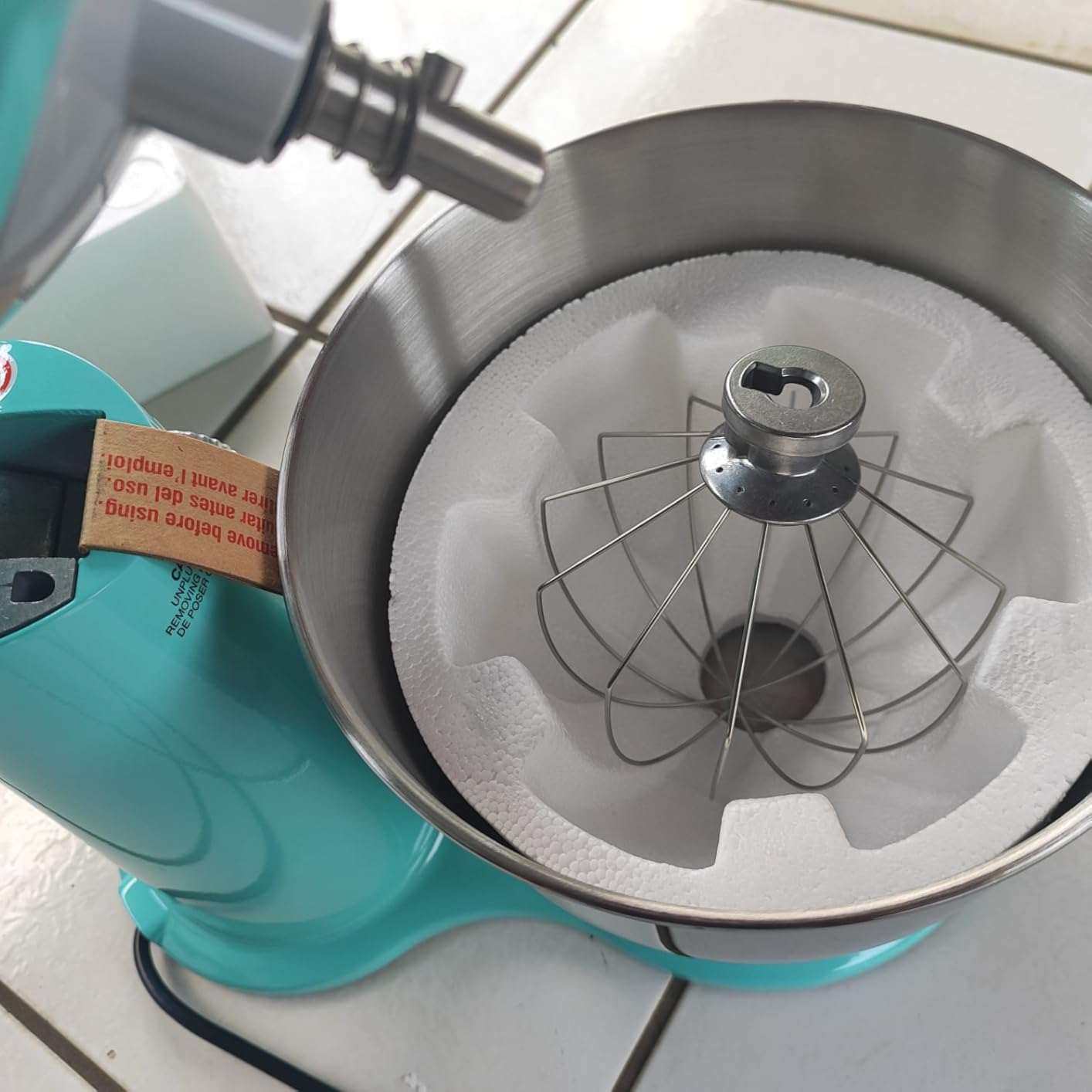
Cuisinart packed serious quality into the SM-50. The die-cast metal construction feels substantial the moment you pick it up, and at nearly 10,000 reviews with a 4.7-star average, the user satisfaction speaks for itself.
The 12-speed control is one of the most granular in this price range. For heavy dough, that means you can start at a very low speed to bring the dough together without throwing flour everywhere, then gradually increase for kneading.
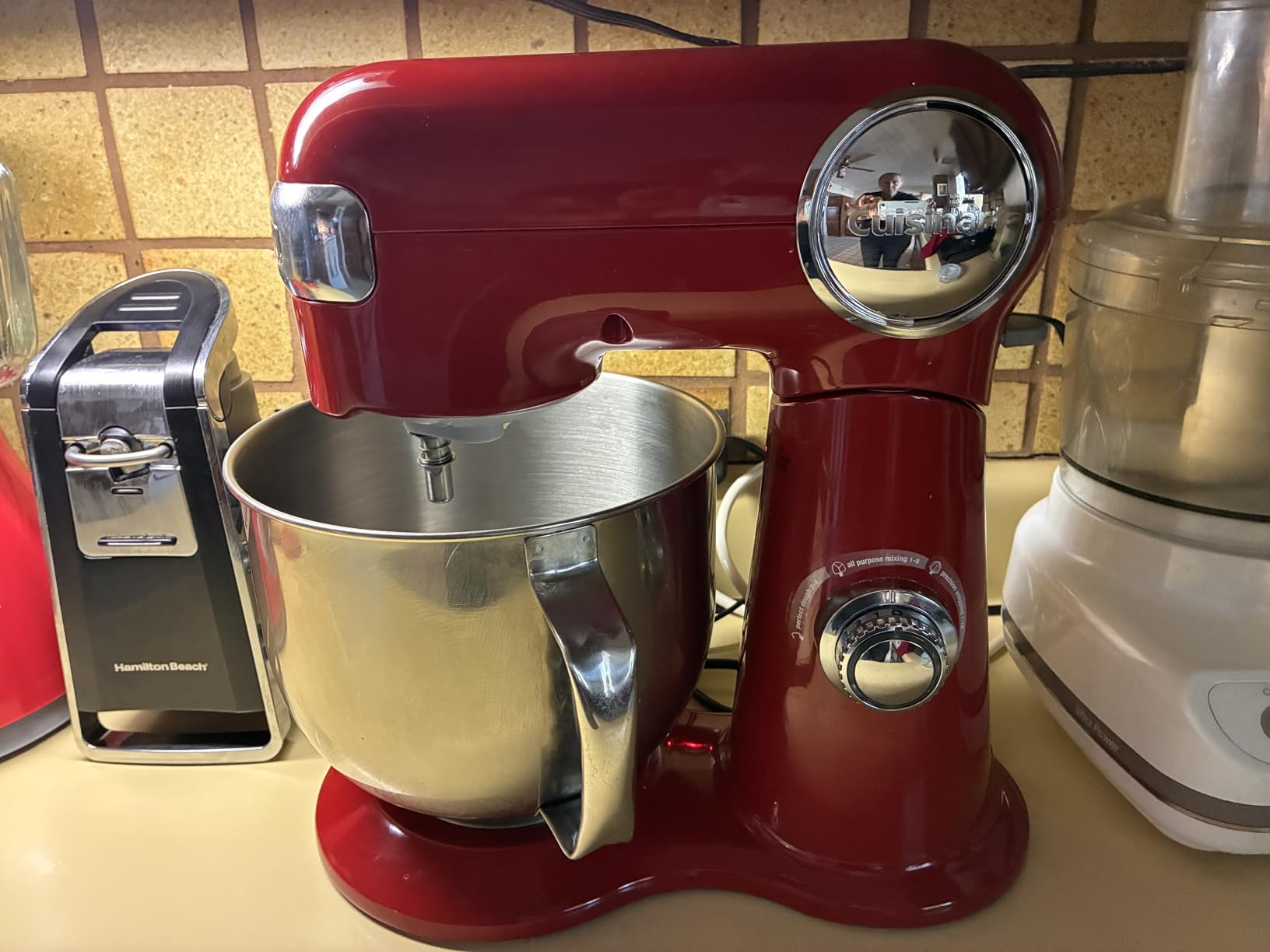
The 500W motor is moderate by this list’s standards, but the gear-driven transmission makes efficient use of that power. I kneaded a batch of brioche — an enriched dough that is notoriously sticky and heavy — and the Cuisinart handled it smoothly.
The tilt-back head design provides full access to the bowl, and the included splash guard with pour spout keeps your counter clean even when adding flour mid-mix.
How the 5.5-Quart Bowl Affects Batch Size
The 5.5-quart capacity is the smallest on this list. That translates to roughly one large loaf of bread per batch. If you typically bake one loaf at a time, that is perfectly fine.
For larger families or anyone who bakes in bulk, the smaller bowl will be a limiting factor. You will need to do multiple batches, which means more time and more wear on the motor.
Attachment Ecosystem and Versatility
Cuisinart offers optional attachments for pasta extruding, pasta rolling, ice cream making, meat grinding, and spiralizing. The 3-year limited warranty is also better than the 1-year coverage many competitors offer at this price.
6. ZACME 8.4QT Commercial Stand Mixer — 800W Powerhouse
ZACME 8.4QT Commercial Stand Mixer 800W with Aluminum Die Casting Meets the Standard of NSF/ANSI 8-2023, Mixers Kitchen Electric Stand Mixer with Stainless Steel 8L Bowl, Dough Hook, Whisk and Beater
800W Motor
8.4 Quart Bowl
NSF Certified
11 Speeds
LCD Display
Pros
- Powerful 800W motor for heavy dough
- Large 8.4qt capacity for bulk baking
- Quiet operation at 48-68 dBA
- NSF commercial certification
- Digital display with timer function
Cons
- Heavy at 33 pounds
- Premium price point
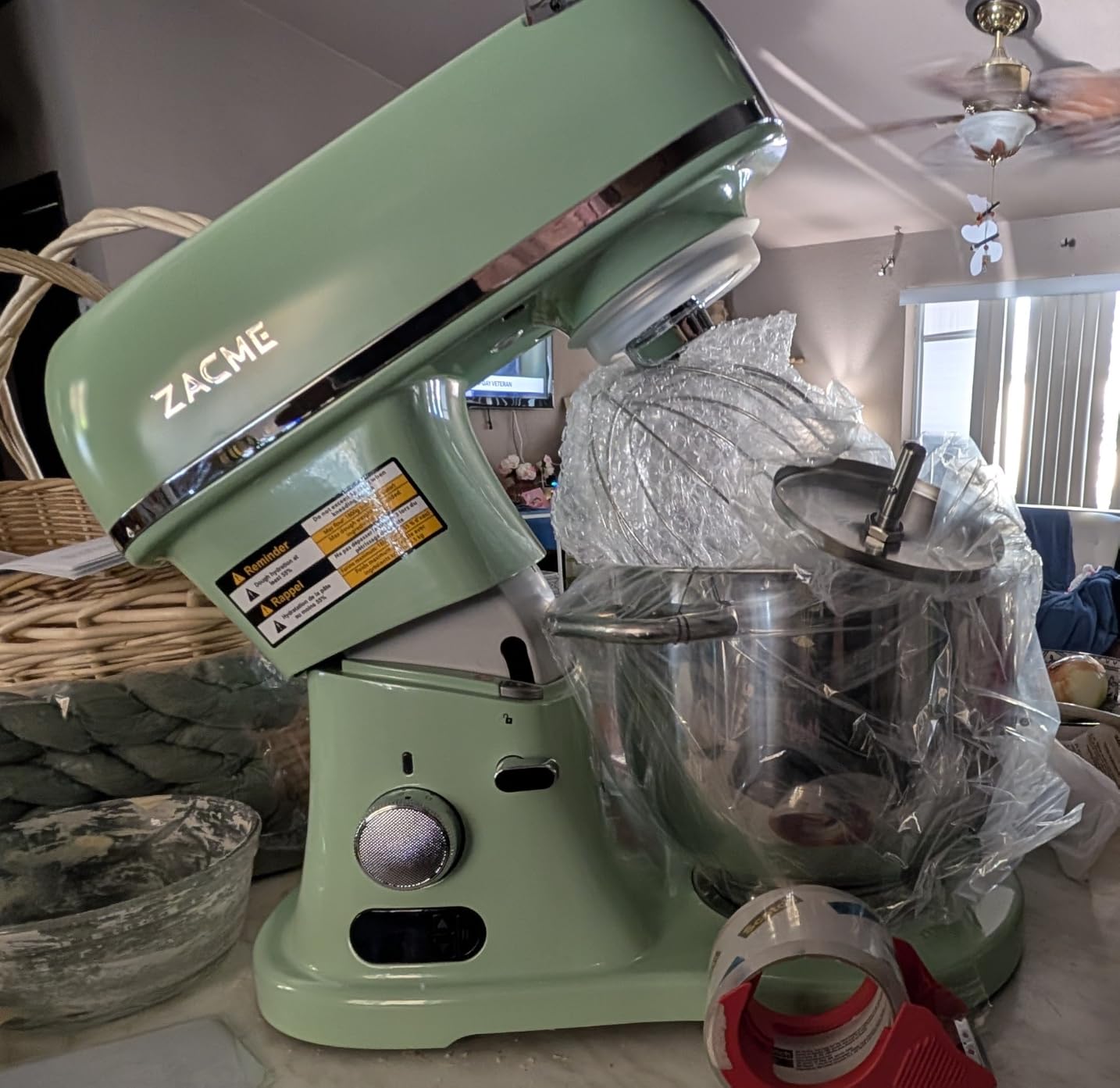
The ZACME 8.4QT Commercial Mixer is the most powerful machine in this roundup. With an 800W DC motor and NSF/ANSI 8-2023 commercial certification, it is built for serious bread production.
When I first fired this mixer up, the quietness caught me off guard. At 48 decibels on the lowest speed, it is quieter than my refrigerator. Even at top speed, it only reaches 68 dBA, which is remarkably calm for a machine this powerful.
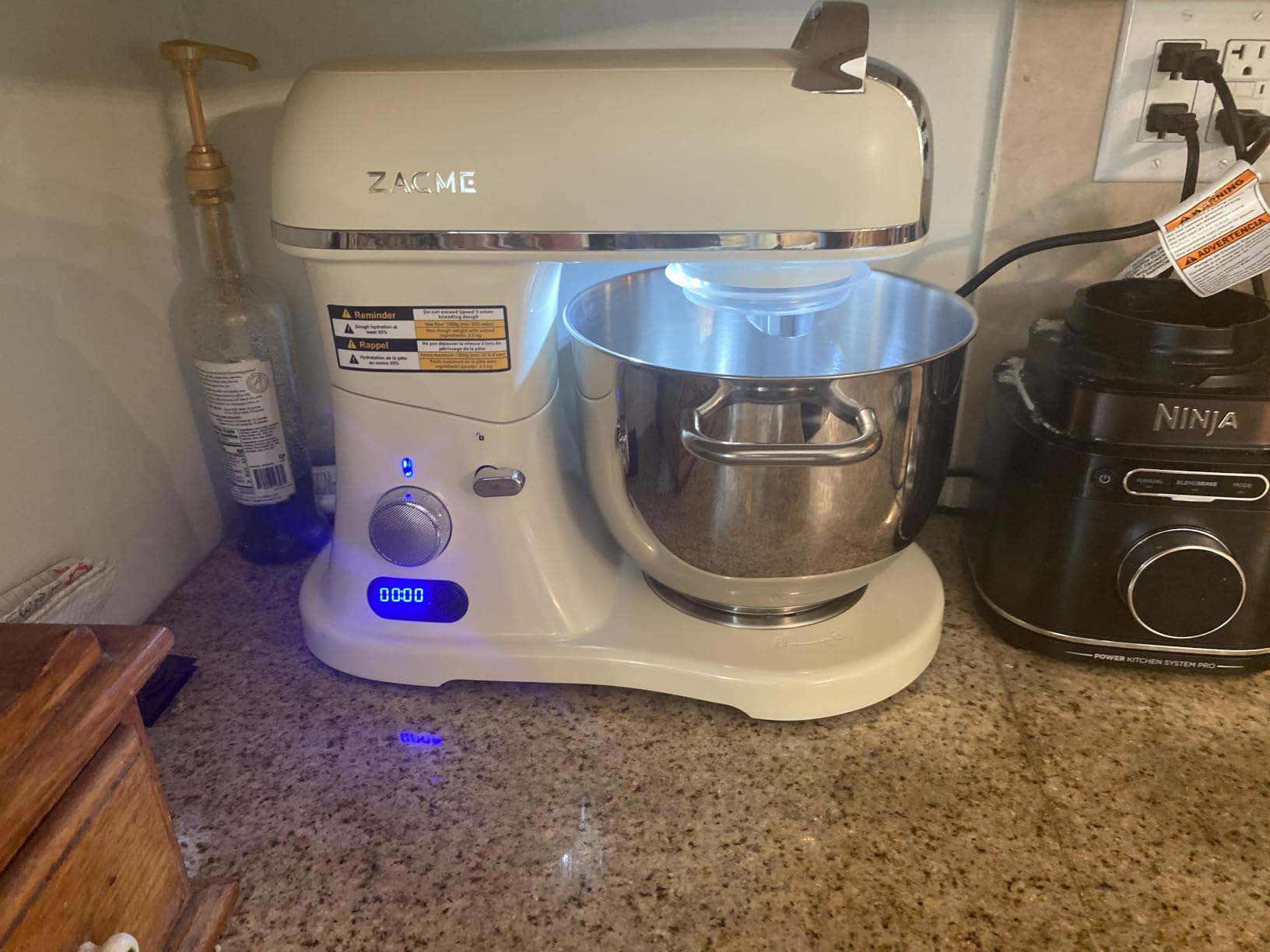
I tested the ZACME with its maximum rated dough capacity of 3 kilograms. The 800W motor barely noticed the load. The planetary mixing action combined with the timer function meant I could set it to knead for 8 minutes and walk away to prep my proofing baskets.
The tilt-head design with anti-skid feet keeps the 33-pound machine firmly planted. Despite its weight, it did not budge during any of my kneading tests.
What the NSF Certification Means for You
NSF certification is not just a marketing badge. It means the materials, design, and construction meet standards for commercial food service. The aluminum die-casting and stainless steel components are corrosion-resistant and built to withstand daily heavy use.
For home bakers, this translates to a machine that will outlast consumer-grade alternatives by years.
Is the Overload Protection Worth It
The built-in overload protection shuts the motor down before it can damage itself. If you accidentally overload the bowl with too much dough, the machine protects its own investment. Given the price, that peace of mind is worth having.
7. Hamilton Beach Professional 5 Qt — All-Metal Value
Hamilton Beach Professional All-Metal 5 Qt Stand Mixer With 12 Speeds
450W Motor
5 Quart Bowl
12 Speeds
All-Metal Construction
Attachment Hub
Pros
- 450W motor holds speed under load
- All-metal construction for durability
- 12 speed settings
- Attachment hub for expandability
- Lightweight at 15.9 lbs
Cons
- Lower wattage than commercial models
- Smaller 5qt capacity
- Fewer included accessories
The Hamilton Beach Professional is the all-metal workhorse of the mid-range category. At 15.9 pounds, it is one of the lighter mixers here, but the all-metal drive system means it still holds its own with heavy dough.
The 450W motor is on the lower end for wattage, but Hamilton Beach designed it to maintain constant speed under load. I noticed the motor adjusting itself during stiff dough kneading rather than bogging down.
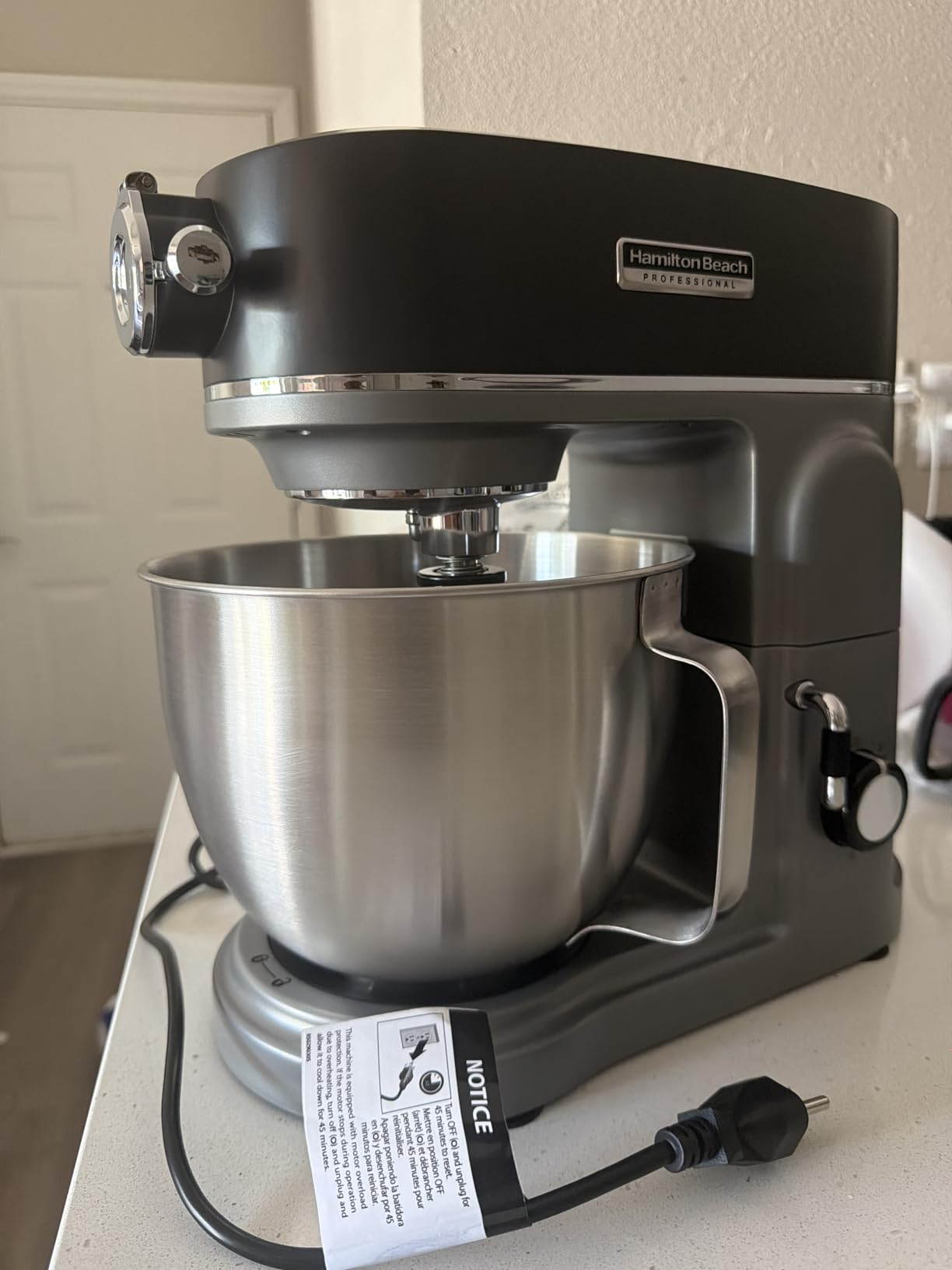
The 12 speed settings give you plenty of control for everything from gentle folding to aggressive kneading. The planetary mixing action ensures the beater reaches every part of the bowl.
The attachment hub is a nice touch at this price point. It opens up options for pasta making, meat grinding, and more, giving you room to grow your baking setup over time.
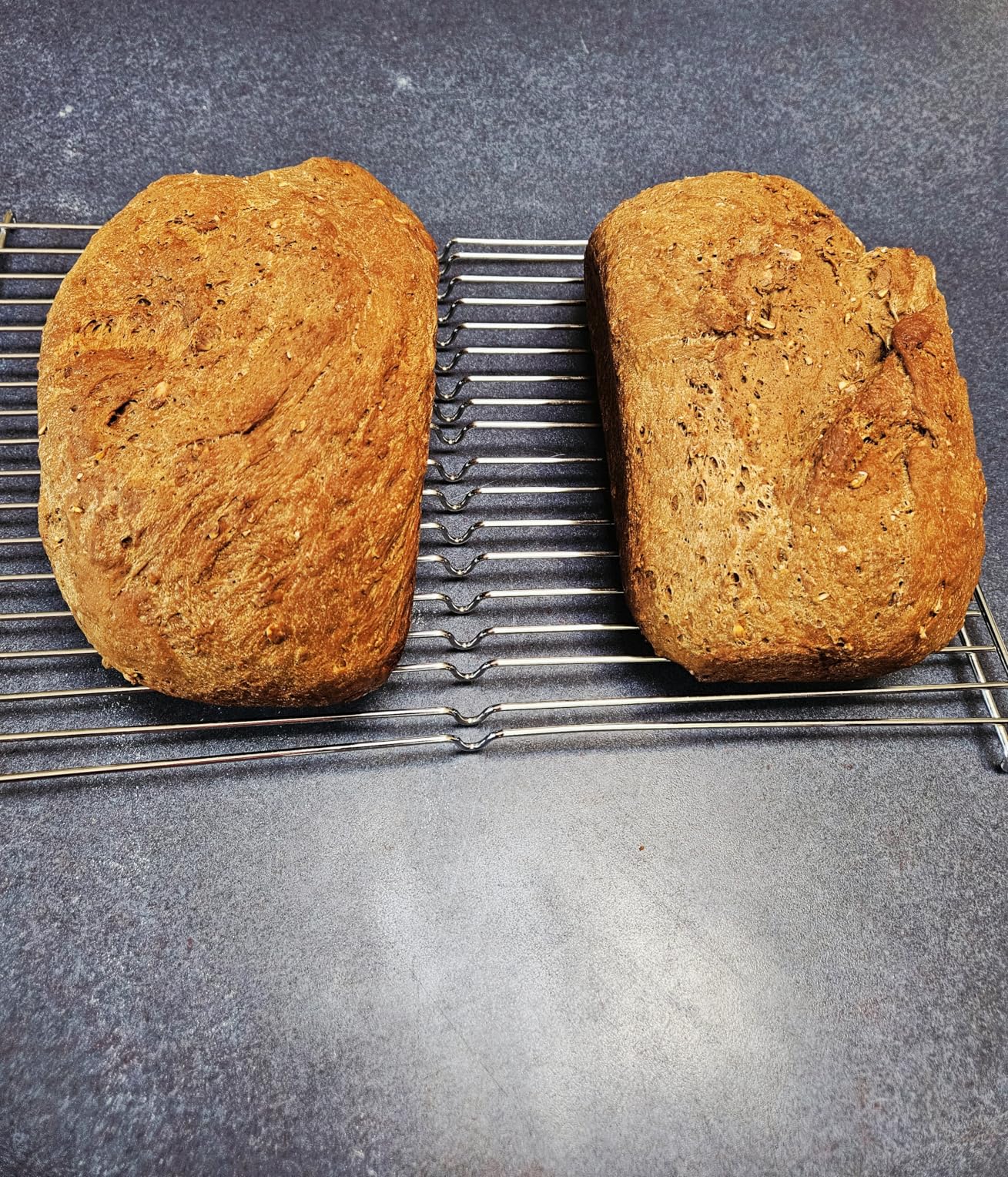
Heavy Dough Performance Limits
The 5-quart bowl limits batch size to roughly one loaf of bread at a time. With the 450W motor, I would keep stiff dough batches on the smaller side to avoid putting sustained stress on the transmission.
For enriched doughs like brioche and challah, which are heavy but softer than lean bread dough, the Hamilton Beach handles things comfortably.
Who This Mixer Fits Best
This is an excellent choice for intermediate bakers who want all-metal durability without spending commercial money. If you bake bread a few times a month and want a machine that will last, the Hamilton Beach Professional delivers.
8. Hauswirt 6QT LED Touch Screen Mixer — Modern Tech Meets Heavy Dough
Hauswirt Stand Mixer 6QT XL Large, 4.5″ LED Touch Screen Electric Household Stand Up Mixer, Full Metal Structure Standing Mixer 11-Speed, Dough Cake Bread Mixer – Silver
500W DC Motor
6 Quart Bowl
11 Speeds
LED Touch Screen
45 dB Noise
Pros
- 500W DC motor with sustained power
- Full metal structure for durability
- 4.5 inch LED touch screen
- Ultra-quiet at 45 dB
- Heat dissipation prevents overheating
Cons
- Not dishwasher safe accessories
- Lower max dough capacity of 3.3 lbs
- Higher price point
The Hauswirt M5 Max stands out immediately with its 4.5-inch LED touch screen. This is not a gimmick — the digital interface lets you select from 11 speeds with precision and monitor the timer function at a glance.
The 500W DC motor is paired with a full metal transmission structure that Hauswirt designed specifically to prevent overheating. Heat dissipation holes on the housing keep the motor running cool even during extended kneading sessions.
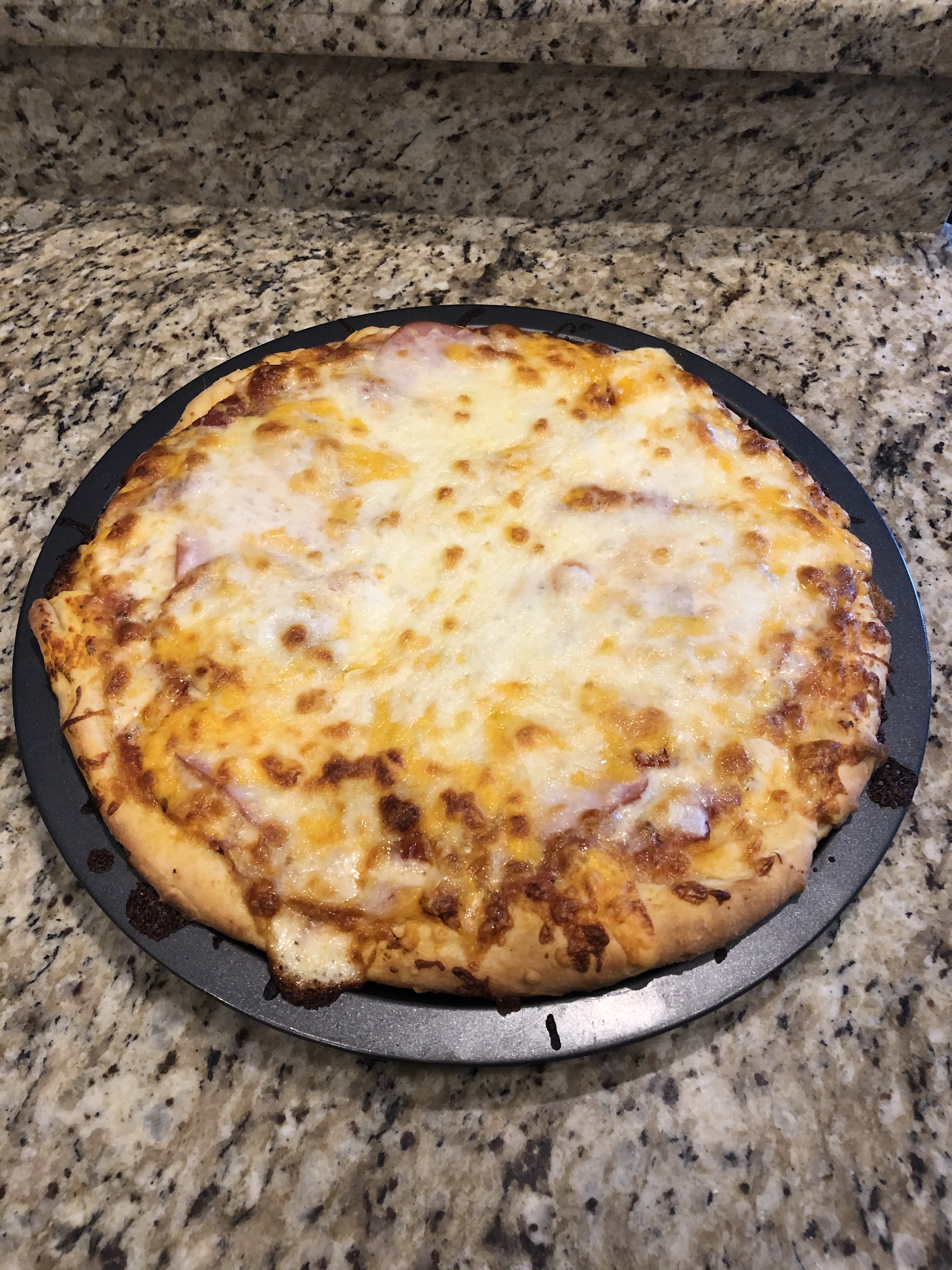
At 45 decibels, the Hauswirt is one of the quietest mixers I have tested. You can carry on a conversation in the kitchen while it kneads a stiff batch of bread dough. That is remarkable for a machine with this much power.
The thickened spiral dough hook deserves special mention. Hauswirt redesigned it for better dough elasticity, and I noticed the difference — my bread had excellent oven spring after kneading with this hook.

Stability Under Load
The anti-skid base keeps the 20-pound machine firmly planted. Even at high speeds with a heavy dough load, the Hauswirt barely vibrates. That stability translates directly to better kneading results.
The 6-quart bowl is good for two medium loaves of bread, which covers most home baking needs.
Trade-offs to Know About
The maximum dough capacity of 3.3 pounds is lower than several competitors on this list. If you regularly bake very large batches, you may find yourself dividing dough into multiple mixes. Also, the accessories are not dishwasher safe, so cleanup requires hand washing.
9. NutriMill Artiste Stand Mixer — Bottom-Drive Bread Specialist
NutriMill Artiste Kitchen Electric Stand Mixer 500 Watt 6.5 Quart Bowl with Dough Hook & Wire Whips (Black Trim)
500W Bottom-Drive
6.5 Quart Bowl
6 Speeds
Suction Cup Feet
8 lb Dough
Pros
- 500W bottom-drive motor outperforms tilt-head
- Handles 8 lb dough batches
- Suction cup feet prevent walking
- Stainless steel drive system
- Extended dough hook included
Cons
- Not Prime eligible
- Louder at 70 dB
- Only 6 speed settings
- Plastic bowl
The NutriMill Artiste uses the same bottom-drive philosophy as the Bosch Universal Plus but at a more accessible price. The 500W motor sits beneath the bowl, delivering power directly to the attachments without the leverage issues that plague top-heavy tilt-head designs.
I was impressed by the suction cup feet, which are not a feature I expected to matter as much as they did. Even during aggressive kneading of a stiff whole wheat dough, the Artiste stayed exactly where I placed it.
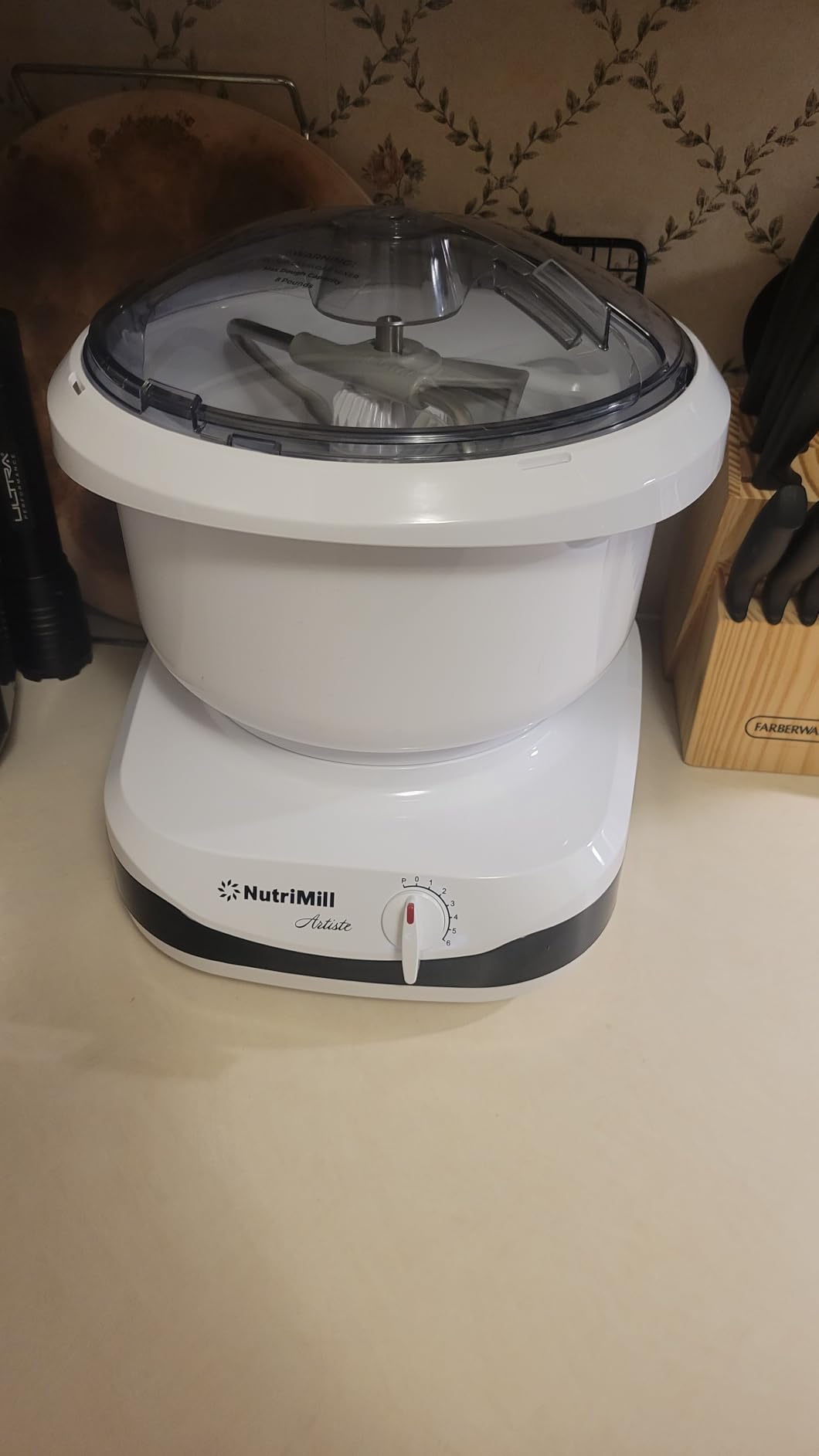
The 6.5-quart bowl handles up to 8 pounds of dough, which is substantial for this price point. The extended dough hook reaches deeper into the bowl, ensuring thorough kneading even for smaller batches.
The included easy-grip bowl with lid is practical. You can mix your dough, cover the bowl, and let it proof right in the same container.
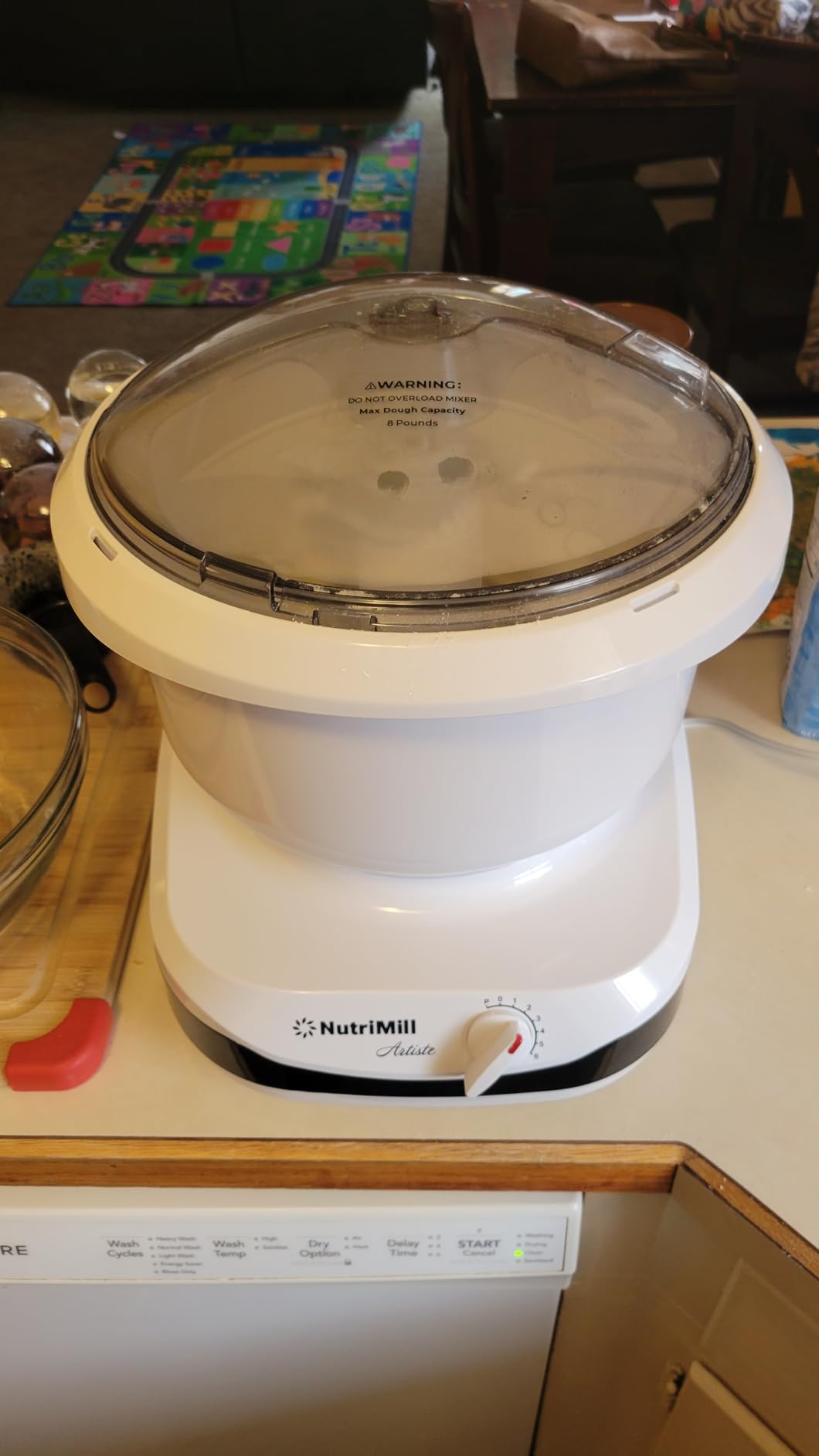
How Bottom Drive Compares to Tilt-Head
Bottom-drive mixers inherently have better stability for heavy dough because the motor weight sits below the bowl, lowering the center of gravity. The NutriMill Artiste benefits from this design choice, staying steadier than similarly priced tilt-head competitors.
The trade-off is that you cannot tilt the head back for easy attachment changes. You lift attachments straight out of the bowl, which takes a bit more wrist motion.
Understanding the Lower Rating
At 4.3 stars, the Artiste has the lowest rating in this roundup. The 70 dB noise level is the main complaint, along with the plastic bowl. But for the price and the bottom-drive design, it remains a solid value for serious bread bakers on a budget.
10. KitchenAid 5.5 Quart Bowl-Lift Stand Mixer — 2x Bowl Power
KitchenAid 5.5-Qt Bowl-Lift Stand Mixer, KSM55SXXX, Porcelain White
500W Motor
5.5 Quart Bowl
11 Speeds
3-Point Bowl Lock
Bowl-Lift Design
Pros
- 2x bowl power vs KitchenAid tilt-head
- 3-point locking bowl for stability
- 11 speeds with 1/2 speed for folding
- Zinc die-cast construction
- Handles 7+ lbs bread dough
Cons
- Premium price point
- Limited review data at 53 reviews
- 1-year warranty needs paid replacement plan
- Heavier bowl-lift design
This KitchenAid 5.5-quart bowl-lift model delivers twice the bowl power of the brand’s popular tilt-head mixers. That is a critical distinction for anyone shopping the best stand mixers for heavy dough. The bowl-lift mechanism creates a more rigid frame that resists the side loads generated by stiff bread dough.
The 3-point locking bowl is a standout feature. The bowl clicks into place at three contact points, eliminating the wobble that can plague single-point bowl-lift designs. During my kneading tests, the bowl did not shift at all.
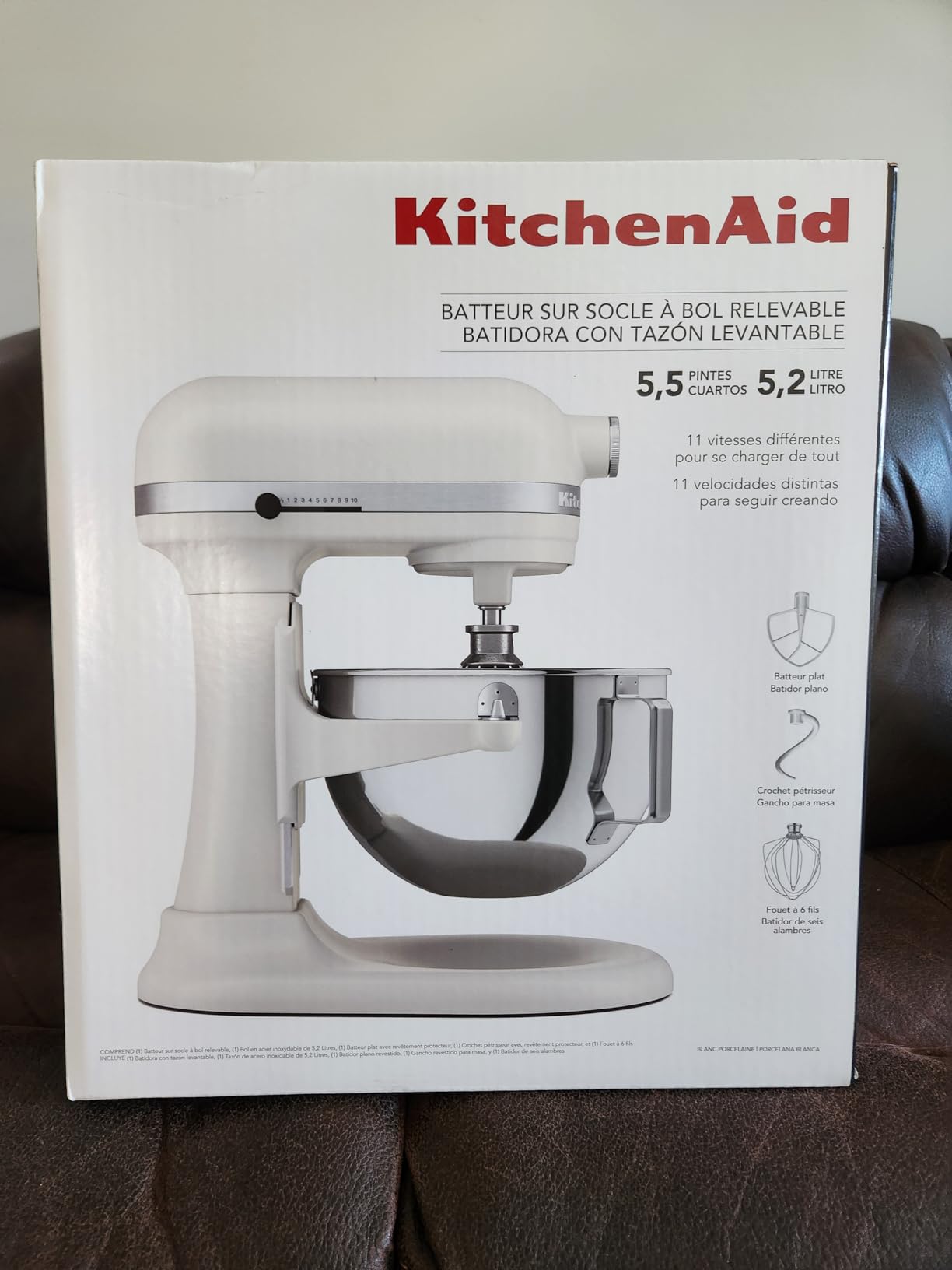
The 11 speed settings include a dedicated 1/2 speed for gentle folding. This is perfect for incorporating delicate ingredients into enriched doughs without deflating them.
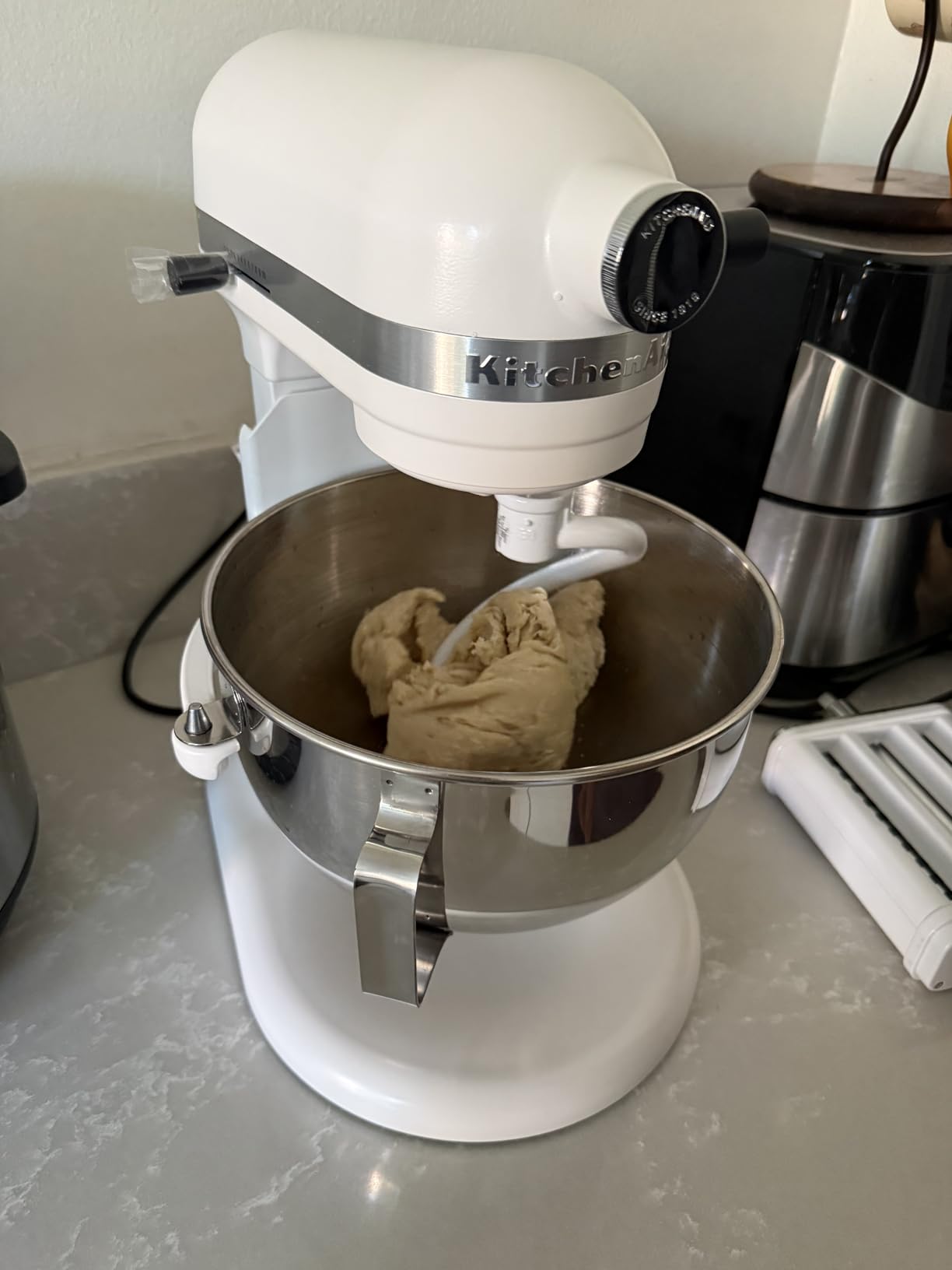
I tested it with a 7-pound batch of bread dough, and the 500W motor handled the load confidently. The zinc die-cast construction feels every bit as solid as you would expect from a KitchenAid at this tier.
Bowl-Lift vs Tilt-Head for Heavy Dough
If you are choosing between KitchenAid designs for bread, the bowl-lift is the clear winner. The mechanism locks the bowl rigidly in place, so the dough hook can apply maximum force without the whole assembly flexing.
Tilt-head mixers are more convenient for light baking tasks, but they simply cannot match the structural rigidity of a bowl-lift design when the dough gets heavy.
What to Know Before Buying
With only 53 reviews at the time of writing, this is a newer model with limited long-term data. The 1-year warranty also requires a $19.95 replacement plan for full coverage. Consider extending that coverage if you plan to use the mixer for daily bread production.
How to Choose the Best Stand Mixer for Heavy Dough
Choosing among the best stand mixers for heavy dough comes down to understanding a few technical factors that separate bread-capable machines from ones that will burn out. Here is what our team focuses on when evaluating mixers for stiff dough work.
Motor Wattage and Torque
Wattage is a starting point, not the whole story. Anything below 450W will struggle with frequent heavy dough use. The 500W to 800W range is the sweet spot for serious bread bakers.
Torque matters more than raw wattage. A gear-driven transmission at 500W can outperform a poorly designed 600W motor. Look for machines that specify DC motors or gear-driven transmissions for sustained torque under load.
Belt Drive vs Direct Drive
Belt-driven mixers like the Bosch Universal Plus use a belt to transfer motor power to the attachment shaft. This design absorbs shock loads well and tends to be very durable for bread work. The belt acts as a mechanical fuse, slipping before the gears strip.
Direct-drive or gear-driven machines like the KitchenAid commercial line transfer power more directly. This gives you instant torque response but means the gears take the full force of heavy loads. Quality gear materials are essential.
Bowl-Lift vs Tilt-Head
For heavy dough, bowl-lift designs are structurally superior. The bowl cranks up into a fixed mixing head, creating a rigid frame that resists flexing. Tilt-head mixers are more convenient for everyday use but inherently less rigid when kneading dense dough.
Bottom-drive designs like the Bosch and NutriMill offer a third option. By placing the motor below the bowl, they achieve excellent stability without needing a bowl-lift mechanism.
Bowl Capacity and Batch Size
Match your bowl size to your baking volume. A 5-quart bowl handles one loaf of bread per batch. A 6.5-quart bowl comfortably handles two loaves. An 8-quart or larger bowl lets you bake four or more loaves at once.
Overloading a bowl is the fastest way to burn out a motor. Always check the manufacturer’s stated maximum dough capacity and stay within it.
Stability Features
Counter-walking is one of the most common complaints on baking forums. Look for mixers with suction cup feet, heavy bases, or low centers of gravity. A 33-pound mixer like the ZACME simply does not move, while a lightweight tilt-head model can vibrate its way off the counter.
If you are setting up a serious baking station, a sturdy bakers rack for your kitchen gives you a dedicated surface that can handle the vibration and weight of a heavy-duty mixer.
Frequently Asked Questions
What stand mixer is best for bread?
The Bosch Universal Plus and ZACME 8.4QT Commercial Mixer are our top picks for bread. The Bosch handles up to 15 pounds of dough per batch with its belt-driven 500W motor, while the ZACME delivers 800W of commercial-grade power with NSF certification. For premium buyers, the Ooni Halo Pro offers professional spiral mixing technology that develops gluten better than any planetary mixer.
What is the most reliable and high quality stand mixer for heavy dough?
The KitchenAid KSM8990CU 8-Quart Commercial Mixer is the most reliable choice for heavy dough, thanks to its NSF certification, high-efficiency DC motor, and gear-driven transmission. The ZACME 8.4QT is equally reliable with its commercial build and overload protection. Both machines are designed for sustained daily use with stiff bread and pizza doughs.
Which mixers can do heavy dough kneading without overheating?
Mixers with 500W or higher motors and proper drive systems handle heavy dough without overheating. The Bosch Universal Plus (500W belt drive), ZACME (800W), Aucma (660W), and KitchenAid Commercial (500W DC motor with heat management) all perform well. Avoid consumer tilt-head mixers under 400W for frequent bread work, as they tend to overheat and can suffer gear damage.
How many watts do I need for heavy dough kneading?
A minimum of 450 watts is recommended for regular heavy dough work, with 500W to 800W being the ideal range. Wattage alone is not sufficient — look for DC motors, gear-driven or belt-driven transmissions, and proper heat dissipation features. A well-designed 500W motor with a good transmission will outperform a cheap 660W motor that lacks thermal management.
Belt drive vs tilt-head stand mixer for bread dough — which is better?
Belt-drive bottom-design mixers like the Bosch Universal Plus are generally better for bread dough than tilt-head models. The bottom-drive design lowers the center of gravity for stability, the belt absorbs shock loads to protect gears, and the open bowl top makes ingredient addition easy. Tilt-head mixers are more convenient for general baking but flex under heavy dough loads and can walk on the counter during kneading.
Final Thoughts on the Best Stand Mixers for Heavy Dough
Finding the best stand mixers for heavy dough in 2026 does not have to mean buying the most expensive machine on the shelf. The key is matching motor power, drive type, and bowl capacity to your actual baking habits.
For most serious bread bakers, the ZACME 8.4QT Commercial Mixer offers the best balance of power, capacity, and value with its 800W motor and NSF certification. The Bosch Universal Plus remains the unbeatable choice for maximum dough capacity at 15 pounds per batch. And if you want professional spiral mixing at home, the Ooni Halo Pro is in a class of its own.
Once you have the right mixer, the rest of your baking setup matters too. Pair it with quality tools like piping bags and tips for decorating to round out your kitchen for any baking project.