
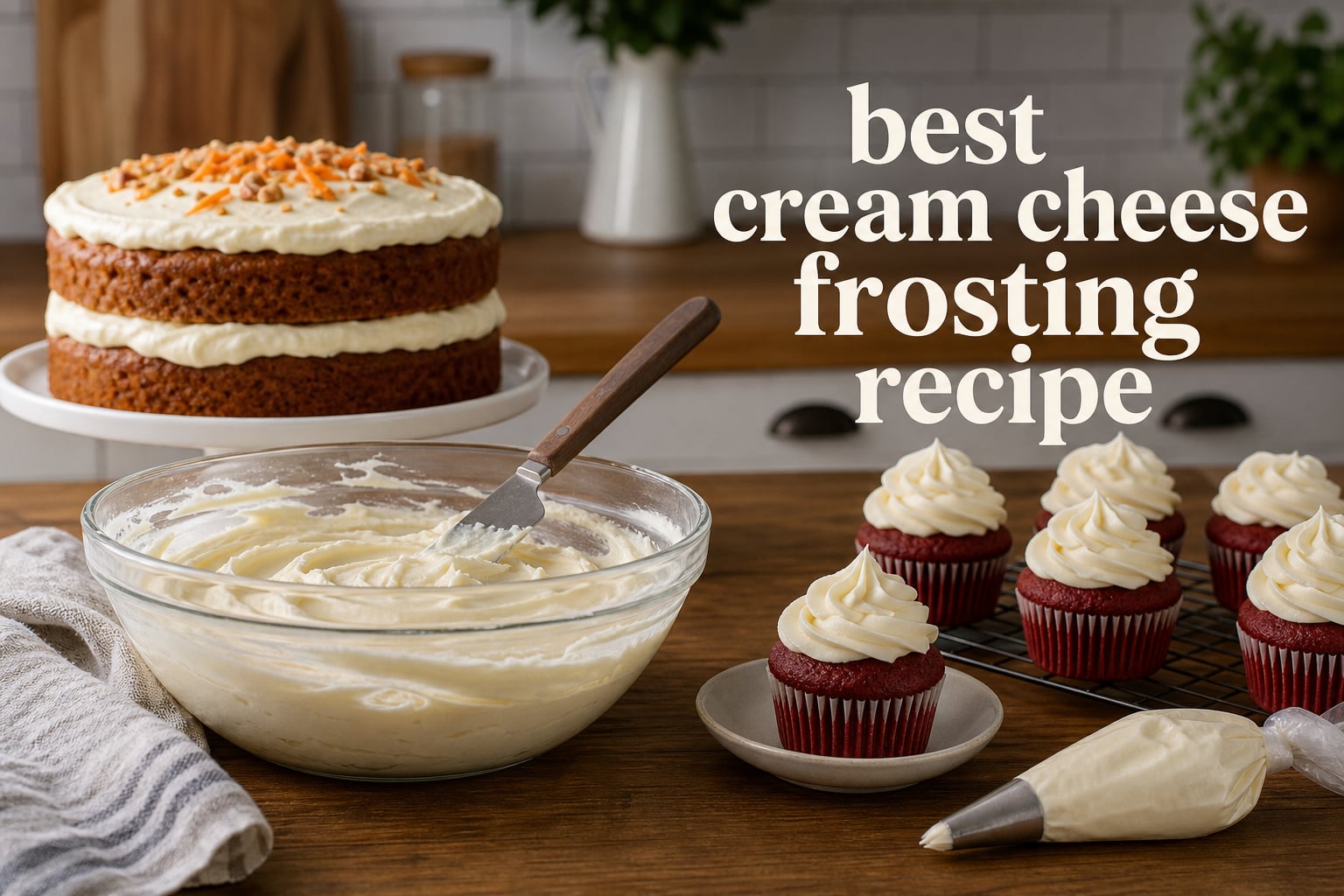
After testing dozens of ratios over the past three years in our bakery kitchen, I can tell you that the best cream cheese frosting recipe comes down to four things: full-fat brick cream cheese, room-temperature butter, sifted powdered sugar, and knowing when to stop mixing. Get those four things right and you will have a thick, tangy, pipe-able frosting that holds its shape on cupcakes, layer cakes, and cinnamon rolls alike.
This is the exact recipe we use at 7ate9 Bakery for our carrot cake orders, and it has never failed me. I am going to walk you through every step, explain why each ingredient matters, and share the troubleshooting tricks I have learned from real baking disasters so your frosting turns out perfect the first time.
Whether you are frosting a red velvet layer cake for a birthday or just want a tangy spread for your morning cinnamon rolls, this best cream cheese frosting recipe will give you professional results at home.
Table of Contents
Ingredients for the Best Cream Cheese Frosting Recipe
The best cream cheese frosting recipe uses just five ingredients, but each one plays a specific role that you cannot skip or substitute without changing the texture. Here is exactly what you need and why each ingredient matters.
Full-Fat Brick Cream Cheese (16 oz, 2 bricks)
This is the single most important ingredient in your frosting. You need full-fat, brick-style cream cheese, not the spreadable kind in a tub. Spreadable cream cheese contains added air and stabilizers that will make your frosting soupy the moment you start beating it.
I always use Philadelphia brick cream cheese because it has the highest fat content and the lowest moisture of the widely available brands. Store brands can work, but check the label to make sure it says brick or block style, not whipped or spreadable.
Your cream cheese must be at room temperature before you start. Cold cream cheese will leave lumps in your frosting that no amount of beating can fix. I take mine out of the fridge about two hours before I plan to bake.
Unsalted Butter (1/2 cup, 1 stick, Room Temperature)
Unsalted butter gives your frosting structure and a silky mouthfeel. I use unsalted because the salt content in salted butter varies by brand, which makes it hard to control the final flavor. You want the butter softened but not melted, so it blends smoothly with the cream cheese.
If you press your finger into the butter and it leaves a clean indentation without collapsing, it is ready. That usually takes about one to two hours on the counter, depending on your kitchen temperature.
Powdered Sugar (4 Cups, Sifted)
Powdered sugar, also called confectioners sugar, provides the sweetness and bulk that gives your frosting body. Four cups might sound like a lot, but cream cheese is tangy and needs that sugar to balance the flavor.
Always sift your powdered sugar before measuring and mixing. Sifting removes the hard lumps that form in the bag, and those lumps will not dissolve no matter how long you beat the frosting. I learned this the hard way after serving lumpy frosting at a friend’s baby shower.
Pure Vanilla Extract (2 Teaspoons)
Pure vanilla extract rounds out the flavor and adds depth. Skip the imitation vanilla, which tastes artificial and one-dimensional. Two teaspoons is the sweet spot, enough to notice without overpowering the tangy cream cheese.
Kosher Salt (1/4 Teaspoon, Optional)
A small pinch of salt enhances every other flavor in the frosting and keeps it from tasting cloyingly sweet. I add kosher salt to every batch, but if your butter is salted you can leave this out.
How to Make the Best Cream Cheese Frosting Recipe
Making the best cream cheese frosting recipe takes about ten minutes once your ingredients are at room temperature. The key is adding ingredients in the right order and stopping the mixer at the right moment.
Step 1: Beat the Cream Cheese Until Smooth
Place your room-temperature cream cheese in the bowl of a stand mixer fitted with the paddle attachment. Beat on medium speed for about one minute until it is completely smooth and creamy. Scrape down the sides of the bowl halfway through to catch any cold spots.
If you see any lumps at this stage, keep beating. It is much easier to fix lumps now than after you add the sugar.
Step 2: Add the Butter and Beat Until Combined
Add your softened butter to the cream cheese and beat on medium speed for about one minute until the two are fully blended. The mixture should look uniform and glossy with no streaks of white or yellow.
Some bakers cream the butter and sugar first before adding the cream cheese. I have tested both methods extensively, and beating the cream cheese first gives you a smoother result because cream cheese is harder to break down than butter.
Step 3: Gradually Add the Sifted Powdered Sugar
Turn the mixer to low speed and add the sifted powdered sugar one cup at a time. Wait until each cup is mostly incorporated before adding the next. This prevents a cloud of sugar from spraying all over your kitchen.
Once all the sugar is in, increase the speed to medium and beat for about two minutes. The frosting will transform from dense and grainy to light and smooth.
Step 4: Add Vanilla and Salt, Then Beat Until Fluffy
Add the vanilla extract and salt, then beat on medium speed for 30 to 60 seconds. The frosting is done when it is smooth, fluffy, and holds a soft peak when you lift the paddle.
Stop here. Do not keep beating hoping it will get fluffier, because overbeating cream cheese frosting makes it thin and runny. The moment it looks good, turn off the mixer.
Step 5: Check Consistency Before Using
Before frosting your cake, test the consistency. Scoop a spoonful and turn it upside down over the bowl. It should hold its shape and cling to the spoon without dripping. If it is too soft, refrigerate the bowl for 15 minutes and recheck.
Tips for Success: Getting That Perfect Tangy Frosting
The difference between mediocre and spectacular cream cheese frosting comes down to a handful of techniques that most recipes never mention. Here are the tips I rely on every single time.
Use Room Temperature Everything
Every ingredient needs to be at room temperature before you start mixing. Cold cream cheese creates lumps. Cold butter will not blend evenly. And trying to warm things up in the microwave almost always leads to partially melted ingredients that ruin the texture.
Plan ahead and take everything out two hours before you want to start. This is the one step you cannot rush.
Use the Paddle Attachment, Not the Whisk
The paddle attachment is the right tool for cream cheese frosting. The whisk attachment whips too much air into the mixture, which can make it thin and unstable. The paddle creates a dense, smooth texture that holds its shape when piped.
Sift the Powdered Sugar
I know sifting feels like an unnecessary step, but it makes a real difference. Powdered sugar clumps in the bag, and those clumps will not dissolve during mixing. Sifting takes 30 seconds and saves you from serving lumpy frosting.
Do Not Overbeat the Frosting
This is the number one mistake I see home bakers make. Cream cheese breaks down the more you beat it, releasing moisture and turning thin. Beat just until the ingredients are combined and fluffy, then stop immediately. If you need to re-whip later, do it briefly on low speed.
Taste and Adjust Before Frosting
Always taste your frosting before using it. If it is too sweet, add a tiny squeeze of lemon juice to brighten the tang. If it is not sweet enough, add powdered sugar one tablespoon at a time. Small adjustments at this stage save the whole batch.
Best Desserts to Pair With Cream Cheese Frosting
Cream cheese frosting is incredibly versatile, and the best cream cheese frosting recipe works beautifully on far more than just carrot cake. Here are my favorite pairings from the bakery.
Carrot Cake
This is the classic pairing for a reason. The warm spices in carrot cake, cinnamon, nutmeg, and cloves, find their perfect match in the cool tang of cream cheese frosting. It is what most of our customers order for birthdays.
Red Velvet Cake
Red velvet and cream cheese frosting are inseparable. The mild cocoa flavor and slight tang of the cake complement the frosting, creating a pairing that has stood the test of time for good reason.
Cupcakes
This frosting pipes beautifully onto cupcakes. I recommend a large open star tip for a classic swirl. The frosting holds its shape well at room temperature for several hours, making it perfect for parties.
Cinnamon Rolls
Spreading warm cream cheese frosting on fresh cinnamon rolls is one of life’s great pleasures. The heat softens the frosting slightly so it melts into every spiral. Try it once and you will never go back to plain glaze.
Banana Cake and Zucchini Bread
The tang of cream cheese frosting cuts through the sweetness of banana cake beautifully. It also works on zucchini bread, pumpkin cake, and spice cake. Any dessert with warm spices or fruit is a good candidate.
Troubleshooting Common Cream Cheese Frosting Problems
Even with the best recipe, things can go wrong. Here are the most common cream cheese frosting problems and exactly how to fix them, based on what I have seen go wrong in our kitchen and what bakers ask about most often in forums.
My Frosting Is Soupy or Runny
Soupy frosting is almost always caused by one of three things: your ingredients were too warm, you overbeat the mixture, or you used spreadable tub cream cheese instead of brick style. To fix it, refrigerate the bowl for 20 to 30 minutes, then re-whip briefly on low speed. The cold will help the fat firm up and restore structure.
If refrigerating does not work, you can beat in sifted powdered sugar one tablespoon at a time until the frosting thickens. Some bakers swear by adding a teaspoon of cornstarch, which absorbs excess moisture without adding sweetness.
My Frosting Has Lumps
Lumps come from cold cream cheese or unsifted powdered sugar. If your frosting is already mixed and lumpy, press it through a fine mesh sieve with a spatula. It takes effort, but it will give you a perfectly smooth frosting.
Next time, make sure your cream cheese is fully at room temperature and beat it smooth before adding any other ingredients. Press it with your finger to check that no cold or hard spots remain in the center of the brick.
My Frosting Tastes Too Sweet
If your frosting is overwhelmingly sweet, you probably used too much powdered sugar. You can balance it by adding a small squeeze of fresh lemon juice or a pinch more salt. Start with half a teaspoon of lemon juice, mix, and taste before adding more.
For the next batch, try reducing the powdered sugar to three and a half cups. Many bakers on the baking forums report that using less sugar than typical recipes call for gives a much better flavor balance while still producing a sturdy frosting.
My Frosting Will Not Hold Its Shape When Piped
Frosting that droops or slides off the cake needs more structure. Refrigerate it for 20 minutes before piping so the butter and cream cheese firm up. You can also add a tablespoon of sifted powdered sugar or a teaspoon of cornstarch to stiffen it.
If you are piping on a warm cake or in a hot kitchen, the ambient temperature is working against you. Chill the frosted cake in the fridge for 10 minutes between piping layers to help each layer set.
My Frosting Separated During Mixing
Separation happens when the ingredients are at different temperatures or when you add cold cream cheese to soft butter. If your frosting looks curdled or split, keep beating on medium speed. It usually comes back together within a minute or two as the temperatures equalize.
If it does not come together, your butter may have been too warm or partially melted. Refrigerate the bowl for 15 minutes, then try beating again. In extreme cases, start over with properly tempered ingredients.
Frosting Problems in Hot or Humid Weather
Humidity and heat are the enemies of cream cheese frosting. On a humid day, your frosting will absorb moisture from the air and soften faster than normal. Work in an air-conditioned kitchen if possible, and keep the frosted cake refrigerated until 30 minutes before serving.
In hot weather above 80 degrees, consider adding an extra half cup of powdered sugar to compensate for the softening effect of heat. You can also refrigerate the frosting for 10 minutes between piping sessions.
How to Pipe, Color, and Adjust Your Frosting
Once you have the basic recipe mastered, here is how to customize it for different cakes, colors, and piping styles.
Can You Pipe Cream Cheese Frosting?
Yes, cream cheese frosting pipes beautifully when it is made correctly with brick-style cream cheese and the right consistency. Use a piping bag fitted with a large star or round tip. The frosting holds swirls and rosettes well, especially if you chill it for 10 minutes before piping.
For detailed decorating work like flowers or borders, refrigerate the frosted cake between applications so each layer sets before you add the next.
How to Make Whiter Cream Cheese Frosting
Cream cheese frosting naturally has a slightly off-white or ivory color. To make it whiter, use clear vanilla extract instead of regular brown vanilla. You can also beat the frosting a few seconds longer, which incorporates air and lightens the color slightly.
Some bakers add a tiny dot of violet gel food coloring, which neutralizes yellow tones the same way purple shampoo works on blonde hair. Use the smallest amount possible, literally the tip of a toothpick, or your frosting will turn purple.
Flavor Variations to Try
This recipe is a blank canvas for flavor. Add a teaspoon of citrus zest, lemon, orange, or lime, for a bright twist. A half teaspoon of almond extract pairs beautifully with red velvet cake. For fall, try a quarter teaspoon of maple extract or a half teaspoon of cinnamon.
Mint extract works well on chocolate cupcakes. Start with a quarter teaspoon because mint is potent, and taste before adding more.
How to Adjust Consistency
To thin frosting that is too stiff, add heavy cream or milk one teaspoon at a time and beat on low until you reach the desired consistency. To thicken frosting that is too soft, add sifted powdered sugar one tablespoon at a time. Always make small adjustments and test between each one.
Storage and Make-Ahead Instructions
Cream cheese frosting stores well, which makes it perfect for preparing ahead of a big baking day.
Refrigerator Storage
Store leftover frosting in an airtight container in the refrigerator for up to one week. When you are ready to use it, let it sit at room temperature for about an hour to soften, then re-whip briefly on low speed with the paddle attachment until it is smooth and spreadable again.
Freezer Storage
You can freeze cream cheese frosting for up to three months. Transfer it to a freezer-safe container, leaving an inch of space at the top for expansion. Thaw it overnight in the refrigerator, then bring it to room temperature and re-whip before using. The texture may be slightly different after freezing, but a good whip usually restores it.
Frosted Cake Storage
Cakes frosted with cream cheese frosting should be stored in the refrigerator because of the dairy content. Let the cake sit at room temperature for 30 to 45 minutes before serving so the frosting softens and the flavors come through. Cover the cut edges with plastic wrap to prevent the cake from drying out.
FAQs
What is the secret to good cream cheese frosting?
The secret to good cream cheese frosting is using full-fat brick-style cream cheese at room temperature and stopping the mixer the moment the frosting looks smooth and fluffy. Overbeating breaks down the cream cheese and makes the frosting runny. Sifting the powdered sugar prevents lumps, and using the paddle attachment instead of the whisk keeps the texture dense and pipe-able.
What are common cream cheese frosting mistakes?
The most common mistakes are using spreadable tub cream cheese instead of brick style, mixing with cold ingredients, overbeating the frosting until it turns soupy, skipping the sifting step for powdered sugar, and using the whisk attachment instead of the paddle. Another frequent mistake is adding too much powdered sugar, which overwhelms the tangy cream cheese flavor.
How do you get fluffy cream cheese icing?
To get fluffy cream cheese icing, beat the room-temperature cream cheese alone first until completely smooth, then add softened butter and beat until combined. Gradually add sifted powdered sugar on low speed, then increase to medium and beat for two minutes until light and fluffy. Stop mixing immediately once it reaches the right texture to avoid breaking down the cream cheese.
Which cream cheese is best for cream cheese frosting?
Full-fat brick-style cream cheese is the best choice for cream cheese frosting. Philadelphia original brick cream cheese is the most widely recommended brand because it has high fat content and low moisture. Avoid whipped, spreadable, or light cream cheese in tubs, because they contain added air, stabilizers, and moisture that make frosting soupy and unstable.
Wrapping Up: Your Go-To Cream Cheese Frosting
The best cream cheese frosting recipe comes down to quality ingredients, proper temperature, and knowing when to stop mixing. Use full-fat brick cream cheese, sift your powdered sugar, keep everything at room temperature, and beat just until fluffy.
With the troubleshooting tips and storage instructions in this guide, you are ready to frost carrot cakes, red velvet cupcakes, cinnamon rolls, and anything else that deserves a thick layer of tangy sweetness. Bookmark this page, grab your stand mixer, and start baking.