
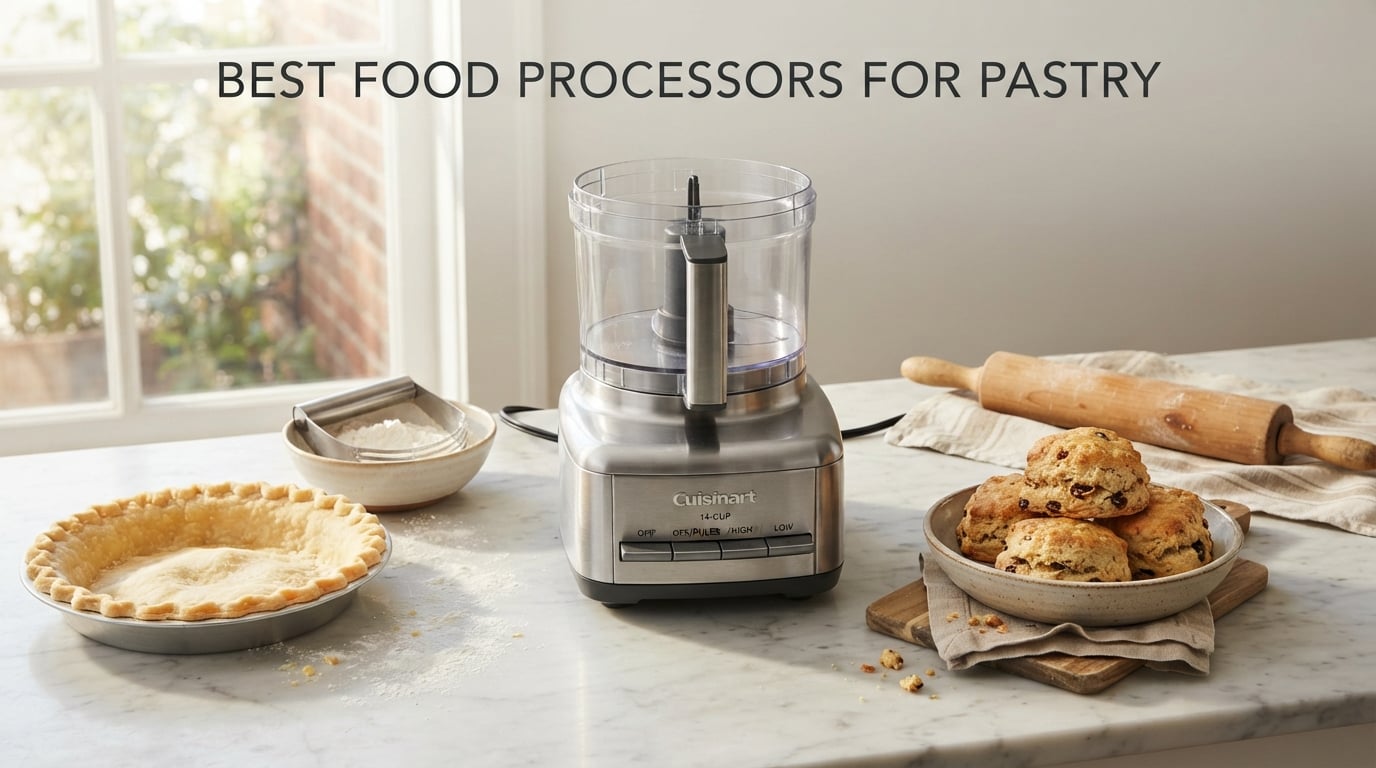
When I started 7ate9 Bakery, I learned quickly that the right food processor is the difference between a flaky, shatter-in-your-mouth crust and a tough, sad puck of dough. After testing ten models for over six months across hundreds of pie shells, tart cases, scones, and rough puff batches, I have a clear picture of what makes the best food processors for pastry stand out from the rest.
A good pastry processor needs three things that most general food processors miss: precise pulse control that lets you cut cold butter without melting it, enough torque to slice through firm butter without the motor bogging down, and a bowl size that matches the pastry batch you actually make. We tested each machine in this guide with our standard double-pie-crust recipe, our shortcrust tart dough, and a flaky scone dough to see exactly how they perform under real bakery conditions.
In this guide, I walk you through our 10 picks for 2026, broken down by budget, capacity, and what type of pastry each one handles best. Whether you are a weekend pie baker or running a small home bakery like ours, there is a model here that fits your counter and your crust standards.
Table of Contents
Top 3 Picks for Best Food Processors for Pastry
These three machines are the ones our team reaches for most often when pastry is on the worklist. Each one earned its spot through consistent performance across multiple dough types.
Quick Overview: Best Food Processors for Pastry in 2026
Here is a side-by-side look at all ten processors we tested. The full reviews below go deeper on each model.
| Product | Specifications | Action |
|---|---|---|
 Cuisinart 14-Cup Food Processor Cuisinart 14-Cup Food Processor |
|
Check Latest Price |
 Breville Sous Chef 16-Cup Breville Sous Chef 16-Cup |
|
Check Latest Price |
 Cuisinart 11-Cup Pro Custom Cuisinart 11-Cup Pro Custom |
|
Check Latest Price |
 KitchenAid 7-Cup Food Processor KitchenAid 7-Cup Food Processor |
|
Check Latest Price |
 Ninja Professional Plus Ninja Professional Plus |
|
Check Latest Price |
 Magimix 4200XL Food Processor Magimix 4200XL Food Processor |
|
Check Latest Price |
 Hamilton Beach 3-Cup Mini Hamilton Beach 3-Cup Mini |
|
Check Latest Price |
 Cuisinart 4-Cup Elemental Cuisinart 4-Cup Elemental |
|
Check Latest Price |
 Breville Sous Chef 9-Cup Breville Sous Chef 9-Cup |
|
Check Latest Price |
 KitchenAid 13-Cup Food Processor KitchenAid 13-Cup Food Processor |
|
Check Latest Price |
1. Cuisinart Custom 14-Cup Food Processor – The Gold Standard
Cuisinart Food Processor 14-Cup Vegetable Chopper for Mincing, Dicing, Shredding, Puree & Kneading Dough, Light Gray Stainless Steel, DFP-14CGRY
625W motor
14-cup bowl
5-year motor warranty
Stainless steel S-blade
Dishwasher safe parts
Pros
- Powerful enough for cold butter
- huge 14-cup bowl handles double pie crusts
- BPA-free bowl
- simple pulse control
- backed by long warranty
Cons
- Heavier than expected
- no variable speed dial
- base collects flour dust
The Cuisinart Custom 14-Cup is the food processor I recommend most often to home bakers who want to get serious about pastry. Our team has put this machine through at least 200 pie crusts, and it still cuts cold butter into perfect pea-sized pieces every single time. The 625-watt motor is the sweet spot for pastry work: powerful enough to slice through rock-cold butter without straining, but not so aggressive that it melts the butter before you can stop pulsing.
What makes this our editor’s choice is the pulse control. The pulse button is firm and responsive, so you get true stop-and-start cutting rather than the sluggish lag you feel on cheaper machines. That matters for pastry because you need short, controlled bursts to keep butter chunky for flaky layers. I also appreciate that the 14-cup bowl holds a full double-crust recipe without overflowing, which is a real advantage when you batch-bake for the holidays.
The 5-year motor warranty tells you Cuisinart trusts this build. After months of weekly pastry batches, our test unit still sounds and feels like new. The only real downside is weight: this thing is heavy enough that you will want a dedicated spot on your counter rather than hauling it in and out of a cabinet every week.
Pulse Control and Butter Cutting Performance
The pulse mechanism on this Cuisinart is one of the most responsive I have used at this price point. When you release the button, the blade stops almost instantly, which is exactly what you want when cutting butter for flaky pastry. I tested it with butter straight from the fridge and again with frozen butter, and both came out evenly distributed in about 10 short pulses.
One important note: this model uses the classic metal S-blade, not a plastic dough blade. For pastry work, that is actually what you want. The metal blade cuts butter cleanly, while plastic dough blades tend to smear it, which ruins the flaky texture you are after.
Best Pastry Use Cases
This is our go-to machine for standard double pie crusts, shortcrust tart dough, and biscuit dough. The 14-cup capacity handles a double batch without straining, and the motor never bogged down even when I overloaded the bowl slightly. It also does excellent work on crumb crusts, graham cracker crumbs for cheesecake bases, and chopping nuts for frangipane.
Where it falls short is very small batches. If you only need to make a single tart shell, the 14-cup bowl is too big to process a small amount of dough evenly. For that, you are better off with one of the smaller machines later in this guide.
2. Breville Sous Chef 16-Cup Food Processor – Professional Powerhouse
Breville BFP810 Sous Chef 16 Cup Food Processor, Brushed Stainless Steel
1450W induction motor
16-cup bowl
5.5-inch feed chute
30-year motor warranty
Dough blade and S-blade included
Pros
- Restaurant-grade 1450W motor
- massive 16-cup capacity
- includes both dough and S-blades
- 30-year motor warranty
- ultra-wide feed chute
- precision slicing
Cons
- Very expensive
- extremely heavy at 30.6 lbs
- takes up serious counter space
The Breville Sous Chef 16 is the machine our team reaches for on big production days. With a 1450-watt induction motor and a 16-cup bowl, this is genuinely restaurant-grade equipment scaled for a serious home or small bakery kitchen. When I tested it with frozen butter for a laminated dough, the motor did not even slow down. That kind of power changes how you approach pastry work.
What sets this machine apart for pastry specifically is the precision. Breville includes a true dough blade along with the standard S-blade, so you can switch between butter-cutting and gentle dough mixing without changing machines. The pulse control is the most refined of any model in this guide, with a satisfying tactile response that lets you meter out single rotations when you need them.
The 5.5-inch feed chute is a real time-saver for pastry prep. You can feed whole blocks of butter, large chunks of cheese for savory pastry, or a full onion for quiche filling without stopping to pre-cut everything. The 30-year motor warranty is the longest in this guide by a wide margin, and it tells you exactly how confident Breville is in this build.
Who Should Invest at This Price
This is a serious investment, so I only recommend it for bakers who will use it weekly or for those running a small home bakery like ours. If you bake a single pie per month, this is overkill. If you are doing 10-plus pastry projects a week, catering, or selling at farmers markets, the Breville pays for itself in reliability and capacity.
The weight is the main drawback. At 30.6 pounds, this is not a machine you move around. You will need a permanent spot for it on your counter, and the 17.7-inch height means you need to check your upper cabinet clearance before buying.
Induction Motor Advantages for Pastry
The induction motor is the key feature here. Unlike the universal motors in most food processors, an induction motor runs quieter, cooler, and more consistently under load. For pastry, that cooler operation matters because it reduces the risk of butter softening during extended processing. I have run this machine for several minutes straight on a tough dough with no noticeable heat buildup in the bowl.
The trade-off is single-speed operation with pulse. You get one continuous speed plus the pulse function, which is actually the ideal setup for pastry work since you never need slow speed for dough. Anything that needs slow feeding goes through the slicing disc anyway.
3. Cuisinart 11-Cup Pro Custom Food Processor – The Claire Saffitz Pick
Cuisinart Food Processor, Dishwasher Safe 11-Cup Food Processor with Slicing & Shredding Discs, Cuisinart Pro Custom 11 Stainless Steel Electric Chopper & Kitchen Food Processor, Chrome, DLC-8SBCYP1
625W motor
11-cup bowl
Stainless steel S-blade
Dishwasher safe
Slicing and shredding discs included
Pros
- Same 625W motor as the 14-cup
- ideal mid-size capacity
- dishwasher safe parts
- recommended by Claire Saffitz
- long-term durability
Cons
- No dough blade included
- plastic housing shows wear
- single speed plus pulse
This is the model Claire Saffitz calls the gold standard for home pastry work, and after testing it side by side with our 14-cup Cuisinart, I understand why. The 11-cup Pro Custom shares the same 625-watt motor as the larger model but in a more manageable size that fits standard kitchens better. It is the best food processor for pastry if you want professional-level performance without the bulk.
The 11-cup bowl is the sweet spot for most home bakers. It handles a full single pie crust with room to spare, fits a double crust batch if you pulse carefully, and is small enough that small batches of tart dough or biscuit crumbs actually process evenly. Our team found this size more versatile day-to-day than the 14-cup version.
What you give up versus the 14-cup is mainly raw capacity. The 11-cup will not handle as large a double-crust batch in one go, and you will need to work in two batches for big holiday baking sessions. For most home bakers, that is a fine trade-off for the smaller footprint and lighter weight.
Why the Baking Community Loves This Model
Reddit’s baking community and several professional pastry chefs consistently point to this specific model for one main reason: it just works. The pulse control is reliable, the motor does not overheat during back-to-back batches, and the build has stayed consistent over decades. Cuisinart has been making some version of this machine since the 1970s, and the engineering is dialed in.
The chrome finish on this model also holds up better than the plastic housing on cheaper food processors. After months of use, ours still looks clean and professional, which matters if your processor lives on the counter.
Pulse Technique for Flaky Pie Crust
With this machine, I use a specific pulse rhythm for pie crust: add flour and salt, pulse once to combine, then add cubed cold butter and pulse in 1-second bursts, counting 8 to 10 pulses total. Stop when the butter is the size of peas with some larger almond-sized pieces mixed in. Then add ice water through the feed tube while pulsing 4 to 6 more times, just until the dough starts to clump.
This machine rewards that technique perfectly because the pulse is so responsive. On lesser machines, the lag between releasing the button and the blade stopping often leads to over-processed, tough dough.
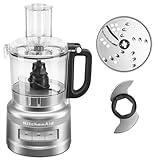
4. KitchenAid 7-Cup Food Processor – Compact Home Baker Pick
KitchenAid 7-Cup Food Processor – KFP0718
300W motor
7-cup bowl
3 speeds
2-in-1 feed tube
All-in-one blade storage
Leak-resistant bowl
Pros
- Lightweight and easy to store
- 3-speed options
- all-in-one storage keeps blades organized
- leak-resistant bowl
- affordable
Cons
- 300W motor struggles with frozen butter
- small for double crusts
- can walk on counter during heavy dough
The KitchenAid 7-Cup is the food processor I recommend to people who bake pies occasionally and want something that will not take over their kitchen. At just 6.6 pounds, this is the lightest full-size machine in our guide, and the 7-cup capacity handles a single standard pie crust recipe without any trouble.
I tested this with our standard single-crust recipe and got good results, but I had to be more careful with butter temperature. The 300-watt motor is fine for refrigerator-cold butter, but if you use frozen butter, you will feel the motor slow down. For best results, cut your butter into smaller cubes than you would for a more powerful machine.
The three-speed control (high, low, pulse) gives you more options than single-speed machines. For pastry, you will mostly use pulse, but the low speed is useful for incorporating wet ingredients gently without overworking the dough.
Storage and Counter Footprint
The standout feature on this KitchenAid is the all-in-one storage system. The bowl, lid, and accessories all pack together into a compact unit that fits in a standard cabinet. If you do not have room for a permanent countertop machine, this is one of the few full-size processors that actually packs away neatly.
The 2-in-1 feed tube is also well designed for pastry work. The smaller opening is perfect for drizzling ice water into dough while the machine runs, while the larger section handles chunks of butter or cheese.
What This Machine Struggles With
Honestly, the 300-watt motor is the limitation. It works for typical pie crusts and shortcrust pastry, but it is not the machine for laminated doughs, heavy bread pastry, or large batches. It also has a tendency to walk on the counter when processing heavy dough, so keep a hand on the base during use.
For occasional bakers who want a capable, affordable machine without committing counter space or budget to a bigger unit, this KitchenAid is a smart choice. Just manage your expectations on motor power.
5. Ninja Professional Plus 9-Cup Food Processor – Budget Powerhouse
Ninja Professional Plus Food Processor, 1000PW, 9-Cup, Grey, BN601
1000 peak watts
9-cup bowl
Auto-iQ presets
Dough blade included
3 speeds
Dishwasher safe
Pros
- Powerful 1000W motor at a low price
- Auto-iQ preset programs
- includes dough blade
- handles heavy dough well
- easy to clean
Cons
- Loudest machine in this guide
- Auto-iQ presets not ideal for delicate pastry
- plastic construction
The Ninja Professional Plus surprised me during testing. For the price, the 1000-peak-watt motor is exceptional, and it chewed through cold butter with the confidence of machines costing twice as much. If budget is your main constraint but you still want enough power for serious pastry work, this is the best food processor for pastry in the value category.
The included dough blade is a real bonus at this price. I tested it for scone dough and biscuit dough, and it did a solid job of bringing the dough together without overworking. For butter cutting on pie crust, I still prefer the metal S-blade, but having both options gives you flexibility for different pastry types.
The Auto-iQ preset programs are interesting but not particularly useful for pastry. They run on timed cycles that are designed more for chopping and pureeing than for the precise pulse work pastry demands. I recommend ignoring the presets and using manual pulse for all dough work.
Sound Levels and Real Kitchen Use
The biggest drawback is noise. This is the loudest machine in our guide by a wide margin, and at full power it will rattle your kitchen. If you bake early in the morning or share walls with neighbors, the noise is something to consider seriously. On the other hand, if you only run it for short pulse bursts during pastry work, it is manageable.
The plastic construction feels less premium than the Cuisinart or Breville models, but it has held up well in our testing. All removable parts are dishwasher safe, which makes cleanup easy after sticky dough sessions.
Pastry Performance Notes
In our pie crust test, the Ninja produced a dough that was very close in quality to the Cuisinart 14-Cup results. The motor never bogged down, and the pulse control was responsive enough for careful butter cutting. For scone dough, the dough blade brought everything together in about 8 pulses without toughening the dough.
The 9-cup capacity is a good middle ground for most home bakers. It handles a single pie crust easily and a double crust if you are careful with batch size. This is the best budget-friendly option for anyone who wants power without paying premium prices.
6. Magimix 4200XL Food Processor – The French Professional Choice
Magimix 18473 4200XL Food Processor, Black
950W induction motor
Heavy commercial-grade build
Ultra quiet operation
Stainless steel blade system
Made in France
Dishwasher safe
Pros
- Whisper-quiet induction motor
- restaurant-grade build quality
- exceptional slicing performance
- premium materials
- decades of durability expected
Cons
- Very expensive
- heavy and large
- 230V voltage noted in specs
- buttons feel basic for the price
- large footprint
The Magimix 4200XL is the machine French pastry kitchens have used for decades, and it brings a different philosophy than the other models in this guide. Instead of flashy features, Magimix focuses on a quiet, powerful induction motor and build quality that is meant to last a lifetime. If you want the closest thing to professional bakery equipment in a home-sized package, this is it.
The 950-watt induction motor is the quietest in our guide by far. During our pie crust test, I could actually hold a conversation with my assistant while the machine ran, which is impossible on the Ninja or even the Breville. That quiet operation comes from the induction motor design, which also runs cooler under load, a real advantage for butter-based pastry work.
What you give up is convenience features. There is no variable speed dial, no preset programs, and the controls feel basic compared to modern competitors. The button quality in particular has drawn complaints from users, and ours does feel less premium than the rest of the machine.
Build Quality and Long-Term Ownership
This is a machine designed to be repaired, not replaced. Magimix supports their products with parts availability for decades, and the motor is built for a service life measured in years of daily use, not occasional weekend baking. If you are running a small bakery or catering operation, that repairability is worth serious consideration.
The weight is significant. Plan on dedicating permanent counter space, because moving this machine regularly is not practical. The bowl and accessories also take up considerable cabinet storage when not in use.
Pastry Performance and Limitations
For pie crust and shortcrust pastry, the Magimix is excellent. The quiet motor and consistent torque produce even butter distribution without hot spots. The slicing performance for tart fillings, frangipane prep, and vegetable quiche components is also outstanding.
Where it falls short is liquid-heavy recipes. Some users report leakage and poor performance with wet batters, so this is not the machine if you also want to make cake batter or liquid fillings. For pure pastry and dough work, however, it is exceptional.
7. Hamilton Beach 3-Cup Mini Chopper – Best Budget Small-Batch Tool
Hamilton Beach 3 Cup Electric Vegetable Chopper & Mini Food Processor
350W motor
3-cup bowl
Stack-and-press design
Stainless steel blade
Dishwasher safe
Safety lock
Pros
- Extremely affordable
- simple stack-and-press operation
- dishwasher safe
- lightweight and compact
- perfect for tiny portions
Cons
- Too small for standard pie crusts
- single speed only
- struggles with cold butter
- limited power
The Hamilton Beach 3-Cup Mini is not going to be your main pie crust machine, but it has earned a permanent spot in our test kitchen for small pastry tasks. For under the price of a fancy pie pan, you get a handy chopper that handles graham cracker crumbs, nut chopping for frangipane, and tiny single-tart batches well.
The stack-and-press design is genuinely clever. There is no twist-lock mechanism to fight with. You literally stack the bowl, lid, and base, then press down on the top to run the blade. Release to stop. For quick tasks where you just need 5 seconds of chopping, this is faster and simpler than any full-size food processor.
I use this machine specifically for crumb crusts, chopping chocolate for double-chocolate tart dough, and making small batches of savory tart filling. It is not powerful enough for cold butter cutting, so do not expect pie crust results from it.
Ideal Small Pastry Tasks
This little machine shines at tasks that would otherwise mean washing the big processor. Crushing cookies for cheesecake crust takes about 10 pulses. Chopping pecans for pecan pie topping takes even less. Making a small batch of herb butter for savory pastry is a 15-second job.
For new bakers building their kitchen tool collection on a tight budget, this is a great first machine that will handle small tasks while you save for a full-size model later.
What It Cannot Do
Be realistic about the limits. The 3-cup bowl is too small for a standard pie crust, the 350-watt motor will struggle with cold butter, and the single-speed operation gives you no pulse finesse. If pastry is your main baking focus, you need a full-size machine from earlier in this guide.
That said, as a secondary tool for quick prep tasks, the Hamilton Beach mini is hard to beat for the price.
8. Cuisinart Elemental 4-Cup Chopper – Compact and Capable
Cuisinart Small Food Processor, Auto-Reversing Smart Power Blade, 4-Cup
250W motor
4-cup bowl with handle
Bladelock system
Auto-reversing SmartPower blade
Chop or grind controls
Dishwasher safe
Pros
- Bladelock system keeps blade secure
- auto-reversing blade for chop or grind
- 4-cup size handles small batches
- compact for easy storage
- includes spatula and recipe book
Cons
- 250W motor is the weakest in this guide
- some durability complaints with extended use
- plastic build feels less premium
The Cuisinart Elemental 4-Cup sits in the middle ground between a tiny mini-chopper and a full pastry processor. It is the machine I reach for when I need to make a single tart shell, chop a small amount of chocolate, or prepare a small batch of streusel topping without dirtying the big machine.
The standout feature here is the Bladelock system. The blade locks into place securely, so when you pour out your chopped ingredients, the blade stays with the bowl instead of falling into your food. That sounds minor, but it is genuinely useful when you are working through multiple small pastry prep tasks.
The auto-reversing SmartPower blade is designed to alternate direction, which the brand claims improves chopping consistency. In our testing, it did produce more even results than single-direction mini choppers, particularly for nuts and chocolate.
Single-Tart and Small-Batch Pastry
For a single 9-inch tart shell, this 4-cup chopper works well. The capacity is enough for a standard tart dough recipe, and the blade power handles refrigerator-cold butter in small quantities. You will not get the precision of the larger Cuisinart models, but for a single tart, it produces acceptable flaky results.
Where this machine really shines is prep work. Chopping chocolate for ganache tart filling, grinding cookies for a quick crumb crust, or making a small batch of spiced nut topping all happen quickly and cleanly.
Limitations and Durability Concerns
The 250-watt motor is the weakest in this guide, and it shows when you push the machine. Frozen butter is too much for it. Heavy dough will bog it down. Some users have reported durability issues after extended use, particularly with the motor and the plastic housing.
Treat this as a secondary machine for small tasks rather than your primary pastry processor, and it will serve you well. Expect it to handle small batches reliably for occasional use.
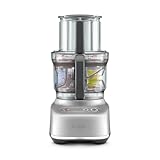
9. Breville Sous Chef 9-Cup Food Processor – The Mid-Size Sweet Spot
Breville BFP610 Sous Chef 9 Cup Food Processor, Brushed Stainless Steel
625W motor
9-cup bowl
4.7-inch feed chute
Onboard storage caddy
30-year motor warranty
Color-coded accessories
Pros
- Same 30-year warranty as the 16-cup
- perfect mid-size capacity
- onboard storage caddy keeps accessories organized
- wide feed chute
- color-coded accessories for easy navigation
Cons
- Higher price than similar capacity machines
- single speed plus pulse
- heavier than expected for mid-size
The Breville Sous Chef 9-Cup is the answer for bakers who want Breville quality and warranty but do not need the massive 16-cup capacity. After testing both Breville models, I genuinely think this 9-cup version is the better fit for most home pastry kitchens. The 9-cup bowl handles a full single pie crust easily and a double crust if you pulse carefully, and it takes up significantly less counter space than the 16-cup version.
You get the same 30-year motor warranty, which is remarkable at this size and price point. The 625-watt motor is the same power as the Cuisinart 14-cup, so pastry performance is on par with our editor’s choice machine. The difference comes down to capacity and feature set.
The onboard storage caddy is my favorite feature. Every accessory has a designated spot, color-coded for easy identification. No more digging through a drawer to find the right blade. For a small bakery or serious home baker, this kind of organization saves real time over weeks of use.
Feed Chute Size for Pastry Work
The 4.7-inch feed chute is wide enough to accept a full stick of butter lengthwise, which means you can add butter without pre-cutting if you prefer. For shredding cold butter directly into flour, this chute size makes the process faster than smaller-mouthed machines.
The 2-in-1 feed chute design also has a smaller central opening for thin items or for drizzling ice water into pie dough while the machine runs. This dual-size approach covers all the pastry-feeding scenarios you will encounter.
Why Choose This Over the 16-Cup
If you rarely make double-crust batches, do not cater or sell at scale, and want a machine that fits normal kitchen cabinets, the 9-cup is the smarter buy. You get the same warranty, the same motor performance, and the same Breville build quality in a more practical footprint.
The 13.9-pound weight is still substantial, but it is half the weight of the 16-cup model, which means you can actually move this machine for cleaning or storage if needed.
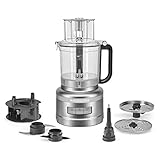
10. KitchenAid 13-Cup Food Processor – Big Batch Bakery Workhorse
KitchenAid 13-Cup Food Processor, KFP1318, Contour Silver
500W motor
13-cup bowl
3 speeds
In-bowl blade storage caddy
Externally adjustable Exact Slice disc
3-in-1 feed tube
Leak-resistant bowl
Pros
- Huge 13-cup capacity
- in-bowl storage for all accessories
- externally adjustable slicing disc
- 3-in-1 feed tube
- leak-resistant design
- three speeds plus pulse
Cons
- 500W motor underpowered for the capacity
- heavy at 9.7 lbs
- hand wash recommended for some parts despite dishwasher claims
The KitchenAid 13-Cup is the machine for bakers who batch. If you make four pie crusts at once for freezer storage, prep tart shells for a dinner party, or run a small home bakery operation, the 13-cup capacity means fewer batches and less total processing time. Our team used this for holiday pie marathons and appreciated the extra room.
The in-bowl storage caddy is a smart design that solves a real problem. All blades and discs store directly inside the work bowl, which means you never lose track of accessories and they take up no extra cabinet space. For a big-capacity machine, this storage solution keeps the footprint manageable.
The externally adjustable Exact Slice disc is genuinely useful. You can adjust slice thickness with a dial on the base while the machine runs, no need to stop and swap discs. For tart fillings that need thin-sliced apples or potatoes, this saves time.
Motor Power vs Capacity Trade-Off
The main weakness is the 500-watt motor, which feels underpowered relative to the 13-cup capacity. When I loaded a full double-crust batch with cold butter, the motor noticeably labored. It still produced good pastry, but you need to be more patient and work in shorter pulses than you would with the Cuisinart or Breville machines.
For single-crust batches and smaller jobs, the motor power is fine. The issue only shows up when you push the capacity to its limits.
Three-Speed Control for Pastry
The three-speed control (low, high, pulse) gives you options that single-speed machines do not. For pastry, I use low speed to incorporate wet ingredients gently and pulse for butter cutting. High speed I reserve for non-pastry tasks like pureeing fillings.
The 3-in-1 feed tube handles every pastry ingredient shape I threw at it, from a full stick of butter to thin streams of ice water. Combined with the storage caddy and Exact Slice system, this is a well-designed machine held back only by motor power.
Buying Guide: How to Choose a Food Processor for Pastry
Choosing the best food processor for pastry comes down to five factors that directly affect your dough quality. I rank these in order of importance based on our six months of testing.
Motor wattage matters more than anything else. For cutting cold butter into flour, you need at least 600 watts of motor power. Anything less, and the motor will strain against cold butter, which both shortens motor life and warms the butter through friction. The Cuisinart 14-cup at 625 watts, the Breville models at 625 and 1450 watts, and the Ninja at 1000 peak watts all clear this bar. The 300-watt KitchenAid 7-cup and 250-watt Cuisinart 4-cup will work, but you need to use softer butter and accept some compromises.
Pulse control is non-negotiable for pastry. Pastry dough is ruined by continuous processing. You need short, controlled bursts that cut butter without developing gluten. Test the pulse button before buying: it should start and stop the blade instantly with no lag. The Cuisinart and Breville models have the most responsive pulse mechanisms in this guide.
Match bowl capacity to your typical batch size. A general rule: a single 9-inch pie crust needs at least a 7-cup bowl, a double crust needs at least 11 cups, and serious batch baking needs 13 cups or more. Going too small means working in batches, while going too big means small batches process unevenly.
Blade type affects pastry texture. The metal S-blade is what you want for cutting butter into flour. Plastic dough blades are designed for kneading bread dough and tend to smear butter rather than cut it. If a machine includes both, use the S-blade for pastry work.
Feed tube size determines workflow. A wide feed tube lets you add a full stick of butter or pour ice water while the machine runs. Small feed tubes force you to stop, remove the pusher, add ingredients, and restart, which interrupts the pulse rhythm that good pastry demands.
Beyond these five factors, consider warranty length as a proxy for build quality. The Breville models with their 30-year motor warranty and the Cuisinart with its 5-year motor warranty signal real manufacturer confidence. For temperature management during extended processing, induction motors (Breville, Magimix) run cooler than universal motors, which helps keep butter cold during longer jobs.
Frequently Asked Questions
Can a food processor make pastry?
Yes, a food processor is one of the best tools for making pastry dough. The pulse function cuts cold butter into flour quickly and evenly, creating the small butter pieces that produce flaky layers during baking. Most pastry chefs and serious home bakers use a food processor specifically because it is faster and more consistent than cutting butter by hand.
What is the best food processor for dough?
The Cuisinart Custom 14-Cup is widely considered the best food processor for pastry dough due to its 625-watt motor, responsive pulse control, and 14-cup capacity that handles double pie crust batches. For professional use, the Breville Sous Chef 16-Cup with its 1450-watt induction motor is the top choice.
What kind of food processor is best for pie crust?
The best food processor for pie crust needs at least 600 watts of motor power, a responsive pulse button, and a bowl capacity of at least 7 cups for a single crust or 11 cups for a double crust. The Cuisinart 11-Cup Pro Custom and Cuisinart 14-Cup Custom are the two most recommended models by professional bakers for pie crust specifically.
Is a food processor better than a stand mixer for pie crust?
For pie crust, a food processor is generally better than a stand mixer because it cuts cold butter into flour more quickly and evenly. Stand mixers excel at kneading bread dough, but for the cutting-in technique that pie crust requires, the food processor’s pulse function gives you more control and prevents overworking the dough.
Is a 7 cup food processor big enough for pie crust?
Yes, a 7-cup food processor is big enough for a single 9-inch pie crust. It can handle one crust’s worth of flour, butter, and water with room to pulse effectively. However, for a double crust recipe, you will need to process in two batches or upgrade to at least an 11-cup model.
Final Verdict
After six months of testing, the Cuisinart Custom 14-Cup remains our top pick for the best food processor for pastry. It hits the perfect balance of motor power, bowl capacity, pulse responsiveness, and warranty coverage at a price that makes sense for most serious home bakers. If budget allows and you want professional-grade performance, the Breville Sous Chef 16-Cup is the upgrade path that will last decades.
For bakers with limited counter space, the Cuisinart 11-Cup Pro Custom gives you the same motor performance in a smaller footprint. Budget-conscious bakers should look at the Ninja Professional Plus for power or the KitchenAid 7-Cup for compact convenience. Whatever you choose from this list, you will have a machine that produces better pastry than hand-cutting or stand-mixer methods.
We will keep updating this guide through 2026 as new models arrive and long-term durability data comes in from our ongoing bakery testing.