
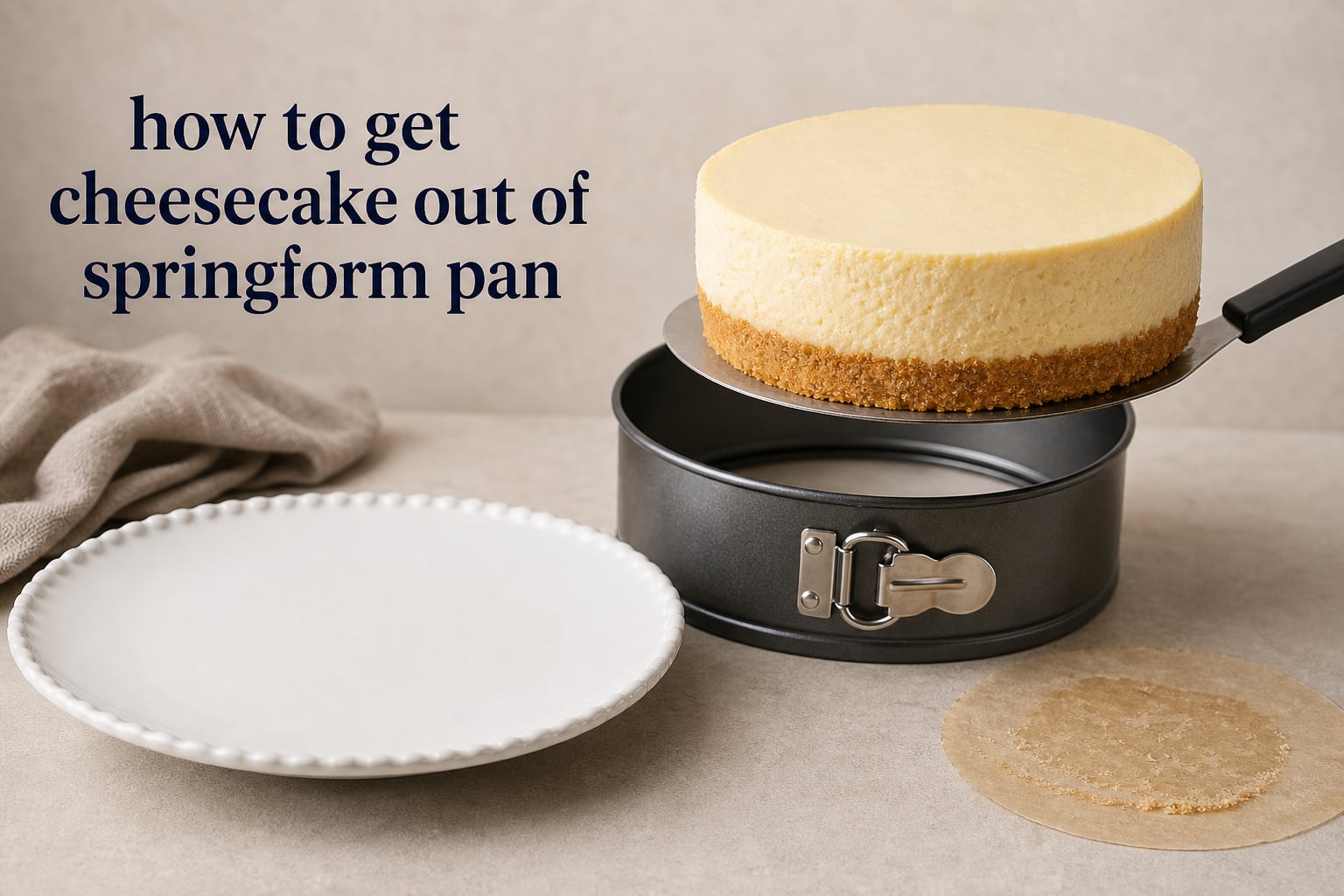
Learning how to get cheesecake out of a springform pan is mostly about timing, not strength. Cool the cheesecake completely, chill it until firm, loosen the sides, release the ring, and only then decide whether it needs to leave the metal base.
That order protects the smooth filling and the crumb crust that took so much care to make. A springform pan is designed to open around the cake, so the ring is usually easy to remove when the cheesecake is cold and the edge has been released.
The base is the part that worries many home bakers most. Bakers often report that a beautiful cheesecake breaks when they try to force it off the bottom, so I treat moving it to a serving platter as optional rather than mandatory.
Table of Contents
How to Get Cheesecake Out of a Springform Pan: Use a Cold Cake and Gentle Pressure
Use this six-step method after the cheesecake has cooled and chilled. It works for most baked cheesecakes made in a standard loose-bottom springform pan.
- Cool the cheesecake fully, then refrigerate it until cold and firm.
- Run a warm, dry offset spatula around the inside edge.
- Set the pan on a steady, flat work surface and open the latch slowly.
- Lift the ring straight up without twisting it across the filling.
- Keep the cake on its base or loosen the crust from below with a cake lifter.
- Slide the cheesecake onto a serving platter with steady, even support.
Step 1: Let the cheesecake cool completely and chill it before removal
Let a baked cheesecake cool completely before you try to open the springform pan. Once it is cool, refrigerate it until the filling is firm; chilling overnight is a common approach when the recipe allows it.
Cold filling holds its shape better than warm filling, and the chilled crust is less likely to crumble as you work. If the top still feels soft or looks loose in the center, leave the ring on and give it more refrigerator time.
Step 2: Loosen the sides with a warm, dry offset spatula
Warm the blade of a thin offset spatula or knife under hot water, dry it well, and place it against the inside wall of the pan. Keep the blade vertical, then make one slow pass around the whole edge to loosen the sides.
Drying the blade matters because stray water can mark the cheesecake surface. Wipe and rewarm the spatula if it starts dragging, rather than sawing back and forth through the filling.
An offset spatula is especially helpful because its bent handle keeps your knuckles above the rim while the thin blade stays close to the pan. Press the tool against the metal, not into the cheesecake, to preserve a neat outer edge.
Step 3: Open the springform latch slowly while the pan stays flat
Place the chilled pan on a counter or serving board before you release the springform latch. Hold the ring with one hand, unbuckle the latch with the other, and let the ring expand on its own.
Do not pull the ring outward against the cheesecake. If it catches at one spot, close the latch, run the offset spatula through that area again, and try once more.
Step 4: Lift the ring straight up after it has fully released
Lift the open ring straight up with both hands. A straight lift keeps the metal from scraping the sides or dragging crumbs over the top edge.
Pause if you see the filling cling to the ring. Put the ring back down gently, loosen that section with the warm dry spatula, and repeat the lift instead of forcing the pan upward.
Step 5: Keep the cheesecake on its base unless you need to remove the crust from the pan
Serving cheesecake on the springform base is completely acceptable, especially when the base is thin or the crust is delicate. Put the base on a serving platter or cake stand and cut slices carefully without digging into the metal.
To remove the crust from the pan, first check whether you used parchment paper under the crust. With parchment in place, slide a long, thin cake lifter or metal spatula between the paper and the base, supporting as much of the cheesecake as possible.
Without parchment paper, work the cake lifter under the crust in tiny increments around the edge before attempting a full slide. The goal is to release the crust gradually, not to lift the cheesecake from one side.
Step 6: Transfer the cheesecake to a serving platter with full support
Set a flat serving platter beside the cake at the same height. Slide the cake lifter under the loosened crust, keep the cheesecake level, and use a second wide spatula for support if the cake is large.
Make one calm, continuous transfer rather than stopping halfway. If the cheesecake feels heavy or fragile, leave it on the loose bottom pan and focus on a clean slice instead.
Prevent Sticking by Lining the Base and Preparing the Sides Before Baking
Preventing a stuck cheesecake starts before the filling goes into the oven. Line the loose bottom pan with a parchment paper round, then prepare the sides according to your recipe with non-stick baking spray or another recommended coating.
Cut the parchment so it lies flat without climbing far up the sides. A smooth liner supports the crust during transfer and avoids a folded edge that can distort the cheesecake.
If you bake in a water bath, keep water from reaching the springform pan and soaking the crust. Bakers frequently mention water-bath leaks and soggy crusts as a separate problem from sticking, but both can make the base harder to handle.
Free a Stuck Cheesecake with Gentle Warmth, Not Force
Free a stuck cheesecake by addressing the exact place where it is stuck. If the ring will not lift, repeat the warm, dry offset-spatula pass around the sides before touching the latch again.
If the crust clings to the metal bottom, let the cheesecake stay cold while you work a thin cake lifter underneath in small sections. For a stubborn bare-metal base, gentle warmth applied to the outside of the base can help release the butter in the crust; use only a brief, controlled amount of heat and keep the cheesecake level.
Forgot to grease the sides? Start with the warm, dry blade method and move slowly. Even an ungreased edge can release cleanly when the filling is thoroughly chilled and the tool stays against the pan wall.
No-Bake and Mini Cheesecakes Need a Firmer Chill Before They Release
No-bake cheesecake needs to be fully set before the springform ring comes off because there is no baked structure to steady the filling. Leave the ring in place until the recipe’s chilling stage is complete, then loosen the edge with the lightest possible touch.
Mini cheesecakes usually release best after chilling in their pan. Run a thin tool around each edge if needed, then lift each cheesecake from below or use the pan’s removable base; do not pull the filling from the top.
Common Mistakes Cause Most Cheesecake Breaks During Removal
Most removal problems come from rushing one of four moments: cooling, loosening, unlatching, or transferring. Give the cheesecake time to become cold, and make a full pass around the edge before opening the springform latch.
- Removing the ring before the cheesecake is chilled can tear the filling.
- Skipping parchment paper makes a plated transfer harder, though serving on the base still works well.
- Forcing a cake lifter beneath the crust can crack the base.
- Letting water into a water-bath pan can leave a damp, fragile crust.
- Twisting the ring as it lifts can rough up the sides of the cheesecake.
If a small crack or rough spot appears, do not keep handling it to make it perfect. Put the cheesecake on its platter or base, chill it again if needed, and add a topping only when you are ready to serve.
These Common Questions Clarify Cooling, Sticking, and Mini Cheesecakes
Do you remove cheesecake from a springform pan before refrigerating?
No. Let the cheesecake cool completely, then refrigerate it in the springform pan until it is cold and firm. The ring supports the filling as it chills. Remove the ring after chilling and after you have loosened the inner edge with a warm, dry offset spatula.
How do I keep my cheesecake from sticking to a springform pan?
Line the loose bottom pan with a parchment paper round before adding the crust, and prepare the pan sides as your recipe directs with non-stick baking spray or another coating. After chilling, run a warm, dry offset spatula against the pan wall before opening the springform latch.
How do you get mini cheesecakes out of a pan?
Chill mini cheesecakes fully in their pan first. Loosen each edge with a thin tool if it clings, then lift from below or use the pan’s removable base. Avoid pulling a mini cheesecake from the top, because the filling can separate from its crust.
How long do you let cheesecake cool before taking out of the pan?
Let the cheesecake cool completely, then refrigerate it until cold and firm before removing the ring. Many recipes call for an overnight chill. Follow your recipe’s cooling and chilling directions, because a cheesecake that still feels soft needs more time in the pan.
A Cold, Loosened Cheesecake Comes Out Cleanly
How to get cheesecake out of a springform pan comes down to a simple sequence: cool, chill, loosen, unlatch, and lift. Keep the cheesecake on the base when that feels safer, or transfer it with parchment paper and broad support when a bare serving platter is the goal.
Take your time at the edge and base, because the dessert does not need force to look good. Once the ring is off, a neat cheesecake is ready for its finishing touches and the first slice.