
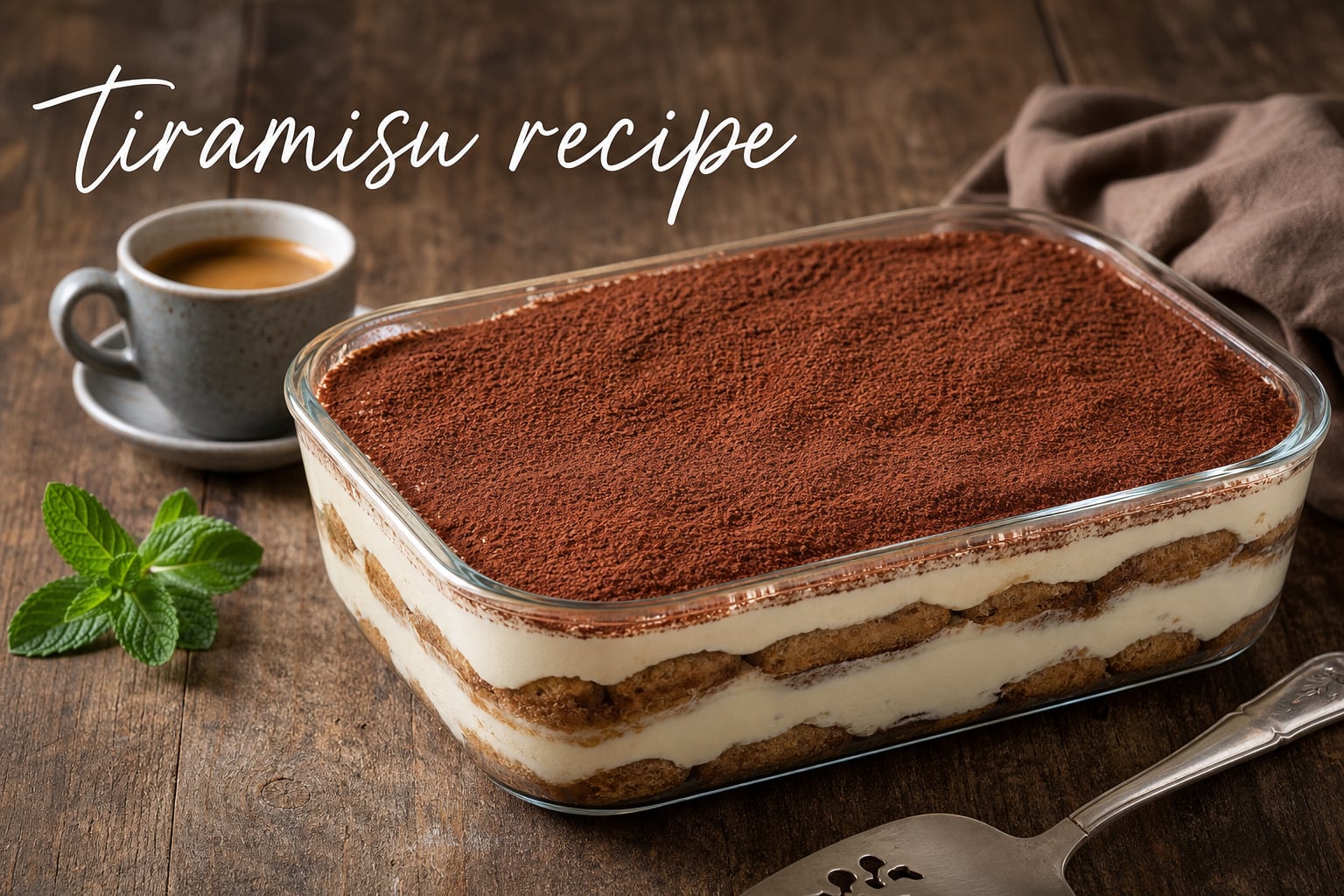
At 7ate9 Bakery, tiramisu is the dessert we get asked about more than almost any other. There is something about that coffee-soaked layer cake with its cloud-like mascarpone cream that makes people feel like they are sitting in a little cafe in northern Italy. The good news is that a great tiramisu recipe is completely doable at home, and I am going to walk you through every single step.
This guide covers everything you need: the full ingredient list with measurements, the exact technique for dipping ladyfingers without turning them to mush, how to build a mascarpone filling that stays light, and how long to chill before serving. I will also answer the questions that come up over and over in our baking classes, like what alcohol to use, whether raw eggs are safe, and how to make this a day ahead without losing any texture.
By the time you finish reading, you will have a reliable tiramisu recipe you can pull out for dinner parties, holidays, or just a quiet Sunday treat. Let’s get into it.
Table of Contents
What Is Tiramisu?
Tiramisu is a classic Italian no-bake dessert made of layers of espresso-dipped ladyfingers and a sweet mascarpone cream, finished with a generous dusting of cocoa powder. The name translates loosely to “pick me up” in Italian, which makes perfect sense once you taste the espresso and cocoa working together.
Most food historians place its origin in the Veneto region of Italy, in or around the city of Treviso, sometime in the 1960s or 1970s. While the exact inventor is still debated, the dessert spread quickly through Italian restaurants and then around the world. A traditional tiramisu recipe uses just a handful of humble ingredients, and the magic is in the technique rather than fancy components.
What makes tiramisu different from other layered desserts is the contrast. The ladyfingers soak up coffee and a splash of liqueur but should still hold their shape. The filling should be airy, almost like a custard that forgot it was supposed to be heavy. And the cocoa on top adds just enough bitterness to balance all that richness. Once you understand those three textures, the recipe comes together fast.
Tiramisu Recipe Ingredients (and Why Each Matters)
Here is the full ingredient list for one 8×8 inch baking dish or a 9×9 inch dish (about 9 to 12 servings). I have grouped them by what they do so you can see why each one is there.
For the Coffee Mixture
1 and 1/2 cups strong brewed espresso, cooled to room temperature. Espresso is traditional and gives the most authentic flavor. If you do not have an espresso machine, use strongly brewed dark roast coffee, double strength.
3 tablespoons liqueur (Marsala, dark rum, or coffee liqueur). This adds the classic grown-up flavor. You can leave it out entirely for an alcohol-free version and add a teaspoon of vanilla instead.
2 tablespoons granulated sugar, optional, stirred into the coffee if you like a sweeter soak.
For the Mascarpone Filling
8 large egg yolks (or 4 whole eggs for a richer, fluffier version). The yolks are cooked gently over a double boiler, which makes them safe to eat and gives the filling its custardy base.
3/4 cup granulated sugar, whipped with the yolks to create a thick, pale zabaglione.
16 oz (about 2 cups) mascarpone cheese, at room temperature. This is the heart of the filling. Do not substitute cream cheese unless you have no other option, because the flavor and texture are completely different.
1 and 1/4 cups heavy whipping cream, cold. Whipped to stiff peaks, this lightens the mascarpone so the filling does not weigh down the layers. Some traditional recipes use whipped egg whites instead, and I will cover that variation below.
1 teaspoon vanilla extract.
For Assembly
About 36 to 40 savoiardi (Italian ladyfingers), the crisp dry kind, not the soft sponge type. You need enough to make two full layers in your dish.
2 to 3 tablespoons unsweetened cocoa powder, for dusting the top and the middle layer. Use a good quality cocoa for the best flavor.
Optional: dark chocolate shavings or a second dusting of cocoa just before serving.
Equipment You’ll Need
You do not need anything fancy, but a few tools make the job much easier:
- One 8×8 or 9×9 inch baking dish (a 9×13 works too if you scale the recipe up by half).
- A double boiler or a heatproof bowl set over a saucepan of barely simmering water. This is for cooking the egg yolks gently.
- A hand mixer or stand mixer for whipping the cream and the yolks.
- An offset spatula for spreading the filling in even layers.
- A fine mesh sieve or sifter for dusting the cocoa.
- A shallow dish for the coffee mixture when dipping ladyfingers.
How to Make Tiramisu Step by Step
This is the main event. Follow these steps in order and you will have a restaurant-quality tiramisu by the end of the day.
Step 1: Brew the Coffee and Let It Cool
Start by brewing your espresso or strong coffee. You need it to be at room temperature, or even slightly chilled, before you dip the ladyfingers. Hot coffee will dissolve the biscuits and turn everything mushy. I usually brew mine first thing, then move on to the filling while it cools. Stir in your liqueur and the optional sugar once the coffee is warm but not hot, then set it aside.
Step 2: Make the Zabaglione (Cooked Yolk Base)
Set up your double boiler with about an inch of simmering water in the bottom pan. The water should not touch the top bowl. In the top bowl, whisk together the egg yolks and sugar until combined. If you are adding a splash of Marsala to the filling itself, add it now.
Set the bowl over the simmering water and whisk constantly for about 8 to 10 minutes. The mixture will thicken, turn pale yellow, and coat the back of a spoon. This is your zabaglione, and cooking it this way means the yolks are safe to eat. Remove the bowl from the heat and let it cool to room temperature, whisking occasionally so it does not form a skin.
This is the step where temperature control matters most. If the water is boiling hard or you stop whisking, the eggs can scramble. Keep the heat gentle and your arm moving.
Step 3: Whip the Cream and Fold the Mascarpone
In a separate bowl, whip the cold heavy cream with the vanilla until you reach stiff peaks. This means when you lift the beaters, the cream holds its shape in a point that does not droop. Do not over-whip, or you will start making butter.
Once the zabaglione has cooled, gently fold in the mascarpone cheese a portion at a time. Use a spatula and a folding motion, cutting down through the middle and lifting from the bottom. The goal is to keep air in the mixture. Then fold in the whipped cream the same way. You should end up with a light, smooth, spreadable cream.
Step 4: Dip the Ladyfingers
Pour your cooled coffee mixture into a shallow dish wide enough to fit a ladyfinger. Working one at a time, dip each ladyfinger for about one second per side. The classic instruction from Italian home cooks is “a dip, not a soak.” If you leave the biscuit in too long, it will fall apart and your tiramisu will be soggy.
Arrange the dipped ladyfingers in a single layer in the bottom of your baking dish, breaking some in half to fill gaps. You want a fairly tight layer with not too much overlap.
Step 5: Build the Layers
Spread half of the mascarpone filling evenly over the first layer of ladyfingers. Use your offset spatula to get a smooth, even surface, reaching into the corners. Dust lightly with about a tablespoon of cocoa powder.
Repeat: dip another batch of ladyfingers and arrange them over the cream. Spread the remaining mascarpone filling on top, smoothing it out as evenly as you can. How the top looks now is how it will look when you serve it, so take a moment to make it neat.
Step 6: Chill, Then Dust with Cocoa
Cover the dish tightly with plastic wrap and refrigerate. You need a minimum of 4 to 6 hours for the layers to set and the flavors to come together. For the best result, chill overnight. I almost always make tiramisu the day before I serve it, because 24 hours in the fridge turns a good tiramisu into a great one.
Dust the top generously with cocoa powder just before serving, not before chilling. If you dust early, the cocoa will weep and turn muddy. Use a fine sieve and tap it gently for an even, snowy layer. Add chocolate shavings if you want a little extra finish.
The Secret to a Good Tiramisu
People ask us all the time, “What is the secret to a good tiramisu?” After making hundreds of these at the bakery, I can tell you it comes down to four things.
First, dip the ladyfingers fast. A one-second dip per side is plenty. The biscuits will continue softening in the fridge as the dessert chills, so what feels slightly firm at assembly will be perfect by the time you serve.
Second, use room temperature mascarpone. Cold mascarpone will clump when you fold it, leaving lumps in your cream. Let it sit out for about 30 minutes before you start.
Third, fold gently. The air you whip into the cream is what makes the filling light. Stir it aggressively and you will end up with a dense, heavy layer.
Fourth, give it time. Tiramisu is a make-ahead dessert by nature. The flavors need hours to meld and the texture needs time to set. Rushing the chill is the number one reason homemade tiramisu disappoints.
Alcohol Variations and Substitutions
The traditional spirit in tiramisu is sweet Marsala wine, which is what gives the dessert its signature caramel-ish depth. But there is no single correct answer to what alcohol goes in tiramisu, and different regions of Italy use different options.
Here are the most common choices and what they bring:
- Marsala wine (traditional): adds a warm, slightly sweet, nutty flavor. This is the closest to the original.
- Dark rum: a very popular choice that adds a deeper, slightly spiced kick. My personal favorite.
- Coffee liqueur (like Kahlua): doubles down on the coffee flavor and pairs beautifully with the espresso soak.
- Amaretto: brings a soft almond sweetness that plays well with the mascarpone.
- Grand Marnier or other orange liqueur: adds a bright citrus note that cuts through the richness.
- Tia Maria or Baileys: creamy coffee liqueurs that blend right into the filling.
For an alcohol-free tiramisu, simply omit the liqueur and add a teaspoon of vanilla extract and a pinch of rum extract to the coffee mixture. The dessert will still be rich and authentic in flavor. You can also substitute strong coffee for the espresso if you want a milder coffee taste, especially when serving kids.
Make-Ahead, Storage, and Freezing
Tiramisu is one of the best make-ahead desserts you can make. In fact, it is better the next day. Plan to make it at least 6 hours before serving, and ideally a full 24 hours ahead so the layers set and the coffee flavor soaks through evenly.
Covered tightly in the fridge, tiramisu keeps well for up to 4 days. After that, the texture starts to break down and the ladyfingers become too soft. Keep it covered to stop it from absorbing other flavors from the fridge.
You can freeze tiramisu, though the texture changes slightly. Freeze it whole, well wrapped in plastic and then foil, for up to 2 months. Thaw it overnight in the fridge before serving. Do not refreeze after thawing, and skip the cocoa dusting until right before serving so it does not get muddy.
Tiramisu Recipe FAQ
What is the secret to a good tiramisu?
The secret to a good tiramisu is dipping the ladyfingers for just one second per side so they soak up flavor without turning soggy, using room temperature mascarpone so the filling stays smooth, folding the whipped cream gently to keep the texture light, and chilling the dessert for at least 6 hours (ideally 24) so the layers set and the flavors meld.
What are the ingredients of tiramisu?
The main ingredients of tiramisu are espresso or strong coffee, crisp Italian ladyfingers (savoiardi), mascarpone cheese, egg yolks, sugar, heavy cream, cocoa powder, and a liqueur such as Marsala wine or dark rum. Vanilla extract is often added for extra flavor.
What’s the alcohol that goes in tiramisu?
The traditional alcohol in tiramisu is sweet Marsala wine. Other popular options include dark rum, coffee liqueur like Kahlua, amaretto, Grand Marnier, and Tia Maria. You can also make tiramisu without alcohol by replacing the liqueur with vanilla extract and a pinch of rum extract.
What is the difference between Italian tiramisu and regular tiramisu?
Authentic Italian tiramisu uses whole eggs or egg yolks cooked into a zabaglione, mascarpone cheese, savoiardi ladyfingers, espresso, Marsala wine, and cocoa powder. Many American versions swap the egg whites for whipped cream, which makes the filling lighter and easier, and sometimes use regular brewed coffee instead of espresso.
Is tiramisu safe to eat with raw eggs?
Tiramisu is safe to eat if the eggs are cooked gently over a double boiler into a zabaglione before being mixed with the mascarpone. This process pasteurizes the yolks. If you prefer to avoid eggs entirely, you can use a no-egg tiramisu recipe that relies on whipped cream and mascarpone for the filling.
How long does tiramisu need to chill?
Tiramisu needs to chill for at least 4 to 6 hours before serving so the layers set and the flavors blend. For the best texture and flavor, chill it for a full 24 hours. Tiramisu is a make-ahead dessert and is always better the next day.
Can I substitute cream cheese for mascarpone in tiramisu?
You can substitute cream cheese for mascarpone if you have no other option, but the flavor and texture will be different. Mascarpone is milder, richer, and softer. If you must substitute, use a blend of 8 oz cream cheese, 1/4 cup heavy cream, and 2 tablespoons sour cream to get closer to the real thing.
Time to Build Your Tiramisu
A great tiramisu recipe is really about patience and a few simple techniques. Brew strong coffee, cook the yolks gently over a double boiler, dip the ladyfingers in a flash, fold the cream with a light hand, and give the whole thing time to chill. Do those five things and you will have a dessert that rivals anything from a restaurant.
This is one of those recipes that becomes a signature once you make it a couple of times. At 7ate9 Bakery, it is one of the most-requested desserts in our 2026 lineup, and once you see how straightforward it is, you will understand why. Make it the day before your gathering, dust it with cocoa right before serving, and watch it disappear.
If you give this tiramisu recipe a try, take note of which liqueur you used and how long you chilled it. Those two small choices make the biggest difference, and once you find your favorite combo, it becomes your recipe. Happy baking.