
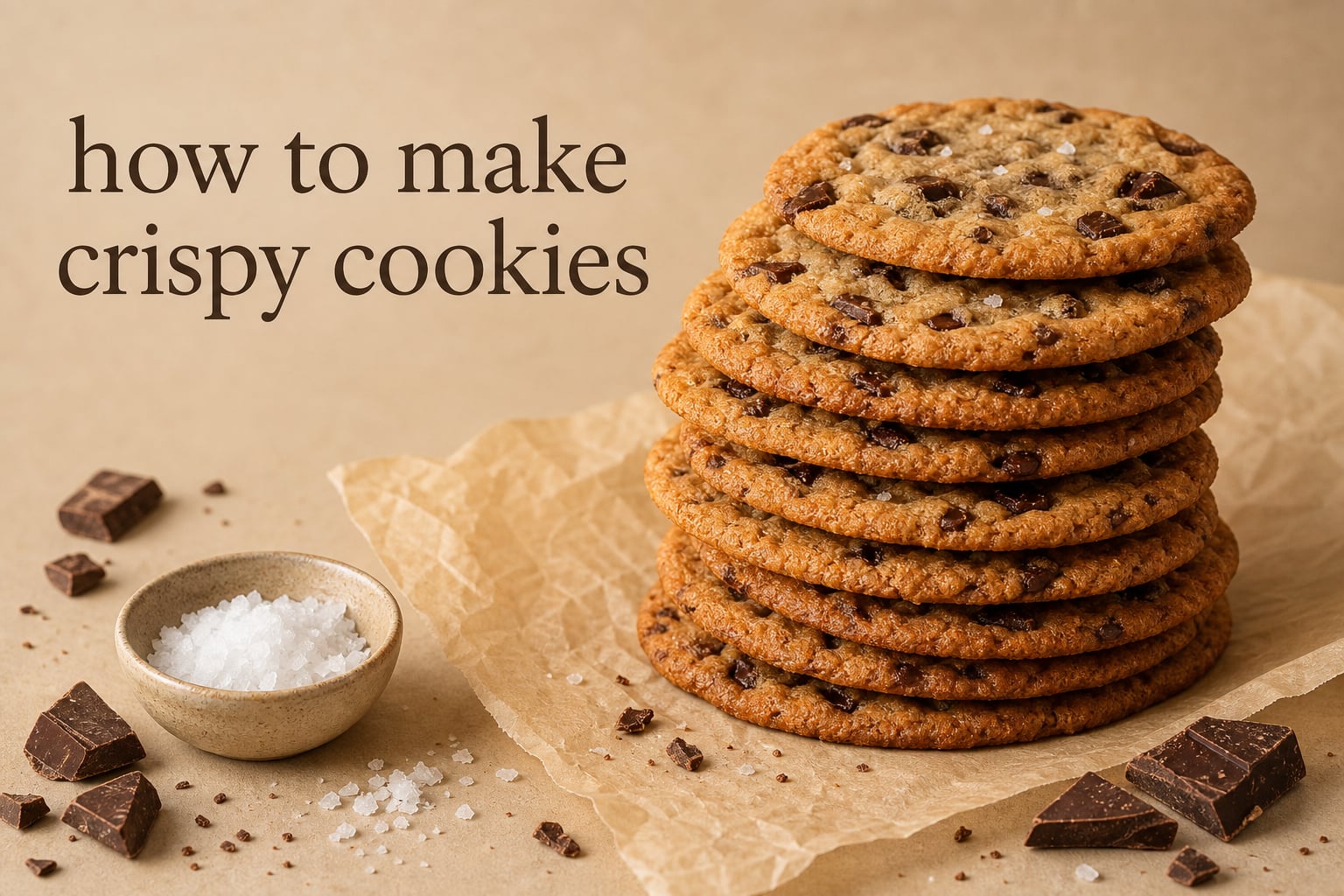
Learning how to make crispy cookies comes down to controlling spread, moisture, and browning. Use a dough that spreads thin, lean toward white sugar instead of lots of brown sugar, bake at 325–350°F, and let the cookies cool completely before judging their snap.
That formula gives you buttery crisp edges and a delicate crunch rather than a thick, cakey cookie. It also explains why a batch can look done yet soften after cooling: a little extra moisture or an underheated oven changes the cookie texture fast.
For thin and crispy chocolate chip cookies, I focus on the variables that make repeatable results possible instead of treating every tip as a rule. Melted butter can help a cookie spread, for example, while a long chill usually limits that spread; both techniques have a place, but they lead to different cookies.
Table of Contents
Crispy cookies come from thin dough, low moisture, and full browning
To make cookies crisp at home, build the batch around five connected choices. The goal is a thin cookie that loses enough water in the oven for sugar and fat to set into a firm, golden surface.
- Choose butter and sugar for spread. A generous fat level and more granulated sugar than brown sugar help dough flatten and dry into a crisp finish.
- Measure flour accurately. Too much flour makes a thicker, softer cookie. Weighing it is the clearest route; if you use cups, fluff the flour, spoon it in, and level it without packing.
- Keep portions modest. Smaller mounds spread and bake through more readily than very large scoops, giving more surface area for crunch.
- Bake at 325–350°F until deeply golden at the edges. Pale cookies may be set but still hold too much moisture for a real snap.
- Cool completely before storing. Steam trapped in a container turns crisp cookies soft, even when the bake itself was right.
Quick answer: Crispy cookies are thin, flat cookies with a firm snap. More white sugar, enough butter to promote spread, carefully measured flour, and baking until golden brown all move a batch toward that result.
Crispness happens when moisture leaves and sugar browns
A cookie becomes crisp when the oven drives out enough water for the structure to dry and set. As butter melts, the dough spreads; the thinner shape gives heat a shorter path to the center, so more moisture can evaporate before the edges become too dark.
Sugar supports that process in two ways. Granulated white sugar encourages spread and contributes to a dry, crackly finish, while brown sugar brings molasses and extra moisture that often produces a chewier cookie.
Heat also creates the familiar toasted flavor. Caramelization and the Maillard reaction deepen color and make the buttery, toffee-like notes people expect in Tate’s style cookies and other homemade crunchy cookies.
Crispy and crunchy cookies differ mainly in how they break
Crispy usually describes a thin, delicate cookie that snaps cleanly and may soften quickly in humid air. Crunchy can describe a thicker, drier cookie with a harder bite, often from nuts, oats, cereal, or a longer bake.
If you want crispy outside, chewy inside, stop the bake when the edges are golden and the middle still looks slightly underdone. If you want a cookie crisp all the way through, make the portion thinner and give it enough extra time for the center to dry.
Crispy cookie ingredients favor fat, white sugar, and measured flour
Most cookie recipes can move toward a crisp finish without becoming dry or bland. The ingredient choices below explain what to adjust and why, so you can read any crispy cookie recipe with more confidence.
Butter makes cookies spread and adds the flavor crisp cookies need
Butter is both fat and water. When it melts early in baking, the dough loosens and spreads; as the water cooks off, the remaining fat leaves a rich flavor and a tender, shattering bite.
Melted butter often creates more spread, which is why bakers in forum discussions report success with it for thin cookies. Softened butter can still make a crisp cookie when the formula has enough butter and white sugar, but it tends to hold more air when creamed, which can make cookies thicker.
Do not assume that melted butter belongs in every recipe. Follow the recipe’s specified state first; changing butter temperature also changes how the flour hydrates and can turn a familiar dough loose or greasy.
White sugar creates a drier, flatter finish than brown sugar
Granulated sugar is the usual lead sugar for a crisp cookie. It dissolves as the dough warms, helps spread the cookie, and supports a brittle surface after cooling.
Brown sugar has a welcome caramel flavor, but its molasses adds moisture. A dough with more brown sugar is commonly softer and chewier, so use it as a supporting flavor when your target is a thin crispy cookie.
Some recipes use a small amount of corn syrup. It can support browning and a glossy, caramelized character, but it is a formula-specific choice rather than a required ingredient for crunchy cookies.
Flour measured lightly keeps the cookie thin instead of puffy
Extra flour is one of the quietest causes of disappointing cookie texture. It absorbs more of the available moisture and builds a thicker dough that may remain soft in the center.
A kitchen scale avoids the cup-to-cup variation. When a recipe lists flour by volume only, stir the flour in its container, spoon it gently into the measuring cup, and sweep off the excess with a straight edge.
Leavening controls lift, and salt makes browned flavors clearer
Too much baking soda or baking powder can give cookies more lift than a crisp style needs. Use the listed amount, and check that baking soda is fresh when a batch repeatedly bakes pale or oddly puffy.
Salt does not make cookies crisp, but it makes butter, chocolate, and caramelized sugar taste more distinct. A small sprinkle of flaky sea salt after baking can also sharpen the contrast between sweet chocolate and buttery crisp edges.
Chocolate chunks and chips change texture less than dough thickness does
Chocolate chips, chopped chocolate, or chunks all work in a crisp cookie. Chopped chocolate spreads into thinner puddles, while chips hold their shape more clearly; neither choice can compensate for dough that is too thick or underbaked.
Keep bulky mix-ins in proportion to the scoop. An overloaded portion cannot spread evenly and often leaves a soft pocket underneath the add-ins.
How to make crispy cookies: spread the dough thin and bake until golden
This method works as a technique guide for cookies from scratch, especially chocolate chip doughs. Start with a recipe formulated for a thin or crisp result, then use these steps to get the texture the ingredient list promises.
Step 1: Preheat the oven long enough for the pan environment to stabilize
Set the oven to the recipe temperature, usually within the 325–350°F range for a crisp style. Give it time to preheat fully, then use an oven thermometer if batches brown too quickly, too slowly, or differently from one rack to the next.
Built-in oven displays can be off enough to matter for a thin cookie. A lower-than-expected oven dries the dough slowly and may leave it soft, while an overly hot oven can darken the rim before the center loses moisture.
Step 2: Mix only until the flour disappears
Cream, whisk, or stir the butter and sugars exactly as the recipe directs, then add the dry ingredients. Stop as soon as you no longer see dry streaks of flour.
Long mixing after flour is added builds gluten, which can make the final cookie tougher and less delicate. Fold in chocolate and other add-ins just until they are distributed.
Step 3: Portion small, even mounds with room to spread
Use a scoop or spoon to make equal portions. For a thin and crispy result, a smaller portion generally bakes more evenly than an oversized mound and gives you a larger area of browned edge.
Leave generous space between portions, because crisp dough is supposed to spread. A crowded sheet makes cookies run together and prevents air from circulating around each one.
Step 4: Use parchment on a light-colored sheet pan
Line a light-colored metal baking sheet with parchment paper. Parchment limits sticking and helps promote even bottoms, while a pale pan gives you more control before the underside gets too dark.
A dark pan absorbs and transfers heat aggressively. It can be useful once you know your oven, but it raises the chance of a bitter bottom before the upper surface is fully dry.
Warning: A silicone baking mat can reduce spread in some doughs and may leave the cookie slightly thicker. It is not wrong to use one, but test it against parchment before deciding that your recipe needs more butter or less flour.
Step 5: Bake until the edges are golden brown, not merely set
Look for a consistent golden brown ring and a center that no longer appears wet. The cookie will firm up on the sheet as it cools, but a very pale center usually points to a softer finish.
Rotate the pan once if your oven has a known hot side. Do it only after the dough has started to set, since opening the door early can interrupt spread and encourage uneven cookies.
Step 6: Cool on the sheet briefly, then move cookies to a rack
Let fragile cookies rest on the hot sheet for a few minutes so they finish setting without breaking. Transfer them to a wire rack afterward, because airflow underneath helps steam escape instead of settling into the bottom.
Do not stack or seal cookies while warm. They may feel firm at the edge, but trapped heat will soften a carefully baked batch within minutes.
Your pan, oven, and dough temperature decide the final snap
Ingredient ratios get most of the attention, yet equipment and timing explain many batches that turn out different from the recipe photo. Keep these controls steady when you are trying to pinpoint what changed.
A thermometer gives you a real baking temperature instead of a guess
Place an oven thermometer near the center rack and compare it with the setting after the oven has been heating for a while. If it runs cool, cookies can spread and remain blond; if it runs hot, the bottoms may brown too fast.
Make one small adjustment at a time. Changing temperature, dough chill time, portion size, and pan type in the same batch makes it hard to learn which variable helped.
Chilled dough limits spread, while warmer dough makes thinner cookies
Cold dough holds its shape longer in the oven, a benefit for thick, chewy cookies. For crispy cookies, a short rest or room-temperature dough may be better when the recipe is designed to spread.
There is an exception: some thin-cookie recipes use chilled dough for flavor development and still spread because their butter and sugar ratios are high. Follow the recipe’s intended chill time, then judge the first tray before changing it.
A smaller scoop and a gentle flattening create more crisp surface
Use the same scoop for every cookie, and flatten the dough only if the recipe calls for it or your test cookie stays domed. A gentle press before baking can help a thick dough become thin and flat without adding extra flour.
Avoid pressing fresh-from-the-oven cookies with a spatula unless you are deliberately making a very thin style. That can squeeze out hot fat and make the texture greasy rather than crisp.
Crispy cookies stay consistent when you manage spread and moisture
The following habits are especially useful when you want a batch closer to store-bought crisp cookies. They also address the repeat problems home bakers describe: cookies that puff, stay soft, or spread into one thin sheet.
More white sugar and less brown sugar make a chewier formula crispier
If you are adapting a basic chocolate chip recipe, shift a modest part of its brown sugar toward granulated sugar rather than removing sugar outright. Removing sugar can reduce spread and browning, which works against the crisp finish you want.
Keep the total sweetener amount consistent unless you are testing a recipe created for a different ratio. Sugar changes structure as well as sweetness.
Melted butter can produce Tate’s style spread when the recipe supports it
For a thin, buttery cookie with a delicate snap, melted butter is often helpful because it starts the spreading process before the cookie enters the oven. It is one reason bakers commonly connect melted butter with a crisp result.
Mix melted butter with sugar as the recipe directs, then do not add extra liquid to compensate for a dough that seems softer than a creamed-butter dough. Let the first tray tell you whether the formula needs a short chill.
One test cookie prevents a whole sheet of surprises
Bake one cookie before portioning the full sheet if you are using a new recipe, a new pan, or a different brand of butter. A test shows whether the dough spreads too far, stays too tall, or needs a minute more in your oven.
If it spreads too much, chill the remaining dough briefly before trying again. If it stays too thick, let the dough warm slightly or flatten the next portion as appropriate for the formula.
Dry add-ins and a light hand protect a delicate cookie
Pat very wet additions dry and avoid adding extra liquid extracts beyond what a recipe specifies. Moisture that seems insignificant in the bowl can delay drying in a thin cookie.
For a simple flavor change, cinnamon or a pinch of espresso powder adds depth without changing the dough’s water balance. Choose finely chopped nuts sparingly if you want the cookie itself, rather than the nut, to provide the main snap.
Useful test: Write down the pan type, scoop size, dough temperature, rack position, and bake time for your best tray. A crisp cookie is sensitive to small changes, so those notes are more useful than relying on memory.
Cookies stay crunchy when they cool fully and are stored airtight
Freshly baked cookies keep giving off steam after they leave the oven. The storage rule is simple: cool them completely on a rack before putting them in any container.
An airtight container protects cookies from humid kitchen air
Store fully cooled cookies in an airtight container at room temperature. Humidity is the enemy of a crispy texture, so do not leave a lid ajar or store the container beside a steaming kettle, dishwasher vent, or warm oven.
Separate layers with parchment if the cookies have melted chocolate or a delicate surface. Do not add bread to the container; bread is often used to preserve softness, which is the opposite of this goal.
A short oven reheat restores softened cookies
If a cookie has lost its snap, place it on a baking sheet in a low oven, around 300°F, for a few minutes. Cool it again on a rack before tasting, because crispness develops as the cookie sheds the last bit of steam.
Use this for already baked cookies, not for dough that was underbaked in the first place. A cookie that is very pale and raw at the center needs a proper bake, not a brief re-crisping.
Freezing works best when moisture stays out
Freeze cooled baked cookies in a tightly sealed container or freezer bag with as much air pressed out as possible. Thaw them uncovered on a rack so condensation does not collect on their surface.
You can also freeze portioned dough, but expect a colder portion to spread less at first. Bake a single test portion from frozen or allow the dough to stand only as the recipe instructs.
Common crispy-cookie problems have specific fixes
When a batch misses the mark, identify the visible problem before changing ingredients. The same fix will not solve soft cookies, overly flat cookies, and dark-bottomed cookies.
Soft cookies need more drying, not always more flour
Soft cookies are often underbaked for a crisp style, stored while warm, or made with a high share of brown sugar. Bake the next tray until the edges and much of the top are golden, cool it fully on a rack, and assess only when it is at room temperature.
Check oven temperature before adding flour. Extra flour can make a cookie thicker and even less likely to dry through.
Puffy cookies need less lift or more planned spread
Puffy cookies may have too much flour, too much leavening, a long dough chill, or butter that was creamed to a very airy state. First confirm flour measurement and baking soda quantity, then follow the formula’s intended dough temperature.
If you are adapting a recipe, use a smaller scoop and flatten one test portion slightly. Do not make broad changes to sugar, butter, and leavening all at once.
Over-spread cookies need a cooler dough or a measured dry ingredient check
Cookies that merge into a thin sheet often come from warm dough, melted butter in a formula made for softened butter, too little flour, or a pan that is still hot from the previous tray. Chill the remaining dough briefly and always start the next batch on a cooled sheet.
Weigh the flour if possible. A scale reveals whether a loose cup measurement, rather than the recipe itself, caused the spread.
Pale cookies need a hotter actual oven or a little more time
Pale edges usually mean the sugars have not browned enough to create a crisp finish. Verify the oven with a thermometer, use the stated rack position, and extend the bake in short increments while watching the bottom.
A light-colored pan is useful here because it lets you bake for color on top without racing toward an overly dark base.
Dark bottoms need a lighter pan or a higher rack position
If the bottoms burn before the tops turn golden, switch from a dark sheet to a light one or move the rack up one position. Parchment adds a small buffer, while a double-pan method can slow bottom browning if it suits your oven.
Do not lower the temperature drastically without checking oven accuracy. A too-low bake can trade burnt bottoms for cookies that are still soft in the middle.
High-altitude cookies need small, documented adjustments
At higher elevations, lower air pressure can make cookies spread or dry differently from the same formula at sea level. Start by baking a small test batch, then adjust one detail at a time: a modest flour increase can help excessive spread, while a slight temperature change may help the cookie set predictably.
Local humidity, pan material, and oven behavior still matter, so there is no single altitude number that works for every kitchen. Record the exact change that improves your batch and repeat that version before experimenting again.
Crispy cookie questions have simple technique-based answers
How to make cookie crisp at home?
Use a dough that spreads thin, measure flour accurately, favor granulated sugar over a high share of brown sugar, bake at 325–350°F until golden, and cool cookies completely on a rack.
How to make cookies stay crunchy?
Cool cookies fully before sealing them in an airtight container at room temperature. Keep them away from humidity, and reheat softened baked cookies briefly in a low oven before cooling them again on a rack.
What to add to cookies to make them crispy?
Use the recipe’s butter, a higher proportion of granulated sugar than brown sugar, accurately measured flour, and the listed leavening. A small amount of corn syrup can support browning in recipes designed for it, but it is not required.
What causes crispy cookies?
Crisp cookies are thin enough for moisture to evaporate during baking. Melted fat and sugar help spread and browning, while a full golden bake and complete cooling create the final snap.
Crispy cookies are repeatable once you control moisture and spread
How to make crispy cookies reliably is no mystery: use a formula built for spread, measure flour lightly, bake until golden, and let every cookie cool before storage. Start with one test cookie, make one change at a time, and write down the version that gives you the snap you want in 2026.