

The best bookshelves for heavy books use a solid wood, thick engineered wood, or a steel frame, shelves at least three-quarter inch thick, and a screwed-in or braced back panel. That combination is what prevents sagging, bowing, and tip-over under concentrated weight from encyclopedias, medical textbooks, and art monographs.
That answer matters because heavy books break shelves in two separate ways. Bending happens when the board is thin or the unsupported span between two uprights is too long, so the middle dips under load. Tipping happens when the loaded unit’s center of gravity moves past its footprint, so the frame racks and eventually falls. Shelf thickness and span defeat the first problem. Bracing, a closed back, and wall anchors defeat the second.
We built this roundup around published specifications rather than adjectives. Every weight figure below is manufacturer-stated, and we flag where those numbers are likely inflated. Manufacturer ratings are usually static loads applied evenly across a shelf, while a real collection concentrates weight in the middle where books lean together. Treat the published number as a ceiling, not a target.
Our team also compared these units against the questions people actually ask in forums, and the complaint pattern is remarkably consistent: sagging in the center, wobble on carpet, and assembly frustration. If you enjoy comparing specifications before you buy, our picks for the best stand mixers for heavy dough and the best heavy duty baking sheets follow the same spec-first method.
Disclosure: As an Amazon Associate we earn from qualifying purchases. Every weight capacity in this article is attributed to the manufacturer, and none of these figures come from our own load testing.
Table of Contents
Top 3 Picks for Best Bookshelves That Hold Heavy Books (October 2026)

HOMISSUE 84-Inch Industrial Bookcase
- 70.6 lb total rating
- 7 tiers
- 23.6 in wide
- MDF panels on steel frame

IRONCK 70-Inch Bookcase Two-Pack
- Set of two 6-tier units
- 22 lb per shelf
- FSC-certified wood
- Tipover device included

HCHQHS Adjustable 6-Tier Bookcase
- Adjustable middle shelves
- Edge protection lips
- 8 side hooks
- 24 in wide footprint
All 10 Bookshelves for Heavy Books at a Glance in 2026
We ranked these by the combination that actually matters: published per-shelf load, board thickness, span between supports, and whether the frame is braced and anchored. Per-shelf and total ratings sit on the same row so you can cross-reference without hunting.
| Product | Specifications | Action |
|---|---|---|
| HOMISSUE 84-Inch Industrial Bookcase |
|
Check Latest Price |
| IRONCK 70-Inch Bookcase Two-Pack |
|
Check Latest Price |
| HCHQHS Adjustable 6-Tier Bookcase |
|
Check Latest Price |
 Tribesigns 70-Inch 5-Tier Bookcase Tribesigns 70-Inch 5-Tier Bookcase |
|
Check Latest Price |
 OtterOasis 6-Tier Industrial Bookcase OtterOasis 6-Tier Industrial Bookcase |
|
Check Latest Price |
 IRONCK Triple-Wide 5-Tier Bookcase IRONCK Triple-Wide 5-Tier Bookcase |
|
Check Latest Price |
 CBNTKI 5-Tier Metal Bookshelf CBNTKI 5-Tier Metal Bookshelf |
|
Check Latest Price |
 Jazipic 5-Tier Metal Bookcase Jazipic 5-Tier Metal Bookcase |
|
Check Latest Price |
 iabifo 39-Inch 6-Tier Heavy-Duty Bookshelf iabifo 39-Inch 6-Tier Heavy-Duty Bookshelf |
|
Check Latest Price |
 Tribesigns 71-Inch 6-Tier Industrial Bookcase Tribesigns 71-Inch 6-Tier Industrial Bookcase |
|
Check Latest Price |
What to Look for in a Heavy-Duty Bookshelf
Material. Solid wood, powder-coated steel, or high-density engineered board. Avoid thin particleboard that warps under pressure.
Back panels. A screwed-in or slide-in engineered back adds real lateral stability compared with thin tacked-on backing.
Shelf span. Shorter unsupported distances resist bowing in the middle. Keep the gap between uprights under 30 inches where you can.
Board thickness. Three-quarter inch or thicker for spans near 24 inches. Thinner board needs a shorter span or a center support.
Frame bracing. Diagonal X-braces convert a flexible rectangle into rigid triangles and dramatically cut side-to-side sway.
Anti-tip hardware. Any unit over 60 inches tall should ship with wall buckles or an anti-dumping kit, and you should actually install them.
Adjustable feet. Levellers let you remove the wobble that starts when a tall loaded unit sits on carpet or an uneven floor.
Shelf depth. Standard depths cluster around 11.8 to 12 inches. Oversized art books need 13 inches or more.
1. HOMISSUE 84-Inch Industrial Bookcase: Best Overall for Narrow Corners
HOMISSUE Tall Bookshelf, 84 Inch Industrial Bookshelf with Metal Frame and Open Shelves, 7 Tier Metal Bookshelves and Bookcases, Rustic Tall Book Shelf for Office, Living Room and Bedroom, Brown
70.6 lb stated capacity
7 tiers
23.6 in W x 84.4 in H
MDF panels on steel frame
Pros
- Tall 7-tier design in a very narrow 23.6 in footprint
- X-shaped steel back resists side-to-side sway
- Four adjustable feet level the unit on uneven floors
- Anti-tilt wall hardware included
Cons
- Backless open back gives books no dust protection
- Narrow width limits books per shelf
- Engineered panels can show wear over time
The number that makes this the strongest all-round pick is the 1621 reviews behind a 4.7 average, the largest sample of anything in this roundup by a wide margin. With that many owners, a 4.7 tends to mean the design is boringly dependable rather than exciting and flawed. And the geometry works: at 23.6 inches wide, each shelf spans roughly 20 inches between uprights, which is short enough that the MDF panels do not have to carry an impossible cantilever.
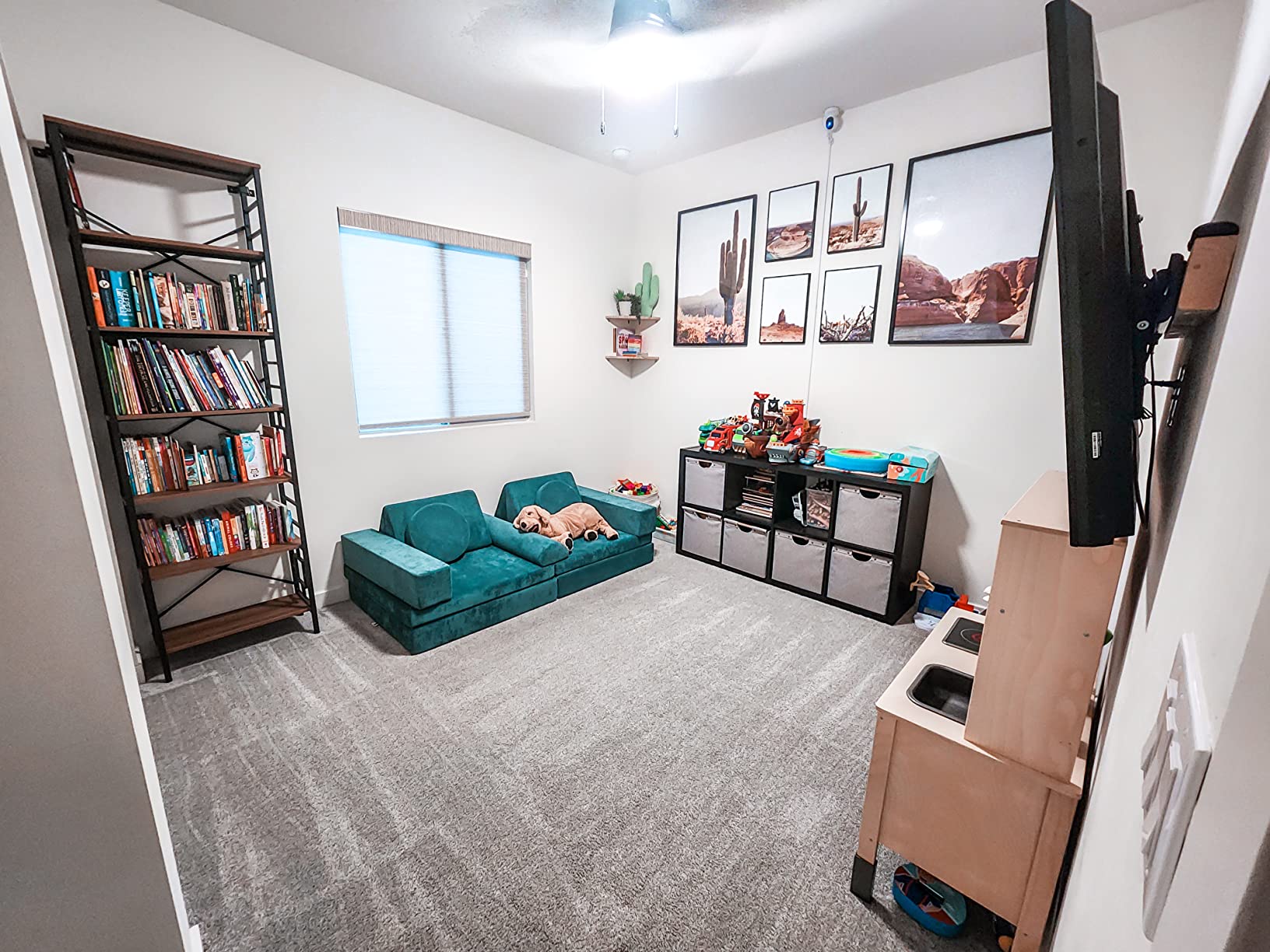
Be clear-eyed about the capacity figure, though. The listed 70.6 pounds is a total rating for the unit, not a per-shelf number, which is unusual and lower than some buyers assume. We would not treat it as a per-shelf allowance. The steel frame, the X-shaped back, and the included wall buckles are what make this unit feel solid, not the headline load number.
Assembly is the real strength here. The metal frame arrives as discrete uprights and crossbars, and the shelves drop in, so the build is a fraction of the screw count a cam-lock flat-pack demands. If you have ever stripped a particleboard screw hole with a power drill, that difference matters more than any spec on the page.
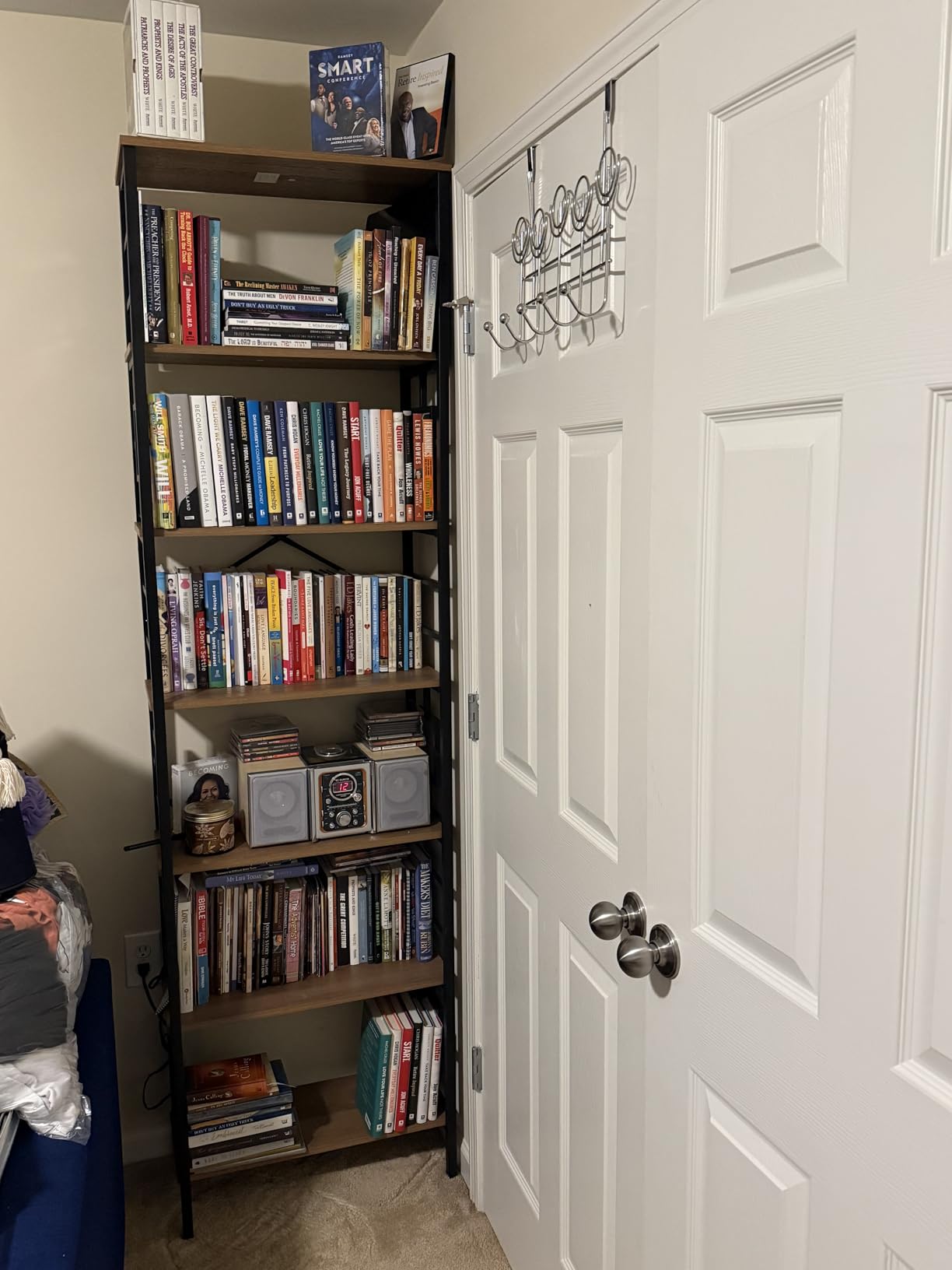
Who this shelf suits
A collector who has run out of wall space and needs vertical storage in a 23.6 inch footprint. It also works well as a room divider, since the open frame passes light while the shelves still hold a serious hardcover load.
Who should skip it
Anyone with art books or large-format textbooks wider than standard, since 11.8 inches of depth is snug. Dust-sensitive collections should also look elsewhere, because an open back leaves spines exposed to everything floating in the room.
2. IRONCK 70-Inch Bookcase Two-Pack: Best Value for Building a Library Wall
IRONCK Bookshelf and Bookcases 70″ Tall, 6 Tiers Display Storage Shelves
22 lb per shelf
6 tiers per unit
Set of two
23.82 in W x 70.87 in H
Pros
- Two matching units create a full library wall
- 1302 reviews at a 4.6 average
- FSC-certified wood construction
- Reinforced screws and tipover device
- Labeled parts speed assembly
Cons
- Fixed shelf heights cannot be adjusted
- 22 lb per shelf is modest for dense hardcovers
- Thin backing pieces chip easily
- Rubber floor pads can reduce stability
Two units for the price of roughly one premium single bookcase is the argument here, and the 4.6 average across 1302 reviews suggests buyers accept the trade. Placed side by side they read as a built-in wall, which is a much harder look to achieve with mismatched single units.
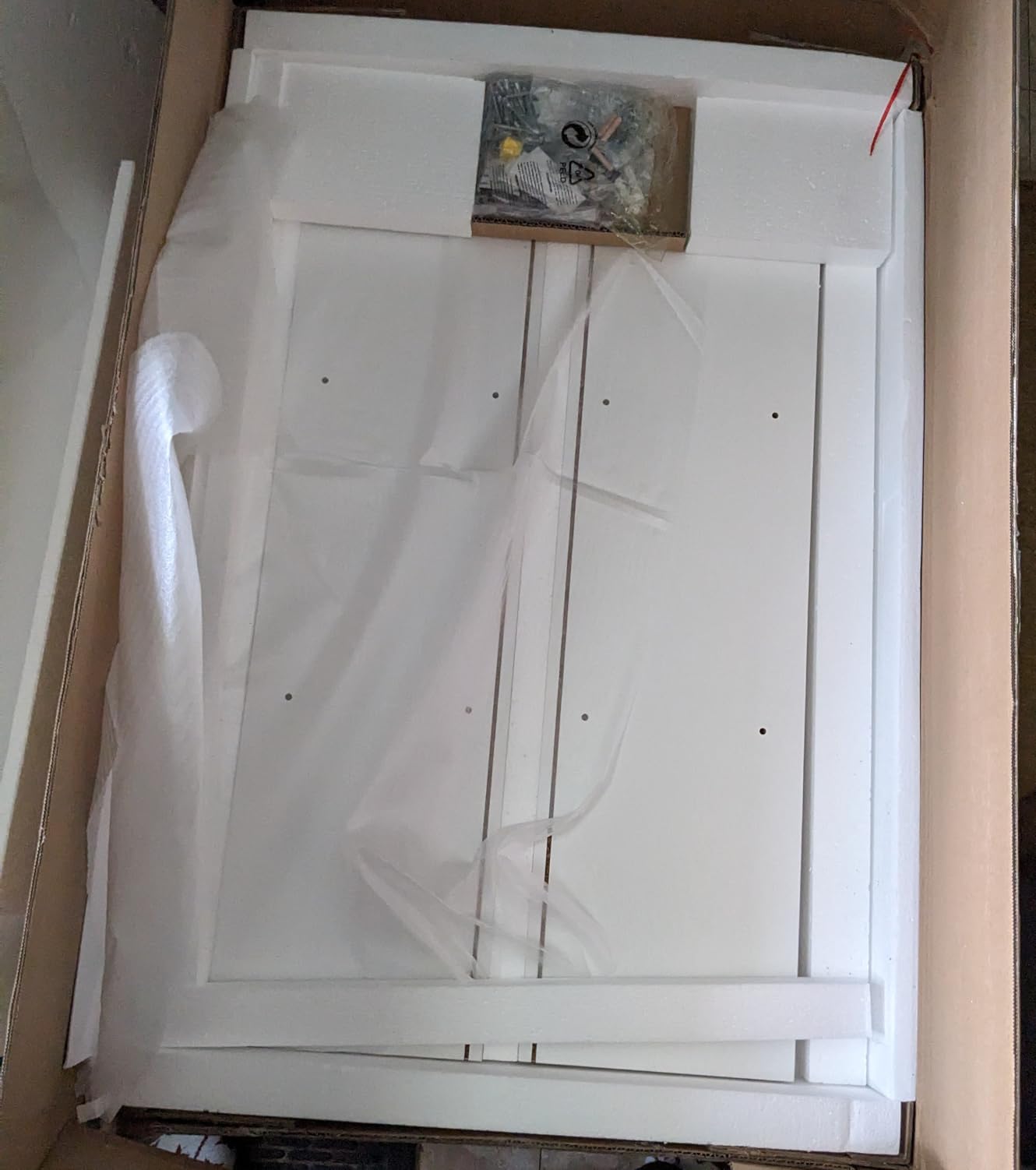
The honest limit is the 22 pound per-shelf rating. That is fine for paperbacks, standard fiction, and a shelf of mixed paperbacks, but it is a light load for encyclopedias or medical references. We would load these with paperbacks and one or two rows of hardcovers at the ends, not packed solid with a full reference set.
One more thing to know: the shelves are fixed height. There is no pin-and-screw adjustment, so if your collection includes tall art books you will have open gaps you cannot reclaim. The included tipover device is worth using on a 70.87 inch unit.
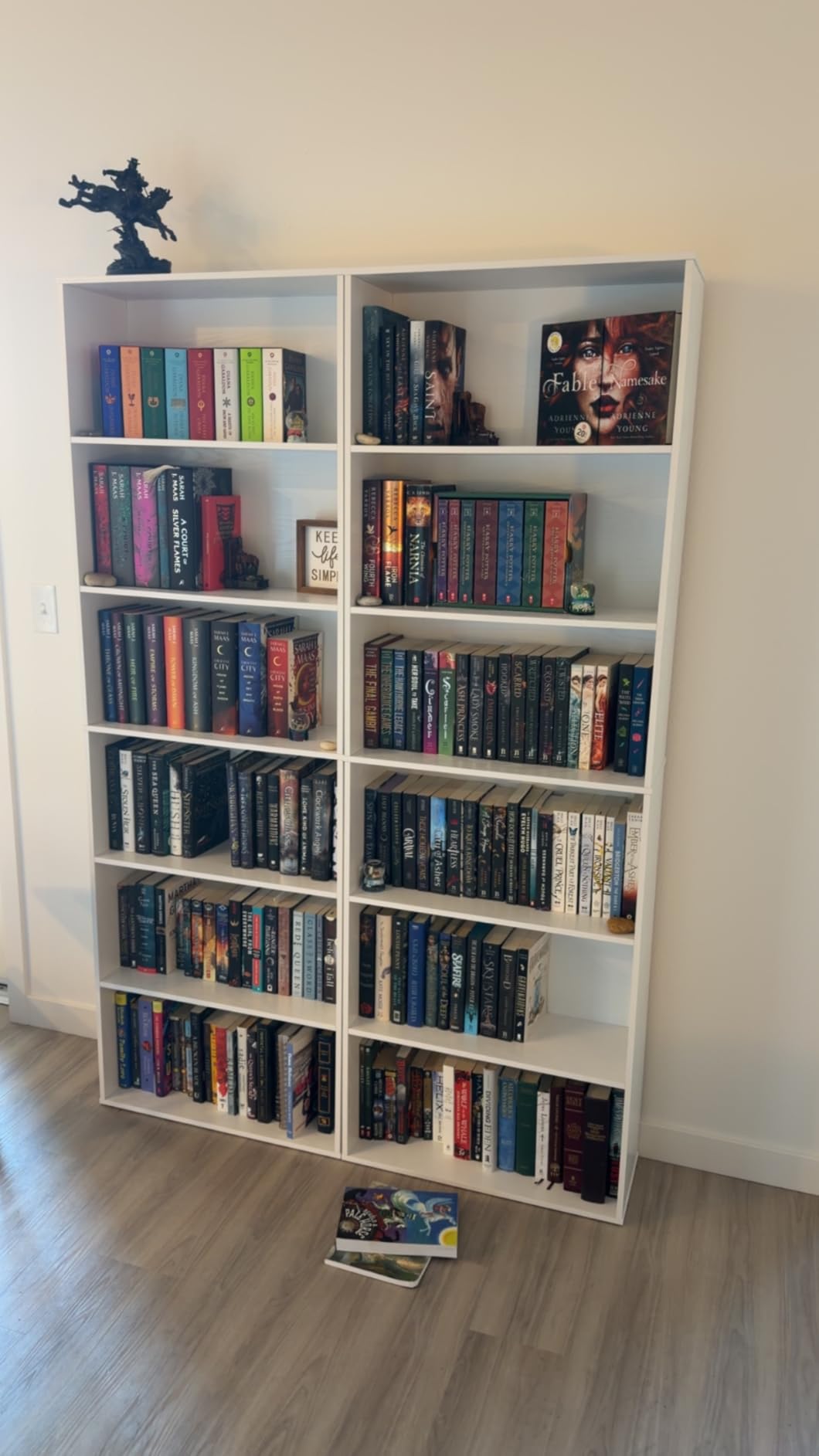
Who this shelf suits
A household building a reading room on a budget, especially one that needs two units for one wall. It also suits mixed collections where most books are paperbacks and a few hardcovers anchor the ends of each row.
Who should skip it
Dense hardback collections and reference sets. At 22 pounds per shelf, a run of heavy volumes gets you to the limit faster than most people expect, and fixed spacing cannot be tuned for oversized volumes.
3. HCHQHS Adjustable 6-Tier Bookcase: Best for Mixed Book Heights
HCHQHS Adjustable 6 Tier Open Bookcase, Rustic Farmhouse Book Shelves, Industrial Wood and Black Metal Bookshelves, Mid Century Bookcase for Home Office Living Room Bedroom
Adjustable middle shelves
24 in W x 70 in H
12 in deep
CARB P2 compliant
Pros
- Adjustable middle shelves tune spacing for taller books
- Edge protection lips keep fragile items in place
- Eight side hooks add hanging storage
- Leveling feet stabilize on uneven floors
- Slim 24 in footprint
Cons
- Backless design offers no dust protection
- No published weight capacity figure
- Several size variants make selection confusing
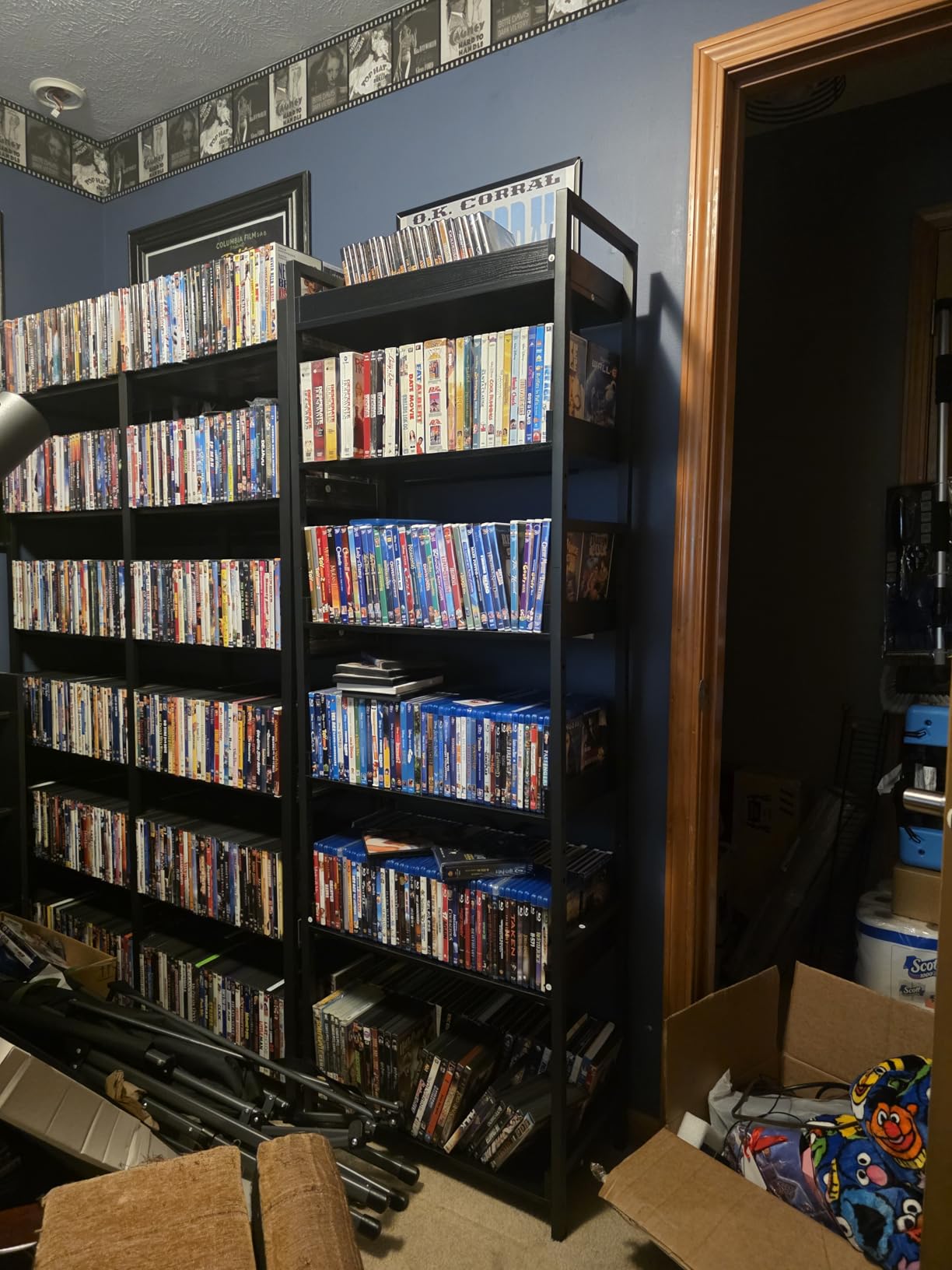
Adjustability is the feature that separates this unit in a roundup where most shelves are fixed. If your collection mixes paperbacks, oversized art books, and binders, being able to move the middle shelves is worth more than a headline load number, because a shelf you can tune never wastes clearance on a poorly matched row.
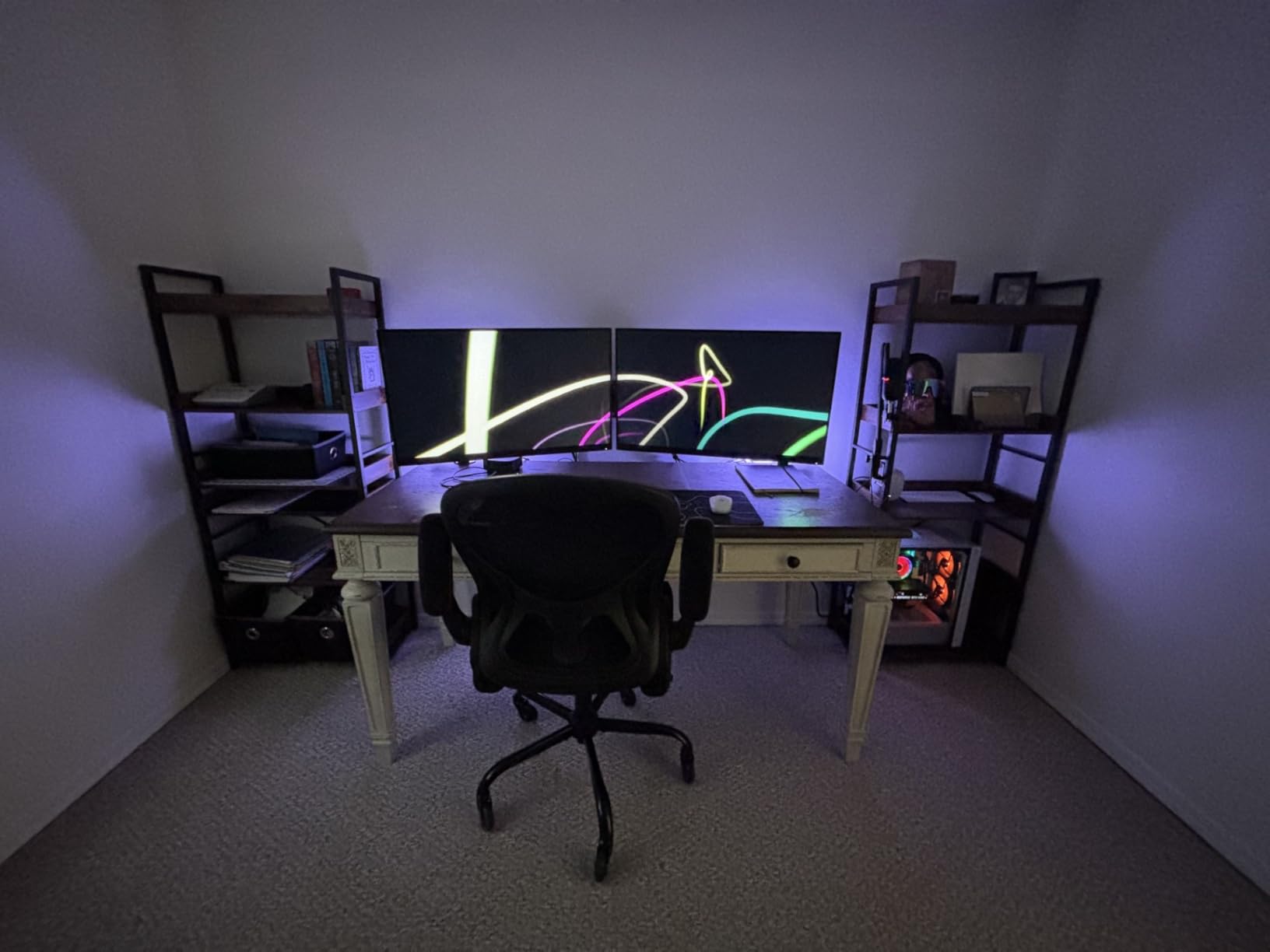
There is no published per-shelf capacity, and we want to be blunt about what that means: you are buying on materials and geometry rather than a rating. The listed shelf thickness of 1.2 centimeters is thin, roughly half an inch, which is why we would keep heavy volumes on the lower shelves where the frame carries the load. At 24 inches wide the span is short, which partly compensates for the board.
The side hooks are a small touch that matters more in practice than it sounds. They give headphones and tote bags a home without occupying shelf space. The leveling feet also solve the carpet wobble that shows up in almost every complaint we read about tall units.
Who this shelf suits
Readers with a mixed-format collection and a 24 inch wall to fill. The edge lips make it a good pick for anyone who stacks small objects above books.
Who should skip it
Buyers who need a documented load rating before committing. Without a published number, you cannot compare it against a 120 or 150 pound steel unit, and the thin board gives us pause for a packed shelf of encyclopedias.
4. Tribesigns 70-Inch 5-Tier Bookcase: Best for Encyclopedias and Oversized Books
Tribesigns Tall Bookcase and Bookshelf, 70.8” Large Bookcases Organizer with 5-Tier Storage Shelves, Heavy Duty Free-Standing Library Bookshelf Shelving Unit for Living Room, Bedroom (Dark Walnut)
88 lb per shelf
529 lb total
Closed back
11.81 in deep
Pros
- 88 lb per shelf and 529 lb total published ratings
- Closed backboard shields books from dust
- Anti-dumping kit and four adjustable feet
- 11.81 in depth fits large books and dictionaries
Cons
- Lowest average rating in this roundup at 4.3
- 31.5 in footprint needs a large room
- Fixed shelf heights limit arrangement flexibility
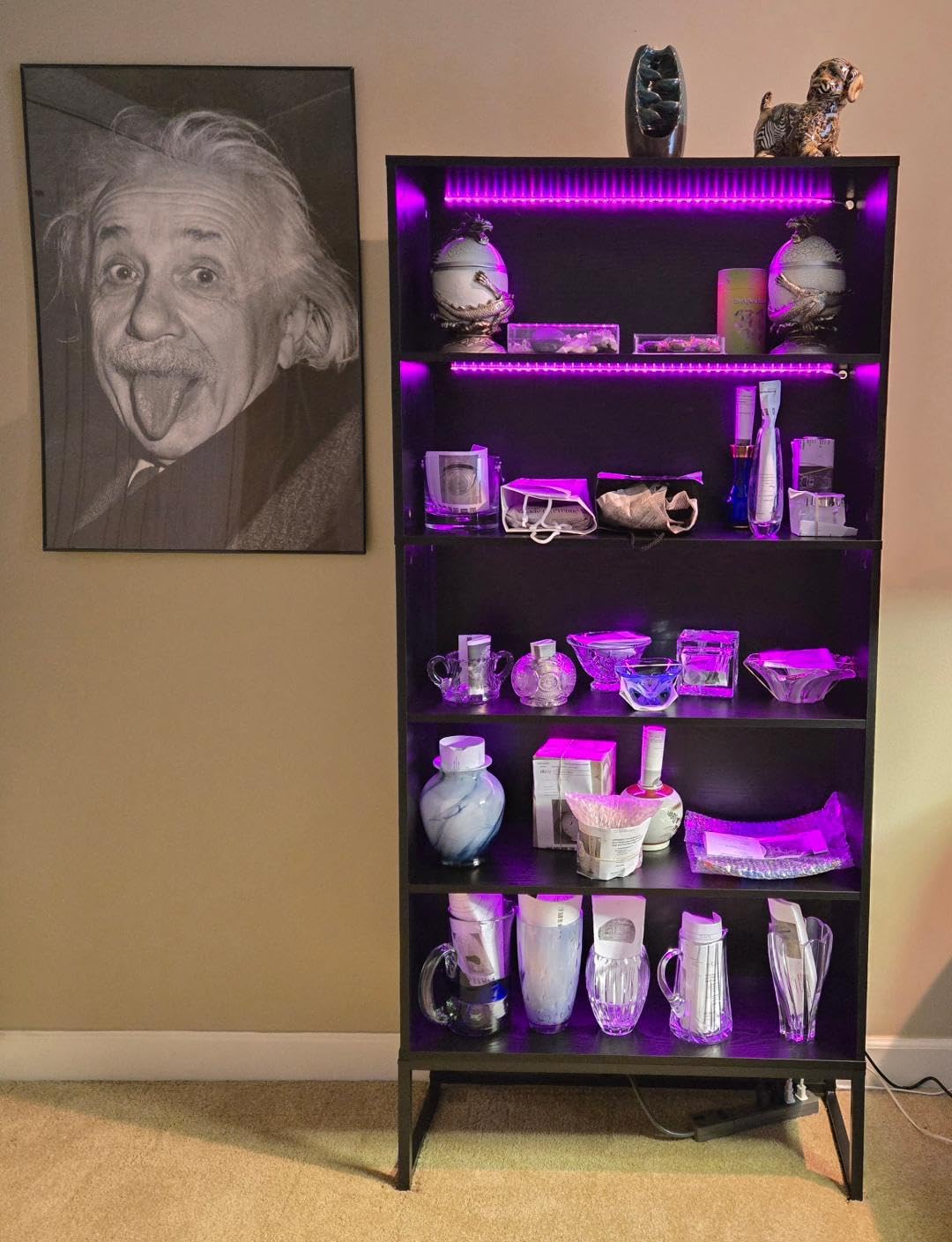
This is the only unit in the roundup that pairs a documented 88 pound per-shelf rating with a 529 pound total figure and a closed back. For a reader who wants reference-grade storage with dust protection and 11.81 inches of depth for oversized books, that combination is hard to argue with. The closed back also adds the lateral stiffness that open-back steel units lack.

Now the fair criticism: a 4.3 average is the lowest here, and the gap against the 4.7 leader is meaningful. Reviewers who need raw load capacity praise the numbers, while the larger share of three-star feedback centers on stability and assembly. The 31.5 inch width also means you need a real wall, not a nook.
Worth noting for long-term owners, the shelves are thick particleboard in a powder-coated metal frame. Particleboard is not automatically a bad material, but it is more prone to long-term creep than solid wood, so we would avoid parking a permanent 80 pound load on the top shelf.
Who this shelf suits
Encyclopedia sets, medical and law-office reference collections, and anyone with oversize books. The 11.81 inch depth and closed back make it the most collection-friendly option here.
Who should skip it
Small rooms and anyone who wants adjustable shelf spacing. A 31.5 inch footprint and fixed heights limit where and how you can use it.
5. OtterOasis 6-Tier Industrial Bookcase: Best for a Wide Open Span
Heavy Duty 6 Tier Industrial Bookcase for Home Office, Rustic Brown
120 lb stated capacity
3 cm thickened boards
47.2 in W x 79.9 in H
X-braced steel frame
Pros
- 120 lb capacity on 3 cm thickened boards
- 47.2 in width is the widest span in this group
- X-braced steel frame resists side sway
- Two anti-tip devices included
- Open design makes contents easy to reach
Cons
- Open back leaves books exposed to dust
- Large 47.2 in by 79.9 in footprint
- Heavier unit that may need two people
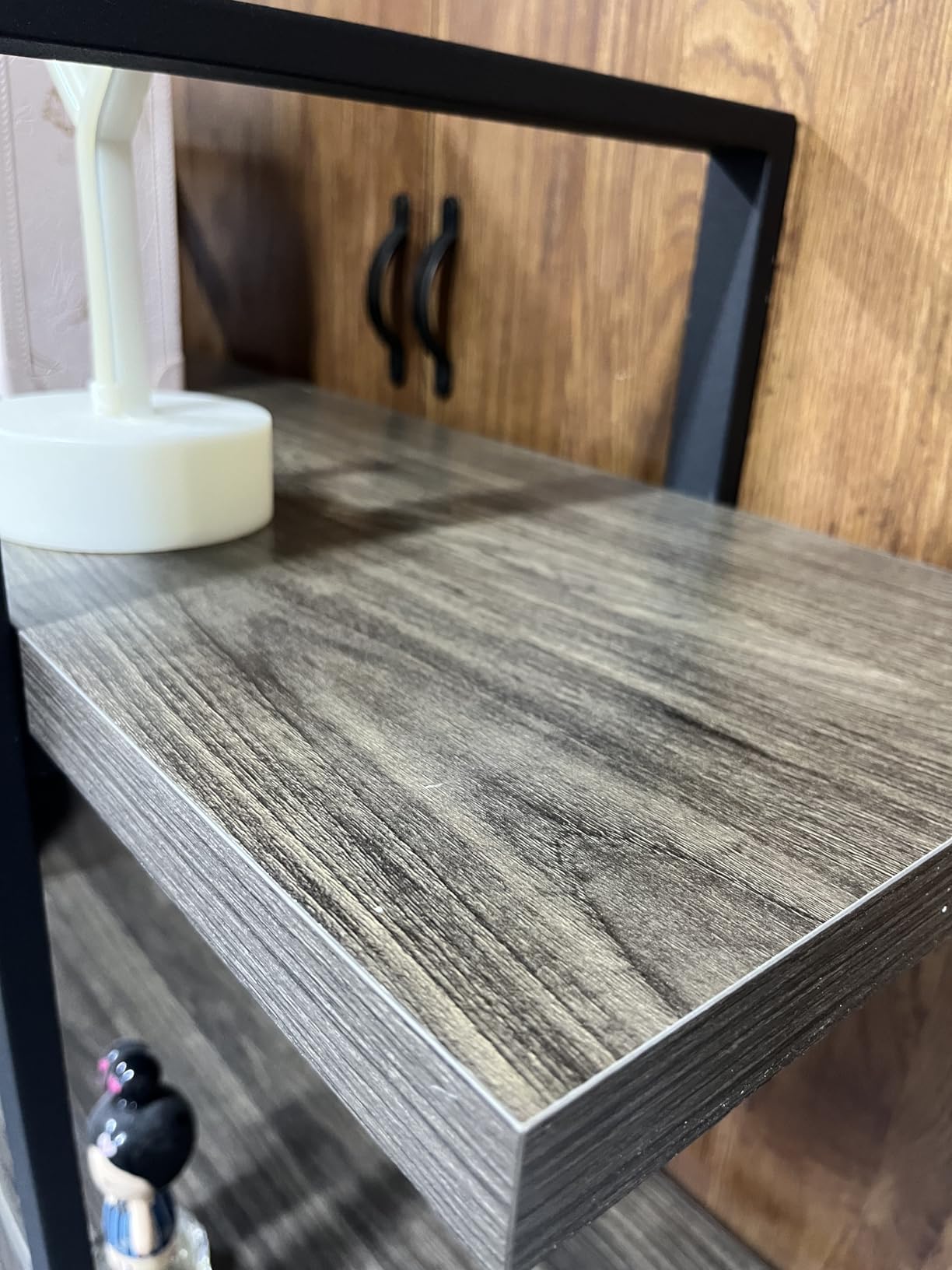
Wide shelves are the hardest test of board thickness, and this unit is the clearest example in the roundup of thickness winning over span. At 3 centimeters, the boards are roughly double what most competitors ship, and that is what lets a 47.2 inch width hold up under load instead of dipping in the middle.
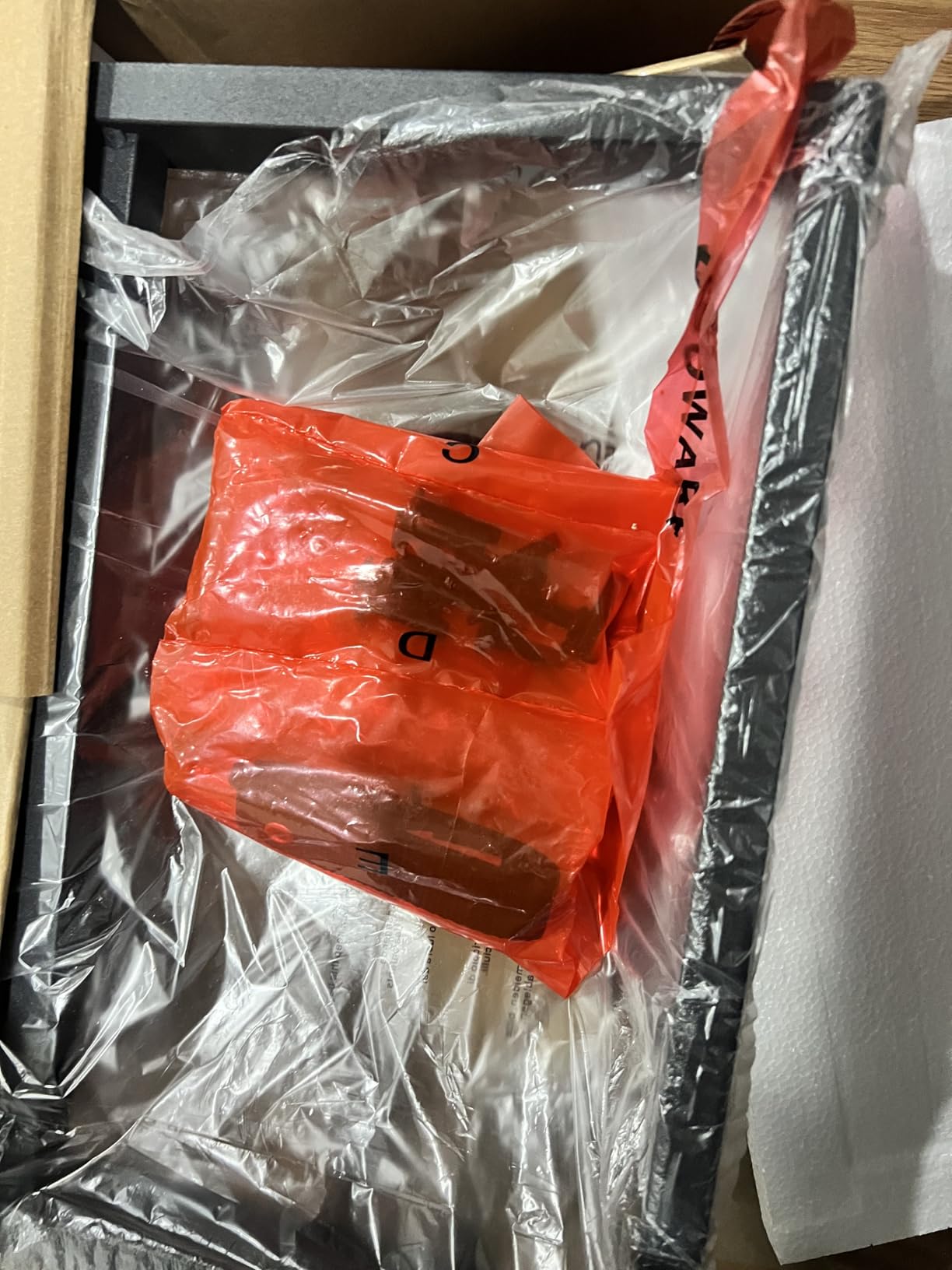
The 120 pound figure is a single stated capacity for the unit and needs the same caution as any manufacturer number: assume it applies per shelf only if the listing says so, and expect real-world performance to be lower with a concentrated center load. Reviewers still report straightforward assembly and a frame that feels planted.
Two anti-tip devices and adjustable feet are both listed, which matters on a unit this wide. A 47.2 inch footprint with a 79.9 inch height is a substantial piece of furniture, so measure your doorway before you commit as well as your wall.
Who this shelf suits
Anyone who wants long continuous rows of books on a single shelf rather than several narrow ones. It also suits rooms with a wide blank wall and industrial styling already in the room.
Who should skip it
Dust-sensitive collections and small spaces. The open back and the largest footprint here make it a poor fit for a bedroom library or a narrow corner.
6. IRONCK Triple-Wide 5-Tier Bookcase: Best for a Wall of Books
IRONCK Book Shelf Triple Wide Bookshelves 5 Tiers with Back Fence
220 lb per shelf
70.87 in W x 70.87 in H
1.18 in shelves
P2-grade MDF
Pros
- Highest rating in the roundup at 4.8 stars
- 220 lb per shelf is the strongest published capacity here
- Back fence and side panels keep books in line
- 13.7 in shelf height fits frames and baskets
Cons
- Very large and heavy at 81.4 lb
- Very wide 70.87 in footprint needs a full wall
- Assembly likely requires two people
At 4.8 stars from 239 reviews, this is the highest-rated unit here, and the 220 pound per-shelf rating is the highest published number in the group. The back fence is the detail that separates it from a plain open etagere: it keeps books and decor from sliding off the ends, which matters enormously on a shelf this long.
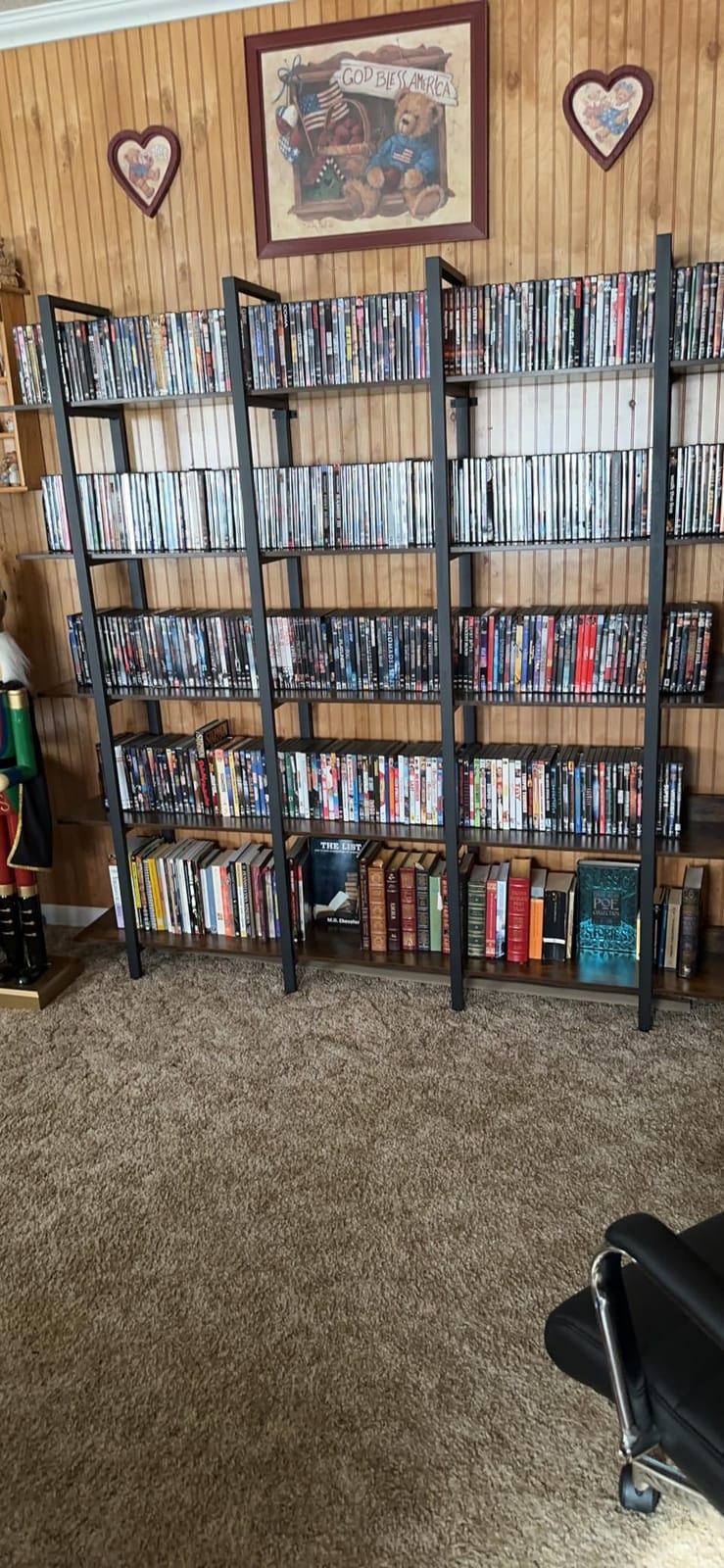
We are not handing it the top spot despite those numbers, and the reason is the review count. Two hundred and thirty-nine reviews is a smaller sample than the leader’s 1621, and a shorter, more enthusiastic sample can flatter a product. The 220 pound figure is also the kind of headline rating that is easiest to inflate, so we would load it sensibly rather than test its limit on a collection you care about.
Practical warning: the unit weighs 81.4 pounds and spans 70.87 inches in both width and height. Two people for assembly is the sensible assumption, and a wide doorway is a hard requirement rather than a preference.

Who this shelf suits
A large room with a full wall to fill and a collection big enough to fill five wide shelves. Collectors of framed prints, baskets, and oversized decor get more usable surface per unit than with a narrow bookcase.
Who should skip it
Apartments, small rooms, and anyone moving solo. The footprint, the weight, and the two-person assembly make it impractical where space is tight.
7. CBNTKI 5-Tier Metal Bookshelf: Best for Assembly in Under 20 Minutes
CBNTKI 5 Tier Metal Bookshelf, Black 69″ Tall Bookcase, Large Heavy Duty Book Shelves, Industrial Wide Book Shelves, Display Storage Shelves for Library Bedroom Living Room Office
150 lb per shelf
34 in W x 69 in H
Cold-pressed steel
Toolless build
Pros
- All-metal construction avoids particleboard sag
- Toolless interlocking assembly in about 10 to 20 minutes
- 150 lb per shelf rating on a 34 in width
- Modular design allows later expansion
- Bookend-style sides keep books upright
Cons
- Some buyers report thin-gauge metal that dents in transit
- Shelves are not height-adjustable
- Black-on-black hardware is hard to see while assembling
Everything here is steel, which removes the sagging question entirely. Steel does not creep, does not bow, and does not have a grain that splits along a screw hole. Several buyers report switching to metal specifically to escape particleboard shelves that sagged under hardcovers, and that is the single strongest argument for this design.
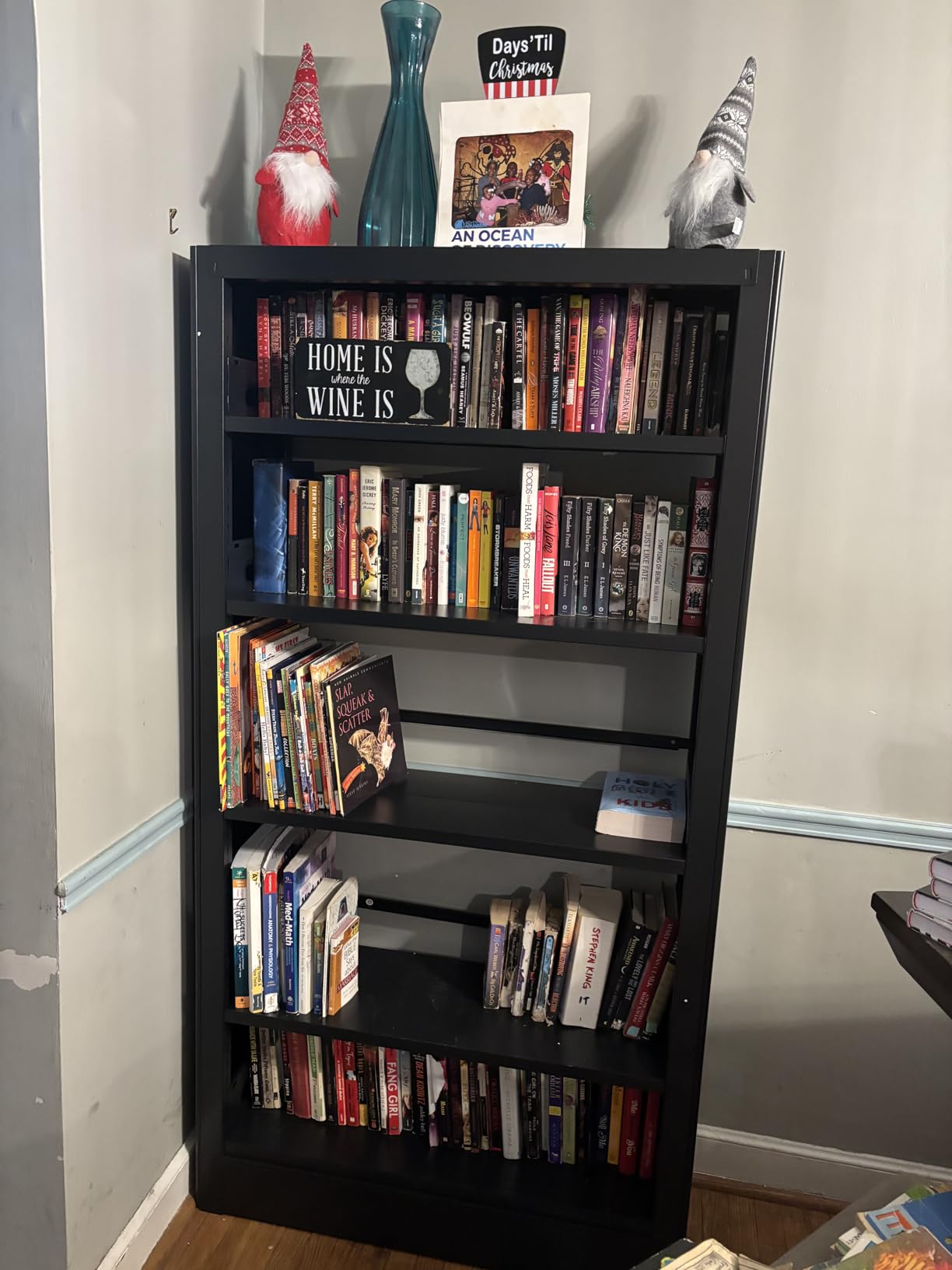
The 150 pound per-shelf rating on a 34 inch width is genuinely strong. The catch is that a smaller share of reviewers, 159 in total, mentions thin-gauge metal and dents arriving in the box. Cold-pressed sheet steel is lighter and cheaper than solid steel sections, so the rating and the gauge need to be read together.
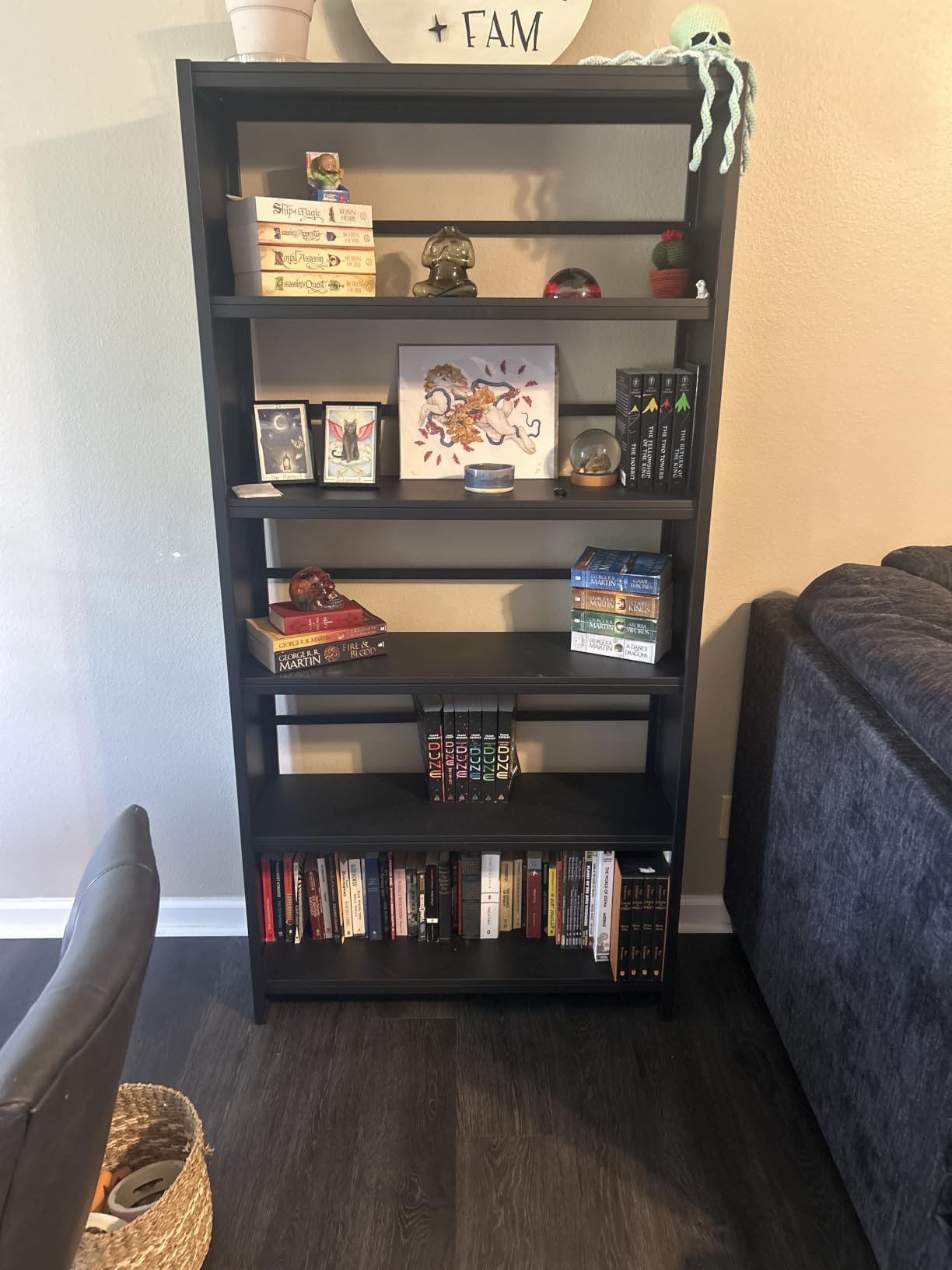
Assembly is the standout. Interlocking parts that go together without tools finish in about 10 to 20 minutes, which is a fraction of the hex-wrench marathon that flat-pack wood units can become. An anti-tipping kit and built-in bookends are included.
Who this shelf suits
Anyone who wants zero wood in the load path and refuses to spend an evening on a screw gun. It also suits a garage, basement, or storage room where a wood back would absorb damp.
Who should skip it
Buyers who need adjustable shelf heights, and anyone sensitive to the sound and look of an all-metal unit. Check the box on arrival for dents before assembling, since that is the recurring complaint.
8. Jazipic 5-Tier Metal Bookcase: Best Adjustable Steel Storage
Jazipic 5-Tier Bookcase with Adjustable Storage Shelves, Heavy Duty Bookcase, Metal Bookshelf with Book Stopper, Black Bookcase Shelf for Library, Office, Living Room
No published per-shelf rating
37.4 in W x 70.9 in H
Adjustable shelves
Anti-tip kit
Pros
- Adjustable shelf heights suit mixed book sizes
- Steel frame holds hardcovers without bending
- Book stoppers and anti-tip kit included
- Waterproof coating wipes clean
- 37.4 in width gives broad storage surface
Cons
- No published per-shelf weight rating
- Some units arrive with bent panels
- Unlabelled hardware boxes cause confusion at assembly
Adjustable heights on a steel frame is a combination you rarely find. Most adjustable units are wood or MDF, where the shelf position is limited by what the board can carry, and most steel units are fixed. Here you get both, with clasps on both sides that let you reposition shelves.
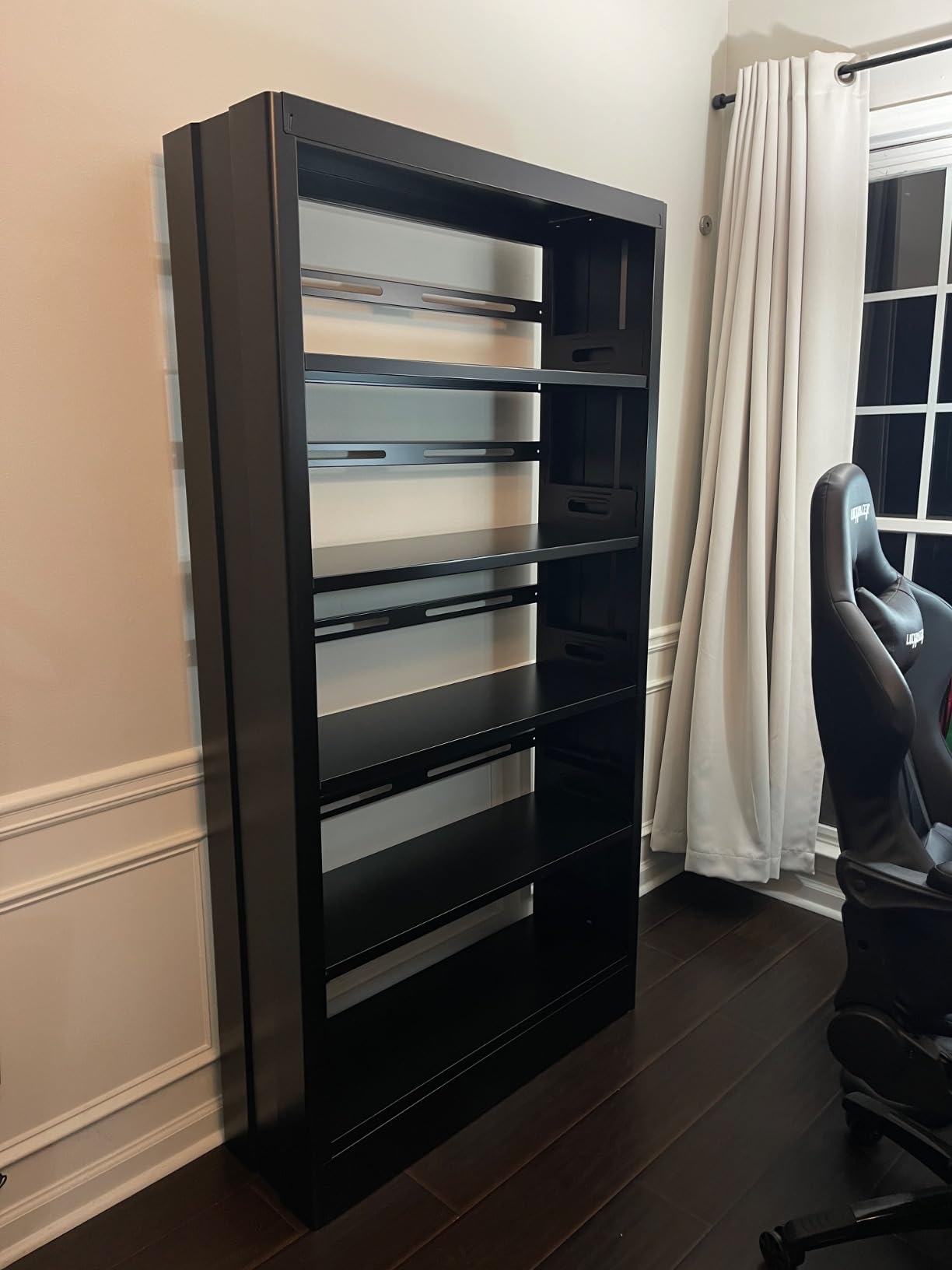
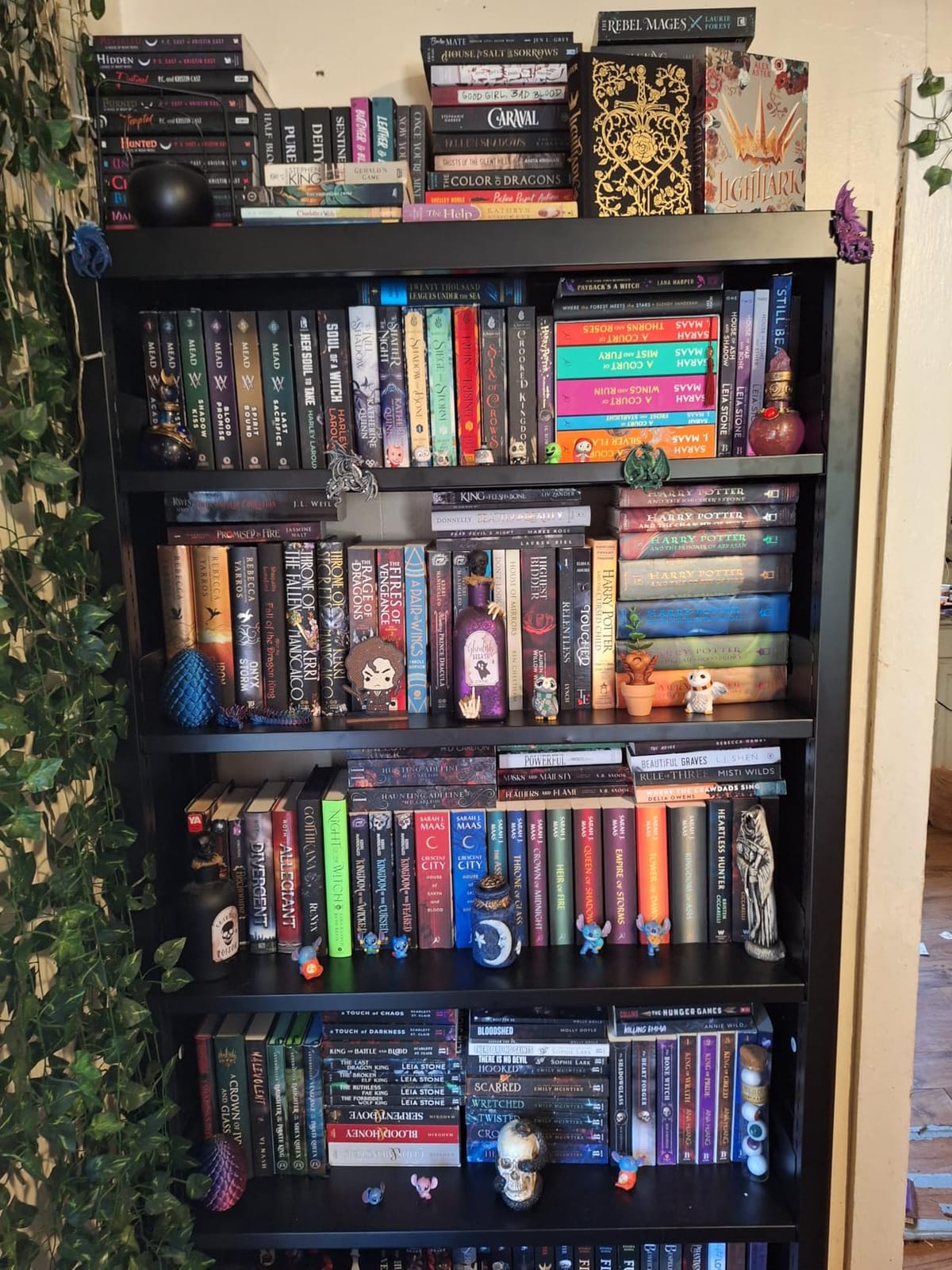
There is no published per-shelf capacity, and that is the main reason this does not rank higher. Owners consistently credit the steel frame for holding hardcovers without bending, but without a number you cannot compare it against the 150 and 220 pound units, and the waterproof, rust-resistant coating tells you what to expect in a basement or garage.
Be aware of the packaging. Buyers on the combination models report unlabelled hardware boxes and bent panels arriving in the mail, both of which add an hour to assembly. Inspect and sort the pieces before you start.
Who this shelf suits
Collectors with mixed formats who want to tune spacing and refuse wood shelves. A 37.4 inch width gives a good balance of capacity and manageable size.
Who should skip it
Buyers who need a documented load rating to feel confident. Without a published figure, you are trusting the material and the reviews rather than a specification.
9. iabifo 39-Inch 6-Tier Heavy-Duty Bookshelf: Best for Reaching the Top Shelf
iabifo 6-Tier 39.37″ Wide Heavy Duty Bookshelf
120 lb capacity
1.2 in shelves
39.37 in W x 74.41 in H
X-braced back
Pros
- 1.2 in shelves rated to 120 pounds
- 39.37 in width fits long rows and bins
- Shelf heights reconfigurable by removing shelves
- Four non-slip pads help prevent tipping
- Detailed manual and accessories included
Cons
- Lowest review count here at 98 reviews
- Wood and metal hybrid shares particleboard sag risk
- Anchoring hardware is not highlighted in the listing
Board thickness is this unit’s argument. At 1.2 inches the shelves are among the thickest in the roundup, and on a 39.37 inch width that thickness is what carries the load across the middle. Feedback centers consistently on those shelves and the 120 pound rating.
We are cautious here for one reason: 98 reviews is the smallest sample in the roundup, and a short sample tells you less about long-term behavior than a long one. It is also a wood and metal hybrid, so it carries the same creep risk as any particleboard shelf even with a strong frame around it.
The 74.41 inch height is the second tallest unit here, which brings the tip-over question with it. The listing mentions non-slip pads, but anchoring hardware is not highlighted, so plan to source your own brackets and fix the unit into studs rather than drywall.
Who this shelf suits
Buyers who want thick boards and a wide, reconfigurable layout on a single unit. It works well for mixed books and storage bins on the lower shelves.
Who should skip it
Risk-averse shoppers who want a long review history behind their furniture. With 98 reviews there is simply less evidence that it holds up over years.
10. Tribesigns 71-Inch 6-Tier Industrial Bookcase: Best Closed-Back Dust Protection
Tribesigns 6-Tier Bookcase, 71 Inches Industrial Bookshelves and Bookcase
75 lb per shelf
0.59 in shelves
31.5 in W x 70.86 in H
E0-grade board
Pros
- 75 lb per shelf rating with thicker shelf profile
- Closed back keeps books protected from dust
- 31.5 in width suits a standard room wall
- X-pattern side accents for industrial styling
- Backed by an 18-month warranty
Cons
- Listing text inconsistently refers to 5 tiers while specs list 6
- 75 lb per shelf is below the top-rated units
- Particleboard can sag over time with dense hardbacks
This one is worth reading for the small print, because the listing contradicts itself. The product name says six tiers, the specifications say six tiers, and the description text refers to a five-tier unit in places. Confirm the shelf count when your package arrives, because it changes what you can fit.
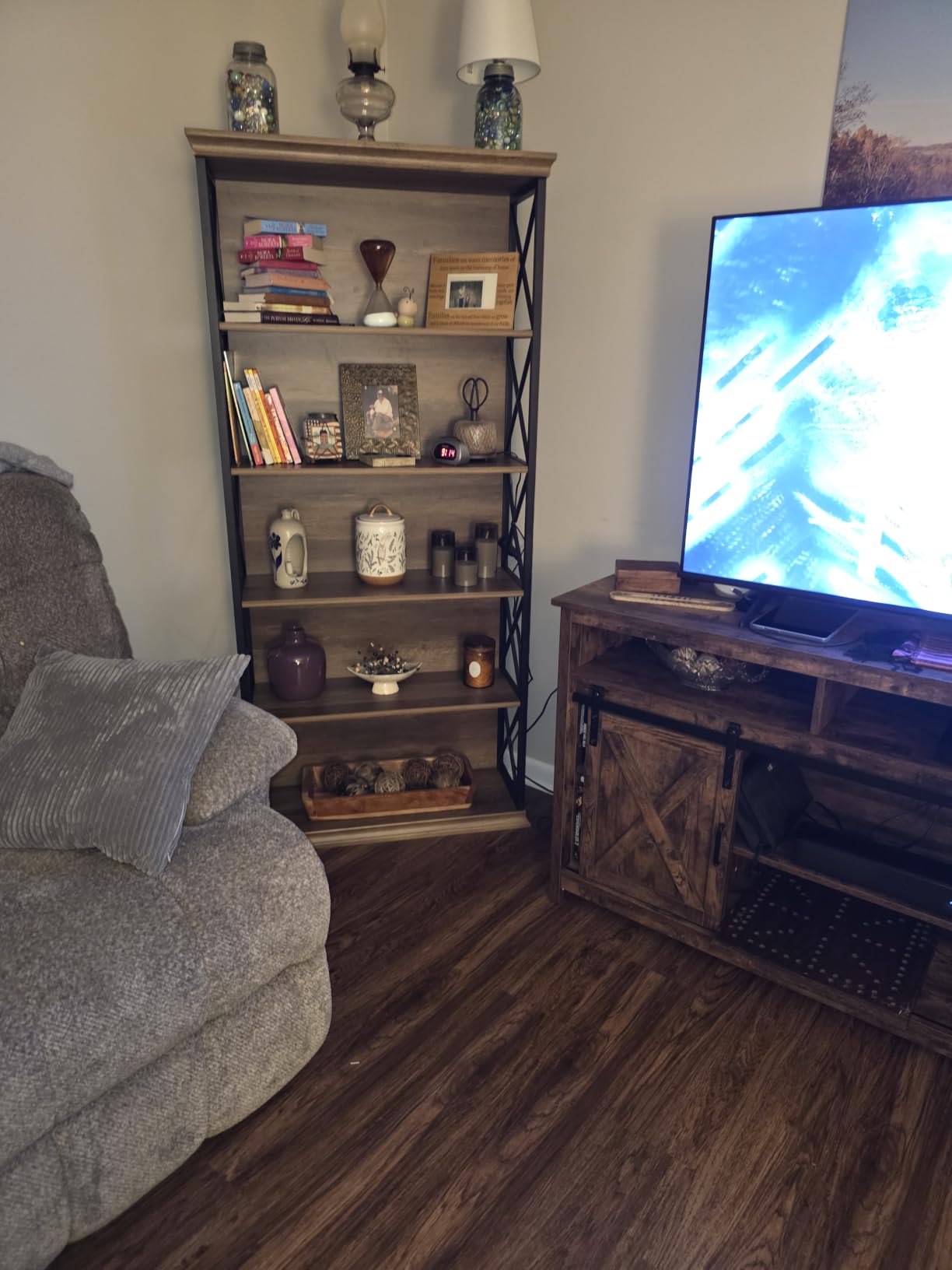
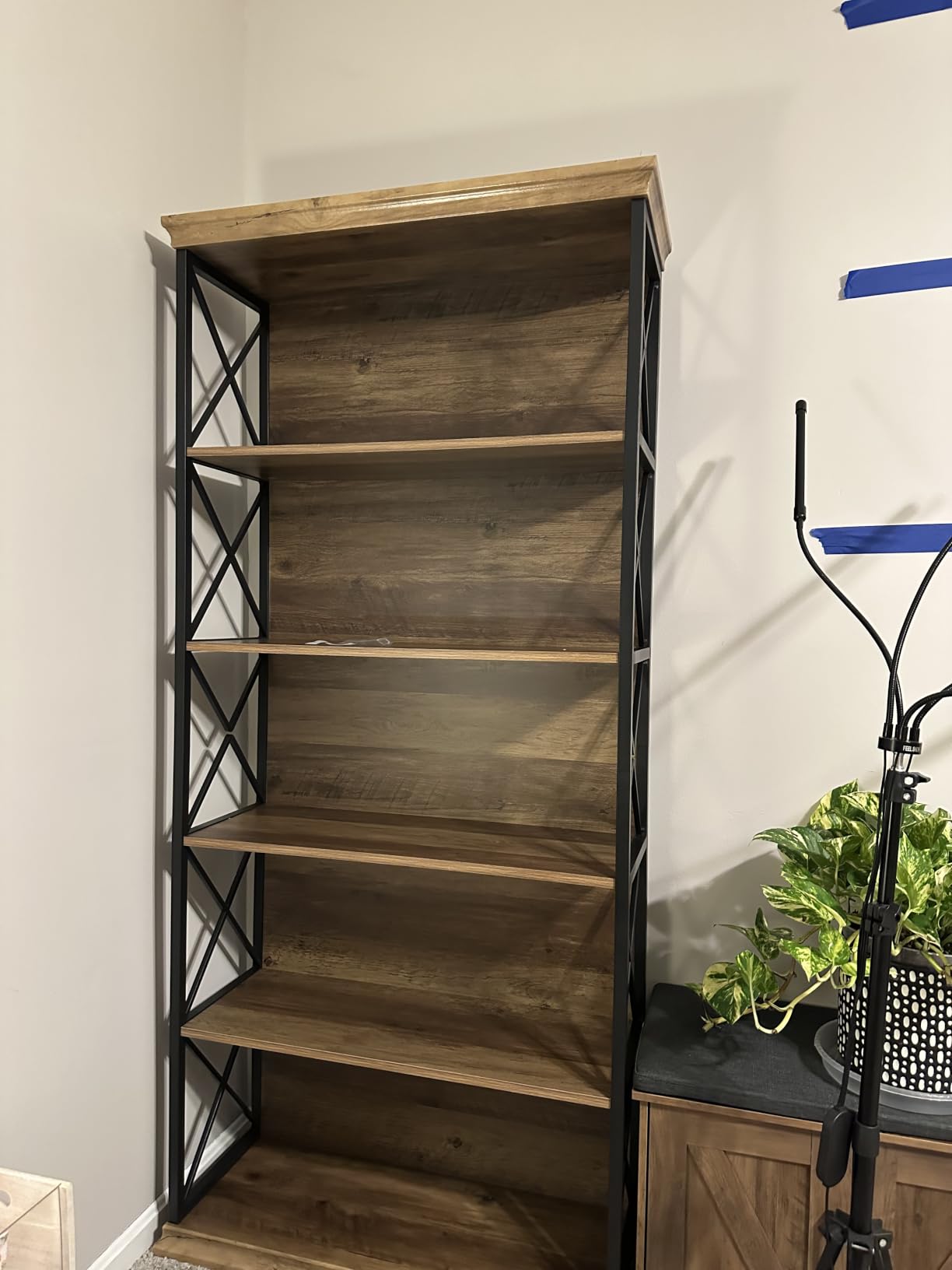
The 0.59 inch shelf profile is thicker than standard flat-pack board and pairs with E0-grade board and a black metal frame. The 75 pound per-shelf rating is real but sits below the leaders, so this is a good unit for a mixed collection and a poor one for a fully packed reference set.
At 4.4 from 329 reviews it sits in the middle of the field. Owners like the industrial styling and the closed back, and the 18-month warranty is longer than most flat-pack furniture offers. Buy it for the dust protection and the look, not for maximum load.
Who this shelf suits
Readers in a bedroom, study, or any room where floating dust settles on spines. The closed back and mid-range width are a sensible everyday combination.
Who should skip it
Anyone planning to fill every shelf to the rating with heavy hardbacks, and anyone who needs a wide span. Seventy-five pounds per shelf has less headroom than the steel units in this roundup.
How to Choose a Bookshelf for Heavy Books
Here is the order we would shop in. Start with the two numbers that decide structural survival, then check the hardware that decides whether the unit stays upright.
1. Weight capacity, per shelf and total. Read per-shelf figures first, because a total number tells you almost nothing about a single shelf. For context: residential wood bookcases typically publish 30 to 50 pounds per shelf, thick engineered board in a metal frame reaches 70 to 135, and commercial cold-rolled steel runs 180 to 300. Thin particleboard under 15 millimeters sits at the bottom of that range.
2. Board material and thickness. Thickness is the variable that decides whether a long shelf dips. Particleboard and MDF board in the 0.5 to 0.6 inch range need a short span, roughly 24 inches or less. Plywood and thick MDF at three-quarter inch and above tolerate longer runs. Solid wood resists long-term creep better than any engineered board.
3. Shelf span. Span is the unsupported distance between two uprights, and it is the number most shoppers ignore. Keep it under 30 inches where the manufacturer allows, and treat anything beyond 36 inches as a decision to add a center support or choose a wider unit with a middle leg.
4. Frame geometry and bracing. Here is what an X-brace actually does, without the jargon. A rectangular frame is a hinge: push the corner and the whole shape flexes. Add a diagonal and you have two triangles, and a triangle cannot change shape without changing the length of one of its sides. That is why braced units resist side-to-side sway so much better, and why a tight brace matters as much as a present one.
5. Back panel and anti-tip hardware. A closed or screwed-in back resists racking far better than an open frame, and it doubles as dust protection. For anti-tip, any unit over 60 inches should be anchored into a wall stud rather than a drywall anchor, because the failure force on a loaded tall unit is far higher than the anchor’s rated pull-out value in drywall.
6. Feet, depth, and adjustability. Adjustable feet solve the carpet wobble that appears in almost every complaint about tall bookcases. Shelf depth of 11.8 to 12 inches suits most books; oversized art books need 13 inches or more. Adjustable shelves let you match clearance to your formats instead of living with fixed gaps.
What not to buy. Thin particleboard under 15 millimeters, no matter what the marketing claims. Hollow-core MDF cores dressed as engineered wood. Plastic peg and dowel supports instead of pins and screws. Cam-lock joints in particleboard, because the anchor strip is the first thing to fail and it is not replaceable. Shelves held by adhesive tacks rather than a screwed-in back.
Loading for longevity. Put your heaviest books on the bottom two shelves and against the uprights rather than the center, since that is where the frame and the back carry the load. Use bookends so a leaning row never becomes a leaning tower, save horizontal stacks for the lowest reinforced shelf, and leave every third shelf partly open for decor.
Wall-mounted heavy-duty shelves. If tip-over is your main worry, wall mounting removes the risk entirely. Look for a steel-bracket design with a one-inch-plus shelf board, and load the brackets into studs. Built-in ledgers screwed into studs with a full-depth board are the strongest option for encyclopedias, and they free up floor space in a small room.
For readers who want the same spec-first approach in another corner of the kitchen, we ranked the best rice cookers for a rice heavy household the same way.
Where to Buy Bookcases for Heavy Books Outside Amazon
Every ranked affiliate roundup on this topic points to the same shelf, and that is a real gap. If you would rather walk a showroom floor or buy from a retailer you can return easily, these are the names worth knowing.
IKEA IVAR is the one that comes up most often in owner discussions, and the consensus in Reddit’s r/IKEA and on the WellTrainedMind forum is that it is sturdy, highly customizable, and inexpensive. Adjustable shelves let you match clearance to odd formats, which is exactly the fix for a mixed collection.
IKEA BILLY gets the same treatment. Forum owners describe it as very sturdy and inexpensive, and one widely-repeated report describes a different unit holding heavy books for eight years. The recurring caveat is depth, since standard Billy shelving is shallower than many US listings, so check measurements against your largest books.
HON builds commercial-grade steel shelving with published load ratings, which is the category most Amazon listings in this roundup imitate. Sandusky Lee welds its own steel units and lists capacity by tier. Sauder and Bush Home make assembled wooden bookcases with hardware included, which removes assembly from the equation entirely.
One forum warning worth repeating: check size matching before you buy. Owners report that cube-style units suit larger books and waste space on small formats, so a unit that is wrong for your collection can waste more money than a cheaper unit that fits.
How to Fix a Bookshelf Shelf That Already Sags
A sagging shelf is usually recoverable, and in most cases the board is fine. Follow this order and stop as soon as the dip disappears.
1. Redistribute the load first. Remove everything, then rebuild with the heaviest volumes against the uprights and on the lower shelves. A large share of visible sag is a loading problem, not a board problem, and this step costs nothing.
2. Add a center support cleat. A strip of solid timber or a metal support rail screwed to the underside of the shelf at mid-span roughly doubles the effective thickness of the board. Screw it into the shelf edges rather than just into thin board, and use the longest screws the frame will take.
3. Fit reinforcement brackets. Under-shelf brackets or a purpose-made shelf support bar do the same job as a cleat with less woodworking. Any bracket rated above your shelf span and screwed into the uprights will stop the midpoint deflection.
4. Know when to stop. If the board is particleboard and the fasteners have torn out, or if the shelf has a permanent set, the board has crept and will not recover. Replace it with a plywood or solid wood shelf cut to your exact depth, and use the original holes to locate the supports.
While you have the unit apart, add wall anchors if it is over 60 inches tall. Fixing into a stud rather than drywall takes ten minutes and removes the only failure mode that can hurt someone.
Frequently Asked Questions
What is the maximum weight a bookshelf can hold?
It depends on the board material, thickness, and the span between supports, not on the unit alone. Residential wood bookcases typically publish 30 to 50 pounds per shelf, thick engineered board in a metal frame reaches 70 to 135 pounds, and commercial cold-rolled steel runs 180 to 300 pounds per shelf. Thin particleboard under 15 millimeters sits at 20 to 30 pounds. Always read the per-shelf figure rather than the total, and load heaviest books against the uprights.
What is the best bookcase for heavy books?
A powder-coated steel frame with boards at least three-quarter inch thick is the safest answer, because steel does not bow or creep. Among wood and hybrid options, look for a closed or X-braced back, adjustable feet, a span under 30 inches, and anti-tip hardware you will actually install. In this roundup the HOMISSUE 84-inch industrial unit leads on owner evidence, while the IRONCK triple-wide unit leads on published capacity.
Is MDF or solid wood better for heavy books?
Solid wood is better over a decade, because it resists creep, the slow permanent deformation that leaves an MDF shelf with a visible dip after years under a constant load. Quality P2-grade MDF at three-quarter inch or thicker performs well in the short term and costs less, and it is a sound choice when the span is short. The deciding factor is board thickness and span, not the label on the material.
What does the X-brace on the back of a bookcase do?
A rectangular frame is a hinge that flexes when you push a corner. Adding a diagonal turns that rectangle into two triangles, and a triangle cannot deform without one of its sides changing length, so the frame becomes far stiffer. That is why X-braced units resist side-to-side sway and racking dramatically better than plain open frames. Check that the braces are actually tight during assembly, because loose bolts give back most of the benefit.
What are the best heavy-duty wall shelves for books?
The strongest options are a steel-bracket wall shelf with a board at least one inch thick, or a built-in ledger screwed into wall studs with a full-depth shelf. Wall mounting removes tip-over risk entirely, which is the main argument for it with heavy books. Load the brackets into studs rather than drywall anchors, space the brackets to keep the unsupported span under 24 inches, and distribute heavy volumes across the full length of the board.
Can I put a heavy bookcase on carpet without anchoring it?
Not without help. Carpet compresses under load, so a tall loaded unit develops a lean and a wobble over time, and the lever force at the top corner of a loaded bookcase is far higher than most people expect. Anchor any unit over 60 inches into a wall stud, keep the heaviest books on the bottom two shelves to lower the center of gravity, and use the adjustable feet to get all four in contact before you load it.
How do I style a bookshelf when I have a lot of books?
Treat styling as load balancing. Put the heaviest books on the bottom two shelves and against the uprights, add bookends so a leaning row never becomes a tower, and reserve horizontal stacks for the lowest reinforced shelf. Leave every third shelf partly open for decor so the wall does not read as one solid block. If you are short on space, our guide to the best coffee makers for a large office covers the same principle of matching capacity to real demand.
The Verdict: Which Bookshelf Wins for Heavy Books
The best bookshelves for heavy books share three things: a frame that cannot bow, boards thick enough for their span, and a back that stops the unit racking. Buy on those three, and treat every published weight capacity as a manufacturer-stated ceiling rather than a promise.
For the strongest evidence of holding up, choose the HOMISSUE 84-inch industrial bookcase, our Editor’s Choice, with 1621 reviews at 4.7 stars and a narrow footprint that suits awkward spaces. For the widest load margin on a single shelf, the IRONCK triple-wide 5-tier unit carries the highest published rating and the highest star average, at the cost of a very large footprint. For a budget build that still needs documented capacity, the Tribesigns 5-tier model pairs an 88 pound per-shelf rating with a closed back and 11.81 inches of depth.
Whatever you pick, anchor it into a stud, load the heaviest books low and against the uprights, and enjoy a shelf that still looks level in ten years.