
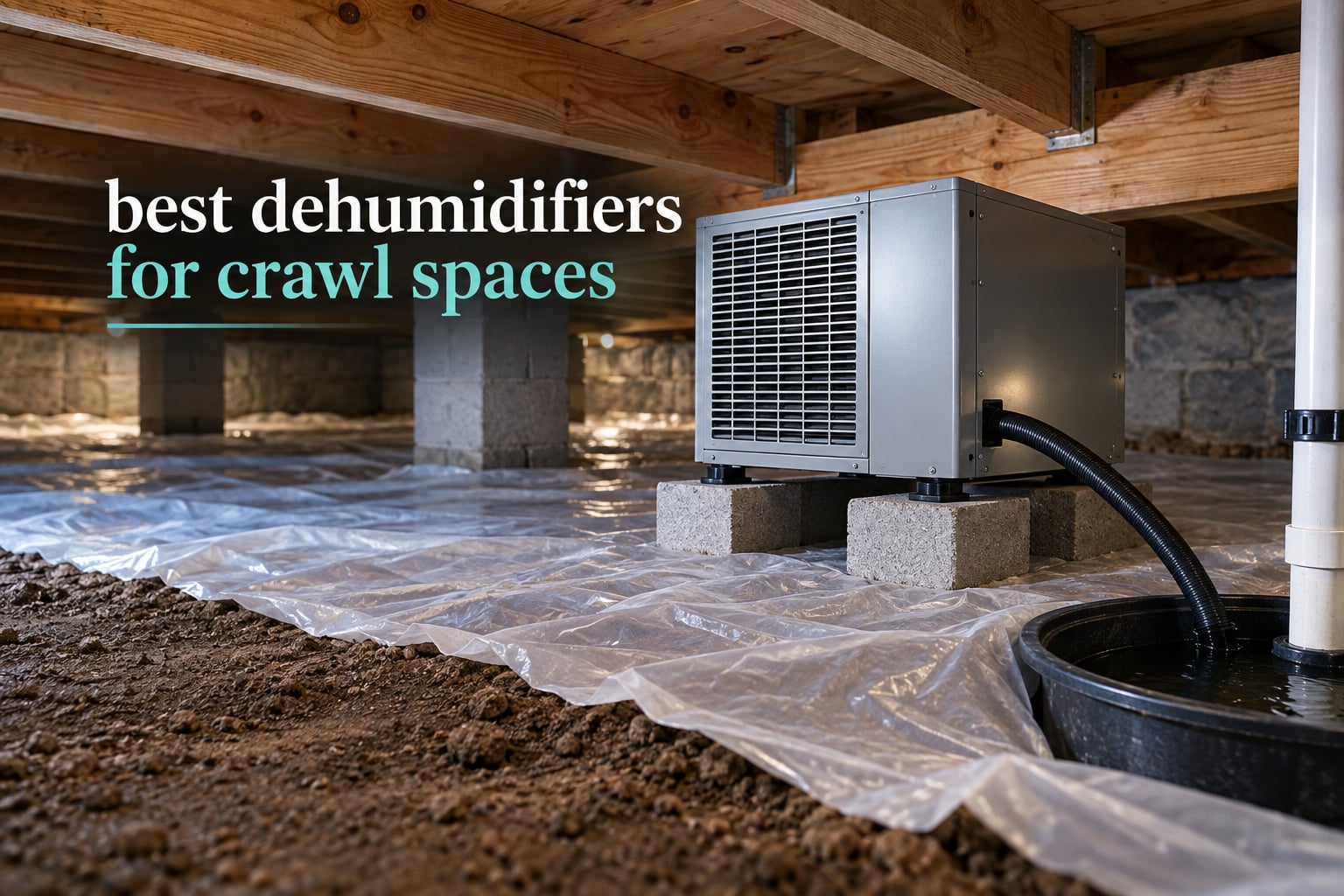
The best dehumidifiers for crawl spaces are compressor units rated for continuous low-temperature operation, sized to roughly 30 pints per day per 1,000 sq ft, and fitted with a built-in condensate pump or a gravity drain line that can reach a drain or sump. Our pick for most homes is the AlorAir Sentinel HD55S, which pulls 55 pints per day at AHAM in a metal housing that measures 13.3 inches tall. Aim to hold relative humidity between 50 and 60 percent, measured near the wood framing.
A crawl space is the cheapest square footage in most houses to dry out, and the least forgiving when you get it wrong. Ground moisture wicks up through bare soil, condenses on cold joists and subfloor, and quietly starts the wood rot and mold cycle that shows up as a musty smell upstairs years later.
We spent weeks reading owner reviews, spec sheets and forum threads on crawl space dehumidification, then sorted ten of the most capable crawl space dehumidifiers by the things that actually decide whether a unit survives a decade under a house: real AHAM capacity, how the water leaves the tank, how low the housing sits, and whether the compressor keeps working when the space drops below 60 degrees.
Two numbers matter more than anything else on the box, and most buyers misread at least one of them. Capacity is quoted twice, once as a saturation figure at 95°F and 90 percent RH and once as the lower AHAM rating, and the gap between them can be more than half. Drainage is the second, because a 130-pint machine with a gravity drain that discharges into a bucket you have to crawl under to empty is not a solved problem.
Table of Contents
Top 3 Best Crawl Space Dehumidifiers (October 2026)

AlorAir Sentinel HD55S 120 Pint
- 55 PPD at AHAM
- 120 PPD at saturation
- 130 CFM airflow
- continuous drain
- metal housing
- 1300 sq ft

AlorAir HD55 Blue 113 Pint
- 53 PPD at AHAM
- 113 PPD at saturation
- 120 CFM airflow
- tankless continuous drain
- 1200 sq ft

Aiusevo 130 Pint with Pump
- Built-in pump with 16.4 ft hose
- 265 CFM airflow
- 19.3 x 17.8 x 17.5 in body
- up to 6500 sq ft
Our top three cover the three situations most homeowners actually fall into. The Sentinel HD55S is the do-everything pick for a typical sealed crawl space with a drain nearby. The HD55 Blue is the same idea with a slightly different casing and a tankless drain, if you want the most crawl-space-specific design on the market. The Aiusevo 130 wins when there is no gravity fall to a drain and the only option is to pump water up to a sump.
Best Crawl Space for Dehumidifiers at a Glance in 2026
| Product | Specifications | Action |
|---|---|---|
| AlorAir Sentinel HD55S 120 Pint |
|
Check Latest Price |
| AlorAir HD55 Blue 113 Pint |
|
Check Latest Price |
| Aiusevo 130 Pint with Pump |
|
Check Latest Price |
 Waykar 125 Pint with Pump Waykar 125 Pint with Pump |
|
Check Latest Price |
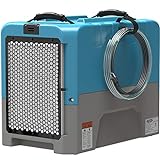 AlorAir Storm LGR Extreme 180 Pint AlorAir Storm LGR Extreme 180 Pint |
|
Check Latest Price |
 Waykar 158 Pint Dual Duct Waykar 158 Pint Dual Duct |
|
Check Latest Price |
 Moiswell Defender M145 155 Pint Moiswell Defender M145 155 Pint |
|
Check Latest Price |
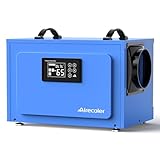 Airecoler GT-X5 125 Pint Airecoler GT-X5 125 Pint |
|
Check Latest Price |
 BaseAire AirWerx 90X 198 Pint BaseAire AirWerx 90X 198 Pint |
|
Check Latest Price |
 Abestorm Guardian SN35P 70 Pint Abestorm Guardian SN35P 70 Pint |
|
Check Latest Price |
Every machine above is rated for crawl space duty and every one of them lists both a saturation capacity and a lower continuous-duty figure. Sort by the second number, not the headline. The Abestorm is the only one here with no manufacturer-published AHAM split, which is worth knowing before you compare it to anything else.
Do You Even Need a Crawl Space Dehumidifier?
The honest answer is that the dehumidifier is the second half of a two-part job, and skipping the first half is the most common expensive mistake we found in the research. A dehumidifier pulling water out of a crawl space that is still open to the weather can work, but it fights a losing battle against 1,500 sq ft of bare soil breathing moisture in from the ground all day.
Encapsulation means covering the soil with 6 mil polyethylene, sealing the foundation vents and rim joists, and adding a foundation vapor barrier. Once that is done, the moisture load drops dramatically and a modest machine can hold humidity in the 50 to 60 percent range almost year-round. This is the configuration every pick on this list is designed for.
For a vented, unencapsulated crawl space in a dry region, many owners and at least one regular poster on r/HomeImprovement argue you can skip the dehumidifier entirely and rely on airflow through the foundation vents. That is defensible in places with low summer humidity. It stops being defensible the moment you see condensation on the joists or that first musty note when you open the access door.
If your crawl space is vented, do the cheap test first. Read a hygrometer in the space through a full day in July. Above 70 percent relative humidity on a regular basis and you have a problem worth solving, and a vapor barrier plus a mid-size unit will fix it for good.
1. AlorAir Sentinel HD55S 120 Pint, Our Best Overall Pick
ALORAIR 120 Pints Energy Star Crawlspace Dehumidifier, Sentinel HD55S
55 PPD at AHAM, 120 PPD max
130 CFM airflow, 1300 sq ft
13.3 in tall metal housing
Continuous drain, MERV-1 filter
Pros
- Strongest review base in the group at 1393 ratings
- Auto defrost handles cool crawl space temperatures
- Continuous drain with no bucket to empty
- Metal housing suits a damp dusty space
- Energy Star certified
Cons
- Heavy at 41.7 pounds to move into a tight crawl space
- No built-in pump so gravity drain must fall to the drain
- Replacement filters cost more than expected
We kept coming back to the Sentinel HD55S because it does the unglamorous things right. It measures 13.3 inches tall and 12.2 inches wide, which passes through a standard crawl space opening without disassembly, and at 55 pints per day AHAM it covers the 1,300 sq ft class that most homes fall into.
The continuous drain outlet is the feature that decides most real installations. There is no tank to fill and nothing to carry out through the access door. If you can route a 4-inch line downhill to a foundation drain or a sump, this unit runs unattended for years.
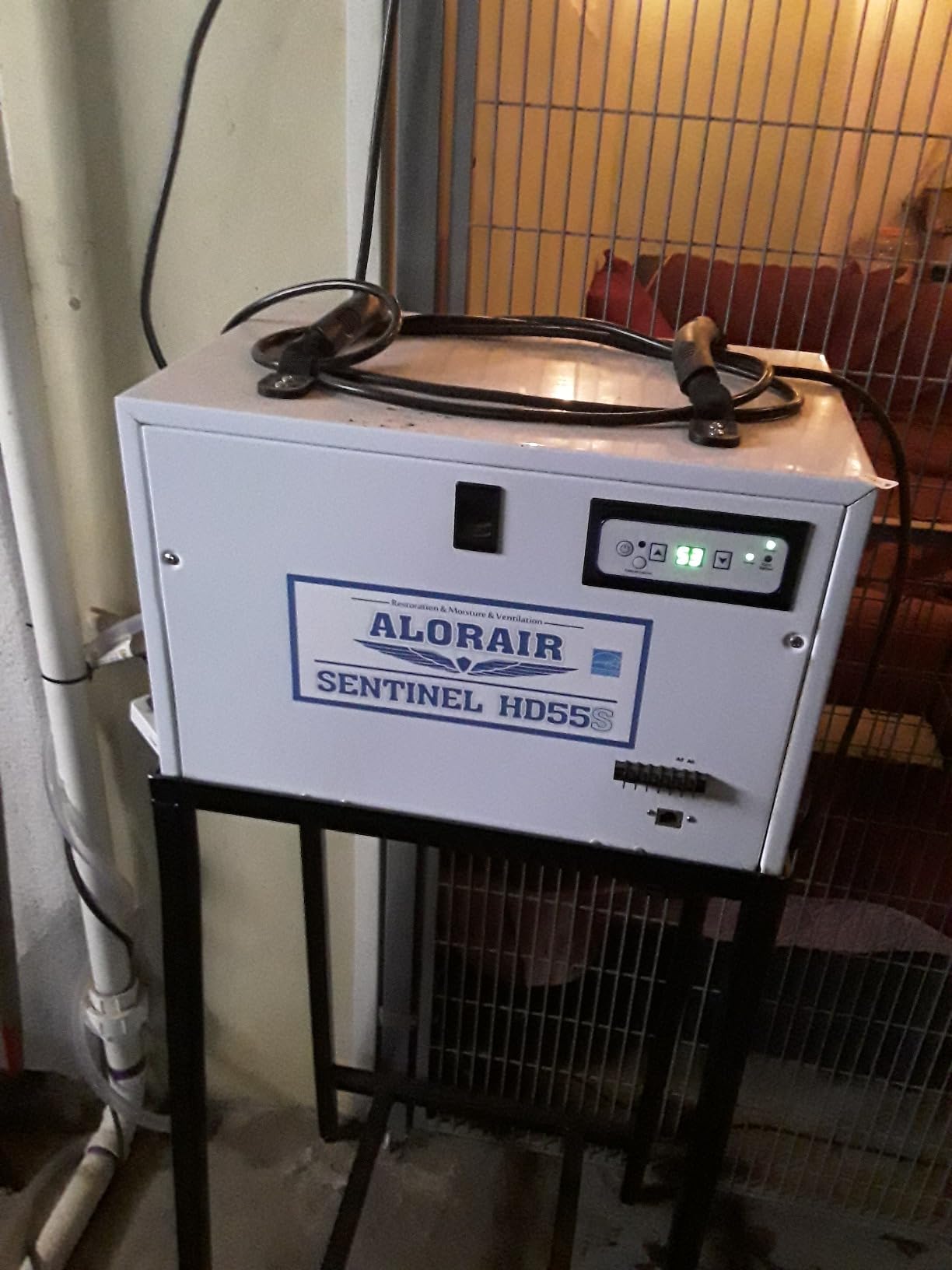
Owner reviews describe the same pattern repeatedly: humidity in the 50s within a few days of starting, musty odors gone from the house above, and no increase worth reporting on the power bill. Auto defrost with temperature sensors is what keeps that true when the crawl space drops into the 50s overnight in autumn.
The honest criticisms are physical rather than electrical. At 41.7 pounds it is a two-person lift for most people, and the absence of an internal pump means the drain line needs somewhere lower to go. Owners also report refrigerant leaks on a minority of units after two or three years, which is the single most common long-term complaint across this entire category.
What the drain line situation tells you before you buy
If your crawl space has a low point, a floor drain or a sump, this is the easiest machine in the roundup to install. Mount it on blocks or a stand high enough that the drain line runs downhill the entire distance, secure the hose so it cannot kink, and the unit is set.
If there is no low point, keep reading. Without a pump, a condensate line that runs uphill will not clear, and you will be back under the house with a wet floor sooner or later. In that situation the pump-equipped models make far more sense.
Where the HD55S falls short
The 41.7-pound weight is the practical one. Getting a machine that size through a 16-inch access opening and across uneven ground is awkward, and adding a plywood sled or a small dolly makes the job much easier.
The MERV-1 filter is basic, and owners recommend cleaning it on a schedule rather than waiting for airflow to drop. Replacement filters for this unit also run higher than you would expect for a filter of that type.
2. AlorAir HD55 Blue 113 Pint, The Tankless Crawl Space Specialist
ALORAIR 113 Pints Crawlspace Dehumidifier for Commercial, Sentinel HD55
53 PPD at AHAM, 113 PPD max
120 CFM airflow, 1200 sq ft
13.3 in tall tankless metal body
Auto defrost
Pros
- Fits through a standard crawl space opening
- No water tank so nothing to empty
- Metal casing for damp dusty conditions
- Auto defrost with temperature sensors
- Long-term owners report years of continuous running
Cons
- Not Energy Star certified so it draws more power
- Evaporator coils ice up often in cool spaces
- Remote control costs extra
- Some refrigerant leak reports after roughly two years
Owners single this model out as the most purpose-built crawl space machine on the market, and the sizing explains why. At 19.2 by 12.2 by 13.3 inches and 41.7 pounds, it was designed around the access opening rather than around the living room.
The tankless design is what separates it from a converted basement unit. Every drop that comes off the coil goes straight out the drain port, so there is no reservoir to fill, no float switch cutting power and no water to find when you open the door after a storm.
At 53 pints per day AHAM across 1,200 sq ft, this is the right shape for a small or medium crawl space in a moderately humid climate. Where owners report it working well, the story is the same: set the humidistat, run it continuously, check a remote hygrometer a couple of times a month.
Because it is not Energy Star certified, it uses more electricity than the white HD55S for comparable output. That is a real running cost in a space that operates year-round, and it is the main reason the white version earned the top spot on this list.
Why tankless matters more than tank capacity
A 15-gallon tank sounds generous until you calculate how fast a 50-pint day fills it in a humid crawl space. Owners end up checking a bucket on a schedule, and the first time a float switch shuts the machine down overnight, the space goes right back to soaking.
There is no equivalent failure mode when the tank is gone. The only remaining failure point is the drain line itself, which is something you can inspect with a flashlight in five minutes.
When the coil icing gets serious
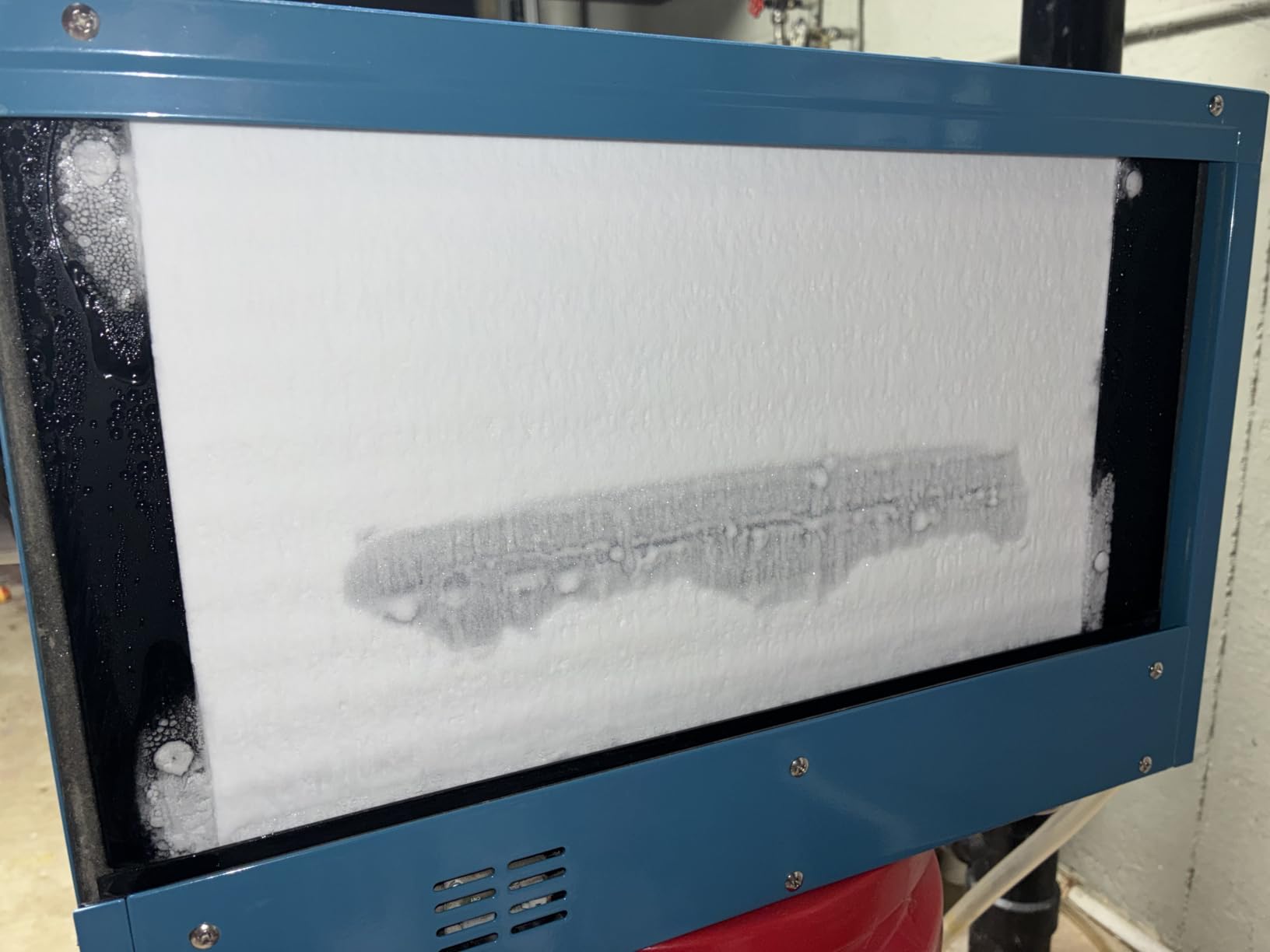
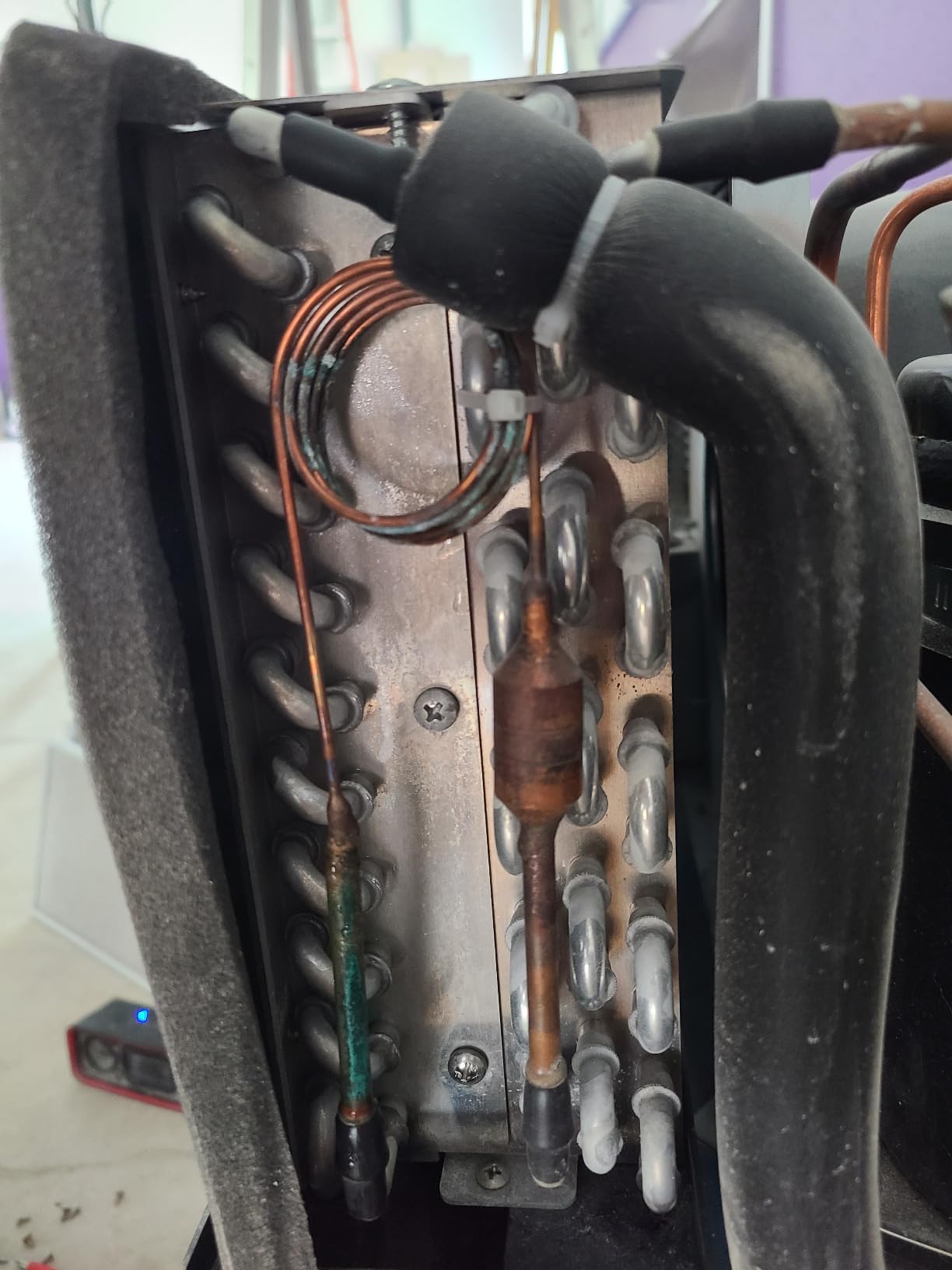
The most consistent complaint is evaporator icing in spaces that run cool. When the coil ices over, the unit cycles into defrost, extracts less water for a while and works harder when it resumes. Auto defrost handles this, but it does not eliminate it in an unheated space with a persistently low temperature.
If your crawl space regularly sits below 55 degrees in winter, factor in more defrost cycling, more energy and a shorter compressor life. In that situation a desiccant unit or a space you keep above freezing is the better answer.
3. Aiusevo 130 Pint with Pump, Best When There Is No Drain to Gravity Feed
130Pints Crawl Space Dehumidifier with Pump and Drain Hose up to 6500 Sq.Ft
130 PPD max, 265 CFM airflow
Up to 6500 sq ft
Built-in pump plus gravity drain
19.3 x 17.8 x 17.5 in body
Pros
- Built-in pump with 16.4 ft hose solves uphill drainage
- Highest airflow here at 265 CFM
- Compact footprint fits between floor joists
- Touchscreen panel with timer and temperature readout
- Auto restart after power outages
Cons
- Settings are lost when power is cycled
- Some reports of units that would not power on reliably
- US plug only
- Remote and duct accessories sold separately
A contractor who said he has installed dozens of crawl space dehumidifiers told r/basement readers to buy the model with a pump, and that single piece of advice decides a lot of installations. This model is built exactly around it, offering both a pumped drain and a gravity drain from the same cabinet.
The pump pushes water up through the included 16.4 ft hose. That is enough reach to get from a shallow crawl space, over the rim joist and into a basement sump, which is the drainage pattern a lot of houses without an exterior foundation drain can actually use.
Airflow is the other headline figure here at 265 CFM, matched only by the Moiswell. More air through the coil means more contact with the desiccant surface, which is why owners report visibly faster humidity reduction in the first week compared with lower-flow machines of similar capacity.
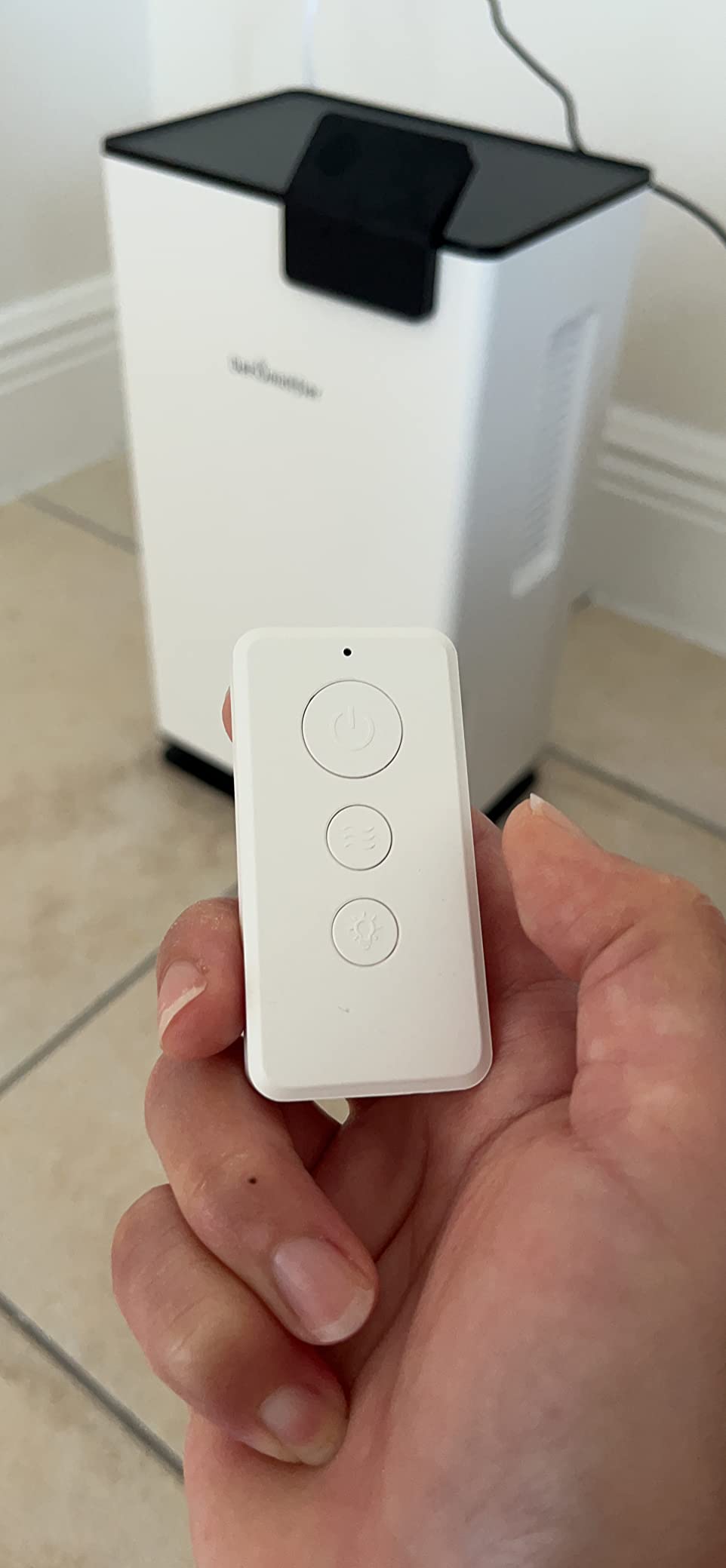
The touchscreen panel shows humidity, temperature and a timer, and the unit auto-restarts after a power interruption. Reviewers do flag that setpoints do not survive a power cycle, so expect to dial in your target humidity again after any outage.
How the pump changes what you can install
Without a pump, your install options are limited to places where water can fall. That often means building a stand, running a line to a drain that is several feet below the machine, or accepting a bucket. With a 16.4 ft lift, this unit can sit flat on the soil on blocks and send water to a sump.
A homeowner in r/HomeMaintenance described suspending the machine from the cross beams so the drain ran downhill into a sump pump. That pattern works with any of these models, but it takes more planning than simply setting a pumped unit where the joists allow.
What we would check before buying
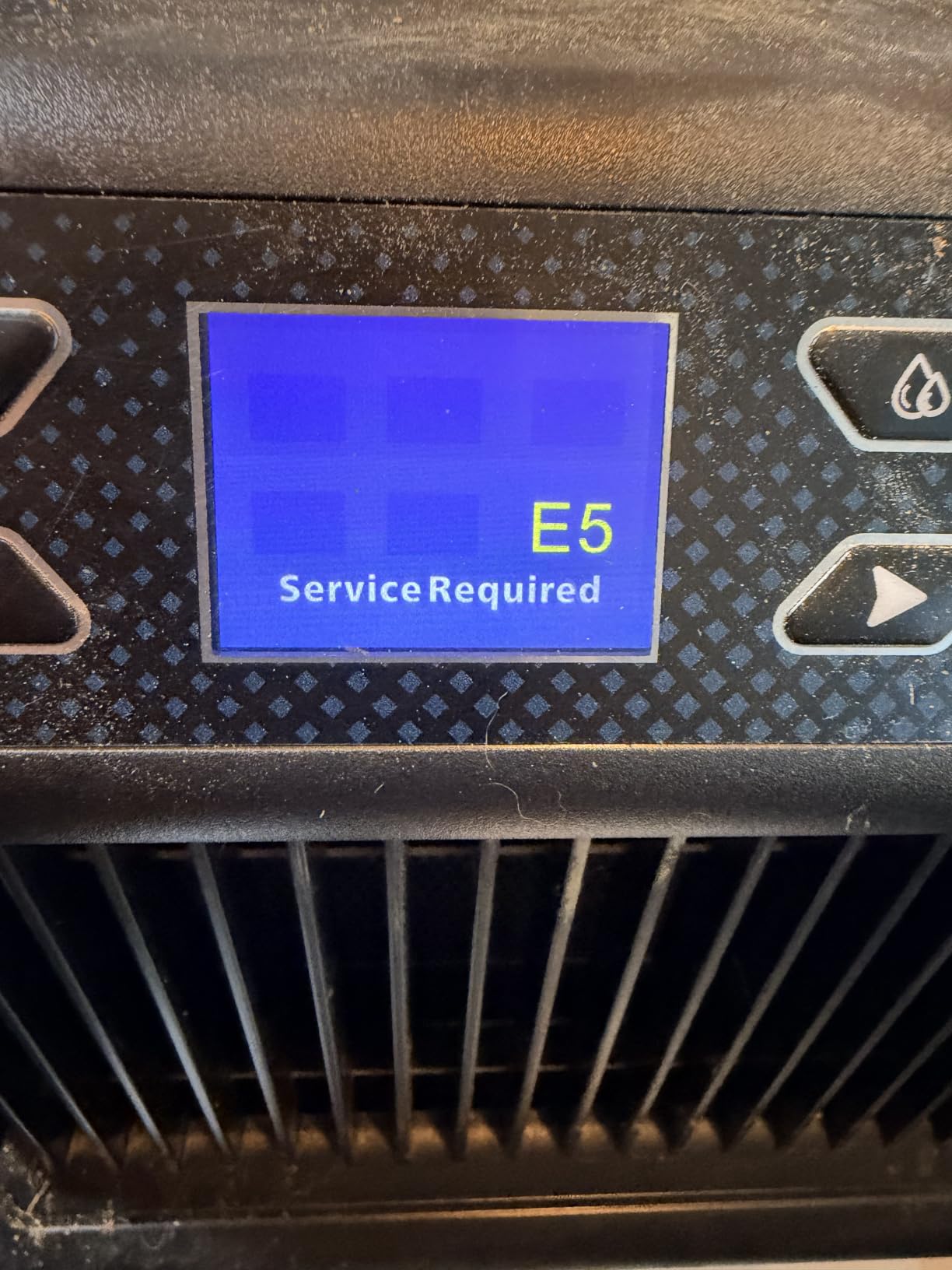
A minority of owners report units that would not power on reliably or that extracted less than the headline number suggests. If a power-on issue shows up, the error code display on the panel is the first diagnostic tool you have, so keep it accessible.
Also budget for the fact that the remote control and any ducting hardware are separate purchases. If you plan to run the unit ducted into an existing HVAC system rather than just recirculating crawl space air, factor that in before checkout.
4. Waykar 125 Pint with Pump, A Balanced Pick for Basements Too
Waykar 125 Pint Crawl Space Dehumidifier with Pump & Drain Hose for Basements, Commercial & Water Damage Spaces up to 6500 Sq. Ft., Compact, Strong Dehumidification, 5-Year Quality Coverage
125 PPD max, 176.47 CFM airflow
Pump hose plus 6.6 ft gravity hose
10 to 90 percent RH range
5-year compressor warranty
Pros
- Rotary compressor improves efficiency and durability
- Wide 10 to 90 percent RH adjustment range
- Pump drains up to 16.4 ft vertically
- Metal casing resists corrosion
- Adjustable feet cut vibration and noise
Cons
- Heavy at nearly 50 pounds
- Remote control is a separate purchase
- Some one-star reviews question durability for the money
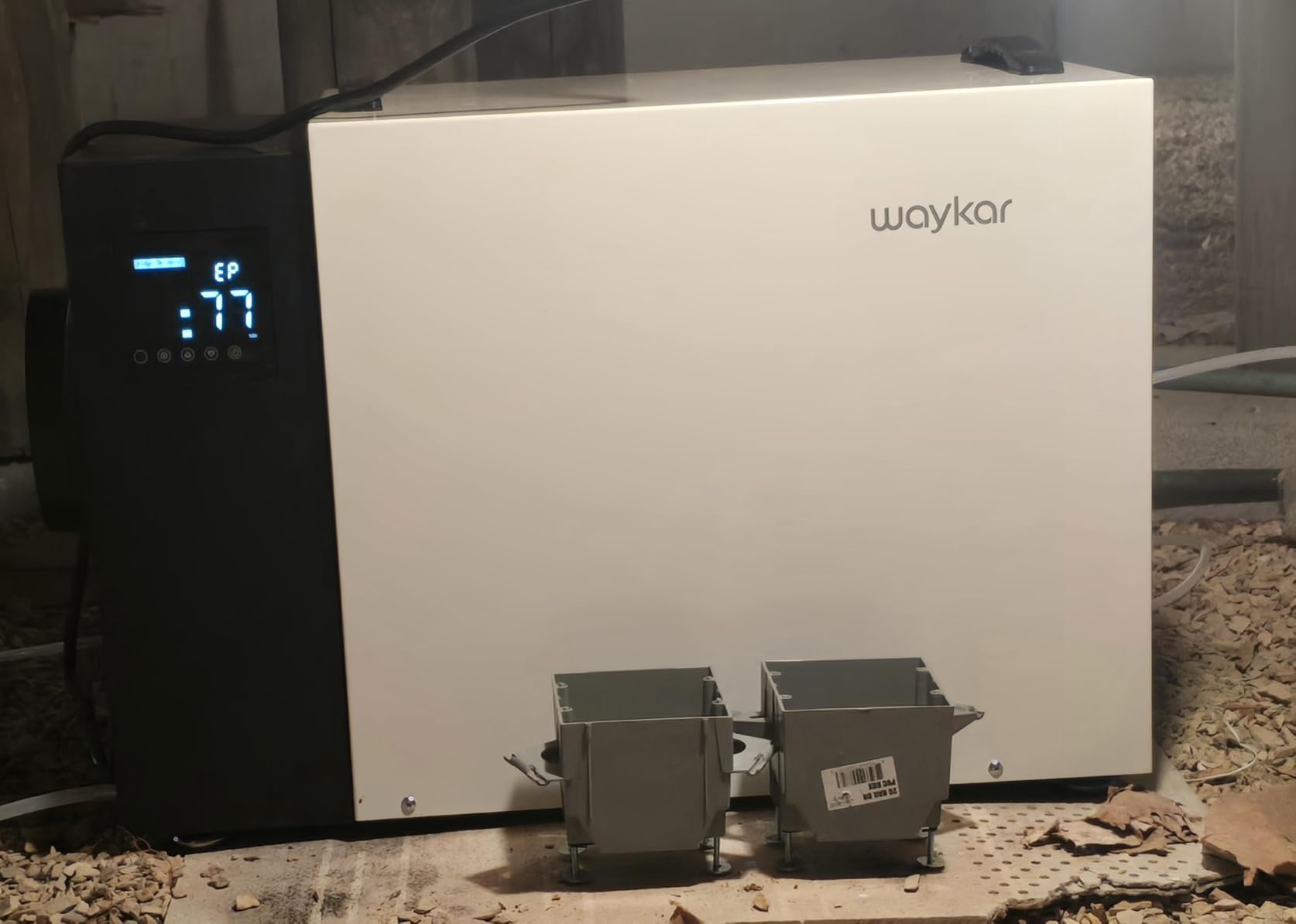
The rotary compressor is what separates this from most of the piston machines in this price class, and it is the feature we would look for first in a unit meant to run continuously for years. Rotary compressors are quieter and put less mechanical stress on the motor than piston types.
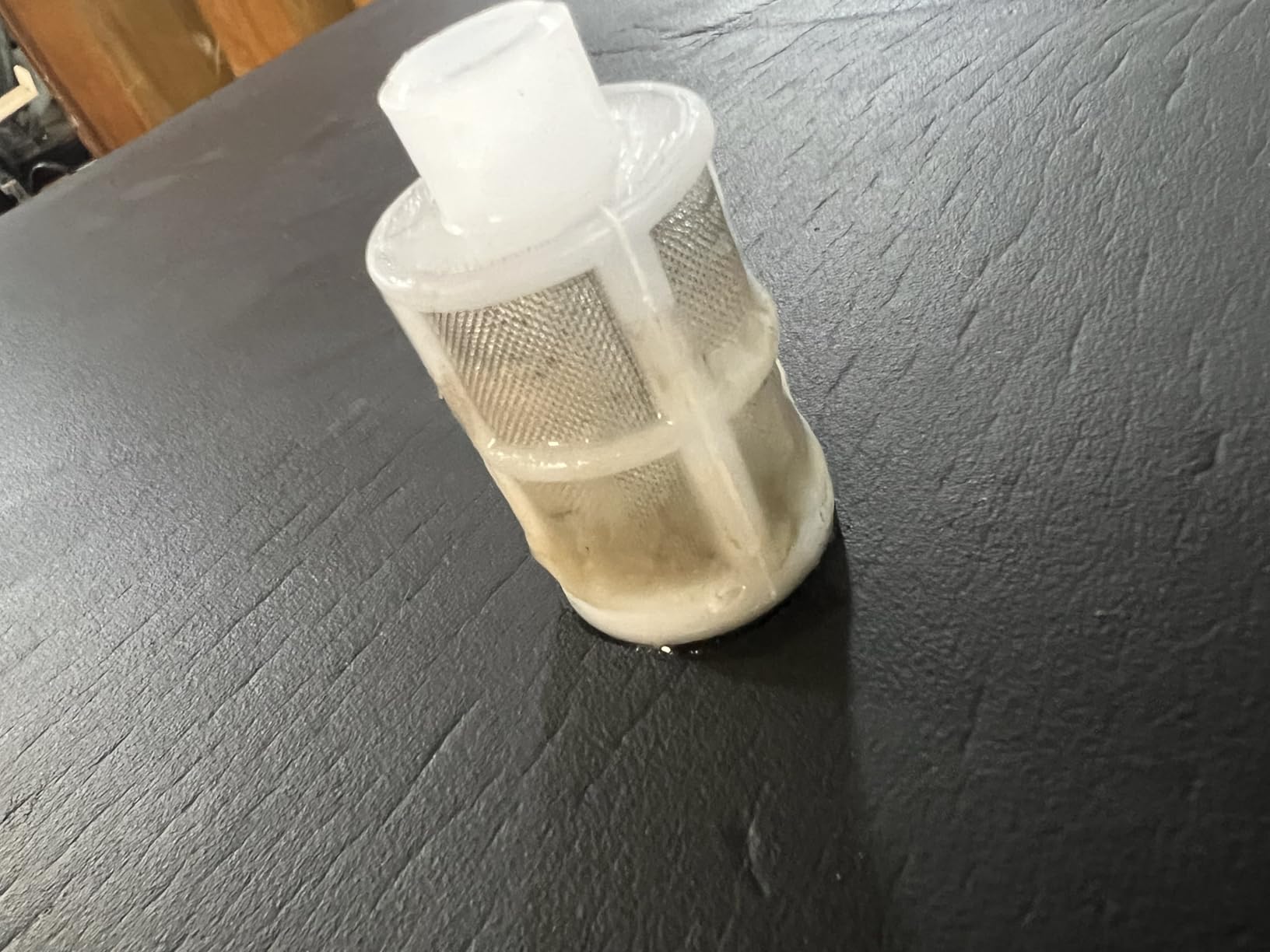
Owner reviews concentrate on the pump-and-hose drainage setup, which comes with both a 16.4 ft pumped hose and a 6.6 ft gravity hose. You get to choose the drainage method at install time without buying a different machine.
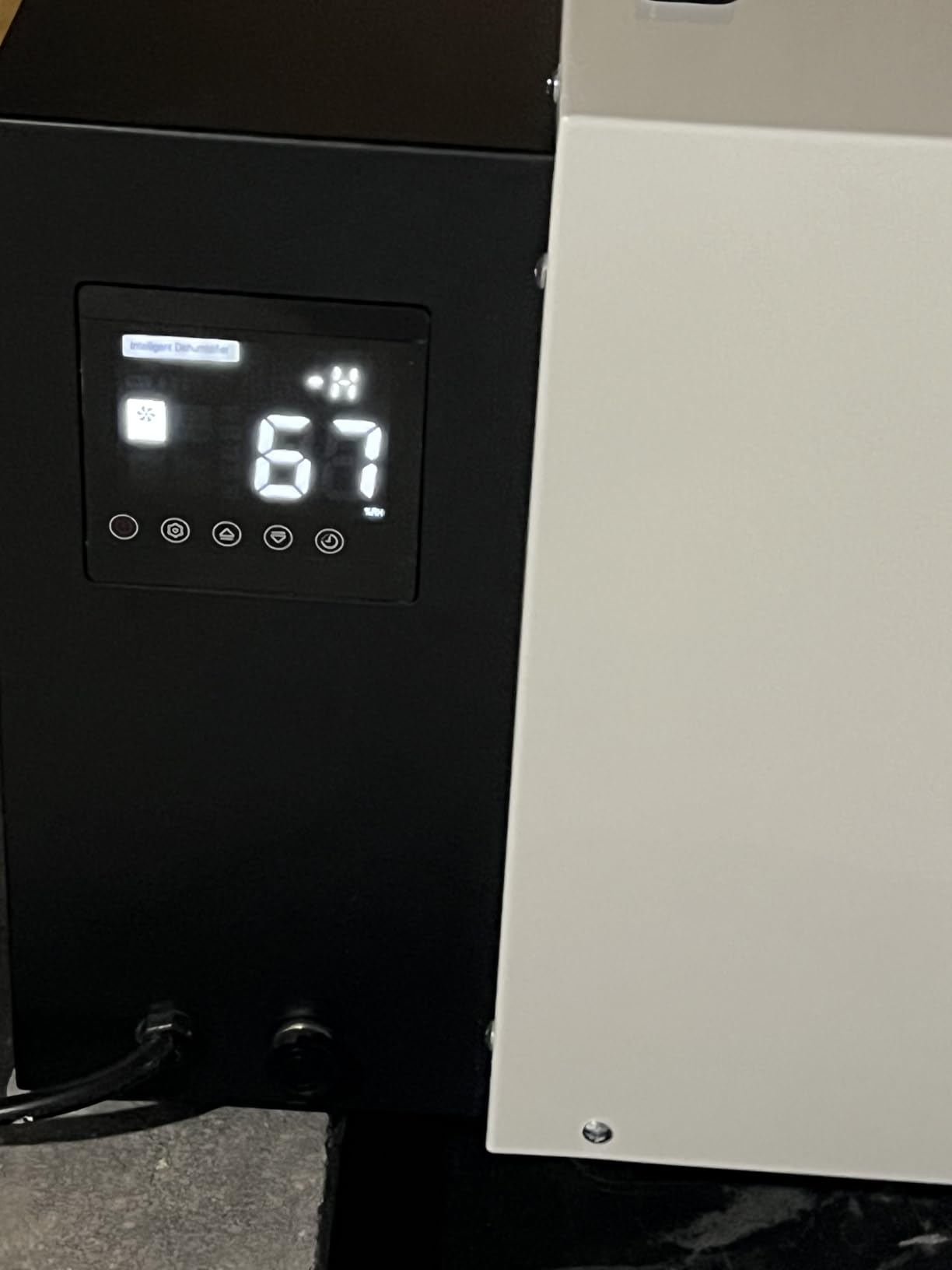
The humidity control range of 10 to 90 percent RH is unusually wide. Most competing units stop at 35 percent on the low end, which matters if you live somewhere with genuinely humid summers and want to pull more aggressively during the peak.
At 530 watts it also sits at the lower end of the power draw range in this group. For a machine rated to run continuously through a Gulf Coast summer, that difference compounds over a season.
When this becomes the right choice
If your crawl space and basement share a drainage situation, or you want one machine that can move between a damp closet and a wet crawl space during a water damage event, this is a flexible pick. The manufacturer positions it for both commercial and residential drying.
The touchscreen panel with an optional remote reaching 32.8 ft is worth considering if your only access point to the space is through a hatch in a closet or a hallway.
The trade-offs worth weighing
At 49.8 pounds, moving this into a crawl space is a two-person job. Plan the route before the unit arrives, and clear a path to the opening first.
The remote being a separate purchase is a small annoyance but it is a common pattern in this category. Several reviewers also flagged durability doubts relative to the cost, so the warranty terms matter more here than usual. The 5-year compressor coverage is a meaningful offset.
5. AlorAir Storm LGR Extreme 180 Pint, Best LGR Drying Power
ALORAIR 180 PPD Commercial Dehumidifier with Pump, 6-Year Limited Warranty
85 PPD at AHAM, 180 PPD max
2300 sq ft, 210 CFM airflow
Built-in pump with 14.7 ft lift
6-year limited warranty
Pros
- LGR refrigeration pulls moisture at lower humidity levels
- 210 CFM airflow for large damp volumes
- Pump and 19.6 ft hose give install flexibility
- Compact 22.8 x 13.7 x 17.3 inch footprint
- Detailed digital diagnostics display
Cons
- Heavy at 64.3 pounds
- Internal pump requires case disassembly to service
- Some refrigerant leak error codes after one to two years
- Warranty service may require paying return shipping
LGR, or low gravity return, refrigeration was built for rooms that need moisture pulled out at relative humidity levels where a standard compressor coil stops being efficient. That is precisely the situation once your crawl space is holding steady in the 55 to 60 percent range and a conventional unit simply cycles without extracting much.
At 85 pints per day AHAM across 2,300 sq ft, this is the highest continuous-duty figure in the roundup. For a large crawl space, a wide coastal lot or a post-storm drying job, that headroom is the whole argument.
The diagnostic display is unusually good for this category. It shows inlet and outlet temperature, relative humidity, grams per pound, coil temperature, compressor amperage and run hours, which is the kind of information a restoration contractor would want and a homeowner would use to confirm the unit is actually working.
Owners report the same behavior pattern: strong moisture pull, auto-restart after power failure, and the pump quietly handling drainage without attention. Memory start means it resumes the last state after an outage rather than resetting.
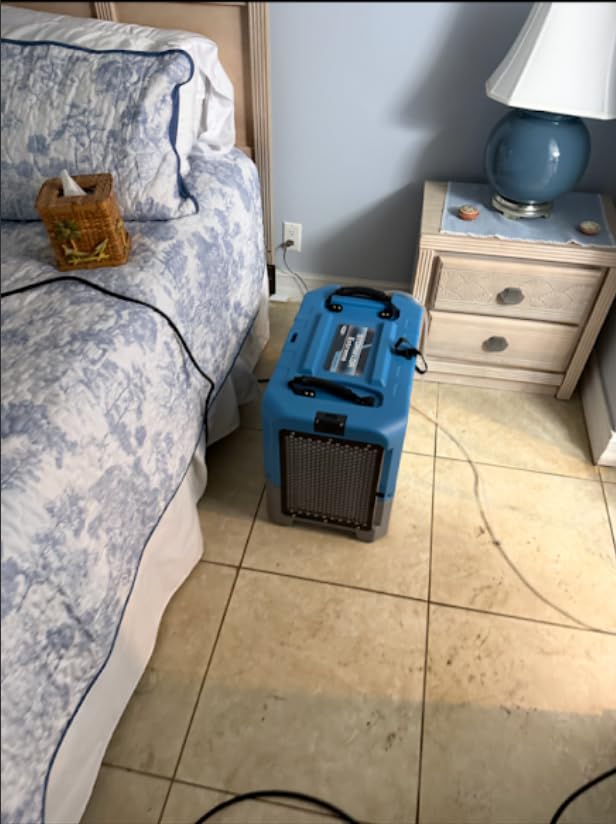
Where LGR earns its extra cost
The LGR design costs more money and pulls more power, so it only makes sense when a standard unit is genuinely underperforming. If your crawl space is 1,000 sq ft and already holding at 55 percent with a small machine, the extra capacity buys you nothing.
Where it clearly pays is on a large space, on a very wet space, or on a drying job where you want the space pulled down fast and then held.
The servicing problem to know about
The most significant practical complaint is that the condensate pump is mounted internally, so replacing it means taking the housing apart. That is a real serviceability issue in a space where access is awkward.
Long-term reliability is the other theme. Owners report refrigerant leak error codes appearing after one to two years on a minority of machines, and some note that warranty claims require paying return shipping. Budget for the possibility of a service call in year three.
6. Waykar 158 Pint Dual Duct, Best for Whole-House Integration
Waykar 158 Pints Crawl Space Dehumidifier with Remote Control and Pump, Dual Duct HVAC Commercial Whole-House Dehumidifier for Basement, Industry Water Damage Unit – 5-Year Quality Coverage
158 PPD max, 205.9 CFM airflow
7500 sq ft rated, dual duct ports
Included 32.8 ft remote and sensor
Pros
- Highest saturated capacity here at 158 PPD
- Remote control included out of the box
- Dual duct design suits whole-house HVAC integration
- 16.4 ft humidity sensor for precise control
- Pump hose and gravity hose both included
Cons
- Heaviest in the group at 70.9 pounds
- Humidity sensor must be installed for automated control
- Wider 24.4 inch body is awkward through a tight opening
Most crawl space dehumidifiers recirculate the air in one space. This one has separate ducted inlets and outlets, which means you can pull air from elsewhere in the structure and return dried air somewhere else. That is the configuration you want if the goal is whole-home dehumidification rather than a single crawl space.
It also ships with the accessories most competitors sell separately: a remote controller with 32.8 ft of range and a 16.4 ft humidity sensor cable so you can place the sensing element near the wood rather than at the machine.
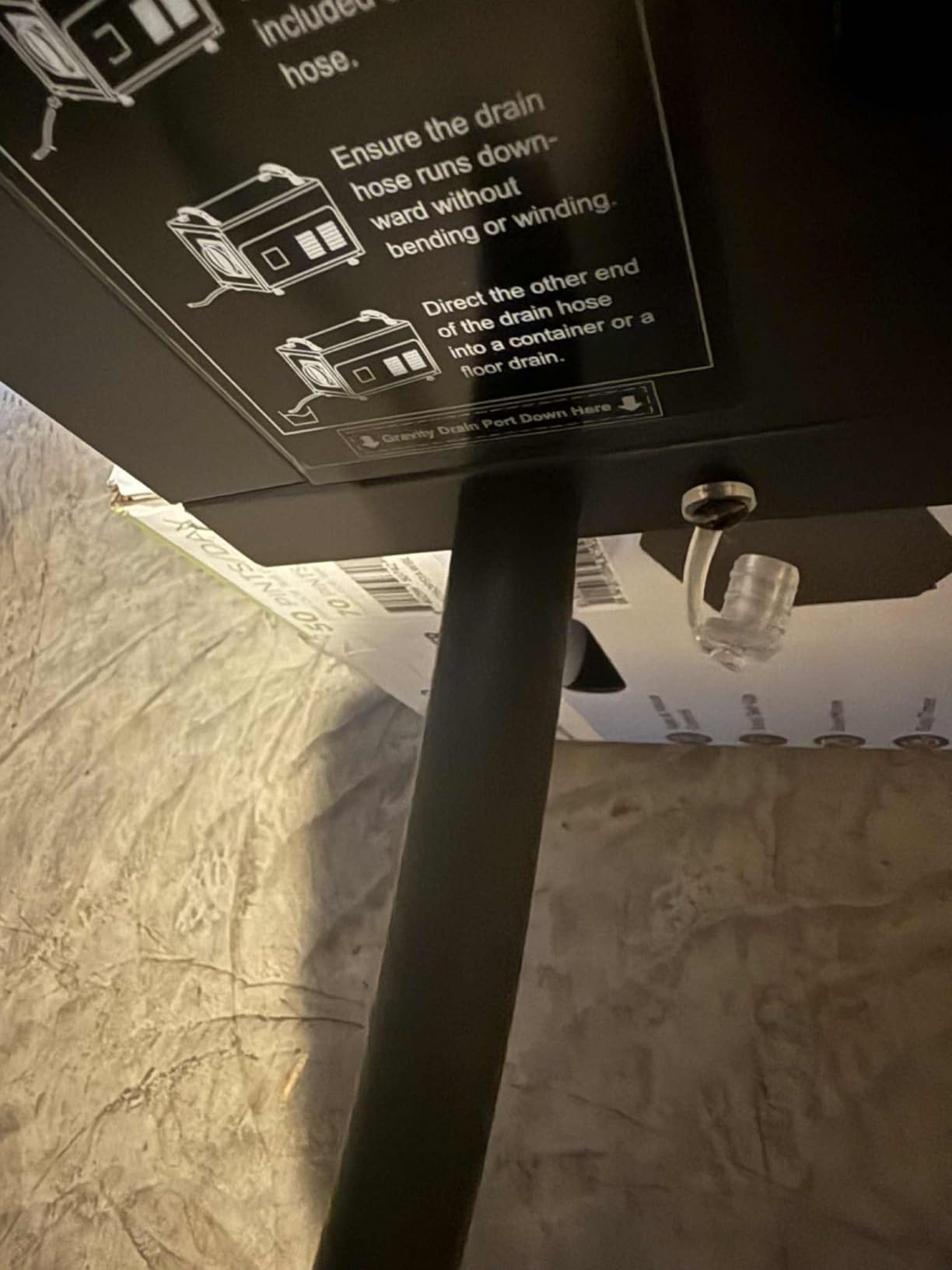
Reviewers consistently name those two included accessories as the reason to pick this over a cheaper unit with the same core capacity. A dehumidifier with a control panel you cannot reach and a humidity sensor mounted in the wrong corner will cycle constantly without ever hitting a real target.
Automatic defrost, overload protection and power-off memory are all present, and the 10 to 90 percent RH adjustment range matches the widest in this group.
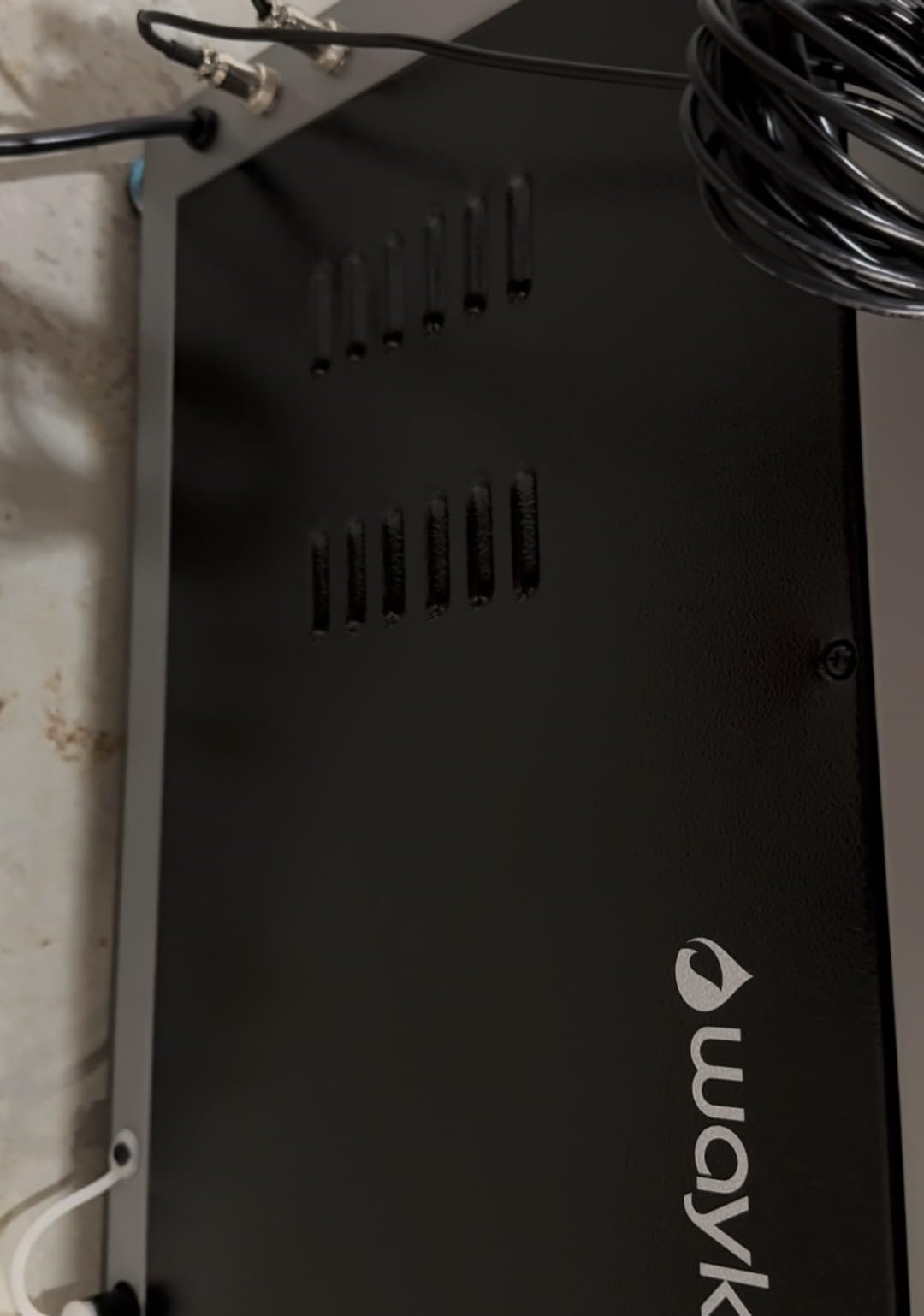
When the 7,500 sq ft figure is realistic
Manufacturer coverage figures assume favorable conditions, and crawl spaces are damp, still and full of obstructions. For a strictly sealed crawl space, size on the AHAM figure or your building’s square footage rather than on the coverage number.
The 7,500 sq ft rating becomes genuinely useful when the unit is ducted and pulling air across a larger portion of the home rather than working against the same trapped volume day after day.
The handling problem is real
At 70.9 pounds and 24.4 inches wide, this is the most physically awkward machine on the list. The width in particular is what will decide whether it fits through your access opening and past any plumbing or ductwork in the way.
Measure the opening and the route before you order, and plan on two people plus a dolly or a plywood sled. Also note that the humidity sensor must be installed correctly for the automated control functions to behave as designed.
7. MoisWell Defender M145 155 Pint, Best Low-Clearance Form Factor
Moiswell 155 Pint Commercial Dehumidifier with Drain Hose for Crawl Spaces
70 PPD at AHAM, 155 PPD max
6000 sq ft, 265 CFM airflow
Horizontal 22.5 x 14 x 14.7 in
Energy Star certified
Pros
- Highest average rating in the roundup at 4.5 stars
- Energy Star certified with 265 CFM airflow
- Horizontal profile fits between floor joists
- Supports floor and overhead installation
- Auto drain
- auto defrost
- 24-hour timer and auto restart
Cons
- Gravity drain only with no built-in pump
- Heavy at 63 pounds
- Highest wattage in the group at 860 watts
The horizontal form factor is the idea here. At 22.5 inches long, 14 inches wide and 14.7 inches tall, it slides between floor joists rather than standing up between them, which is what makes the difference in a shallow 16-inch clearance space.
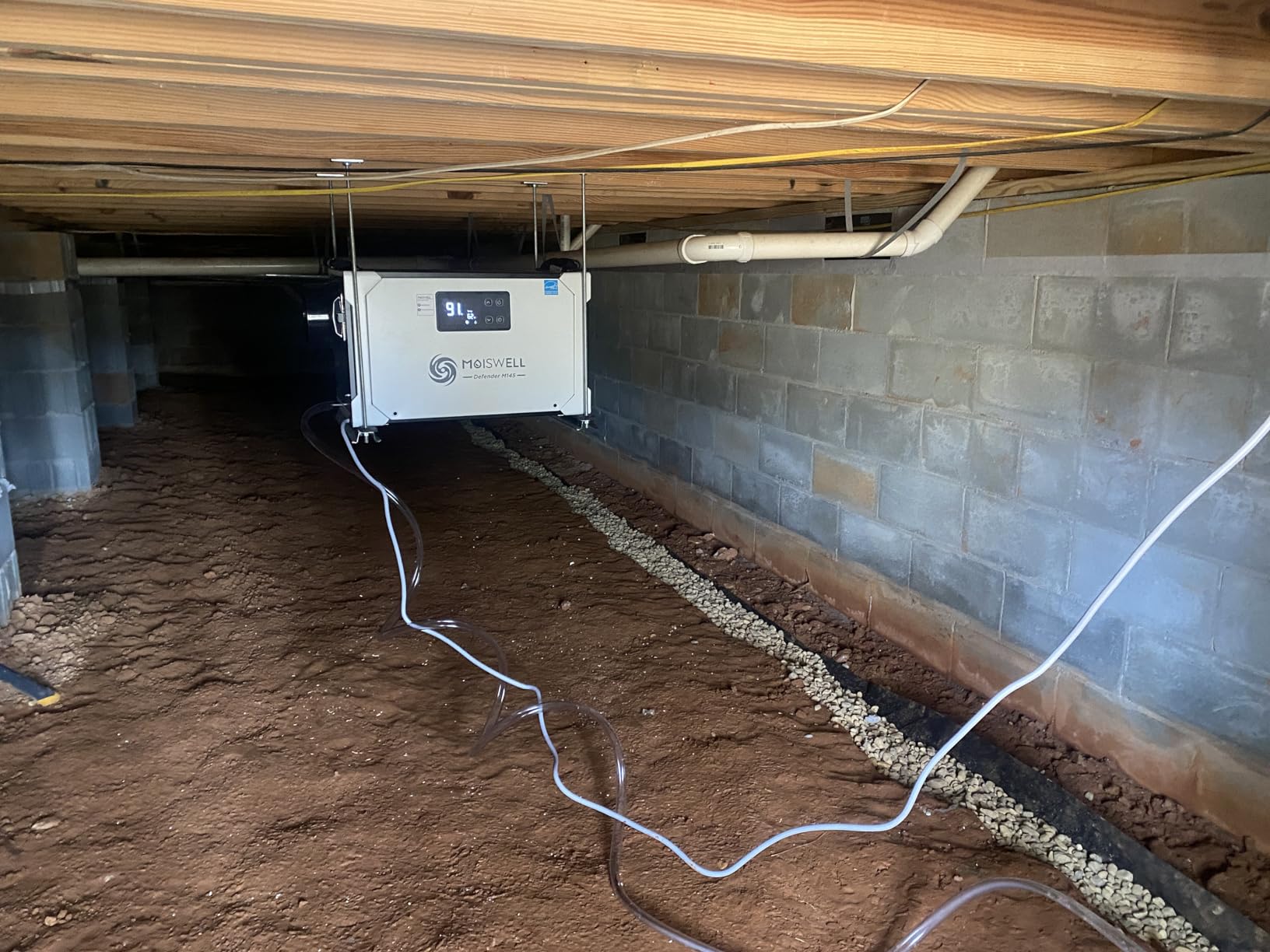
Owners also note that it supports both floor installation and overhead installation. Overhead mounting from the joists frees the soil surface completely and puts the machine exactly where the cold air and the condensation problems are.
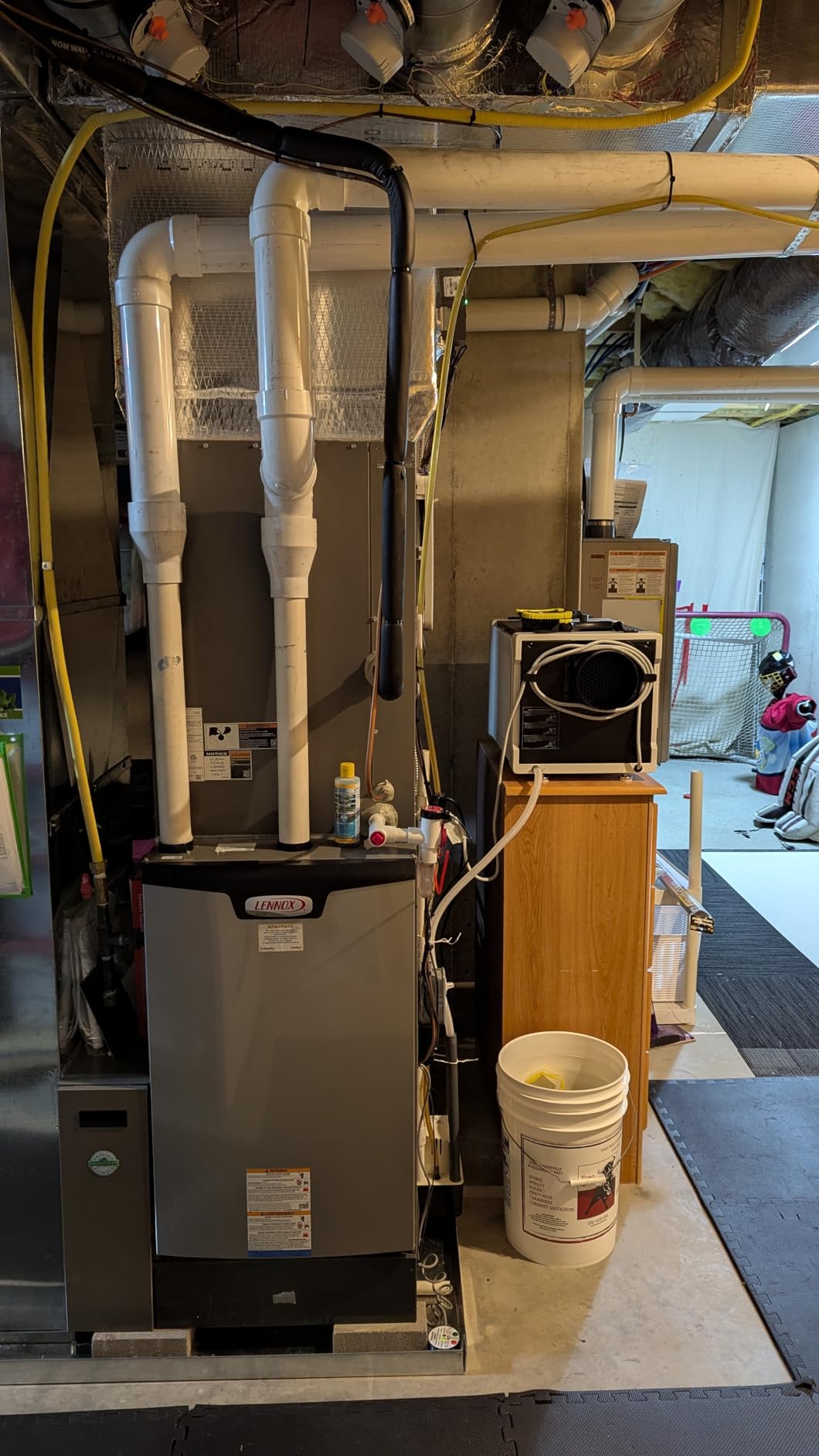
This is the highest-rated machine we included, holding a 4.5 average across its reviews. The recurring praise is for the combination of Energy Star efficiency, high airflow and a shape that actually fits where the space is tightest.
Set-and-forget features are complete: a 24-hour timer, automatic ON and OFF cycling to the humidity setpoint, automatic defrost and automatic restart after a power outage.
Planning a gravity drain around this unit
Because there is no internal pump, the placement question comes first. You need a drain point lower than the machine, and the run between them has to fall continuously without kinks or traps where condensate can sit and freeze.
If you can suspend the unit from joists above a sloped line to a sump, this works well. If the only outlet is level with or above the crawl space floor, this is not the right machine.
Where the rating hides the catch
The 860-watt draw is the highest in this roundup. Energy Star certification moderates the running cost, but a machine running continuously through a humid season at that draw will still show up on a bill more than the lower-wattage units here.
At 63 pounds it is also among the heavier machines. Budget for two people and a proper route into the space.
8. Airecoler GT-X5 125 Pint, Best R32 Energy Efficiency
Airecoler 125 Pints Commercial Dehumidifier for Crawl Space & Basement
60 PPD at AHAM, 125 PPD max
6000 sq ft, 265 CFM airflow
R32 refrigerant system
19.2 x 12.2 x 13.4 in body
Pros
- R32 refrigerant extracts efficiently with lower electricity use
- Compact 19.2 x 12.2 x 13.4 inch body fits low clearance
- Flexible placement including suspension between joists
- 265 CFM airflow
- 5-year coverage with 3 years on the dehumidification system
Cons
- This variant is gravity drain only with a 6.56 ft hose
- 830 watt draw among the higher here
- Smaller review base at 290 ratings
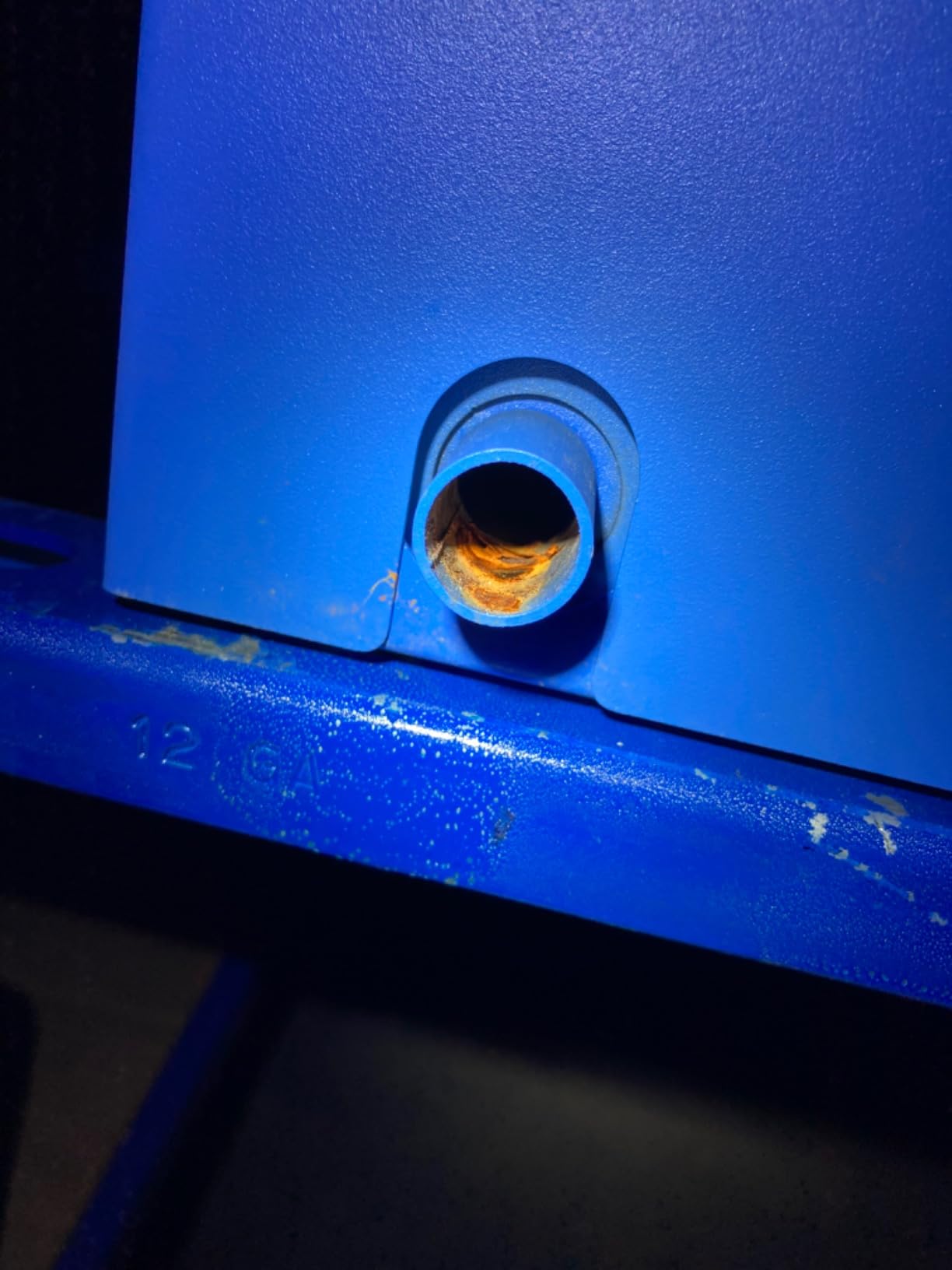
R32 is a newer refrigerant with a much lower global warming potential than the older R410A used in most dehumidifiers, and systems that use it can move heat more efficiently. Owners notice the practical version of that as a machine that pulls hard without the electricity bill climbing as much.
At 60 pints per day AHAM and 265 CFM of airflow, this sits in the middle of the roundup on output. The 19.2 by 12.2 by 13.4 inch housing is one of the more compact profiles here and clears a tight joist bay without difficulty.
Placement flexibility is a genuine strength. The manufacturer lists freestanding, countertop and suspended between floor joists, so it adapts to shallow spaces and shallow ceiling clearance alike.
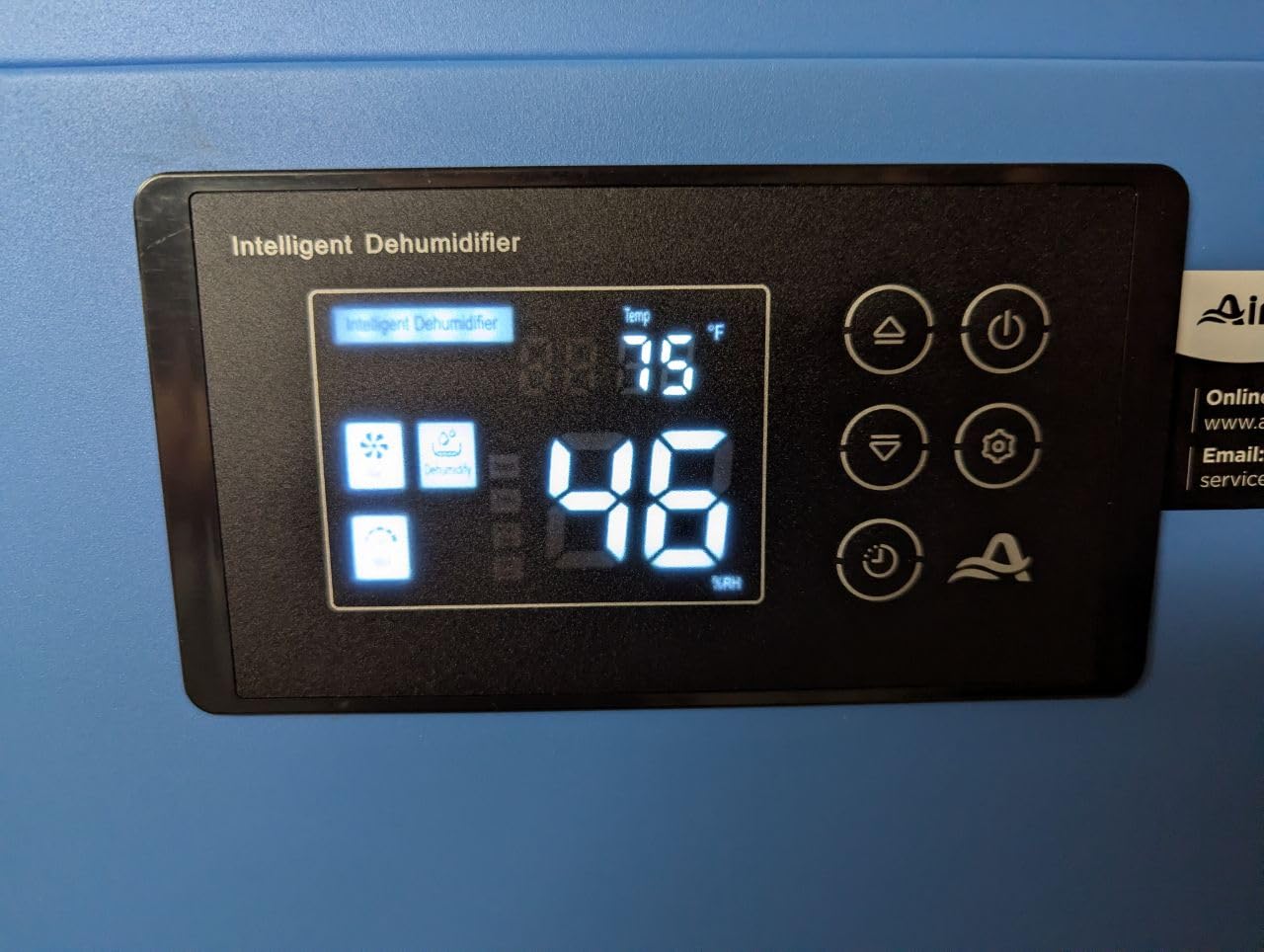
Controls cover continuous mode, a 24-hour timer, auto defrost, auto drain and auto restart after a power outage. That is a full feature set for a machine at the middle of the capacity range.
Check the pump configuration before ordering
This specific variant has no built-in pump. It drains by gravity through the included 6.56 ft hose, which means the machine has to sit above the drain point and the run has to slope the whole way.
Other capacity options in the same line do include pumps, so if your install needs one, look at those versions specifically rather than assuming the whole range is pumped. Getting this wrong is the most common install mistake we saw in forum threads about this category.
What the smaller review base means
With 290 ratings this has less owner history than the machines above it, and a smaller base makes it easier for a single batch of reviews to skew the average. The 4.4 figure is encouraging but carries less statistical weight than the 4.5 across 500 on the MoisWell.
The 830-watt draw is second highest in the roundup. If the unit is going to run continuously for a full humid season, factor that into your running cost expectations.
9. BaseAire AirWerx 90X 198 Pint, the Quietest Install Here
BaseAire 198 Pints Commercial Dehumidifier with Pump for 2,600 sq. ft
90 PPD at 80F and 60 percent RH, 198 PPD max
2600 sq ft, 210 CFM airflow
Built-in pump, 14.7 ft lift
58 dB(A) peak
Pros
- Quietest measured peak noise at 58 dB(A)
- Built-in pump lifts water 14.7 ft
- 90 PPD at 80F and 60 percent RH is a real working figure
- Strong carry handle
- Auto-stop at set humidity with auto restart
Cons
- Heaviest in the roundup at 70.5 pounds
- Highest cost in the group
- Remote control purchased separately
- Some reports of blower motor failure within a couple of months
Most crawl spaces are directly under a room where people expect silence, which is why the 58 dB(A) peak rating on this machine matters more than the number suggests. Owners report that on some installs it is effectively inaudible from the floor above.
The capacity figure is stated differently from most of the roundup, and usefully so. Rather than quoting saturation capacity and then a separate AHAM number, this one states 90 pints per day at 80°F and 60 percent RH, which is a realistic crawl space operating condition rather than a laboratory maximum.
That makes it the easiest unit here to size honestly. If your space genuinely sits at 80°F and 60 percent RH, the 90-pint figure is what you will actually get, and 90 pints covers roughly 2,600 sq ft in the manufacturer’s sizing.
The condensate pump lifts 14.7 ft, so drainage logistics are as flexible as the pump-equipped competition. Auto-stop at the humidity setpoint, auto restart and power interruption memory are all standard.
When quiet operation changes the decision
If the crawl space sits under a bedroom, a home office or above a living room where a compressor cycling is noticeable, the noise rating can be worth paying for. Several reviewers described installs where they could not hear the machine from the floor above.
That silence comes partly from the housing design and partly from the fact that a large, heavy machine resists vibration transmission through the joists better than a small one does when it is properly mounted.
The handling and reliability trade-offs
At 70.5 pounds and 23.43 by 15.28 by 18.03 inches, this is the largest and heaviest machine in the roundup. Confirm the dimensions fit your bay spacing and plan the lift before it arrives.
There are also isolated reports of blower motor failure within the first couple of months, and the remote control is a separate purchase. Check what the warranty covers for parts and labor before committing.
10. Abestorm Guardian SN35P 70 Pint, Our Budget Pick for Small Spaces
Abestorm 70 PPD Dehumidifier with Pump & Hose for Crawl Space & Basement
70 PPD, up to 1000 sq ft
Pump lifts 19.6 ft plus gravity drain
15.2 x 11.4 x 11.2 in, 38.2 pounds
5-year warranty
Pros
- Lightest and most compact machine here at 38.2 pounds
- Pump lifts 19.6 ft
- the longest reach in the roundup
- Metal construction rather than plastic
- 5-year warranty with responsive service and free parts
- Holds crawl space humidity around 45 to 55 percent
Cons
- Lowest capacity at 70 PPD
- Pump is audible when it activates
- Controls and buttons are not intuitive
- Some reports of units stopping condensing after 6 to 16 months
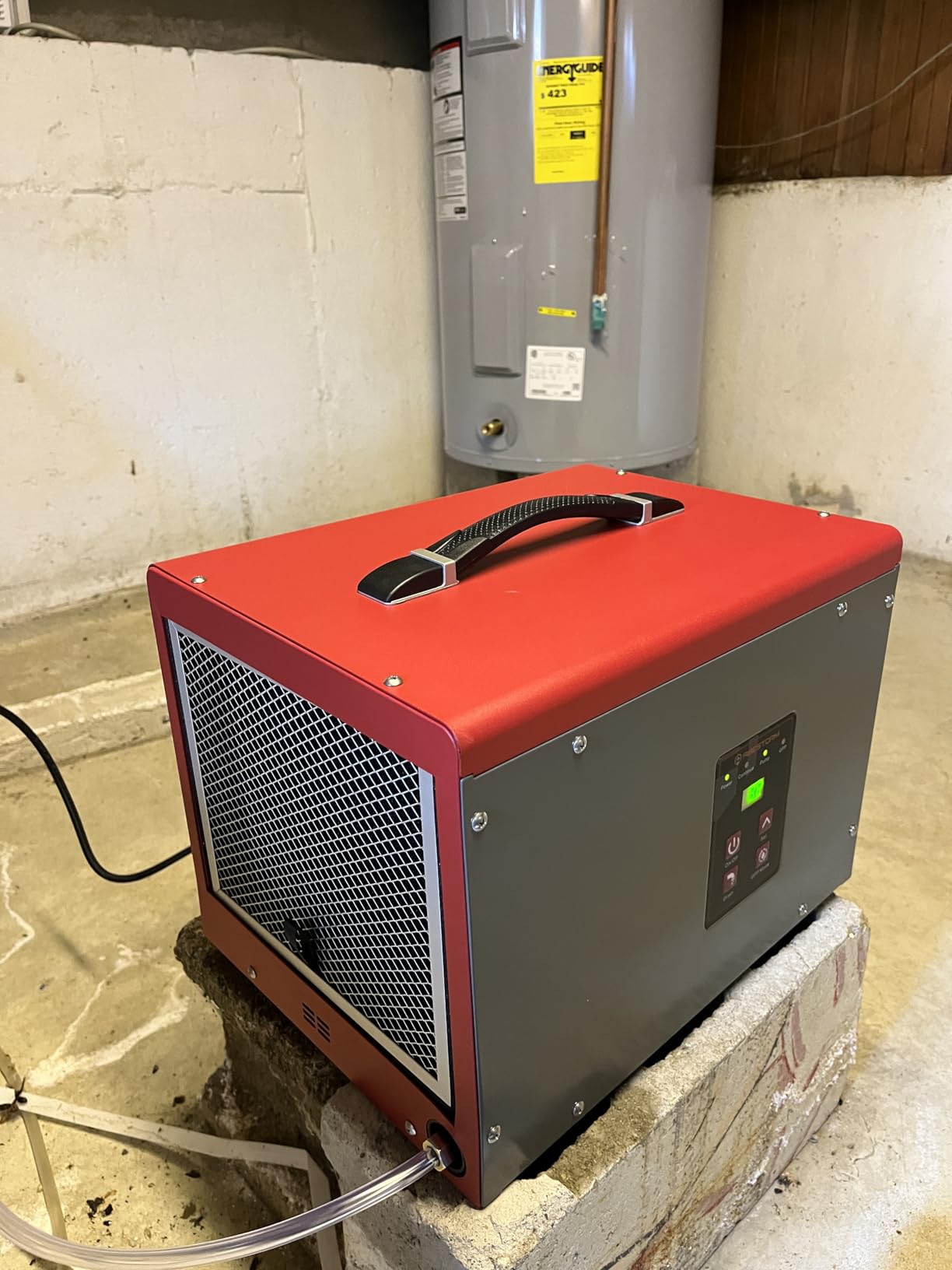
This is the answer to the forum question about whether a big-box-store machine is good enough. At 38.2 pounds and 15.2 by 11.4 by 11.2 inches, it is by a wide margin the easiest unit here to carry through a crawl space opening and position exactly where you want it.
The pump is the standout. A 19.6 ft lift is the longest reach in this roundup, which means it can pump water from the middle of a long crawl space up to a sump with plenty of margin.
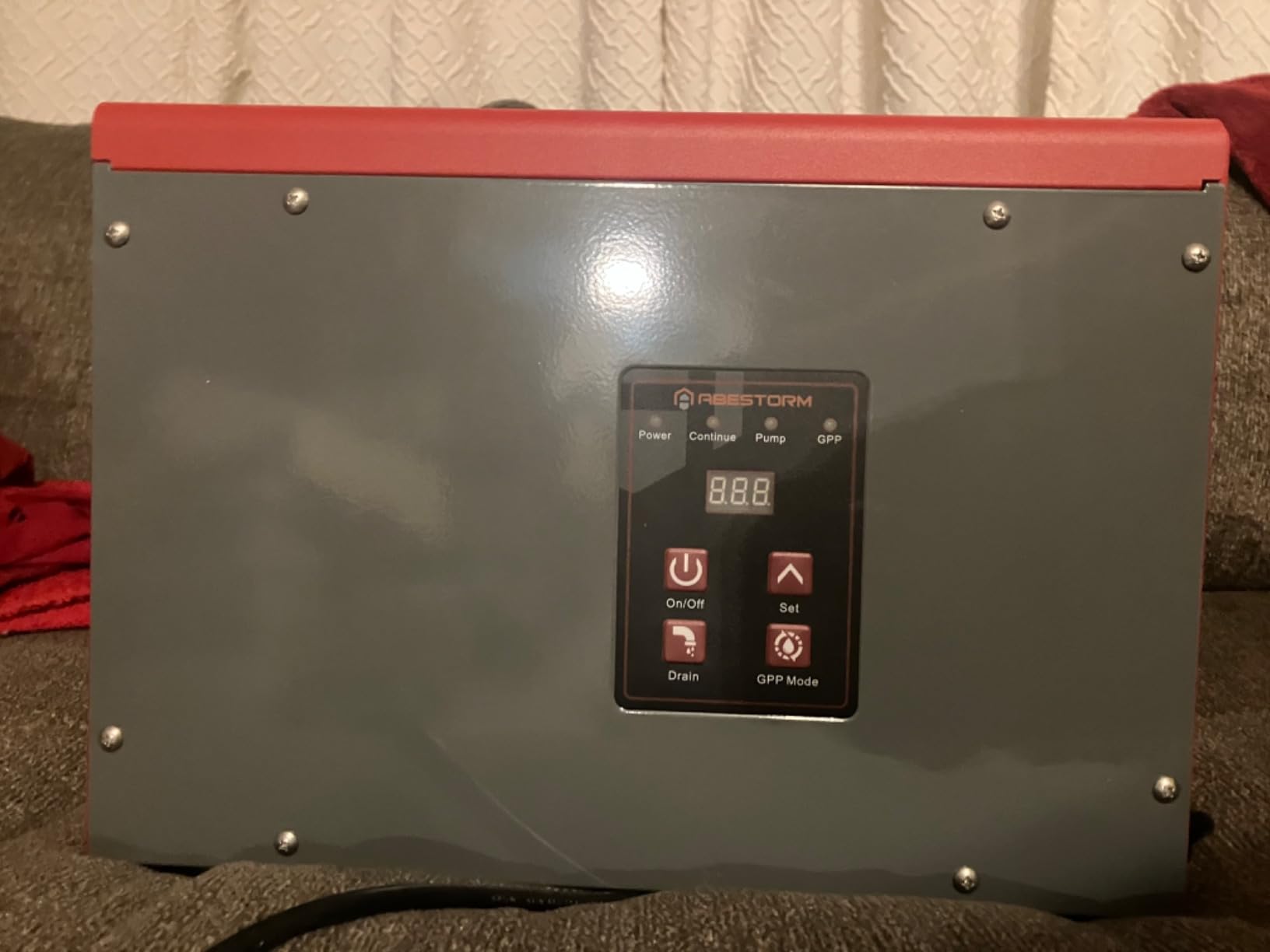
Owners report the humidity settling and staying in the 45 to 55 percent range, which is right in the band you want for wood framing. The auto-stop at target humidity and auto restart after a power interruption keep it running hands-off.
Service is a real differentiator here. Abestorm sells replacement parts directly so owners can repair a unit themselves, and the 5-year limited warranty comes with lifetime access to expert technical support.
Knowing when 70 pints is enough
Seventy pints per day covers a crawl space up to roughly 1,000 sq ft, and that is genuinely the right size for many homes. Smaller footprints, drier soil and a good vapor barrier all reduce the moisture load.
It becomes the wrong size the moment you have a larger footprint, a high water table, recent flooding or a coastal climate where the space sits above 70 percent RH for weeks at a time.
Where the compromises show
The pump is audible when it activates, and in a shallow space under a quiet room that can carry up into the house. If the crawl space sits under a bedroom, check that first.
The controls are also described as unintuitive, with a manual needed to work out the functions. Some owners also report units that stopped condensing after six to sixteen months, so treat the warranty terms as important rather than decorative.
How to Size a Crawl Space Dehumidifier
Most sizing confusion in this category comes from comparing two different numbers that both end in the word pints. Get this right before you spend anything and you will save yourself from buying a machine that is either oversized and wasteful or undersized and never keeps up.
Measure first, then match capacity
Measure the actual crawl space footprint, not the house footprint. A 2,000 sq ft house on a slab may have a 900 sq ft crawl space, and a 2,000 sq ft house on piers might have more than that. Pull the tape along the joist bays and count.
Then use the crawl space square footage as the basis for capacity. The working rule for a properly encapsulated space is roughly 30 pints per day of AHAM-rated capacity for every 1,000 sq ft. That gives you a sizing reference you can apply to any space:
500 sq ft: about 15 to 25 PPD continuous-duty capacity
1,000 sq ft: about 30 to 35 PPD
1,500 sq ft: about 45 to 55 PPD
2,000 sq ft: about 60 to 70 PPD
2,500 sq ft: about 75 to 90 PPD
Add roughly 30 to 50 percent if the space is not encapsulated, if you are in a region with summer relative humidity regularly above 60 percent, or if there is a plumbing leak or a known high water table. Add capacity for latent load, not for the square footage a marketing page claims.
That last point matters. Coverage figures of 6,000 to 7,500 sq ft on several machines in this roundup assume good airflow, a dry soil surface and moderate ambient humidity. In a sealed crawl space the air is damp and still, and the realistic service area is far smaller than the headline number.
Read the two capacity numbers correctly
The single biggest source of confusion in this category is that almost every machine is quoted twice. Saturation capacity is measured at 95°F and 90 percent relative humidity, a laboratory worst case. AHAM capacity is measured under standard test conditions closer to what a room actually experiences.
The AlorAir Storm LGR makes the gap obvious: 180 pints per day at saturation and 85 pints per day at AHAM. That is less than half. A buyer who sizes on the 180 figure will think they have twice the machine they actually have.
The Abestorm 70 PPD is quoted without a split figure at all, and the BaseAire makes the opposite choice by stating 90 PPD at 80°F and 60 percent RH directly. The BaseAire approach is the easiest to size with, because those conditions are what a humid crawl space actually looks like.
For your own comparison, line up the AHAM or working-condition numbers only. Anything quoted at saturation tells you how much water the unit can move on the worst day of the year, which is a durability consideration rather than a sizing one.
Drainage decides the install, not the capacity
There are three drainage arrangements, and the right one is determined by your crawl space rather than by the dehumidifier.
Gravity drain. The unit sits above the outlet and the line runs downhill the whole way. Simplest and most reliable, but it needs a low point. The AlorAir HD55S, HD55 Blue, MoisWell M145 and Airecoler GT-X5 all use this.
Built-in condensate pump. A small pump inside the cabinet pushes water up to a drain. Lift ranges from 14.7 ft on the AlorAir Storm LGR and BaseAire up to 19.6 ft on the Abestorm. This is what you want when the only outlet is a basement sump.
Sump pump tie-in. The drain line runs to an existing sump, with the dehumidifier plumbed in as an auxiliary water source. Common advice is to run it so the sump floats activate the pump rather than the reverse, so a dehumidifier failure does not mean a flooded space.
Contractors posting on r/basement consistently recommend the pump version, and the reason is simple. Gravity drain depends entirely on finding a low point, and a surprising number of crawl spaces do not have one. A pumped unit works anywhere.
Clearance and cold-weather operation
Height is the constraint most often missed. Many crawl spaces are between 16 and 24 inches tall, so a unit 17 or 18 inches tall will not fit on the floor at all. Two options solve this: choose a low-profile unit like the MoisWell M145 at 14.7 inches, or suspend a taller machine from the floor joists.
Suspending from the joists is a well-established pattern. A homeowner on r/HomeMaintenance described hanging the unit from the cross beams to allow downhill drainage into a sump pump, and it also keeps the machine clear of surface water and soil contact.
For cold operation, look for an automatic defrost cycle with temperature sensors. Every unit in this roundup has one. Be realistic about the difference though: defrost manages coil icing, it does not make a standard compressor efficient in a permanently freezing space.
Watch the upper temperature ratings too. Several machines here are rated to 100°F or 104°F, which matters in a Gulf Coast crawl space that can reach those temperatures in August.
Installing and Maintaining a Crawl Space Dehumidifier
Installation is where most crawl space dehumidifier disappointments come from, and almost none of them relate to the machine itself. They come from clearance, power and drainage.
Clearance first. Measure the height from soil to joist at the lowest point, then subtract the height of the blocks or stand you intend to use. A unit that fits in the catalog and not in your bay will not work.
Mount it properly. Set the machine on level blocks or rated joist hangers so it is not sitting in a puddle waiting to happen. Isolate vibration with rubber feet or a foam pad if the space sits under a bedroom.
Protect the power. Run the circuit from a GFCI-protected receptacle. A damp crawl space with a metal housing and a standing water risk is exactly the environment where GFCI protection matters.
Route the drain downhill or pump it. A drain line that runs level will not clear, and a section that traps water can freeze and block the line in winter. Secure the hose at intervals so it cannot sag and form a trap.
Set the humidity and walk away. Target 50 to 60 percent RH, measured near the wood rather than at the machine. Below 50 percent you are wasting energy and can dry out wood framing; above 60 percent you are not solving condensation.
Maintenance is mostly inspection. Clean or replace the filter on a schedule, because a clogged filter cuts airflow across the coil and that directly reduces extraction. Check the drain line every few months for kinks, mineral scale or a frozen section.
The most common failure mode people describe is a condensate pump that stops moving water. The tank fills, the float switch cuts power and the space silently returns to soaking while you assume the unit is running. A cheap fix is a small monthly check on the pump, and a smarter fix is a pump with an audible alarm you can hear from the house above.
Frequently Asked Questions
Is it worth putting a dehumidifier in a crawl space?
Usually yes, if the space is encapsulated or you see condensation on the joists. A crawl space dehumidifier removes ground moisture that would otherwise condense on cold framing and subfloor, which is the leading cause of wood rot, mold and termite damage. Without one, you also lose the stack effect control that keeps crawl space air out of the living area. If your space is vented and stays under 70 percent RH through a humid summer, you may get by with airflow alone.
Can I put a dehumidifier in my crawl space without encapsulation?
You can, and it will pull water, but expect to run it harder and for longer. Bare soil releases moisture continuously, so the latent load never drops and the unit cycles far more than it would in a sealed space. The recommended order is to lay 6 mil polyethylene over the soil, seal the foundation vents and rim joists, then add a dehumidifier. Owners who skip encapsulation usually report good results only in dry regions.
Is a dehumidifier necessary in an encapsulated crawl space?
In most cases, yes. Encapsulation cuts the moisture load dramatically but does not eliminate it, and soil moisture plus outdoor air leaking through small gaps still generates humidity. The combination is what works: the vapor barrier slows the moisture down and the dehumidifier removes what gets through. Without a dehumidifier, an encapsulated space will still drift above 60 percent RH and can still show condensation on cool framing.
What size dehumidifier do I need for a 2000 sq ft crawl space?
For a 2,000 sq ft encapsulated crawl space, aim for a machine rated at roughly 60 to 70 pints per day under AHAM conditions rather than at saturation. If the space is not encapsulated, or you are in a region where summer humidity regularly exceeds 60 percent, step up to 70 to 90 PPD. Measure the crawl space itself rather than the house footprint, and confirm your access opening is wide and tall enough for the unit you choose.
How many pint dehumidifier for 1000 sq ft?
Roughly 30 to 35 pints per day of AHAM-rated capacity for a 1,000 sq ft encapsulated crawl space. Compare that number rather than the saturation figure printed on the box, which can be two to three times higher and is measured at 95 degrees and 90 percent humidity. If your space is unencapsulated or very wet, size up a step to 50 PPD or choose a unit with a built-in condensate pump.
How many sq ft does a 70 pint dehumidifier cover?
A 70 pint unit is generally rated for a crawl space of up to about 1,000 sq ft. That figure assumes encapsulation and moderate ambient humidity, and it is generous for a space with bare soil, a high water table or coastal climate. The Abestorm Guardian SN35P is an example of a 70 PPD machine built for the 1,000 sq ft class, and it is the lightest and easiest to install in this category.
Where do I drain a crawl space dehumidifier?
The three options are gravity drain to a low point, pumped drain to a higher outlet, or a tie-in to an existing sump pump. Gravity drain is simplest but requires a drain point below the machine and a line that slopes the entire way. Pumped units lift water 14 to 19 ft and are the most flexible. For a sump tie-in, plumb the dehumidifier so its water raises the sump float rather than the other way around, so a dehumidifier failure cannot flood the space.
What humidity should my encapsulated crawl space be?
Aim for 50 to 60 percent relative humidity, measured near the wood framing rather than at the machine. Below 50 percent wastes energy and can dry out framing, while above 60 percent you are still in the range where condensation forms on cold surfaces. Take a reading across a full day in the worst month of your local summer, since average readings hide daytime spikes that do the real damage.
Which Crawl Space Dehumidifier Should You Buy?
For most homes, the AlorAir Sentinel HD55S is the best dehumidifier for crawl spaces we reviewed: 55 PPD at AHAM, a metal housing that clears a 16-inch bay, a tankless continuous drain and a 6-year limited warranty, backed by the largest review base in the roundup. It is the pick when you have a low point to drain to.
If there is no gravity fall available, buy the Aiusevo 130 Pint and let the built-in pump do the work. If your crawl space is under 1,000 sq ft and you want the easiest install of the ten, the Abestorm Guardian SN35P at 38.2 pounds is hard to argue with.
Before anything else, spend an afternoon on the prep work. Measure the space, cover the soil with 6 mil polyethylene, seal the vents and check the drainage route. The machine is the easy part, and the prep is what decides whether it works for the next ten years.