
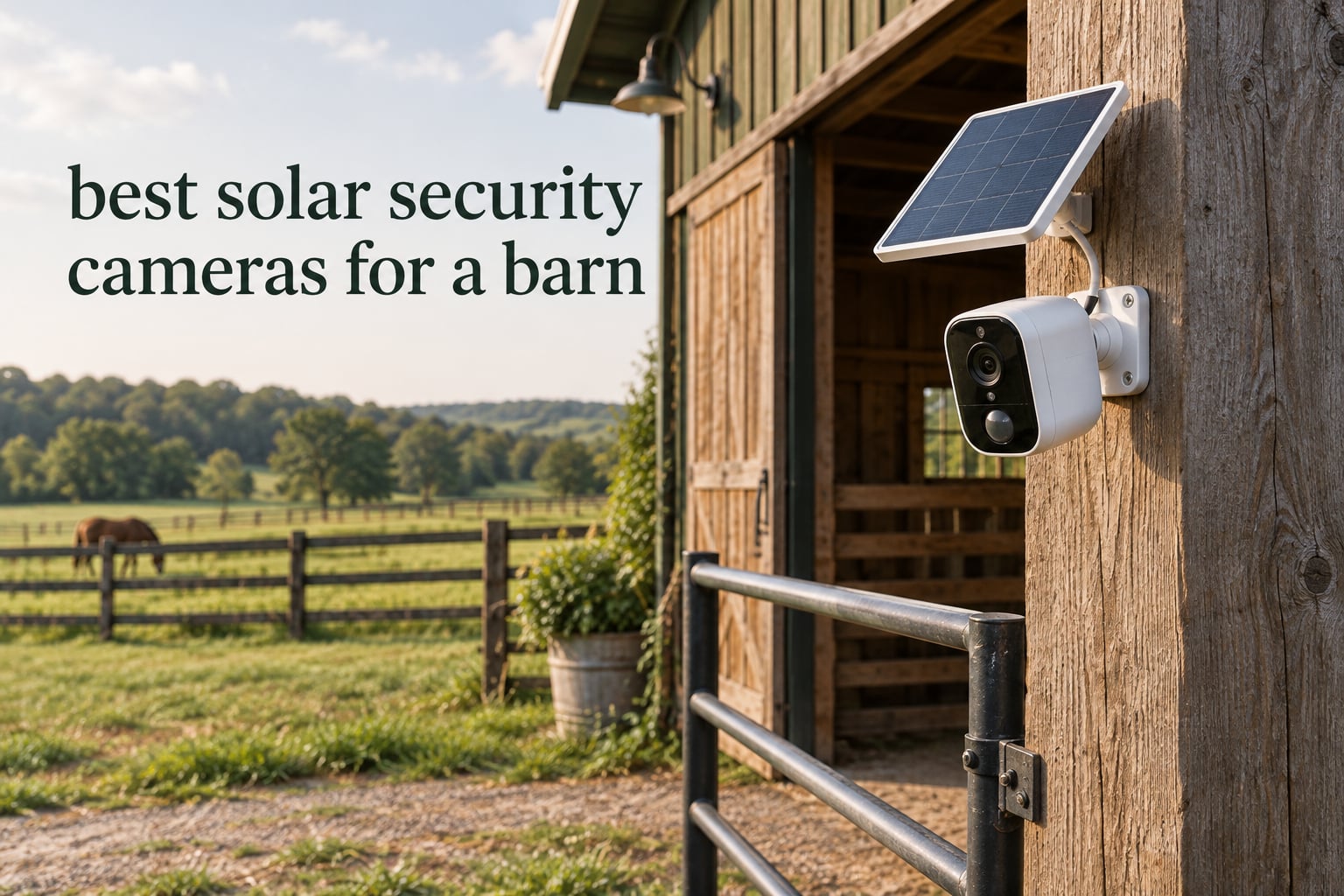
A barn camera has one job description that no indoor camera shares: it has to run for months on stored sunlight, survive a full winter without a charger, and still hand you usable footage from a dark aisle at 2am. There is no mains power at most barns, no heating cable running to the ridge pole, and in most cases no WiFi signal either. That combination rules out a huge share of the security cameras sold online today.
So what is the best security camera for a barn? For a barn that has no power and no WiFi, the answer is a 4G LTE cellular model with a solar panel, because it removes both the wiring and the network problem at once. If the barn sits within reliable WiFi range of your house or shop, a WiFi model with local microSD storage is the cheaper, simpler pick. And if you mainly want deterrence and evidence around gates, hay stacks and beehives rather than a live app, a rugged solar cellular camera is the smarter purchase.
That is the whole framing for our best solar security cameras for a barn in 2026. Solar solves power, not connectivity, and those are two separate decisions. We compared ten wire-free outdoor cameras across power source, connectivity, night range, storage, weather rating and monthly cost, then ranked them for the specific problems a barn throws at a camera: deep shade on the north wall, dust and hay in the air bouncing infrared light, animals triggering motion sensors at all hours, and a device you cannot easily reach when it needs attention.
Table of Contents
Top 3 picks Best Solar Security Cameras for a Barn in 2026
Three models cover most barn situations. The eufy SoloCam S340 is the sharpest general-purpose solar camera on a barn wall or eave. The Reolink Argus PT is the value pick, with the longest review history and no subscription anywhere in the stack. The SEHMUA S40 is the one to buy when the barn has no WiFi at all, because it runs on cellular with a SIM and a 6W panel.
eufy SoloCam S340
- 3K dual-lens with 8x zoom
- Removable solar panel with 10000 mAh battery
- 360 pan and tilt with AI tracking
- Local storage with no monthly fee

Reolink Argus PT
- 5MP sensor with color night vision to 33 ft
- Separate solar panel
- 355 pan and 140 tilt
- 512GB microSD hub or FTP storage

SEHMUA 4G LTE S40
- 4G LTE cellular with no WiFi needed
- 6W panel with 10400 mAh battery
- 2K color night vision
- 360 pan and tilt
A note on the list order: the ranking favours cameras that suit a barn, not cameras that happen to score well on paper. Resolution matters less than whether the camera still has charge in February, and night coverage matters more than any daytime detail.
All 10 Best Solar Security Cameras for a Barn Compared (October 2026)
Every camera below runs without a power cable. The differences that decide which one belongs on your barn are connectivity, battery size, night range and whether a subscription is required for basic recording.
| Product | Specifications | Action |
|---|---|---|
| eufy SoloCam S340 |
|
Check Latest Price |
| Reolink Argus PT |
|
Check Latest Price |
| SEHMUA 4G LTE S40 |
|
Check Latest Price |
 Cinnado B6 2-Pack Cinnado B6 2-Pack |
|
Check Latest Price |
 aosu SolarCam 2K aosu SolarCam 2K |
|
Check Latest Price |
 aosu D1 Classic 4-Cam Kit aosu D1 Classic 4-Cam Kit |
|
Check Latest Price |
 HOSAFE 4G LTE 2-Pack HOSAFE 4G LTE 2-Pack |
|
Check Latest Price |
 Hiseeu 2K 4MP 2-Pack Hiseeu 2K 4MP 2-Pack |
|
Check Latest Price |
 Xega 4G LTE Solar Camera Xega 4G LTE Solar Camera |
|
Check Latest Price |
 eufy 4G LTE Cam S330 eufy 4G LTE Cam S330 |
|
Check Latest Price |
1. eufy SoloCam S340 – Best Overall Barn Camera With 3K Dual-Lens Clarity
eufy Security SoloCam S340, 3K Dual-Lens Solar Security Camera
3K dual-lens with 8x zoom
10000 mAh battery
removable solar panel
360 pan and tilt
Pros
- Sharp 3K day and night image
- Removable solar panel keeps 10000 mAh battery topped up
- 360 pan and tilt with AI object tracking
- Local storage with no monthly fee
- Fast and straightforward app setup
Cons
- Plastic mount has no theft resistance
- Motion detection over-triggers on wind-blown foliage
- Tinny half-duplex two-way audio
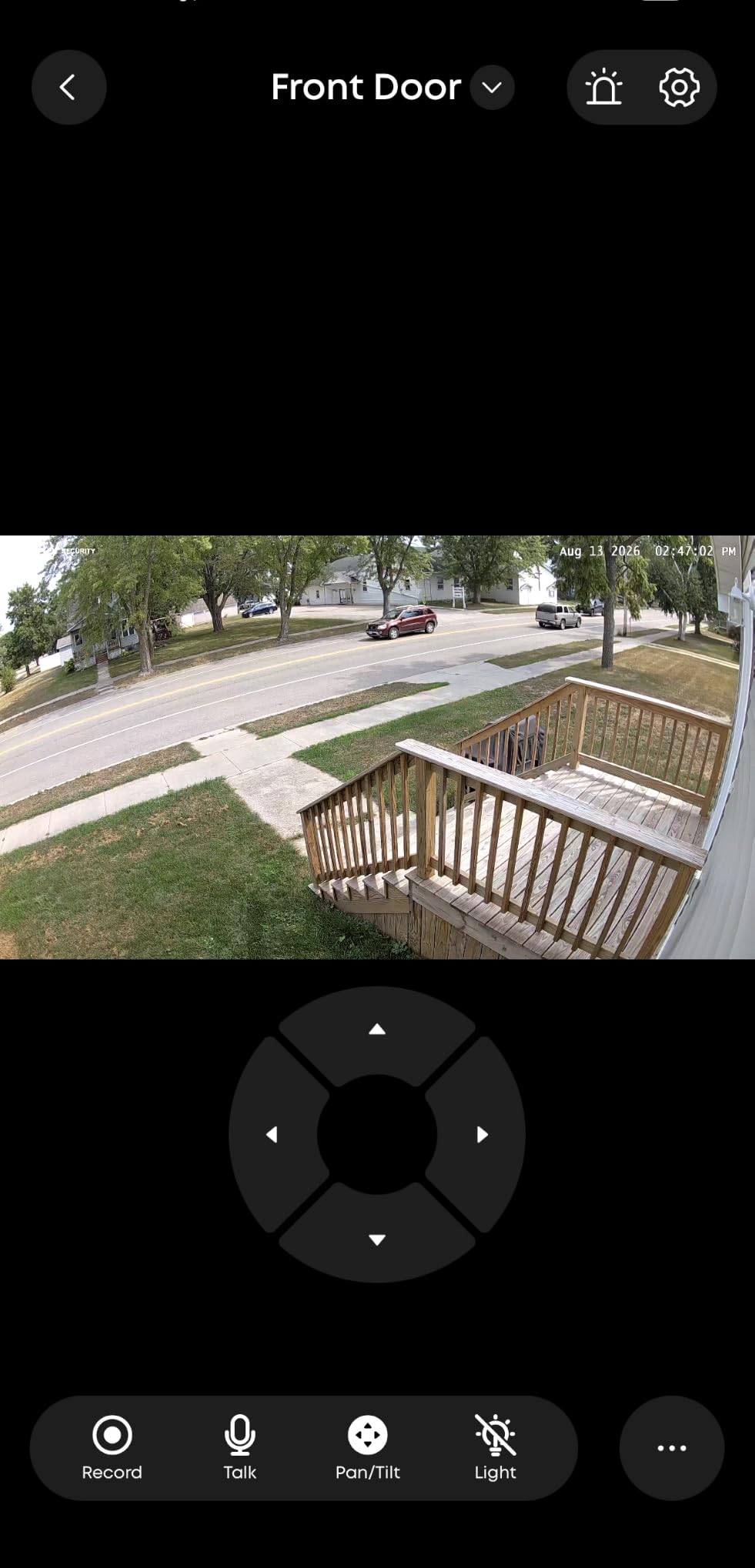
The SoloCam S340 is the camera I keep coming back to for barn walls and eaves. It records in 3K with a dual-lens setup and up to 8x hybrid zoom, which means a horse in a stall doorway is a usable subject rather than a grey smudge. The 135-degree view plus full 360-degree pan and tilt means one mount can watch a stall row, the aisle and the door without a second camera.
Power is handled by a removable solar panel feeding a 10000 mAh battery. The panel detaches on a cable, so on a barn with a shaded eave you can run the panel up to the ridge or the south gable and leave the camera itself on the corner. That panel relocation freedom is the single most useful installation feature on this camera.
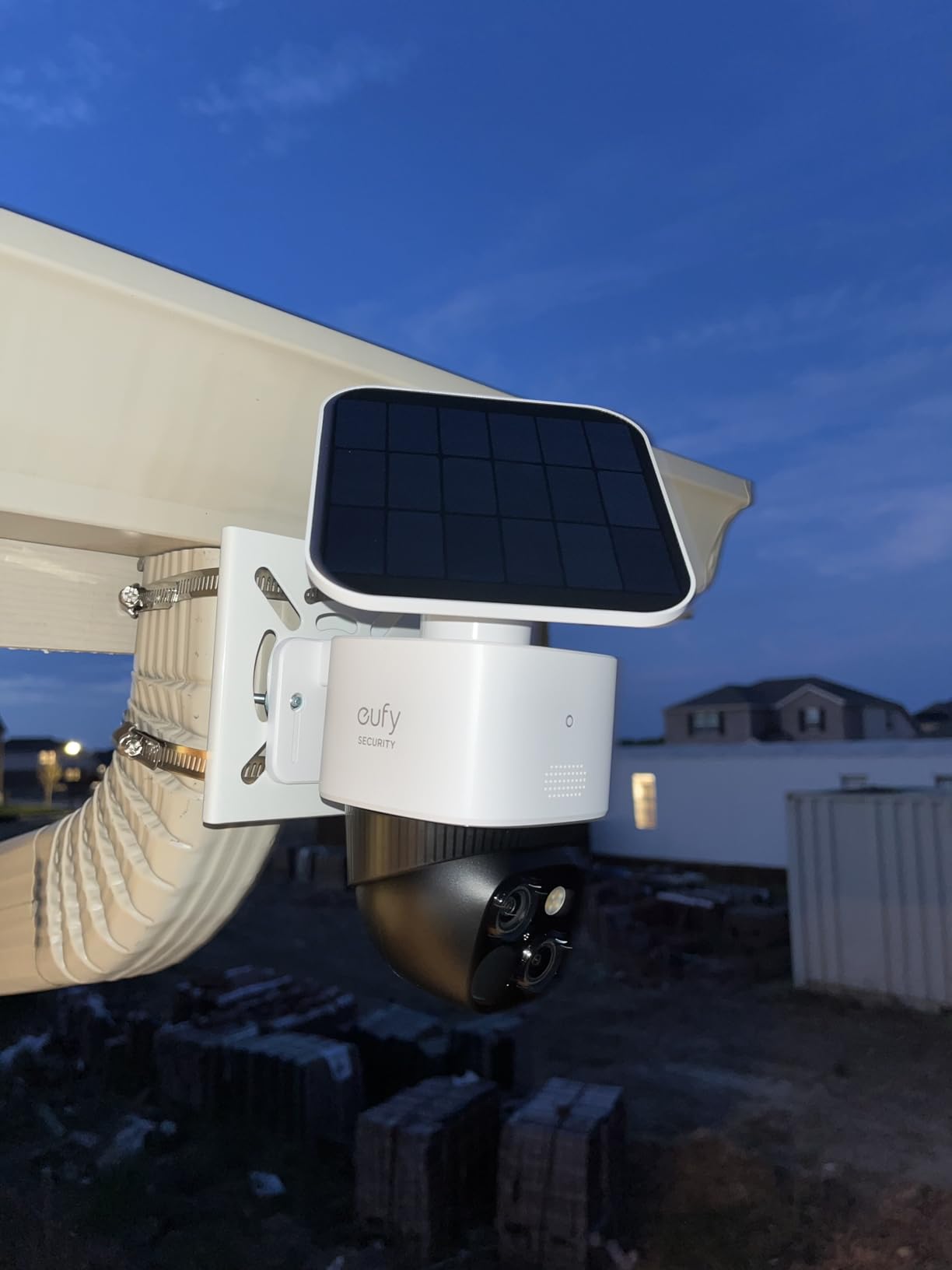
Storage is a 128GB microSD card with no monthly fee, and AI detection handles person and vehicle classification. Reviewers consistently describe the daytime and night image as genuinely sharp and note that installing several across a property is common, which tells you the panel-to-camera ratio holds up in real weather rather than only in a spec sheet.
The weak point is physical. The mount is plastic with no theft resistance, so on an exposed gate post where a ladder or a pry bar would be involved, this is the wrong housing. The app’s solar charge readout is also unreliable enough that you should judge the battery by how quickly it recharges after a storm rather than by the on-screen number.
Will It Survive a Barn Winter With No Sun for Days?
Owners report the solar panel keeping the battery charged year-round at this size. The panel is removable, so you can reposition it once a season rather than permanently accepting a shaded north wall. A cloudy week at 10000 mAh is comfortable for a motion-triggered camera.
If your barn faces due north with a tree line or a bank of pines on the sun side, no panel size fixes that. Check the solar exposure before you buy, not after.
Is It Good Enough for an Exposed Gate or a Foaling Stall?
For an interior stall, foaling camera or covered aisle, the 3K clarity and color night vision are the best in this group. For a visible deterrent on a gate post, the plastic mount argues against it, and the tinny half-duplex audio makes talking to a stranger through it less useful than it sounds.
Motion over-triggering on foliage is the complaint to tune for. Narrow the detection zone to the aisle and you lose most of it.
2. Reolink Argus PT – Best Value Barn Camera With 512GB Local Storage
REOLINK Solar Security Cameras Wireless Outdoor 360° Coverage Argus PT
5MP sensor
color night vision to 33 ft
355 pan and 140 tilt
separate solar panel
Pros
- Consistently clear day and night image
- Panel keeps battery charged through cloudy weather
- No subscription with microSD
- hub or FTP options
- Holds up in heavy snow and rain
- 2.4 and 5 GHz dual-band WiFi
Cons
- Solar models show 4-7 second response delays
- No auto-tracking on this model
- Detection zones and sensitivity can be confusing
- Weak support for small replacement parts
The Argus PT has the deepest review history of anything in this roundup, and that record is unusually consistent. The 5MP sensor gives clear daytime and night footage, color night vision reaches 33 feet, and the pan range of 355 degrees horizontally with 140 degrees of tilt covers most of a barn interior from a single high corner.
Storage flexibility is its real advantage for farm use. Rather than forcing one choice, it records to a microSD card up to 512GB, to a Reolink hub, or straight to an FTP server, with no subscription at any tier. For someone running several cameras across acreage, being able to centralise recordings on a drive in the shop is worth a lot.
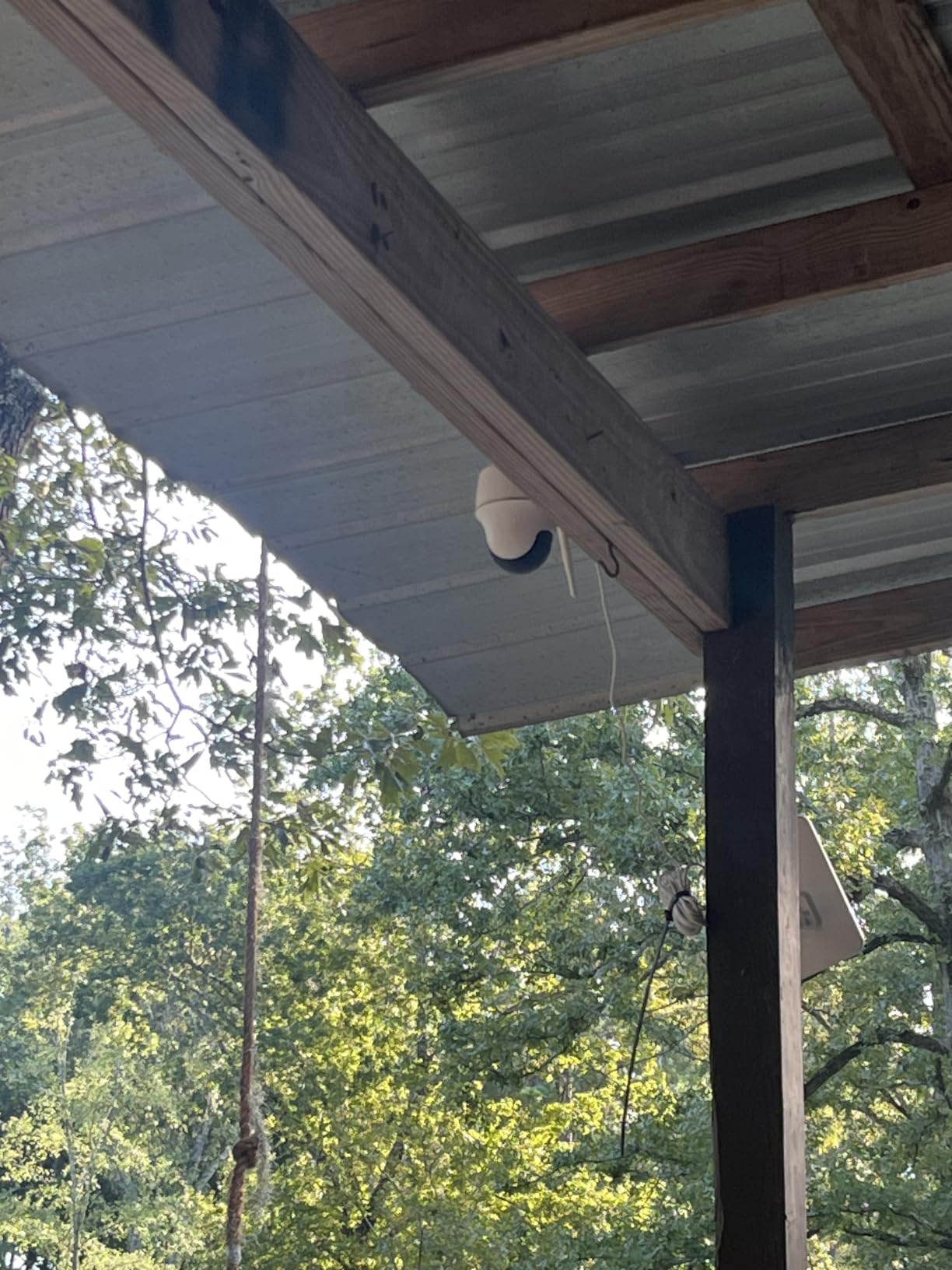
It also runs 2.4 and 5 GHz dual-band WiFi, which matters on a property where a 2.4GHz-only camera drops off at the far edge of the yard. The separate solar panel is a genuine advantage over integrated panels because you can angle it independently of the camera body.
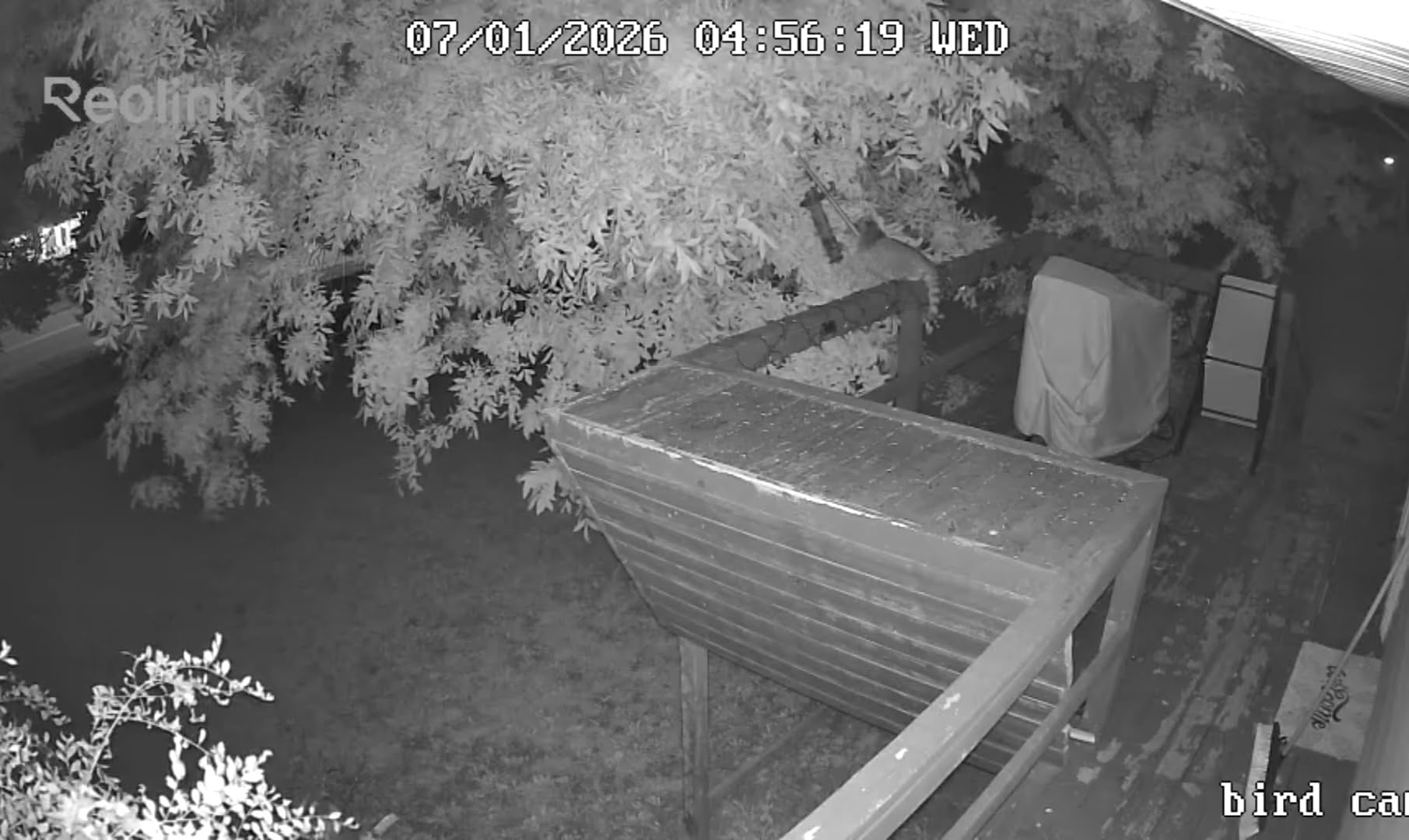
The complaints are consistent too, and they are about timing. Reviewers report 4 to 7 second response delays on the solar versions, which can mean missing something moving fast at night. There is no auto-tracking on this model, so the pan and tilt only move when you reposition them, and the detection sensitivity controls are widely described as confusing.
Does the Solar Wake-Up Delay Matter for Barn Theft?
For a slow-moving intruder opening a stall door, four seconds is not decisive. For someone running a vehicle out of a gate, it is. If your barn risk is equipment and hay rather than people, the delay is a fair trade for the storage flexibility and the price.
The Argus PT Ultra models add tracking; this one does not. If you need the camera to follow a subject on its own, step up a model.
Is 33 Feet of Night Vision Enough for a 180-Foot Barn?
Thirty-three feet covers a stall row, a feed room or a hay bay lit by nothing but infrared. It does not cover the length of a 180-foot structure from one mount, which is a placement problem rather than a camera problem. Mount at intervals along the aisle instead of reaching for a longer claim.
Whitewashed or pale walls will bounce infrared back and wash the picture out. Aiming slightly downward away from the brightest wall matters more here than any resolution figure.
3. SEHMUA 4G LTE S40 – Best Solar Barn Camera When There Is No WiFi
SEHMUA 4G LTE Cellular Solar Security Camera Wireless Outdoor, No Wi-Fi Solar Powered Camera, 360° Live View, 2K Color Night Vision, PIR Motion Sensor, Two-Way Talk, Built-in SIM Card
4G LTE cellular
6W panel with 10400 mAh battery
2K color night vision
360 pan and tilt
Pros
- Works with no WiFi and no mains power
- 10400 mAh battery plus 6W solar panel
- 2K with full-color night vision and spotlight
- 360 pan and tilt coverage
- Made for barns
- farms and ranches
Cons
- Cellular service needs a paid plan after the trial
- No WiFi fallback at all
- Built-in SIM cannot be removed or swapped
- Spotlight must be enabled manually
The S40 is the answer to the question that fills most of the forum threads about barn cameras: what do I buy when there is no power and no network. It runs on 4G LTE cellular through a built-in SIM, and the manufacturer markets it explicitly for barns, farms, ranches, trail cameras and construction sites. That is not boilerplate here, it is the actual use case.
The power package is the biggest in this roundup relative to the body size: a 6W panel and a 10400 mAh battery. Video is 2K with full-color night vision, 4x digital zoom, and 360 degrees of pan and tilt through the phone app. Owners in genuinely rural settings report the battery staying up through stretches of bad weather.
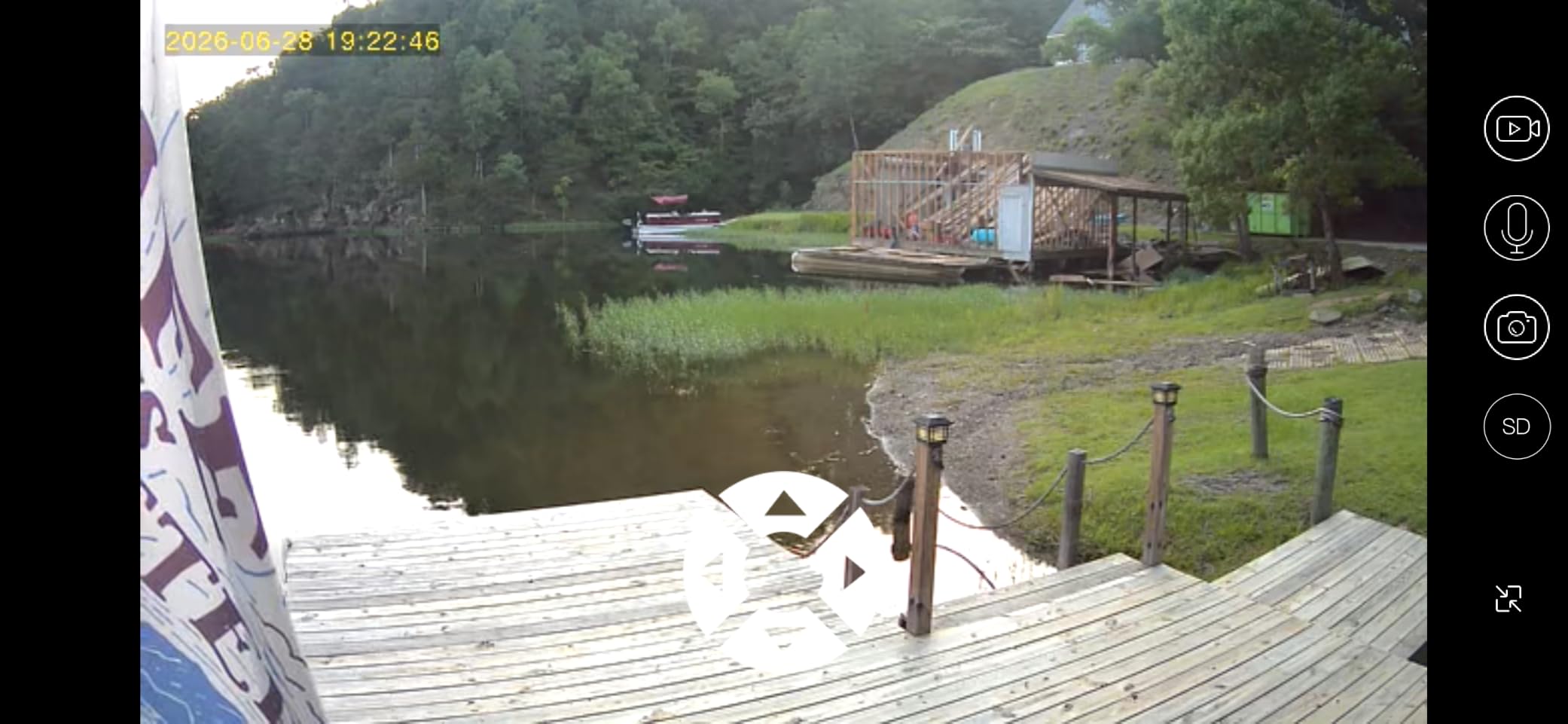
The built-in SIM runs on AT&T, T-Mobile and Verizon networks with a trial period before a paid plan starts. That is the model to understand before you mount anything: the hardware is a one-time decision, the data plan is a recurring one, and on a farm with three barns and two gates that recurring line is the number to do the arithmetic on.
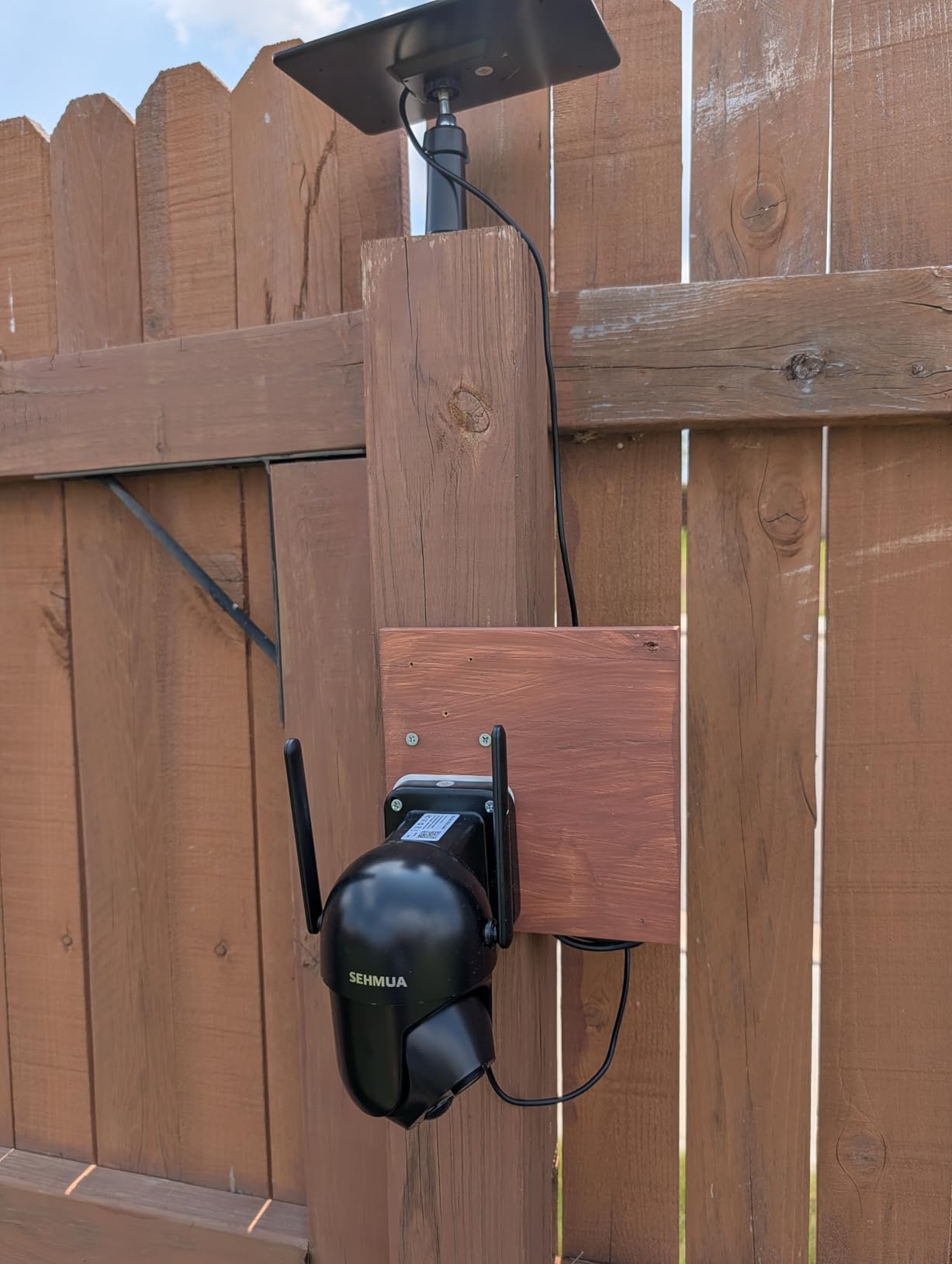
Two limitations are worth planning around. The camera cannot fall back to WiFi because it has no WiFi radio, so weak cellular coverage at the barn is a hard stop. And the built-in SIM cannot be swapped, which matters if you ever move the camera to a different site on a different network.
Will Cellular Coverage Hold Up at a Remote Barn?
Test it before you buy, with a phone on the same network, at the exact mounting height and position. A bar or two at chest height by the door is not the same as usable signal at 12 feet on a post in open ground.
Signal strength matters more here than anywhere else in this list. Owners in good coverage get clear 2K video; owners in poor coverage get a camera that stops uploading and quietly wastes a data plan.
Does the 10400 mAh Battery Cover a Barn Through Winter?
A 6W panel with a 10400 mAh battery is a generous pairing for a motion-triggered camera, and it holds charge in rainy weather according to owners. The panel is a good size for a pole or post mount in open ground, which is where a cellular camera usually ends up anyway.
The one thing to plan is the spotlight. It has to be switched on manually in the app, so if you are relying on visible light as a deterrent, set that up during installation rather than discovering it later.
4. Cinnado B6 2-Pack – Best Two-Camera Set for Barn, Aisle and Gate
Cinnado 2K Solar Wireless Outdoor Cameras for Home Security White B6 2Pack
Two cameras with two solar panels
2K 2304x1296
360 pan-tilt-zoom
5000 mAh each
Pros
- Two cameras and two panels in the box
- Color night vision with a bright spotlight
- Human-only AI detection cut false alerts
- 360 PTZ with auto-tracking
- Good customer support
Cons
- 2.4GHz WiFi only
- Event recording only with no 24/7 mode
- Default 10-second clip length
- Occasional drop-off needs re-pairing
Most barns need two sightlines before they need one good sightline: the door you care about and the aisle behind it. The Cinnado B6 two-pack gives you both, with a solar panel for each camera in the box. That pairing is the reason this set shows up on garage, driveway and farm lists as a value pick rather than a single-camera recommendation.
Each camera records 2K at 2304×1296 with three night modes including full color and a spotlight, and the 360-degree pan-tilt-zoom is smooth with auto-tracking that actually follows a subject. The 5000 mAh batteries per camera stay near full through cloudy days, and human-only AI detection is what separates this from a basic camera in a dusty environment.
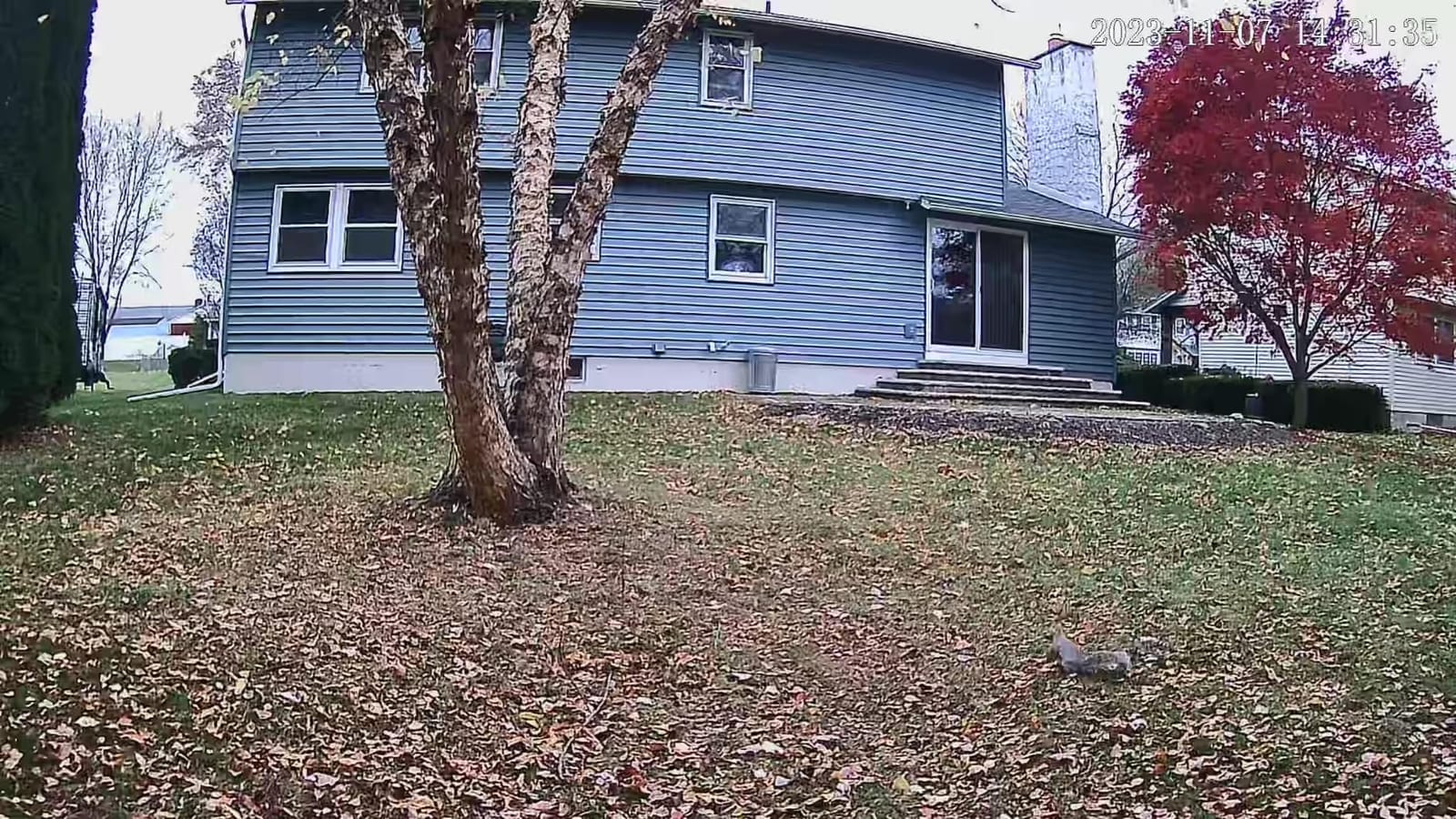
Storage is a microSD card up to 128GB, not included, with optional cloud as an alternative. The card not being included is a real cost line people miss, so factor it into the first purchase rather than the second.
Two constraints shape where you can put these. They are 2.4GHz only, so they will not join a 5GHz network. And they record on motion events only, with a default clip length of around 10 seconds, so a theft in progress runs the risk of being split into fragments rather than captured as one continuous clip.
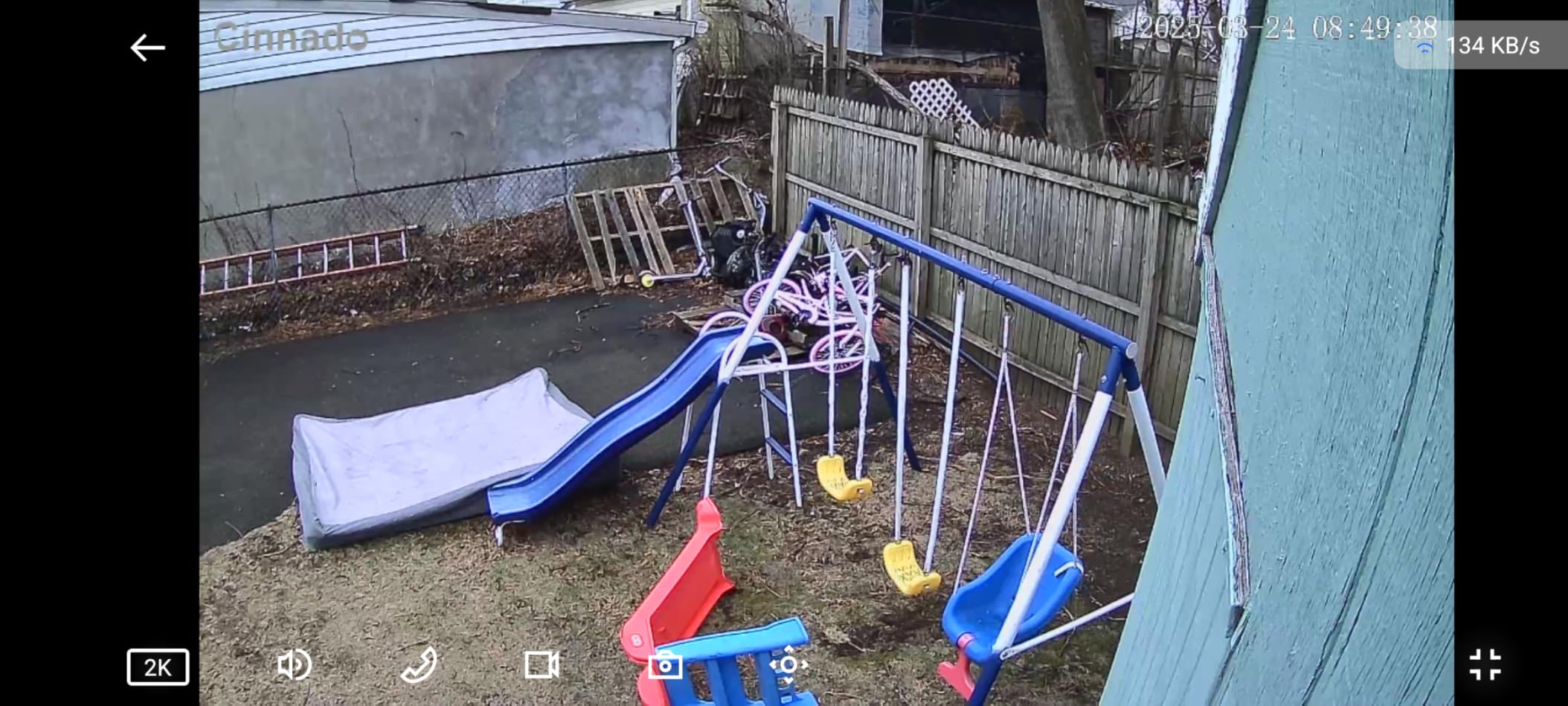
Can Two of These Cover a Long Barn Aisle?
Yes, placed at the quarter points, and that is the sensible use of a two-pack. One at each end of an aisle with the pan-tilt-zoom aimed across gives better coverage than one camera at the centre trying to cover 360 degrees at close range.
Do not count on 24/7 continuous recording here. If you need a full record of the night rather than event clips, look at a model that writes continuously to a hub.
Is 2K Enough to Identify a Face in a Stall Door?
Reviewers report clarity sharp enough to read a license plate from roughly 20 feet, which covers most barn and yard scenarios at close range. Beyond that distance, the resolution and the 33-foot night range become the limit rather than the lens.
Human-only detection is the underrated feature here. In a barn full of shifting hay and animals, filtering to humans is what keeps the alert list readable.
5. aosu SolarCam 2K – Best Barn Camera for a Site With Limited Sun
aosu Solar Camera Outdoor Wireless for Home Surveillance,Fixed Solar Panel
2K video
360 pan and tilt with auto tracking
fixed solar panel
color night vision
Pros
- Fixed panel holds charge even in shaded spots
- Clear 2K day and night picture
- 360 coverage with useful auto human tracking
- Easy app setup and multi-camera management
- Support resolves issues and sends replacements
Cons
- Limited motion detection range
- Fixed panel cannot be angled to catch optimal sun
- 2.4GHz WiFi only
- Sleep behaviour can need a person nearby to wake
The aosu SolarCam is the camera to look at when your barn has a permanently awkward sun situation and you cannot move the panel. Its solar panel is fixed to the body, and owners on shaded installs report it keeping the battery charged over a year or more of use. On a spot that is marginal for a removable panel, a fixed one you cannot get wrong is sometimes the better engineering choice.
Video is 2K with a 360-degree field of view, pan and tilt, and automatic human tracking that follows a moving person. Two-way talk, a built-in spotlight, color night vision and IP65 weatherproofing cover the rest of the barn checklist, and setup is app-based with voice guidance and no complicated wiring.
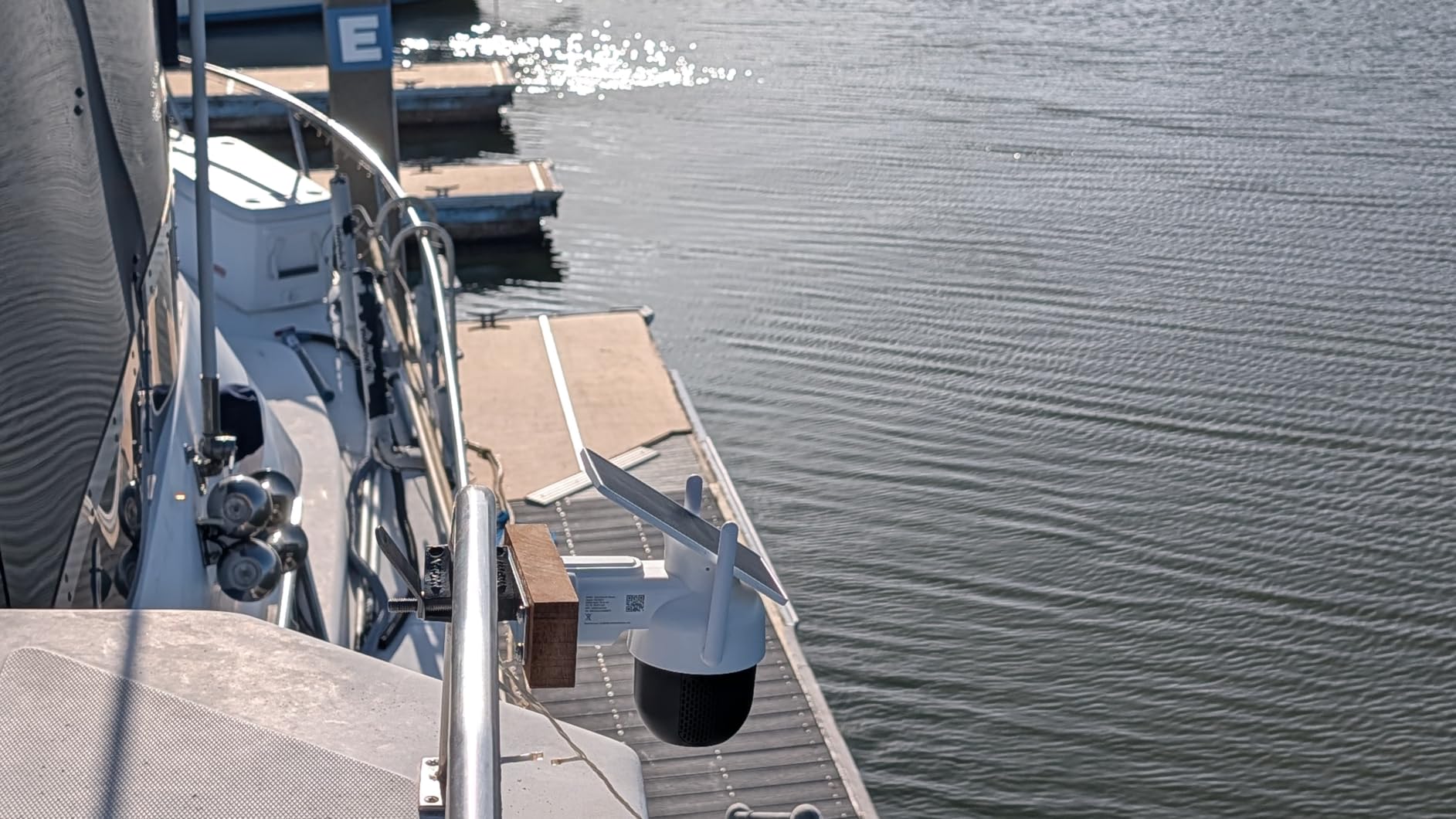
Several owners bought multiple units for whole-property coverage, which is worth noting because it means the panel-to-camera sizing holds up when several devices are on the property drawing power at once. Support is repeatedly singled out as responsive, including replacements and full refunds, which matters on a device mounted 15 feet up.
The real limit is detection range. Motion detection is short, and it can miss people approaching from a distance, plus the camera sometimes behaves as though it has gone to sleep and needs a person close by to wake it. If your threat is someone walking in from the field rather than standing in the aisle, that is a serious gap.
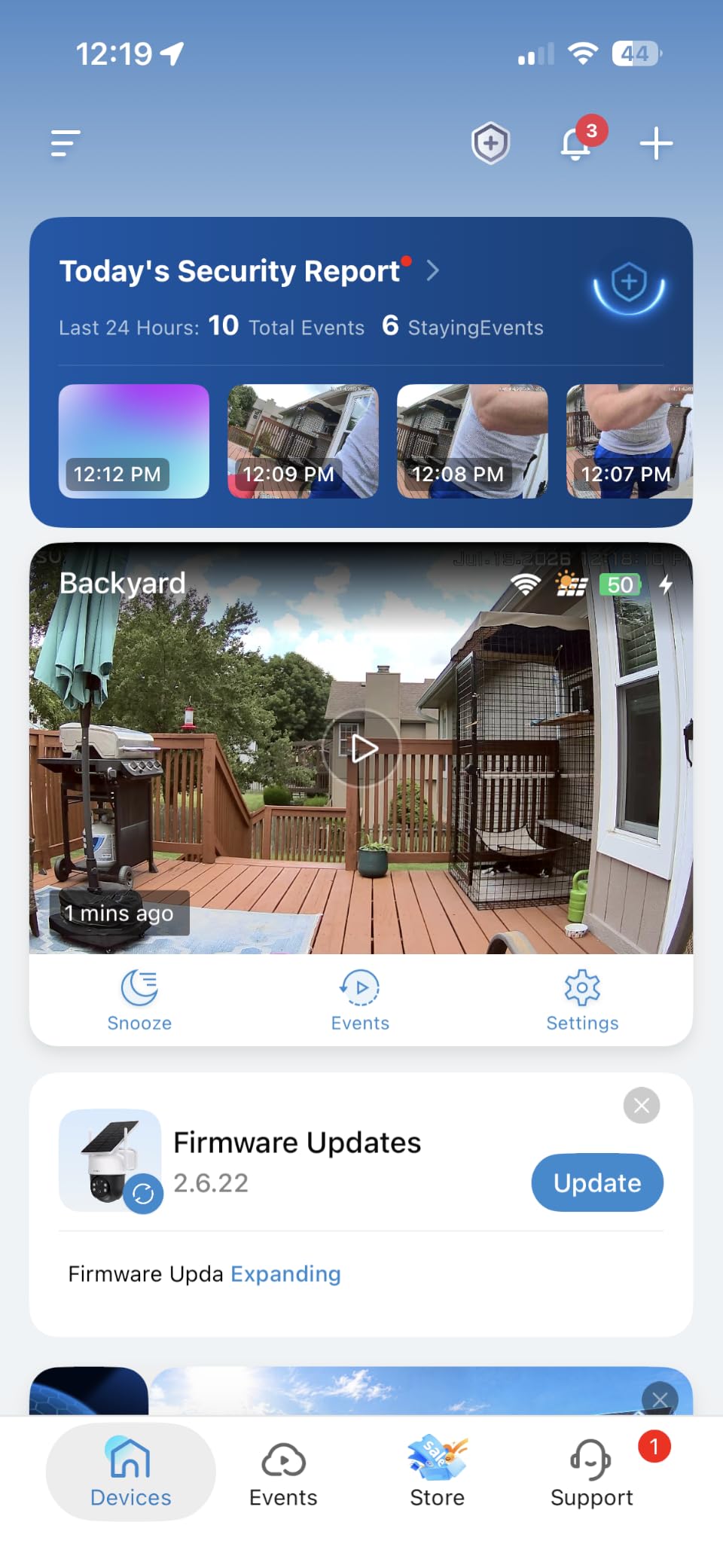
Is a Fixed Solar Panel Better Than a Removable One?
On a shaded or awkward site, often yes, because you cannot accidentally angle it into shadow. On a good south-facing eave, no, because you lose the ability to seasonally re-aim the panel. Decide based on your sun, not on the spec sheet.
The panel is also the one part that cannot be replaced independently, so treat the whole body as the serviceable unit.
Will It Hold Up on a Barn Exposed to Livestock?
It has held up for owners running it across an entire property, and IP65 covers rain and hose spray. The bigger practical risk on a working farm is not weather but a swinging gate, a horse leaning on a post, or a piece of equipment catching a panel.
Mount above reach of livestock and out of the path of any gate that swings. Treat the housing as IP65, not as vandal-proof.
6. aosu D1 Classic 4-Cam Kit – Best Solar Kit for Covering Multiple Barns
aosu D1 Classic 4-Cam Kit, Security Cameras Wireless Outdoor, Solar Powered
Four 360 cameras
aosuBase hub with 32GB
local encrypted storage
no subscription required
Pros
- 32GB encrypted local storage with no subscription
- Four 360 pan and tilt cameras in one kit
- Panels hold batteries full in a few hours of daylight
- Clear 2K/3MP with good color night vision
- Four-way live view and cross-camera tracking
- Responsive support with replacements
Cons
- One to two second delay between detection and action
- Tracking resets after about 30 seconds
- Sensitivity tuning needed to avoid wind triggers
- Only four cameras per app page
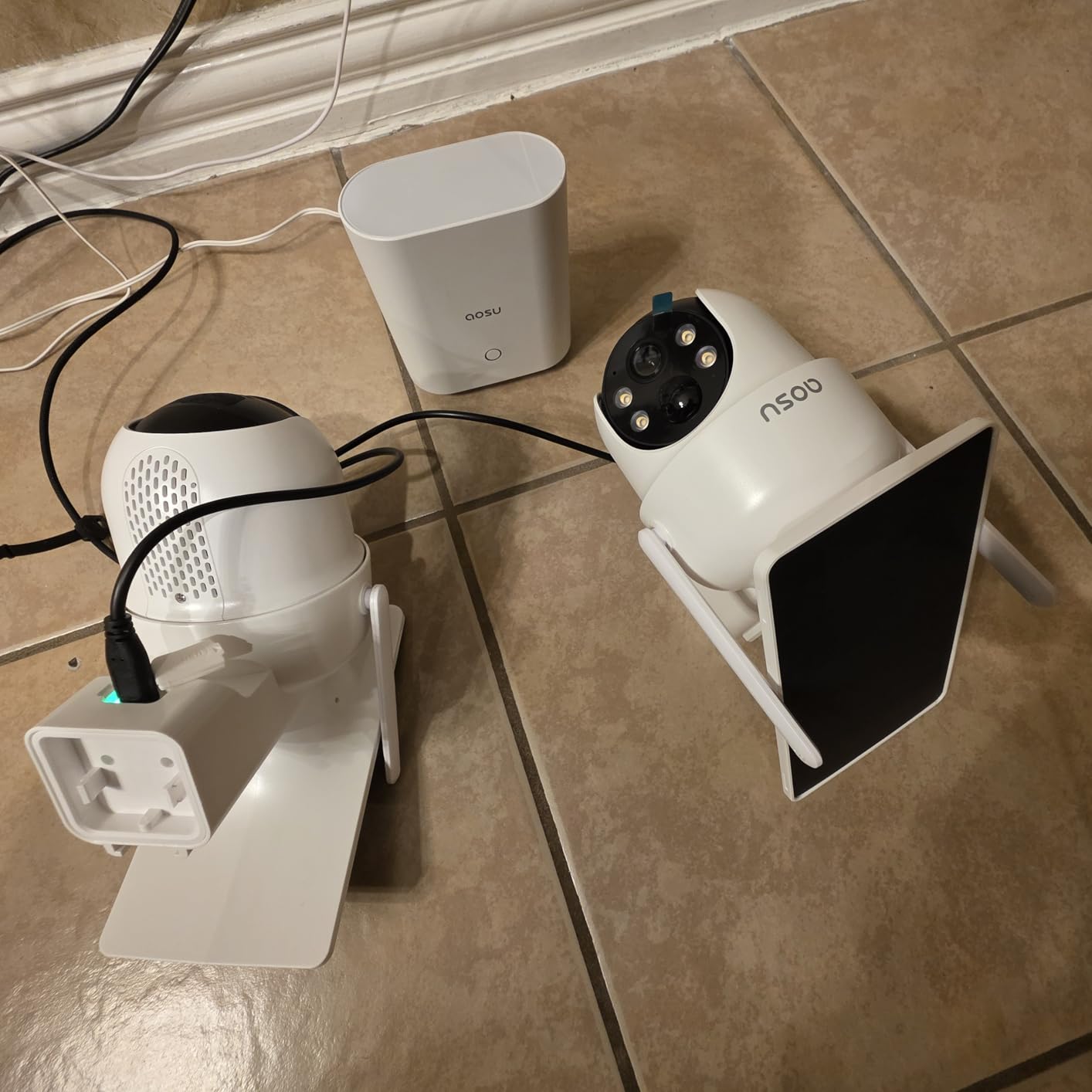
The D1 Classic is the only kit here that treats a farm as a system rather than a single camera. You get four 360-degree pan and tilt solar cameras and an aosuBase hub with 32GB of encrypted local storage, and no subscription is required to use it. That storage is also the point of failure protection: the reviews note footage survives a camera being damaged or stolen.
Four-way simultaneous live view and cross-camera tracking let you follow movement from the barn to the yard to the gate without opening apps one at a time. Each camera is 2K/3MP with four LED lights for improved color night vision, and the solar panels bring the batteries to full in about three hours of daylight.
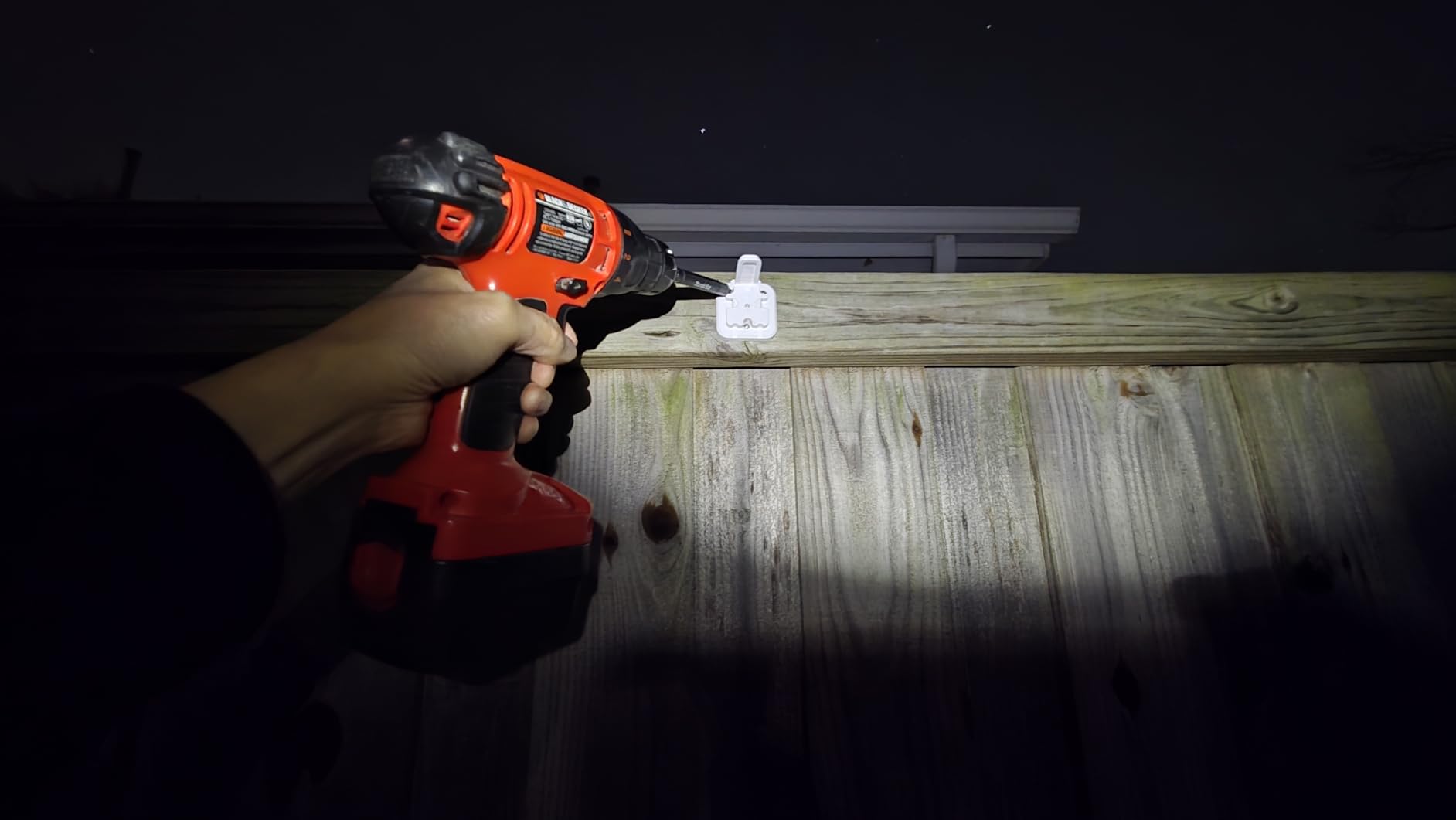
It has the highest average rating of the ten cameras we looked at, and owners with larger properties are its core audience. Installation is about five minutes per camera and three drilled holes, which matters when the alternative is running to a far field across a farm.
There are real trade-offs. Motion detection has a one to two second delay before it acts, tracking stops at the 360-degree limit and resets to the default view after roughly 30 seconds, and cross-camera tracking only works if the next camera picks up the event. The app shows four cameras per page and the iPad layout is poor, so planning on a tablet at the kitchen table will disappoint.
Is a Four-Camera Kit Overkill for One Barn?
For a single barn and one yard, two cameras cover it. This kit makes sense when you have several structures, a main barn plus an equipment shed, or fields to watch from a pole. Think of it as the acreage or multi-outbuilding answer rather than the single-barn answer.
The hub is the reason to consider it even at two cameras, since 32GB of encrypted local recording removes the monthly fee from the equation entirely.
Will the Delay and Tracking Reset Cause Missed Footage?
For a person moving through a lit aisle, one to two seconds is not the difference between evidence and nothing. For a fast-moving vehicle at a gate, plan to cover that gate with a fixed camera instead of relying on tracking to follow it.
Cross-camera tracking is best treated as a convenience for following movement, not as a guarantee of a continuous handoff between mounts.
7. HOSAFE 4G LTE 2-Pack – Best Dual Cellular Set for Two Off-Grid Locations
4G LTE Cellular Solar Security Camera Wireless Outdoor, 2 PCS 360°Live View
Two 4G LTE cameras
6W panels with 10400 mAh batteries
2K color night
IP66
Pros
- Two fully wireless cellular cameras in one pack
- Panels hold batteries at full in rainy weather
- Clear picture that holds up when zoomed
- Loud and clear two-way voice for warning someone off
- Low recurring data plan cost
Cons
- Cellular connection can drop where signal is weak
- microSD card sometimes will not stay registered
- Data plan required after the trial
- App night view is extremely bright in the dark
Two off-grid locations is the normal case for a farm: a barn and a gate, or a barn and a goat yard. The HOSAFE two-pack puts two fully wireless cellular cameras, each with its own 6W solar panel and 10400 mAh battery, in one box. Owners use them exactly that way, and report the per-camera economics as the main reason to buy the pair.
Both cameras record 2K with color night vision, 4x digital zoom, 360-degree pan and tilt and a built-in spotlight, rated IP66 for weather. The two-way audio is loud and clear enough to actually warn someone off, which is more useful on a farm than on a suburban wall. Built-in SIM support across major US carriers and PIR alerts with app push round out the feature set.
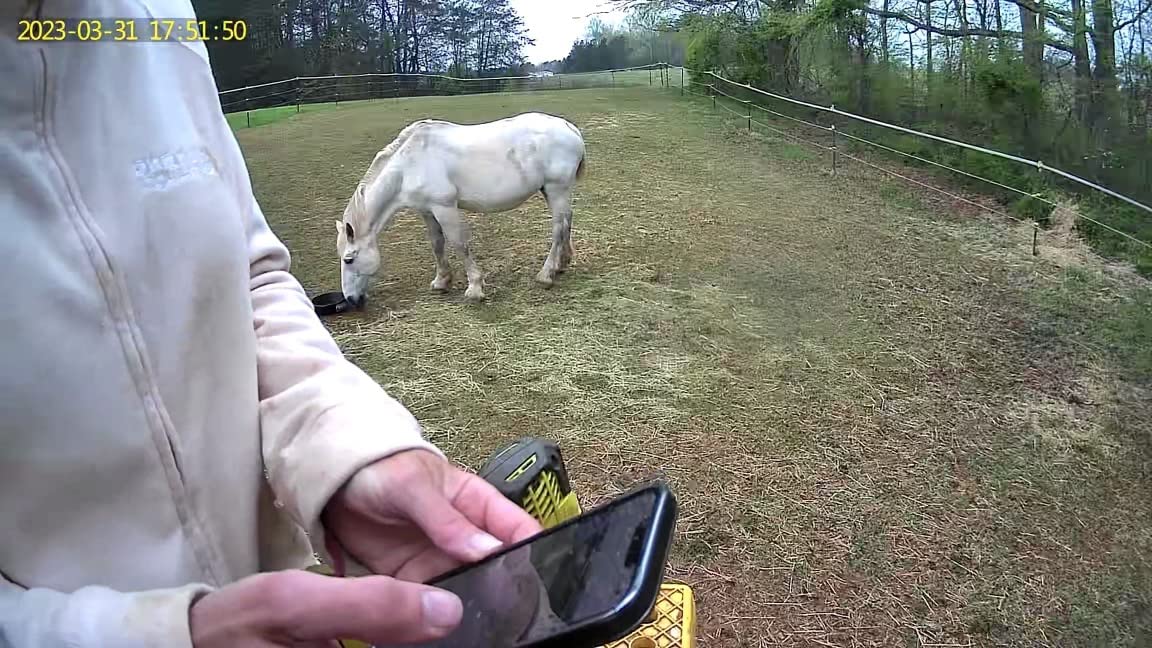
What makes this pair stand out among cellular options is the recurring cost. The data plans attached to this class of camera sit at the low end, and for owners running multiple cameras across a property, the monthly data line is often larger over five years than the hardware.
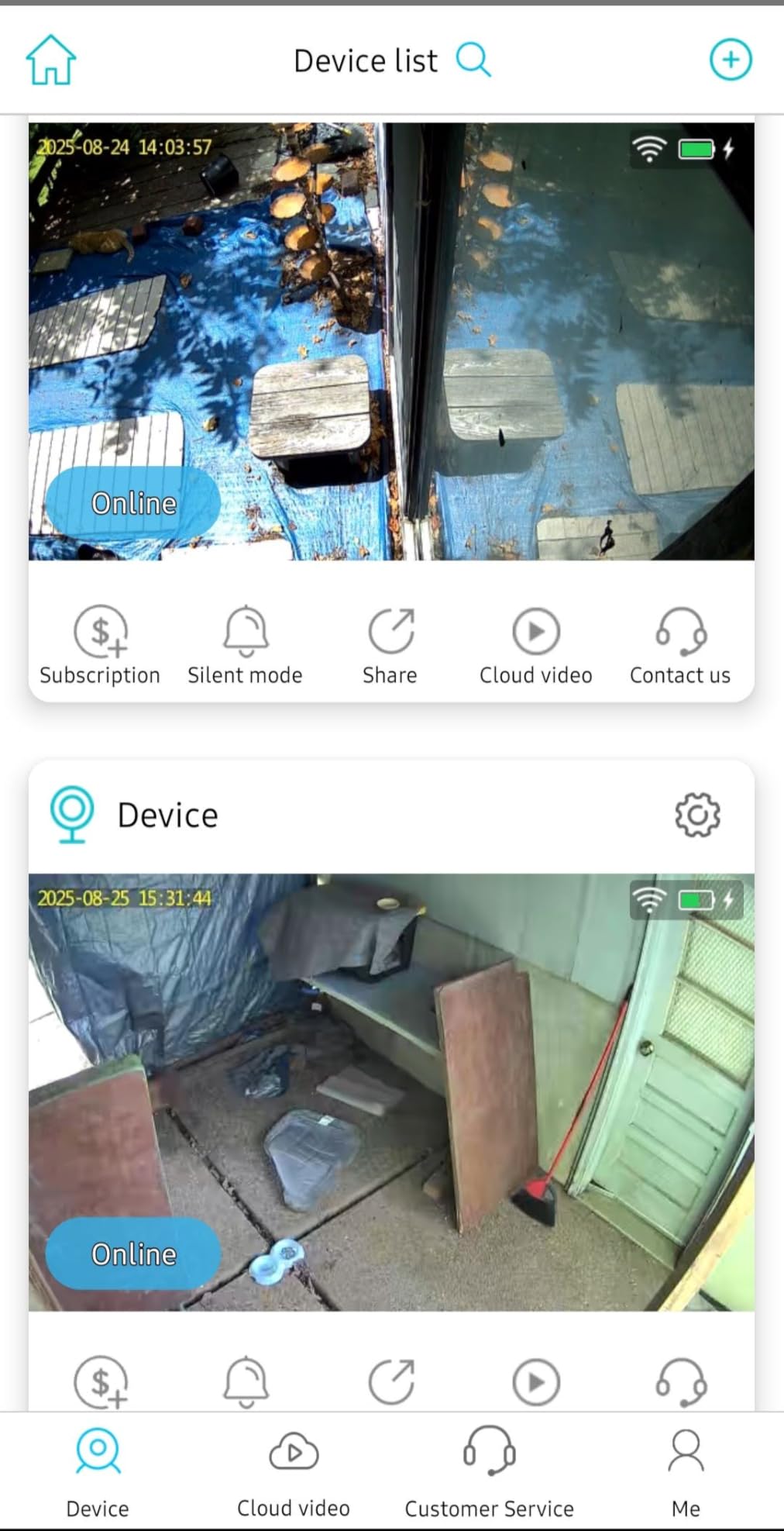
The caveat is the same one that applies to every cellular camera here: performance is entirely bound to local signal strength. The most negative reports describe a connection that would not establish at all and a card that would not stay registered. Owners also note the app night view is extremely bright when opened in a dark barn, so dim your phone before checking in at 2am.
Are Two Cellular Cameras Cheaper Than One WiFi Camera Plus a Data Plan?
Sometimes, and the arithmetic is worth doing before you buy anything. Cellular models avoid pulling a cable or an extender across a property, and a second camera is often the coverage a barn actually needed rather than a higher-resolution one.
Count the cameras against one recurring plan, not each one separately, before assuming the total is small. The cheapest plans in this class are still a monthly line item for the life of the camera.
What Happens When the Signal Is Weak at One of the Two Sites?
One camera keeps working and the other goes quiet, which is a confusing failure mode because the app shows both as installed. Test signal at both mounting points before the pair goes up, and pick the two spots with the strongest readings rather than the two spots you most want to cover.
microSD recording still works locally even if the cellular link is poor, so card storage is your insurance for the location with marginal coverage.
8. Hiseeu 2K 4MP 2-Pack – Best Detail From a Two-Camera Solar Set
Hiseeu 2K 4MP Solar Security Cameras Wireless Outdoor, 2.4G/5G Home WiFi
4MP 2560x1440 video
5200 mAh battery
two panels included
IP66 weatherproof
Pros
- 4MP resolution above most cameras in this range
- Two cameras and two solar panels included
- About two hours of daily sunlight sustains operation
- IP66 waterproof with discreet housing
- AI human detection with adjustable sensitivity
- Built-in siren and two-way audio
Cons
- 2.4GHz WiFi only despite the listing title
- SD card not included and cloud costs extra
- Shared app ecosystem with limited polish
The Hiseeu set is the resolution outlier in this group. At 4MP, 2560×1440, both cameras out-resolve most of the models above them, and the reviews single that out as the reason to buy at this level. The box includes two cameras and two solar panels, each with a 5200 mAh battery that needs about two hours of direct sunlight a day.
Both cameras carry a 135-degree field of view, an LED spotlight with full-color night vision, and a 33-foot night range, rated IP66. AI human detection with adjustable sensitivity, a siren alarm and two-way audio make it the most deterrence-oriented set in the roundup, which is a reasonable fit for a hay barn or a grain store.
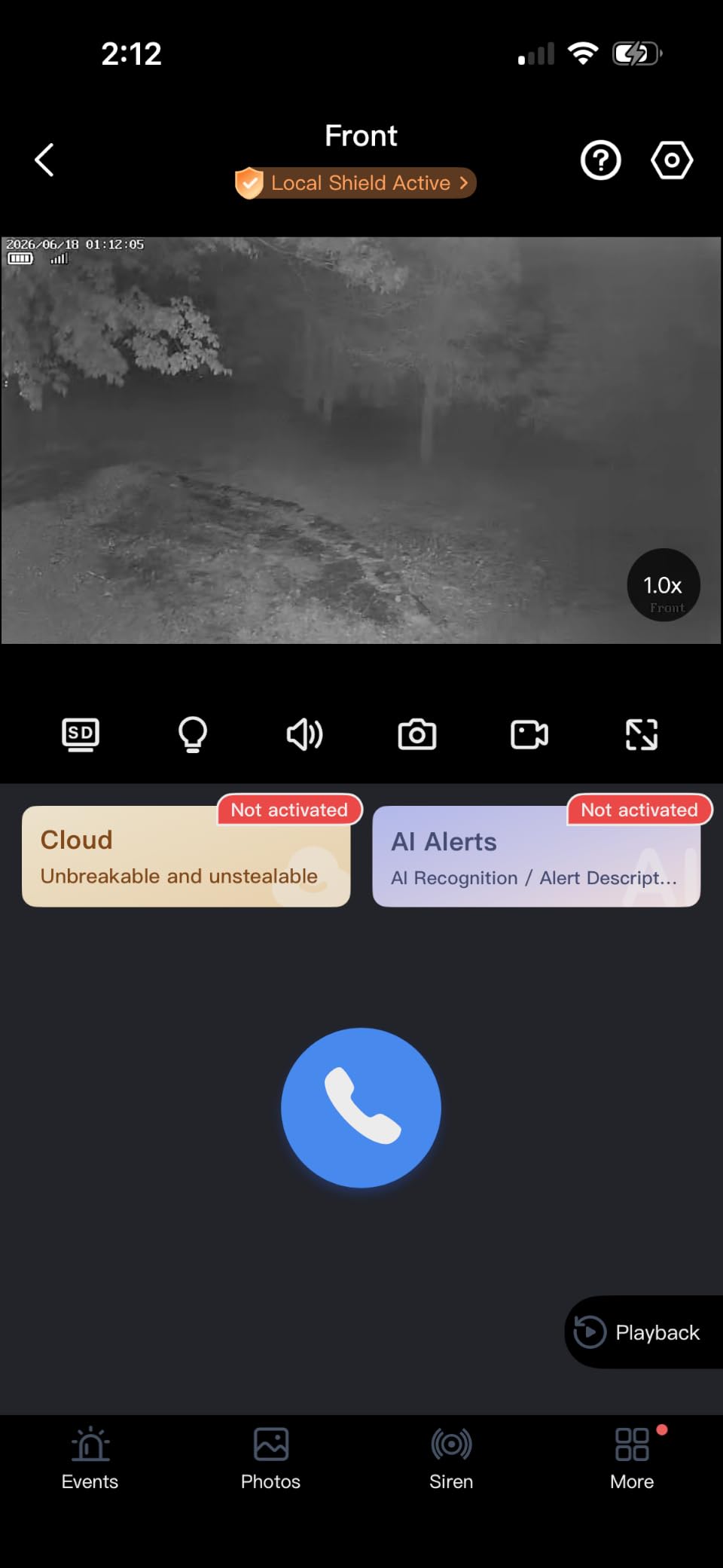
Its review pool is thinner than the long-running models here, so individual units vary more. What the reviews do agree on is resolution for the money and straightforward solar setup.
The specification worth catching is the connectivity. Despite the listing title mentioning 2.4G and 5G, these cameras are 2.4GHz only. Storage is a separately purchased SD card, up to 256GB, or optional cloud, and the app is a shared platform that is functional rather than polished.
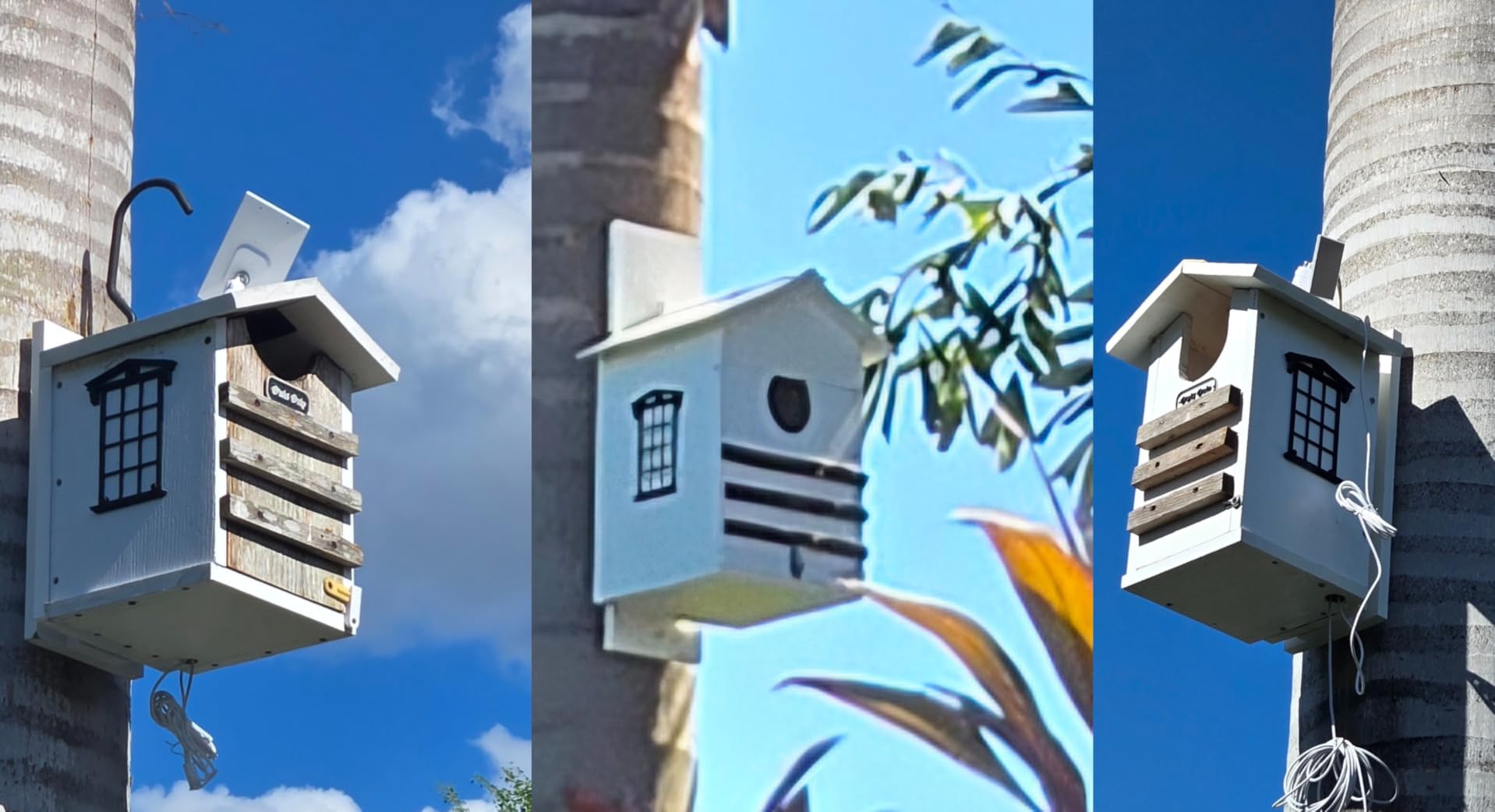
Does 4MP Actually Help Inside a Barn?
Yes, in the situations where the subject is close. A person at a stall door, a machine parked in a bay, or a number on a piece of equipment all benefit from the extra detail. At the far end of a long aisle, the limit becomes the 33-foot night range and ambient light, not the sensor.
If your footage needs to identify a face across a yard rather than at a doorway, 4MP does not rescue you from a camera aimed too far away.
Is the Siren Worth Having on a Working Barn?
On a hay, grain or equipment store, yes. A loud siren on a motion trigger is a genuine deterrent and costs nothing extra. Inside a stall barn with animals that spook at sound, disable it, or the alerts will train you to ignore them.
Pair the siren with a visible camera rather than a hidden one. Deterrence only works if the person can see what they are walking into.
9. Xega 4G LTE Solar Camera – Best Budget Cellular Camera for Remote Land
Xega 4G LTE Solar Cellular Security Camera with SIM Card, No WiFi Needed
4G LTE cellular
5W panel with 9000 mAh battery
color night to 82 ft
IP66
Pros
- Works with no WiFi and no mains power
- Solar panel and 9000 mAh battery hold up in rain
- 2K imagery with good color night vision
- 355 degree pan with two-way audio
- Support described as fast and responsive
Cons
- Built-in SIM is not user replaceable
- Data plan is mandatory after the trial and cannot transfer
- Motion triggers are very sensitive with no exclusion zones
- Reports of failures within a year
The Xega is the lowest-cost way to put a cellular camera on genuinely remote land, and the reviews split hard on it. Supporters run it on rural acreage and for wildlife monitoring, and value the low entry cost, the solar endurance and a support team that responds quickly. Critics report units failing within a year and question cloud recording reliability.
The hardware is respectable for the money: a 5W panel with a 9000 mAh battery, about three hours of sun for a day of operation, 2K/3MP video, 355 degrees of horizontal pan with 90 degrees of tilt, 4x digital zoom, and a stated night range of 82 feet. Color night vision uses four IR LEDs, and IP66 covers the weather side.

There is no auto-tracking on this model, so the pan is manual. Two-way audio works well enough to speak to a delivery driver or push an animal back out of a feed area, which is a barn-specific use the spec sheet does not advertise.
Two limitations deserve a decision before you mount it. There is no SIM slot, and the built-in SIM is not user replaceable, which locks the camera to its original carrier and is a problem outside the US. And the data plan is mandatory after the trial and cannot be transferred to a replacement camera, so if the hardware fails you are also losing whatever time you have left on the plan.
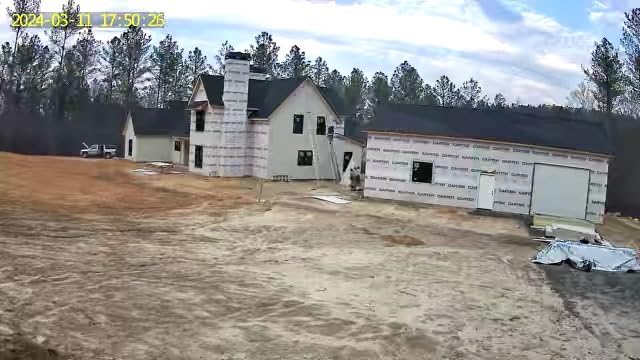
Is This Reliable Enough for a Camera You Cannot Easily Reach?
This is the honest weakness in the reviews. Several owners report multiple cameras failing within a year, and on a remote pasture or a back gate that is a service call you do not want to make. On a pole you can reach from the lane, the calculus is different.
Pick this one for coverage breadth and low entry cost. Do not pick it as your only camera on an isolated gate.
Is 82 Feet of Night Vision Realistic on a Farm?
That figure is for a clear line of sight in open ground. In a barn with dust, hay particles in the air and pale walls reflecting infrared, useful color night vision is a good fraction of that. Treat it as a wide-area detection range rather than an identification range.
Mount it high with a downward tilt to reduce the amount of reflective dust in the path between lens and subject.
10. eufy 4G LTE Cam S330 – Best 4K Barn Camera With Cellular Backup
eufy Security 4G LTE Cam S330, 4K Cellular Solar Security Cameras Wireless Outdoor, Pan and Tilt, 4G and Wi-Fi Duo-Mode, AI Tracking, with SIM Card and 32GB SD Card, No WiFi, No Problem
4K day and night
4G and WiFi dual-mode
9400 mAh battery
32GB card included
Pros
- Works with no WiFi and no electricity
- Dual mode fails over to cellular instead of going dead
- 4K clarity with lettering readable on trucks
- 32GB SD card included in the box
- Solar holds battery above 75% in partial shade
- Consistently connected over cellular
Cons
- Activity zone editor is frustrating to shape
- Motion sensitivity limited so subjects must be close
- AI tracks people and vehicles but not animals
- App can crash during clip playback
The S330 is the only camera here that does both jobs at once. It has a 4G LTE radio and a WiFi radio, and it switches to mobile data automatically when the WiFi signal drops. On a property where the barn is sometimes in range of a house router and sometimes not, that failover is the feature that removes a whole class of failure.
Video is 4K in color day and night, with license plates described as readable at 30 feet and a 100-lumen spotlight reaching 26 feet. The 360-degree pan and tilt tracks people and vehicles, the battery is 9400 mAh with a solar panel, and a 32GB SD card ships in the box. Owners report the battery staying above 75% even in partially shaded locations.
Reviewers also use it as a cheaper substitute for a dedicated trail camera, partly because the per-month data cost works out lower. Several comment on how consistently it stays connected over cellular compared with trail cameras on the same site, which is a meaningful comparison when you are choosing what to point at a field.
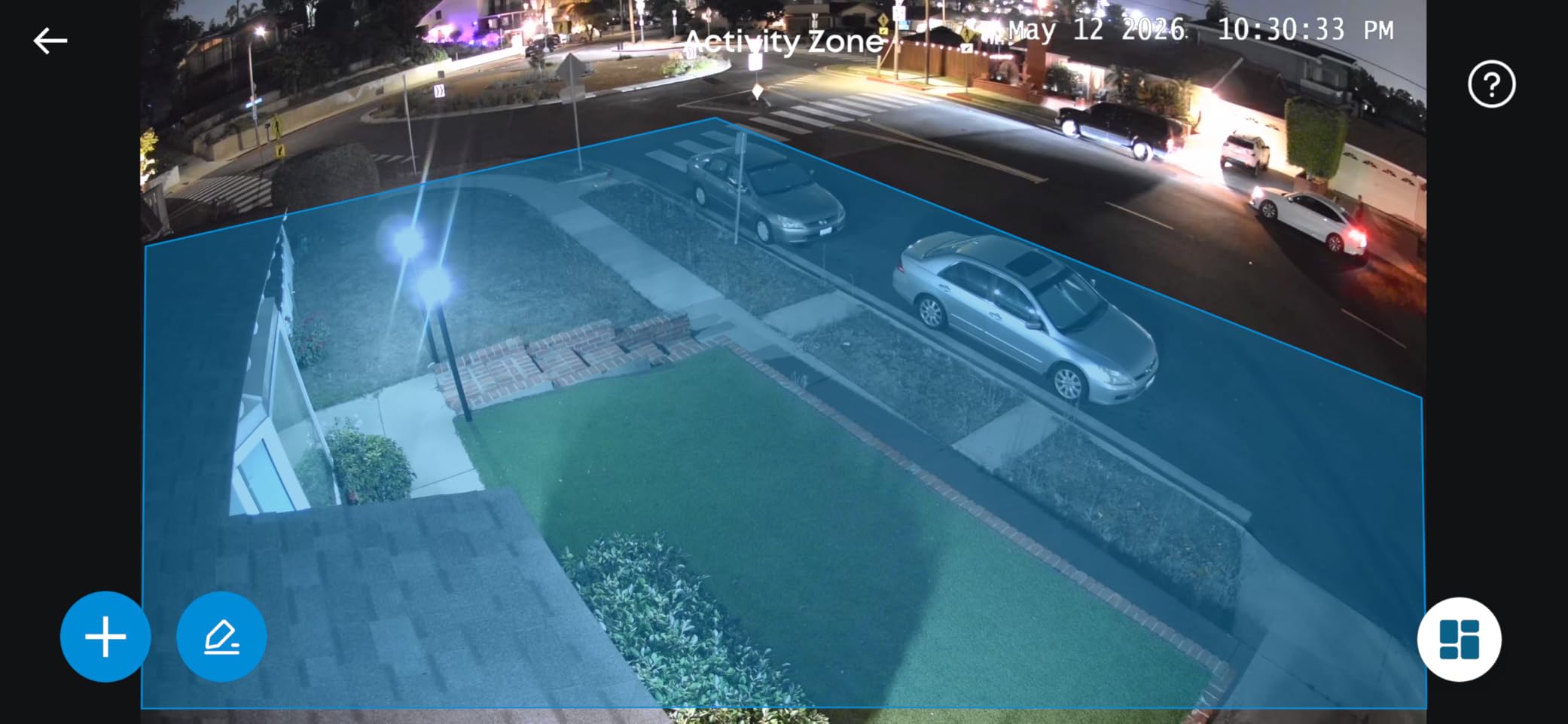
The complaints are mostly software, and they are specific. The activity zone editor is frustrating because dragging one point moves and can shrink the whole shape. Motion sensitivity needs the subject fairly close. The AI ignores animals entirely, which rules it out as a foaling or livestock-wellness camera. And there is a cluster of reviews from outside the US reporting the cellular module not working on Australian networks.
Does Dual-Mode Connectivity Solve a Real Barn Problem?
Yes, for hybrid properties. If your barn sits at the edge of a house router’s reach, a WiFi-only camera will drop out exactly when someone walks around the far corner. Auto-failover to cellular removes that failure mode without any configuration from you.
It also means you can move the camera between a WiFi barn and a cellular gate later without changing hardware.
Is It Suitable for Horses and Livestock?
Not as a welfare camera. The AI detection covers people and vehicles only, so a foaling or livestock camera is out of scope even with 4K and a spotlight behind it. For a barn monitoring equipment, doors and people, the image quality is the best in this group.
Pair it with a livestock-appropriate camera rather than trying to make one device do both jobs on a working farm.
How Many Cameras Does a Barn Need?
Start with the doors, not the size. A 180-foot barn covered by one camera at one end gives you a good image of the near third and a useless image of the rest, because a fixed night range does not scale with the building. One camera every 60 to 80 feet along the length of the aisle is a realistic starting point, and a 360-degree pan-and-tilt model can cover more ground per mount than a fixed bullet.
For a typical setup that means one camera on the drive or gate approach, one covering the main aisle and stall doors, one on the equipment or hay storage door, and one on the farthest outbuilding. A foaling stall gets its own indoor unit regardless of the others, because the distance to the subject is measured in feet rather than yards.
Two barn-specific problems deserve attention. First, infrared reflection: pale or whitewashed walls bounce infrared light straight back at the lens and wash the image out, so aim cameras slightly down and away from the brightest wall. Second, airborne dust and hay chaff scatter infrared and create false motion, which is where human-only AI detection earns its keep over a plain PIR sensor.
The Barn Has No WiFi – Start With Cellular
If a barn has no mains power, it very often has no WiFi either, and that is the single most common reason a well-chosen camera ends up useless there. A WiFi-only solar camera on a barn two hundred yards from the house will not stream, will not alert, and may sit in a state of repeated reconnection attempts that drains the battery faster than the panel can replace it.
So: can a wireless camera be connected to cellular data? Yes, but only if it has a 4G LTE radio and a SIM slot built in, which is a different product category from a WiFi camera rather than a setting you can switch on. Cellular models here run on 4G LTE, 360-degree pan and tilt and 4K or 2K video with PIR alerts, and they remove the wiring problem at the same time as the network problem.
Test the signal before you buy, at the exact mounting height rather than at ground level, and check it on the network the camera will use. Several of these cameras use a SIM that works across AT&T, T-Mobile and Verizon, so the carrier question is often easier than expected, but coverage at your specific barn is not. A phone on the same network, held at post height at the post location, is a good enough proxy.
One hybrid pattern comes up repeatedly from farm owners: mains-powered PoE cameras at the house and shop, plus solar cellular cameras out on the fields and gates. It avoids duplicating hardware you already own and puts each camera on the power source that suits its location.
How to Place and Maintain a Barn Solar Panel
Panel placement decides whether a camera survives winter, and the most repeated complaint across owner forums is a panel mounted on a shaded or north-facing barn wall that slowly falls behind until the camera dies. Do a shade audit before anything else: note when and where shadows from the ridge, trees and neighbouring structures fall across the mount, especially in December when the sun is lowest.
Point the panel toward the equator, which means south in the northern hemisphere. Tilt it by your latitude plus about 15 degrees for a winter installation and minus 15 degrees for a summer one, and tighten that angle twice a year if you can reach the mount. A detachable panel on a cable is worth paying for on a barn where the camera needs to watch a shaded door but the panel needs full sun.
Then set a maintenance cadence. Clear leaves, bird droppings and snow every couple of months, hose the panel down once a year, and check the battery level after the first serious storm of the season. Panels last for decades; the dirt on them lasts a season.
For acreage coverage, a pole or portable tower mount gives you the height you need to see over a fence line and out across a field, and it also gets the panel above ground-level shade from shrubs and equipment. A wall or eave mount suits a barn where you want to watch the door and the aisle up close.
When Not to Buy Solar for a Barn
Skip solar in a few specific situations, because these cameras are the wrong tool rather than a cheaper version of the right one.
Deep permanent shade is the first. A north-facing wall under a tree line will not recover what the panel spends, no matter how large the battery is. If the only available mount is shaded, run a cable to a mains camera or use a cellular model with a larger panel and accept the data cost.
The second is a need for continuous 24/7 recording. Most solar cameras in this class record on motion events only, and a camera that wakes, records for ten seconds and sleeps will not give you a full record of an empty night. If you need continuous coverage, a hub-based kit such as a four-camera set with a local base, or a wired camera, fits the job.
The third is a barn already inside reliable WiFi range of the house with mains power nearby. In that case a wired or PoE camera gives you better footage, more storage options and nothing to maintain, and the solar premium buys you nothing.
Finally, be honest about theft. Several of these mounts are plastic with no theft resistance, and a visible camera on a lone pole is a target. A solar panel is also easy to steal or knock off. If the site is genuinely remote and exposed, assume you will replace something every few years and choose the most physically robust option you can.
How to Choose a Solar Security Camera for a Barn
Connectivity first, and nothing else on this list matters until it is settled. If the barn has reliable WiFi, choose a WiFi model with local microSD storage and you will avoid any recurring data cost. If it does not, choose 4G LTE and budget for a data plan for the life of each camera, because on a farm with several cameras that recurring line is what determines the real cost.
Second, panel access. Removable or angled panels win on shaded and awkward barns, fixed panels win where you cannot reach the mount again. Third, night range matched to distance. Fourth, storage: local microSD with no subscription is the baseline, and a hub-based kit is worth considering if you want a central recording point that survives a camera being stolen.
Fifth, weather and physical rating. IP65 handles rain and hose spray, IP66 adds heavy rain and dust jets, and neither is vandal-proof. Sixth, motion detection quality. Human-only AI detection or radar-plus-PIR fusion cut the false alerts that barn dust, insects and wind-blown hay generate, and an alert you ignore is as bad as no alert at all.
Seventh, deterrence versus covert monitoring. A visible camera with a spotlight and a siren is the right choice for hay, grain and equipment stores. A low-profile, camouflaged unit is the right choice where you want to identify behaviour rather than scare it away.
On how we ranked these ten: power autonomy first, then connectivity fit for a barn with no network, then night performance, then storage without a subscription, then physical durability for an exposed exterior. Ratings and review counts broke ties. Nothing here was ranked on resolution alone, because a sharp picture from a camera that died in February is not evidence of anything.
Frequently Asked Questions
What is the best camera for a barn with no Wi-Fi?
A 4G LTE cellular camera with a solar panel, because it solves power and connectivity at the same time. Models like the SEHMUA S40 pair a 6W panel and a 10400 mAh battery with a cellular radio and a built-in SIM, so there is no cable and no network to run. Test signal at post height before buying, and budget for a data plan.
Can a wireless security camera be connected to cellular data?
Only if it has a 4G LTE radio and a SIM built in. That is a separate product category from a WiFi camera, not a setting you switch on. Several models in this roundup use a SIM that roams across ATu0026amp;T, T-Mobile and Verizon. Dual-mode models such as the eufy 4G LTE Cam S330 switch to mobile data automatically when WiFi drops out.
Do solar security cameras record 24/7 or only when motion is detected?
Most solar cameras in this price class record on motion events only, including the eufy SoloCam S340, the Reolink Argus PT and the aosu SolarCam. If you need a continuous record of the night, choose a hub-based kit such as the aosu D1 Classic with its own local base, or use a wired camera. Event-only recording also means clip length matters, since ten-second defaults can fragment a continuous event.
How much sunlight does a solar security camera need per day?
It depends on panel size and how often the camera is triggered. The aosu D1 Classic is quoted at about three hours of daily sunlight, the Hiseeu set at around two hours, and the Xega cellular model at roughly three hours. A 6W panel with a 10000 mAh or larger battery has the most headroom for cloudy stretches. A north-facing or shaded mount will not sustain any of them through winter.
How long do solar camera batteries last in winter?
It depends on sun, not on the calendar. The largest batteries here are the SEHMUA and HOSAFE models at 10400 mAh, with the eufy SoloCam S340 at 10000 mAh and the eufy 4G LTE Cam S330 at 9400 mAh. Owners of the eufy models report staying above 75% charge in partial shade. A cloudy week is survivable; a shaded mount is not.
The Bottom Line for Barn Owners in 2026
Start with the rule that decides most of these purchases: solar solves power, not connectivity. A barn with mains power and WiFi nearby should get a WiFi camera with local microSD recording and no subscription. A barn with neither should get a 4G LTE camera with a real panel and a battery above 10000 mAh, and you should budget the data plan as part of the cost from day one.
Within those two groups, the eufy SoloCam S340 is the strongest all-rounder for barn walls and eaves, the Reolink Argus PT is the best value if storage flexibility matters, and the eufy 4G LTE Cam S330 is the pick when you want 4K and a camera that keeps working when the WiFi does not. For multiple structures, the aosu D1 Classic kit gives you four mounts and a local base with no subscription.
Before anything goes up a post, check the sun at the mount in December, check the cellular signal at post height, and decide whether you want a visible deterrent or quiet evidence. Those three checks will save more money than any specification on this list.