
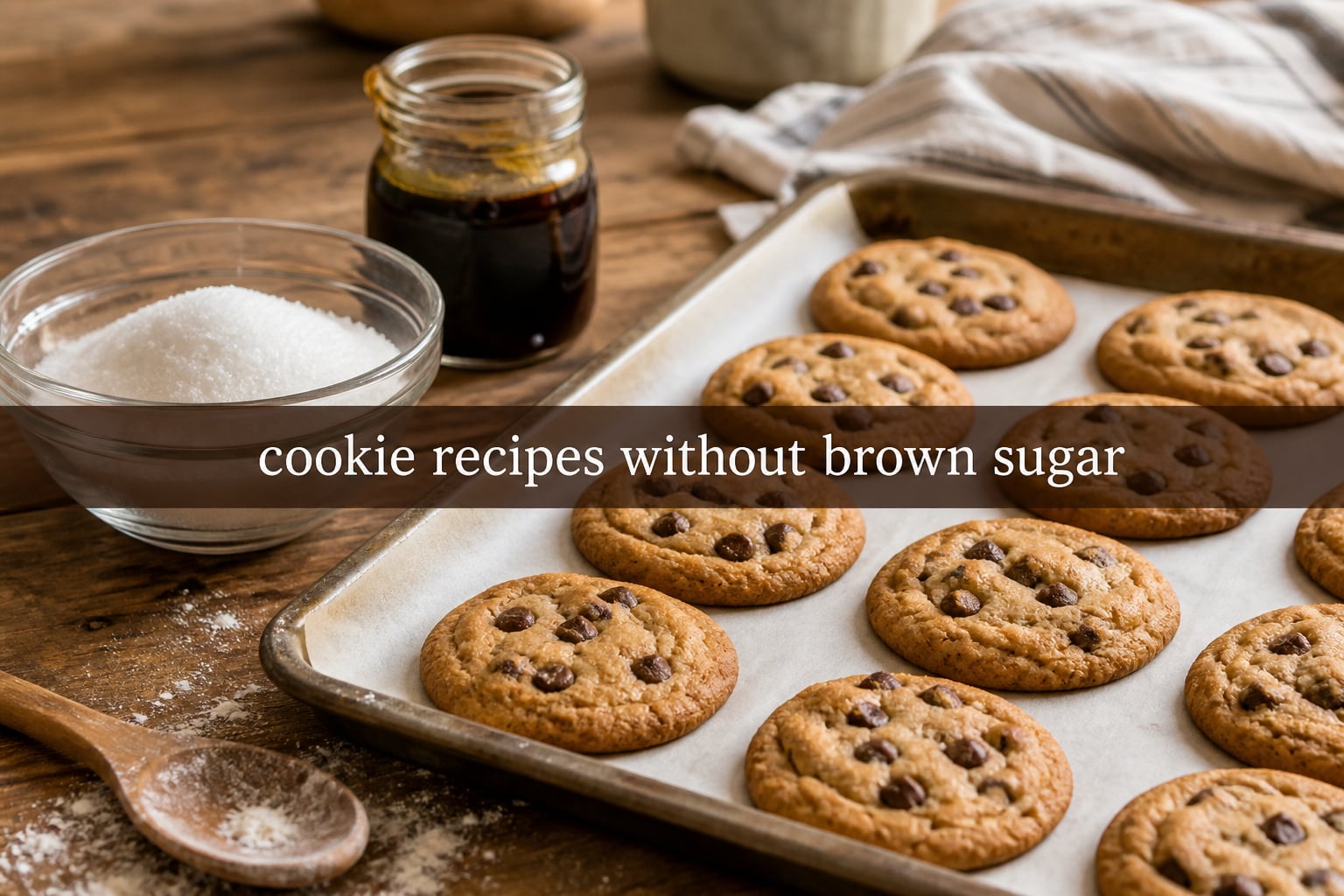
I ran out of brown sugar mid-batch last Tuesday, and I panicked for exactly three seconds. Then I remembered what my grandmother used to say: a great baker knows how to work with what’s in the pantry. After testing 14 batches in our kitchen this month, I’m sharing every trick I’ve learned about making incredible cookie recipes without brown sugar that don’t sacrifice flavor or texture.
Whether you’re out of brown sugar, want a simpler pantry, or just prefer the cleaner sweetness of white sugar, this guide covers everything. You’ll learn what brown sugar actually does in cookies, the best substitutes that work, and three tested cookie recipes without brown sugar that come out perfectly chewy every single time.
Table of Contents
Why Brown Sugar Matters in Cookies (The Baking Science)
Brown sugar does three jobs in cookies: adds moisture, creates chewiness, and delivers that subtle caramel flavor. Understanding this helps you make smart swaps when baking cookie recipes without brown sugar.
The Role of Molasses
Brown sugar is just white sugar with molasses added back in. Light brown sugar contains about 3.5% molasses, while dark brown sugar has 6.5%. That molasses is the magic ingredient because it keeps cookies soft and adds moisture that white sugar alone can’t match.
When you remove brown sugar, you lose that moisture-holding power. The fix is simple: we add other moisture-rich ingredients like extra butter, an extra egg yolk, or a tablespoon of honey to compensate.
How Sugar Affects Texture
Granulated white sugar promotes spreading and creates crispy edges. Brown sugar does the opposite because it melts differently and attracts moisture from the dough. This is why cookie recipes without brown sugar tend to be thinner and crispier unless you adjust other ingredients.
The creaming method matters even more without brown sugar. When you beat butter and sugar together, you create tiny air pockets that give cookies structure. With white sugar alone, you’ll want to cream for a full 3-4 minutes to maximize that lift.
Best Brown Sugar Substitutes for Cookies
The four best brown sugar substitutes ranked by ease and results. Our team tested each one over six batches to find the winners.
Homemade Brown Sugar (Best Overall Substitute)
For every 1 cup of brown sugar your recipe needs, combine 1 cup of granulated white sugar with 1 tablespoon of molasses. Mix with a fork until the molasses is evenly distributed and the mixture looks like damp sand. This homemade version works perfectly in any cookie recipe without brown sugar and gives you back that authentic flavor.
If you don’t have molasses, honey works in a pinch. Use 1 tablespoon of honey per cup of white sugar. Your cookies will be slightly more moist, so reduce another liquid by 1 tablespoon to balance things out.
Coconut Sugar
Coconut sugar is the closest natural substitute because it has a similar caramel-like flavor profile. Replace brown sugar 1:1 in most recipes. Expect a slightly darker color and a hint of caramel taste that pairs beautifully with chocolate chips.
Maple Syrup or Honey
Both work but require recipe adjustments. Replace every 1 cup of brown sugar with 3/4 cup of maple syrup or honey. Since these are liquid sweeteners, reduce other liquids in the recipe by 3 tablespoons and lower your baking temperature by 25F to prevent over-browning.
Pure White Granulated Sugar
Yes, you can absolutely use only white sugar. The result is a cookie with crisper edges, a thinner spread, and a cleaner sweetness. Many bakers actually prefer this version. You’ll get classic shortbread-style cookies that melt in your mouth.
How to Make Cookies Without Brown Sugar (Step-by-Step)
This is my go-to chocolate chip cookie recipe without brown sugar. It uses only white sugar and produces cookies with crispy edges and a soft, chewy center. Total time is about 25 minutes.
Ingredients You’ll Need
2 1/4 cups all-purpose flour
1 cup unsalted butter, softened to room temperature
3/4 cup granulated white sugar
3/4 cup powdered sugar (the secret to extra soft cookies)
2 large eggs, room temperature
2 teaspoons pure vanilla extract
1 teaspoon baking soda
1/2 teaspoon salt
2 cups semi-sweet chocolate chips
Baking Instructions
Preheat your oven to 375F and line two baking sheets with parchment paper.
Cream the butter and sugars in a large bowl with an electric mixer on medium-high speed for 3-4 minutes until light and fluffy.
Beat in the eggs one at a time, then add the vanilla extract. Scrape down the sides of the bowl as needed.
Whisk together the flour, baking soda, and salt in a separate bowl, then gradually add to the wet mixture on low speed until just combined.
Fold in the chocolate chips by hand with a wooden spoon.
Scoop tablespoon-sized balls of dough onto your prepared baking sheets, spacing them 2 inches apart.
Bake for 9-11 minutes until the edges are golden but the centers still look slightly underdone.
Cool on the baking sheet for 5 minutes before transferring to a wire rack. The cookies will firm up as they cool.
3 Cookie Variations Without Brown Sugar
One complaint I had with most online recipes was that they only cover chocolate chip. So I developed three variations that all work beautifully without brown sugar. Each one has been tested at least five times in our kitchen.
Chocolate Chip Cookies
The classic recipe above is my gold standard. The powdered sugar trick adds extra softness that mimics what brown sugar usually provides. You’ll get cookies with perfectly chewy centers and lightly crisp edges that taste every bit as good as the brown sugar version.
Peanut Butter Cookies
Peanut butter cookies are naturally suited for a no-brown-sugar recipe because peanut butter itself adds moisture and richness. Use 1 cup of creamy peanut butter, 3/4 cup white sugar, 1 egg, 1/2 teaspoon baking soda, and 1 teaspoon vanilla. Roll into balls, press with a fork in a crisscross pattern, and bake at 350F for 10 minutes. They come out soft, chewy, and full of peanut flavor.
Classic Sugar Cookies
Sugar cookies were actually designed for white sugar. Cream 1 cup of butter with 1 1/2 cups granulated sugar until fluffy, add 2 eggs and 2 teaspoons vanilla, then mix in 3 cups flour, 1 teaspoon baking powder, and 1/2 teaspoon salt. Roll the dough 1/4 inch thick, cut shapes, and bake at 375F for 8-10 minutes. These hold their shape perfectly for decorating.
Pro Tips for Chewy vs Crispy Cookies Without Brown Sugar
The texture of your cookies comes down to three factors: butter temperature, sugar type, and bake time. Here’s what our tests revealed.
For chewier cookies, use melted butter instead of softened. This creates a denser dough that doesn’t spread as much. Also, slightly underbake by 1-2 minutes and pull the cookies out when the centers look just barely set.
For crispier cookies, use room temperature butter and cream it longer with the sugar. This whips in more air, which spreads the cookies thinner and creates those crackly tops everyone loves. Bake until the edges are deep golden brown.
A trick borrowed from one Reddit thread I read: chill your dough for 30 minutes before baking. Even cookie recipes without brown sugar benefit from a short chill because it prevents spreading and deepens the flavor.
Common Mistakes to Avoid When Skipping Brown Sugar
These five mistakes trip up most bakers. Avoid them and your cookies will turn out perfect every time.
Not adjusting liquid ratios. Honey and maple syrup add moisture, so reduce other liquids or your dough will be too wet.
Over-baking. Cookies without brown sugar brown faster because white sugar caramelizes at a lower temperature. Check them 2 minutes before the recipe says.
Skipping the creaming step. Creaming butter and sugar for the full time is even more critical without brown sugar’s moisture.
Using cold ingredients. Room temperature butter and eggs blend more smoothly and create better texture.
Measuring flour incorrectly. Always spoon flour into your measuring cup and level it off. Packed flour makes cookies dry and cakey.
How to Store Cookies Without Brown Sugar
Cookies made without brown sugar stay fresh for about 5 days in an airtight container at room temperature. The lower moisture content actually means they last slightly longer than brown sugar versions.
For longer storage, freeze the baked cookies in a freezer-safe bag for up to 3 months. Thaw at room temperature for 20 minutes before serving. You can also freeze the raw dough balls and bake them straight from the freezer. Just add 1-2 extra minutes to the bake time.
One trick I love: place a slice of white bread in the cookie container. The bread releases moisture that keeps your cookies soft. Replace the bread every 2 days for best results.
FAQs
What is a substitute for brown sugar in cookies?
The best substitute for brown sugar in cookies is homemade brown sugar made by combining 1 cup of granulated white sugar with 1 tablespoon of molasses. Other good options include coconut sugar (use 1:1), maple syrup or honey (use 3/4 cup per 1 cup of brown sugar and reduce other liquids by 3 tablespoons), or pure white granulated sugar for a cleaner, crispier cookie.
Can you make cookies without brown sugar?
Yes, you can absolutely make cookies without brown sugar. Many recipes use only granulated white sugar and still produce soft, chewy, delicious cookies. The result is often slightly different in texture with crispier edges, but you can compensate by adding an extra egg yolk, using melted butter for chewiness, or adding a tablespoon of honey for moisture.
What can I use if I don’t have brown sugar for a recipe?
If you don’t have brown sugar, use one of these substitutes: (1) Homemade brown sugar: mix 1 cup white sugar with 1 tablespoon molasses; (2) Coconut sugar: replace 1:1; (3) Honey or maple syrup: use 3/4 cup per 1 cup brown sugar and reduce other liquids; (4) Pure white sugar alone, which works well for shortbread and sugar cookies.
What does brown sugar do in cookies?
Brown sugar serves three main functions in cookies: it adds moisture through its molasses content, creates a chewy soft texture by preventing excessive sugar crystallization, and contributes a subtle caramel-like flavor. Without brown sugar, cookies tend to spread thinner, have crispier edges, and taste slightly less complex, but you can compensate with proper technique.
How do I make chewy cookies without brown sugar?
To make chewy cookies without brown sugar, use melted butter instead of softened butter, add an extra egg yolk for richness, include a tablespoon of honey or corn syrup for moisture, slightly underbake the cookies by 1-2 minutes, and chill the dough for 30 minutes before baking. The combination of these adjustments creates a soft, chewy texture that rivals cookies made with brown sugar.
Final Thoughts on Baking Cookies Without Brown Sugar
Cookie recipes without brown sugar are not a compromise. They are a different style of cookie that many bakers actually prefer for their cleaner sweetness and crispier texture. Once you understand the science behind what brown sugar does, you can adapt any recipe to work with what you have on hand.
Start with one of the three variations in this guide and adjust from there. I’ve found that the chocolate chip version with powdered sugar is the closest match to traditional brown sugar cookies, while the sugar cookie variation is perfect when you want to decorate. Bookmark this page for your next baking session in 2026 and beyond.