
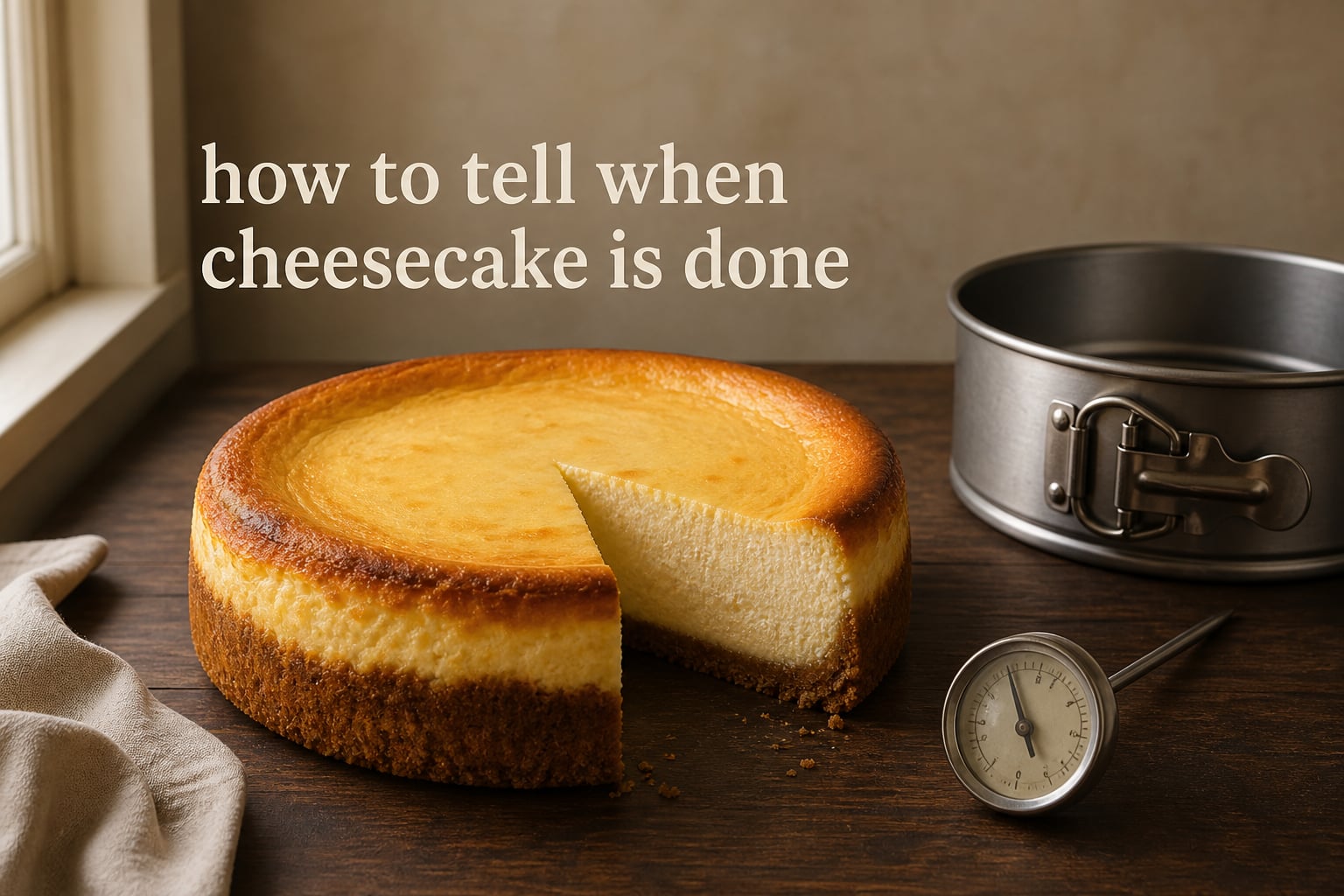
I have pulled more cheesecakes out of the oven too early than I care to admit. For years I waited until the top looked fully set, and every single one came out puffed, cracked, and dry around the edges. Learning how to tell when cheesecake is done changed everything for me, and it comes down to three reliable tests you can run in under a minute.
A cheesecake is done when the outer 2 to 3 inches look firm and slightly puffed, but the center 2 to 3 inches still jiggle like Jell-O. The internal temperature should read between 150F and 160F. Pull it at this stage and the carryover heat finishes the job while it cools, giving you a creamy, crack-free result.
Table of Contents
How to Tell When Cheesecake Is Done: 3 Foolproof Tests
Use these three tests together for the most accurate read on doneness. Any one test gives you a good signal, but combining two removes all doubt.
- The Jiggle Test for a quick visual check
- The Temperature Test for precision baking
- The Touch Test as a backup when you do not own a thermometer
Method 1: The Jiggle Test (Visual Check)
The jiggle test is the fastest way to know how to tell when cheesecake is done without any tools. Hold the springform pan with both hands and give it a gentle shake side to side.
What you want to see is a small circle in the very center that wobbles slightly while the outer edges stay completely still. Think of a bowl of Jell-O that has just been tapped, only happening in a 2 to 3 inch circle in the middle. The edges should look set, slightly puffed, and matte rather than shiny or wet.
If the entire surface ripples like liquid, it needs more time. If there is zero jiggle anywhere and the top looks dry or browned, you have gone too far. That slight wobble in the center is exactly right, and it will firm up during the cooling process thanks to carryover cooking.
Method 2: The Temperature Test (Thermometer Reading)
For bakers who want a precise number, an instant-read thermometer takes the guesswork out of how to tell when cheesecake is done. Insert the probe into the center of the cheesecake, going about halfway down into the custard.
You are looking for an internal temperature between 150F and 160F. I pull mine at 150F because the temperature climbs another 5 to 10 degrees as the cheesecake rests on the counter and then chills in the fridge. This carryover cooking is what turns a slightly underdone center into a perfectly silky slice.
Always take the reading while the cheesecake is still in the oven with the door closed, or immediately after pulling it. If you wait too long and the temperature drops, you will get a false reading and might overbake on the next attempt.
Method 3: The Touch Test (Finger Feel)
The touch test is what I reach for when I am baking without a thermometer. Lightly press the surface of the cheesecake near the center with the pad of your index finger.
A done cheesecake feels firm with a slight give, similar to the flesh at the base of your thumb when you touch your pinky to it. It should spring back gently when you lift your finger. If your finger leaves an indent or the surface feels sticky and wet, the cheesecake needs more baking time.
Be careful not to press too hard or you will leave a permanent dent in the top. Use a light, quick touch and you will get a clear read on whether the custard has set enough.
Why the Toothpick Test Does Not Work for Cheesecake
If you have baked cakes before, your instinct might be to stick a toothpick in the center and look for moist crumbs. Skip this method entirely when testing cheesecake. A finished cheesecake is a baked custard, and custards are supposed to remain soft and slightly jiggly in the center.
A clean toothpick actually signals that you have overbaked the cheesecake, which leads to cracks, a dry texture, and a rubbery bite. Trust the jiggle, the thermometer, or your finger instead.
Equipment You Need to Test Doneness
You do not need much to master how to tell when cheesecake is done, but a few tools make the job easier.
- Instant-read thermometer for precise temperature readings between 150F and 160F
- 9-inch springform pan so you can release the sides cleanly after cooling
- Roasting pan for a water bath, which keeps the custard gentle and prevents cracks
- Oven mitts and a flat kitchen towel for safely shaking the pan during the jiggle test
A water bath is optional but highly recommended. It surrounds the springform pan with hot water and creates steam, which slows the cooking on the edges and helps the center set evenly. If you skip it, plan to start testing for doneness about 10 minutes earlier than the recipe states.
FAQ
Is it better to overcook or undercook cheesecake?
Slightly undercooking cheesecake is always better than overcooking it. A cheesecake that is a touch soft in the center will finish setting as it cools and chills, giving you a creamy texture. An overcooked cheesecake dries out, develops cracks, and loses the silky mouthfeel that makes the dessert worth baking in the first place.
Does cheesecake continue to cook while cooling?
Yes, cheesecake keeps cooking after you pull it from the oven through carryover cooking. The internal temperature rises another 5 to 10 degrees as the residual heat redistributes through the custard. This is why pulling the cheesecake at 150F and letting it cool gradually gives you a perfectly set center without overbaking.
How do I know when to take my cheesecake out of the oven?
Take your cheesecake out of the oven when the outer 2 to 3 inches look firm and slightly puffed, but the center 2 to 3 inches still jiggle like Jell-O when you gently shake the pan. The internal temperature should read 150F to 160F. Turn off the oven, crack the door open an inch, and let the cheesecake cool inside for one hour before moving it to the counter.
What happens if my cheesecake is still jiggly after baking?
A jiggly center is exactly what you want. Cheesecake is a baked custard that finishes setting as it cools and chills in the refrigerator. If only the center 2 to 3 inches wobble while the edges stay firm, pull it from the oven and let it cool gradually. After 4 to 6 hours of chilling, the center will be completely set and ready to slice.
Final Thoughts on How to Tell When Cheesecake Is Done
The trick to knowing how to tell when cheesecake is done is trusting the wobble. Pull your cheesecake when the edges look set and the center still jiggles like Jell-O, confirm with a 150F to 160F reading if you have a thermometer, and let the carryover heat finish the job. Bake it this way once and you will never go back to guessing.