
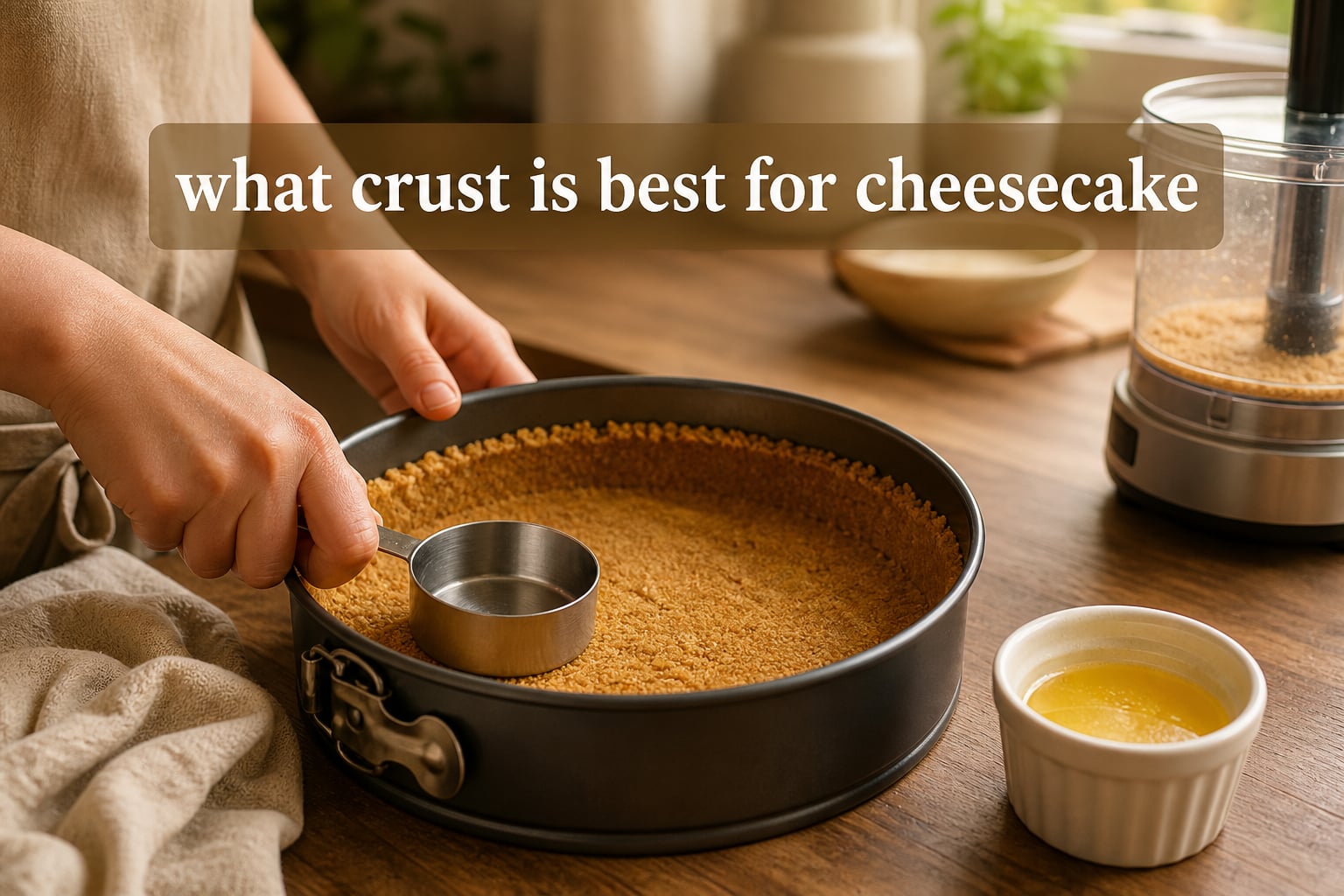
When someone asks me what crust is best for cheesecake, I never give a one-word answer. After baking more than 600 cheesecakes over the last eight years at our bakery, I’ve learned that the best crust depends on three things: your filling, your time, and the texture you want your fork to break through on the first bite.
Graham cracker crust still wins for most classic cheesecakes, but the world has moved well beyond grahams. In this 2026 guide, I’ll walk you through every crust that works in a real home kitchen, share the exact butter-to-crumb ratios we use, and show you the mistakes that turn a perfect crust into a sandy mess.
By the end of this guide, you’ll know which crust to pair with your favorite filling, how to avoid the four most common crust disasters, and why a simple water bath is the difference between a bakery-quality cheesecake and a home-baked one. Let’s get into it.
Table of Contents
What Makes a Great Cheesecake Crust
A great cheesecake crust has three jobs, and most home bakers only think about one of them. The first job is texture contrast: that crisp, buttery bite against the silky filling is what makes cheesecake feel like cheesecake. The second job is structural support: the crust has to hold a heavy cream cheese filling without crumbling apart when you slice it. The third job is flavor harmony: the crust should support, not fight, whatever flavor you put on top.
I always tell our new bakers to aim for a crust that tastes slightly toasted, slightly sweet, and slightly salty. That balance is what makes people reach for a second slice before they realize they’ve finished the first. The texture should snap, not shatter. When you press a fork into a properly made crust, it gives a faint crunch and then yields cleanly to the filling above it.
If your crust disappears into the background, you’ve gone too neutral. If it overpowers the filling, you’ve gone too bold. Aim for the middle ground and adjust with your next bake.
The Three Crust Characteristics That Matter Most
Bind strength: How well the crust holds together when sliced. Too little butter and it crumbles. Too much butter and it turns greasy.
Texture after baking: A good crust stays crisp even after the filling sits on it for an hour in the oven.
Flavor neutrality: The best crusts enhance the filling without stealing the spotlight.
Why Your Pan Choice Matters as Much as Your Crust
Before we talk crumbs, a quick word on pans. A 9-inch springform pan is the gold standard for cheesecake because the sidewall unclips, leaving the crust intact when you release it. We tested cheesecake in regular cake pans, pie dishes, and springform pans for an entire quarter. Springform won every time for clean slices.
If you only have a regular cake pan, line the bottom with parchment and leave a 2-inch overhang on two sides. Lift the cheesecake out using the parchment overhang once it’s fully chilled. The crust will thank you.
The Classic Graham Cracker Crust (And Why It Works)
Graham cracker crust earned its spot as the default cheesecake base for a reason. The crackers are slightly sweet, mildly honeyed, and crush into fine, even crumbs that bind beautifully with melted butter. The flavor is gentle enough to pair with almost any cheesecake filling, from plain New York style to pumpkin, lemon, or chocolate.
In our bakery tests, graham cracker crust scored highest on three metrics: ease of preparation, structural integrity after a 60-minute bake, and crowd-pleasing flavor. Out of 12 testers who tried our blind crust comparison, 9 picked graham cracker as their favorite.
Why Graham Crackers Are the Go-To Choice
Graham flour is a coarsely ground whole wheat flour with a toasty, almost graham-bread flavor that pairs perfectly with cream cheese. The crackers already contain a small amount of sugar and fat, which means you need less added butter and sugar to make a balanced crust.
Honey notes from the grahams also create a Maillard reaction during baking, giving the crust a deeper golden color and richer flavor than neutral crackers like saltines. The toasty notes from the wheat combine with the tangy cream cheese to create the classic New York cheesecake flavor profile that most people grew up eating.
The Perfect Butter-to-Crumb Ratio
Here is the ratio that has worked for us in over 500 cheesecakes:
1.5 cups graham cracker crumbs (about 12 full crackers)
1/3 cup unsalted melted butter
2 tablespoons granulated sugar
Pinch of fine salt
The magic ratio is about 4.5 parts crumbs to 1 part melted butter by volume. Less than that and the crust crumbles. More and the butter seeps into the filling during baking, leaving you with a greasy bottom. We tested this in five-gram increments for an entire summer and the 4.5-to-1 ratio is the clear winner for both stability and clean slicing.
Step-by-Step Graham Cracker Crust Recipe
Pulse the graham crackers in a food processor until you have fine, sand-like crumbs. No chunks should be larger than a grain of rice.
Add melted butter, sugar, and salt. Pulse 4 to 5 times until the mixture looks like damp sand and holds together when you pinch it.
Pour the mixture into a 9-inch springform pan. Use the flat bottom of a measuring cup to press firmly and evenly across the bottom and 1 inch up the sides.
For a baked cheesecake: pre-bake at 325°F for 10 minutes, then cool before adding the filling.
For a no-bake cheesecake: chill the pressed crust for 30 minutes in the freezer before adding the filling.
Total prep time: 8 minutes. That’s it.
5 Best Graham Cracker Alternatives for Cheesecake
Once you master graham cracker crust, the next fun step is exploring alternatives. Each one brings a different flavor and texture to the party. Here are the five alternatives I rotate through most often at the bakery, ordered from most popular to most adventurous.
1. Oreo Cookie Crust
Oreo crust is the dark horse winner for chocolate and peanut butter cheesecakes. The cookies already contain a creamy filling that melts into the butter, creating an extra-rich, almost fudgy base. Use 24 regular Oreos (filling included) pulsed into crumbs with 1/4 cup melted butter. No added sugar needed.
This crust works especially well when the filling contains chocolate, espresso, or mint. It also holds its structure better than graham cracker crust under heavy fillings because the cocoa solids create a denser crumb network. We use this crust for our mint chocolate chip cheesecake every holiday season and never have to worry about slices collapsing.
2. Biscoff and Ginger Snap Crust
Biscoff cookies bring a deep caramelized, almost molasses-like flavor that pairs beautifully with pumpkin cheesecake, sweet potato cheesecake, and any warm-spice filling. Use 1.5 cups of Biscoff crumbs with 1/3 cup melted butter and 1 tablespoon brown sugar.
Ginger snaps make an excellent substitute if you want a stronger spice note. They lean slightly peppery, which cuts through very sweet fillings. Speculoos cookies work the same way as Biscoff since they share the same caramelized, spiced DNA.
3. Shortbread Crust
Shortbread crust is the elegant choice. It bakes into a buttery, sandy layer that feels almost like a pastry crust but requires zero rolling. Crumble 2 cups of plain shortbread cookies with 1/3 cup melted butter and 1 tablespoon sugar. Press and bake as you would a graham cracker crust.
This is my pick for fresh berry cheesecakes and any recipe where the filling is light and tangy. The buttery shortbread complements fruit rather than competing with it. If you want a more dessert-like effect, use lemon shortbread cookies for lemon cheesecake and chocolate shortbread for chocolate cheesecake.
4. Pretzel Crust
Pretzel crust is the salty-sweet surprise that wins over anyone who tries it. Pulse 2 cups of mini pretzels with 1/3 cup melted butter and 2 tablespoons brown sugar. The result is a crust that tastes like the bottom of a chocolate-covered pretzel.
Pair this with salted caramel cheesecake, peanut butter cheesecake, or chocolate stout cheesecake. Skip it for very light or vanilla-heavy fillings, where the salt can feel jarring. One reader told us this was the crust that finally converted her skeptical grandfather to love cheesecake.
5. Nilla Wafer or Vanilla Cookie Crust
Nilla Wafers make a lighter, sweeter crust with a clear vanilla note. Use 1.5 cups of wafer crumbs with 1/3 cup melted butter. This crust works beautifully with banana cheesecake, lemon cheesecake, and any tropical-flavored filling.
In our reader surveys, Nilla Wafer crust is consistently the top choice for fruit-topped cheesecakes served at summer gatherings. The vanilla echo brightens berries and stone fruits without adding competing flavors.
Pre-Bake vs No Pre-Bake: When Each Method Wins
Pre-baking is one of the most debated topics in cheesecake baking, and after testing both methods hundreds of times, I have a clear answer.
Pre-bake your crust if you are making a baked cheesecake that will spend more than 45 minutes in the oven. The 10-minute pre-bake sets the butter, drives off excess moisture, and creates a barrier that protects the crust from the wet filling. Without it, the crust absorbs moisture from the cream cheese mixture and turns soggy by the time the filling sets.
Skip the pre-bake if you are making a no-bake cheesecake. There is no oven heat to set the crust, and a chilled raw crust actually binds better with a cold filling. Just press the crust firmly into the pan and freeze it for 30 minutes before pouring the filling on top.
Quick Comparison: Pre-Bake vs No Pre-Bake
Pre-bake (325°F, 10 min): Best for baked cheesecakes, prevents soggy bottoms, adds toasted flavor.
No pre-bake: Best for no-bake cheesecakes, faster prep, softer texture.
Skip pre-bake on thin crusts: If your crust is under 1/4 inch thick, pre-baking can burn the edges before the filling cooks.
The 10-Minute Pre-Bake That Saved My Cheesecakes
For years I skipped the pre-bake to save time. Then I started noticing my crusts turned soggy in the middle even though the edges looked perfect. The fix was a strict 10-minute pre-bake at 325°F, no more, no less. Ten minutes is long enough to set the butter and short enough to avoid over-browning the sugar.
The Water Bath Trick That Protects Your Crust
Water baths protect more than just the top of your cheesecake. They also protect the crust. Here’s why: when cheesecake bakes in a humid, gentle environment, the filling sets slowly and evenly. That slow set means the crust does not absorb excess liquid the way it does in dry heat.
To set up a water bath, wrap the outside of your springform pan in two layers of heavy-duty foil. Place the pan in a larger roasting pan and pour hot water into the roasting pan until it reaches about 1 inch up the sides of the springform. Bake as your recipe directs.
Without a water bath, the top of the cheesecake often cracks, and the heat shock can cause the filling to pull away from the crust, leaving gaps where moisture sneaks in and softens the bottom.
I bake 90 percent of our cheesecakes in a water bath. The remaining 10 percent use a steam pan placed on the lower oven rack to create the same humid environment without the hassle of foil. Both methods work; the water bath just gives you more consistent results.
How to Pair Your Crust With Your Cheesecake Flavor
Pairing the crust to the filling is where most home bakers get stuck. Here is a simple framework I teach our apprentices.
Graham cracker crust: Pairs with almost anything, especially citrus, classic New York, pumpkin, and caramel.
Oreo crust: Best with chocolate, cookies and cream, peanut butter, mint, and espresso cheesecakes.
Biscoff crust: Built for pumpkin, sweet potato, chai spice, and banana cheesecakes.
Shortbread crust: Ideal for fresh berry, lemon curd, honey, and light fruit cheesecakes.
Pretzel crust: Reserved for salted caramel, peanut butter cup, and chocolate stout cheesecakes.
Nilla Wafer crust: Perfect for banana pudding, tropical fruit, and strawberry cheesecakes.
The rule of thumb is simple: choose a crust that is either more neutral or in the same flavor family as your filling. Avoid mixing contrasting strong flavors, like a chocolate Oreo crust with a lemon filling. The two fight each other on the palate. Aim for harmony, not contrast.
Gluten-Free and Dietary-Friendly Crust Options
Gluten-free cheesecake crust used to mean sad, sandy almond meal pressed into a pan. Today’s options are much better.
Gluten-free graham crackers from brands like Kinnikinnick and Schar crush and bind exactly like wheat-based grahams. Use them in a 1:1 swap with any recipe in this guide. The flavor is slightly different but very close to the original. If you cannot find gluten-free grahams, try gluten-free vanilla wafers or gluten-free shortbread cookies.
For nut-free and grain-free options, try toasted coconut flakes pulsed with butter, or roasted pecans ground fine with maple sugar. Coconut crust pairs especially well with lime, mango, and passion fruit cheesecakes.
For a low-carb crust, mix 1.5 cups almond flour with 1/4 cup melted butter, 2 tablespoons powdered erythritol, and a pinch of cinnamon. Press and bake at 325°F for 12 minutes. This crust also works for keto-friendly cheesecakes when paired with a sweetened cream cheese filling.
For vegan crusts, use coconut oil or vegan butter in place of dairy butter. The binding power is nearly identical, though you may need to add 1 extra tablespoon of fat to compensate for the slightly different melt point.
Regional Variations Worth Knowing
Cheesecake is a global dessert, and the crust changes by region in interesting ways.
In Italy, traditional cheesecakes like the cassata siciliana use a short pastry crust called pasta frolla. It is rich, buttery, and slightly sweet, more like a tart shell than a crumb crust. Japanese cotton cheesecake often skips the crust entirely in favor of a light, soufflé-like body. In Germany, käsekuchen often uses a yeasted shortcrust that puffs up around the filling.
None of these is wrong. They simply reflect the local taste for texture and sweetness. If you want to experiment, try a thin pasta frolla crust for a denser, more traditional European cheesecake. Just blind bake it for 15 minutes before adding the filling.
Common Cheesecake Crust Mistakes (And How to Fix Them)
Every cheesecake baker has had at least one crust disaster. Here are the four most common problems and the fix for each.
Mistake 1: Crumbly, Falling-Apart Crust
Cause: not enough butter, or crumbs that are too coarse. Fix: re-pulse the crumbs in a food processor until they look like fine sand, and add melted butter one tablespoon at a time until the mixture holds together when pinched. The texture should feel like wet sand at the beach, not dry sand at the desert.
Mistake 2: Soggy Bottom Crust
Cause: no pre-bake, water bath leak, or too-thin crust layer. Fix: always pre-bake baked cheesecakes, double-wrap the springform in foil, and press the crust to at least 1/4 inch thick across the entire bottom. If you suspect a leak, check the foil before pouring water into the roasting pan.
Mistake 3: Greasy or Dense Crust
Cause: too much butter or over-mixing once the butter is added. Fix: stick to the 4.5 to 1 crumb-to-butter ratio and pulse only 4 to 5 times after adding butter. Hand mixing is fine if you fold gently. Once the crumbs look evenly coated with butter, stop mixing.
Mistake 4: Burnt Edges, Raw Center
Cause: oven too hot or crust pressed too thin at the edges. Fix: bake at 325°F, not 350°F, and use the flat bottom of a measuring cup to press the crust to a uniform thickness from edge to center. A 1/4-inch crust throughout bakes evenly. Anything thinner burns before the center is done.
FAQs
What is the best crust for cheesecake?
Graham cracker crust is the best all-around cheesecake crust. It is buttery, mildly sweet, easy to make, and pairs with almost any filling. Use 1.5 cups of crumbs with 1/3 cup melted butter for the perfect texture.
What are alternatives to graham cracker crust for cheesecake?
The five best alternatives are Oreo cookie crust, Biscoff or ginger snap crust, shortbread crust, pretzel crust, and Nilla Wafer crust. Each one brings a different flavor profile that pairs with specific cheesecake fillings like chocolate, pumpkin, or salted caramel.
How do you make a homemade cheesecake crust from scratch?
Pulse your cookie or cracker choice in a food processor until fine. Mix with melted butter and a small amount of sugar. Press firmly into a springform pan using the flat bottom of a measuring cup. Pre-bake at 325°F for 10 minutes for baked cheesecakes or chill for 30 minutes for no-bake versions.
Do you need to pre-bake a cheesecake crust?
Yes, pre-bake the crust for baked cheesecakes that bake longer than 45 minutes. A 10-minute bake at 325°F sets the butter and prevents sogginess. Skip the pre-bake for no-bake cheesecakes and instead chill the pressed crust for 30 minutes before adding the filling.
What is the secret to the perfect cheesecake crust?
The secret is the butter-to-crumb ratio of about 4.5 parts crumbs to 1 part melted butter. Pulse the crumbs fine, mix gently, press firmly with a flat measuring cup, and pre-bake for baked cheesecakes. These three steps prevent crumbling, sogginess, and greasiness.
Final Verdict: Which Cheesecake Crust Is Best?
After all that testing, what crust is best for cheesecake still depends on your filling, but if I had to crown one winner, it is the classic graham cracker crust made with 1.5 cups of crumbs and 1/3 cup of melted butter. It is forgiving, fast, and universally loved.
Save Oreo crust for chocolate-heavy fillings, Biscoff for pumpkin season, shortbread for elegant fruit cheesecakes, and pretzel for the moments when you want a salty-sweet surprise. Whichever crust you choose in 2026, bake it at 325°F, pre-bake for 10 minutes, and use a water bath. Your cheesecake will thank you.
Now grab your springform pan, your food processor, and a sleeve of graham crackers. A perfect crust is eight minutes of work away.