
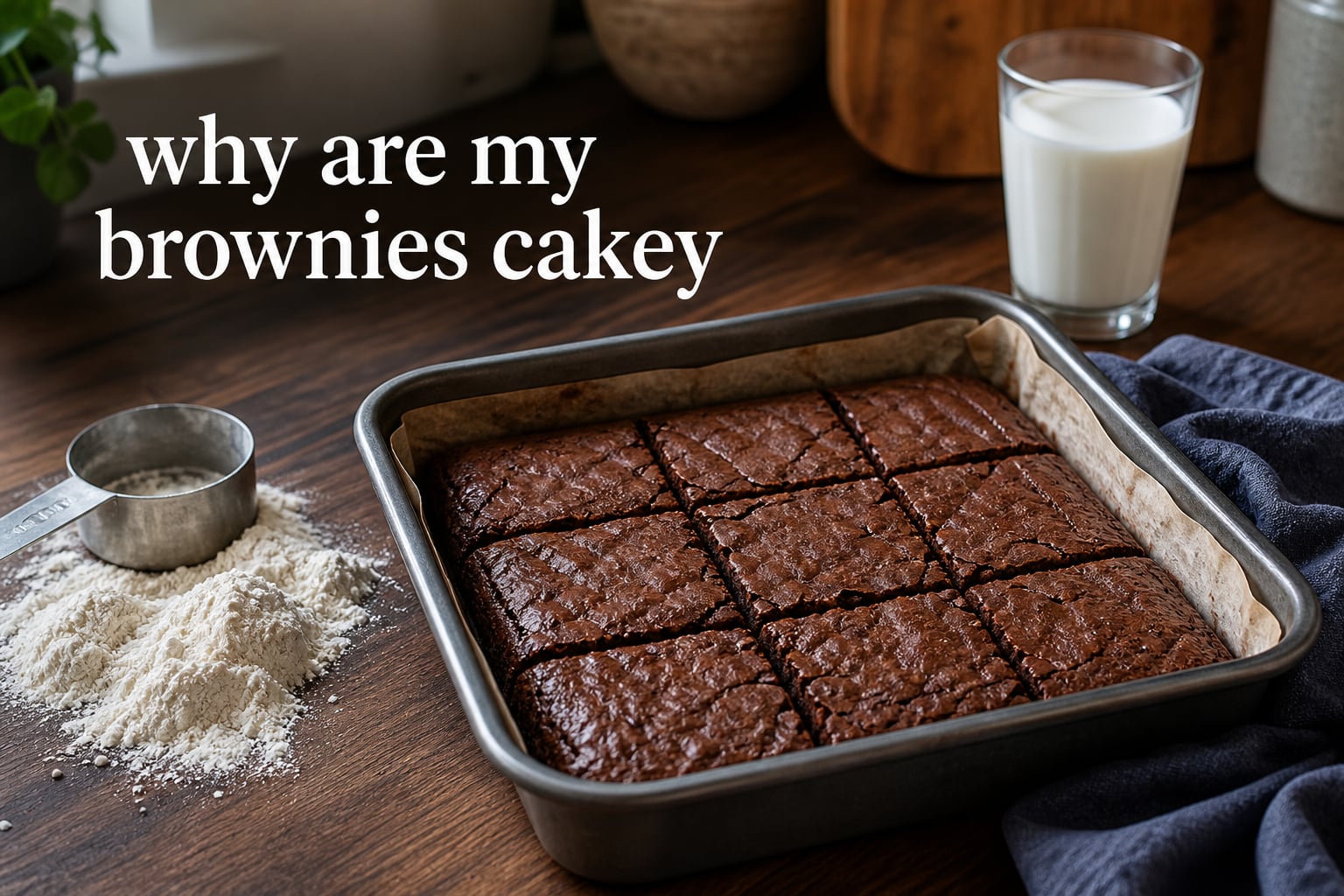
If you have ever pulled a pan out of the oven hoping for dense, fudgy squares and instead cut into something light, spongy, and tall, you are not alone. The question “why are my brownies cakey?” is one of the most common baking frustrations we hear from home bakers, and on baking forums like r/AskBaking it shows up almost weekly. The good news is that cakey brownies are not a mystery or a sign that you are a bad baker. They are almost always the result of a handful of fixable habits involving flour, leavening, mixing, and baking time.
In this guide we break down exactly what causes brownies to turn cakey, how to tell the difference between cakey and fudgy, and the specific steps you can take to fix the problem. Whether you are troubleshooting a batch that just came out wrong or trying to prevent it next time, you will have clear answers by the end.
Table of Contents
Why Are My Brownies Cakey? The Quick Answer
Brownies turn out cakey when too much air or structure gets built into the batter. The four main culprits are:
Too much flour – extra flour creates more structure and a drier, lighter crumb.
Leavening agents – baking powder or baking soda adds lift and makes brownies rise like a cake.
Over-mixing the batter – vigorous beating whips in air and develops gluten, both of which create a fluffy texture.
Over-baking – leaving brownies in the oven too long dries them out and sets a cake-like crumb.
Fix those four things and most cakey-brownie problems disappear. Below we go deeper into each cause and how to correct it.
The 4 Main Causes of Cakey Brownies, Explained
1. Too Much Flour (and How You Measure It)
Flour is the number one reason bakers end up with cakey brownies. Brownies need very little flour compared to cookies or cake. When you add even a couple of extra tablespoons, you build extra structure that turns a dense fudgy square into something puffy and dry.
The real problem is usually how the flour gets into the measuring cup. If you scoop directly from the bag with your measuring cup, the flour packs down and you can end up with 25% more flour than the recipe intends. We see this come up constantly on baking forums, where home bakers follow a recipe “exactly” but still get cakey results because their cup of flour was heavier than the recipe writer’s.
The fix is simple. Spoon the flour lightly into your measuring cup and level it off with a straight edge, or better yet, use a kitchen scale and weigh it. Most brownie recipes call for around 1 cup (about 120 to 130 grams) of flour for an 8-inch pan. If you are over 150 grams, you are heading into cakey territory.
2. Leavening Agents: Baking Powder and Baking Soda
Leavening agents are the ingredients that make baked goods rise, and they are the single fastest way to turn brownies into cake. A leavening agent like baking powder produces carbon dioxide bubbles in the batter, which expand in the oven and create a tall, airy crumb. Baking soda does the same thing when it reacts with an acidic ingredient like cocoa powder or brown sugar.
Here is the thing: many brownie recipes do not call for any leavening at all. If your recipe includes baking powder or baking soda and your brownies keep coming out tall and spongy, that may be your answer. Some recipes intentionally use a small amount for a cakelike style, but if you want fudgy results, look for a recipe with zero leavening or cut the amount in half.
This is also why substituting a cake mix or self-rising flour into a brownie recipe tends to backfire. Both already contain leavening, and the double dose almost guarantees a cakey rise.
3. Over-mixing the Batter
Over-mixing is the cause that catches the most people by surprise. When you beat brownie batter vigorously, you do two things at once: you whip air into the mixture, and you develop the gluten in the flour. Both of those push the texture toward cake.
Air pockets expand in the oven and create lift. Gluten forms elastic strands that hold those air bubbles in place, giving the brownies structure similar to bread or cake. The more you mix, the more air and gluten you build, and the taller and lighter your brownies get.
Fudgy brownies want the opposite. You want to mix only until the dry ingredients disappear into the wet ones, then stop. A few streaks of flour are fine. Use a spatula or a low-speed mixer, never a high-speed beating, and never mix for minutes on end. If your batter looks pale, fluffy, and increased in volume, you have already over-mixed.
4. Over-baking and the Toothpick Test Trap
Brownies continue to cook from residual heat after you take them out of the oven, which means pulling them at the right moment is critical. If you wait until a toothpick comes out completely clean, you have already baked them too long, and the result will be dry and cakey.
For fudgy brownies, the toothpick should come out with a few moist crumbs clinging to it, not wet batter but not clean either. The center should look set but still slightly soft, and the edges should just be pulling away from the pan.
Most 8-inch brownie recipes are done between 20 and 30 minutes at 350°F. Start checking at the low end of the range your recipe gives. Remember that dark metal pans bake hotter than light ones, and glass pans hold heat longer, so your pan choice can add several minutes of effective baking time.
Other Factors That Push Brownies Toward Cakey
Beyond the big four, a few secondary factors can tip your brownies in the wrong direction.
Butter vs Oil
Melted butter and oil give different textures. Oil produces a denser, moister brownie because it stays liquid at room temperature. Butter, especially if it is creamed with sugar rather than melted, incorporates air and gives a lighter crumb. If your recipe creams softened butter and sugar together, expect a cakier result. For maximum fudginess, melted butter or oil is your friend.
Egg Whites vs Egg Yolks
Egg whites add protein and structure, which means lift. Egg yolks add fat and richness, which means density and moisture. Recipes that use extra whites or whole eggs beaten until fluffy will rise more. Recipes that lean on yolks, or that stir eggs in gently without beating, stay denser.
Water and Liquid Ratio
King Arthur Baking has pointed out something most sources skip: too much water makes brownies cakey. You need enough liquid to dissolve the sugar (which is what creates that shiny crackly top), but too much turns the batter thin and encourages a cake-like rise. If you are substituting ingredients that add water, like extra milk or coffee, keep the total liquid modest.
Ingredient Temperature
Cold eggs or cold butter straight from the fridge can make batter harder to mix smoothly, which leads to longer mixing and more air. Room-temperature ingredients blend quickly, so you can stop mixing sooner.
Cakey vs Fudgy Brownies: How to Tell the Difference
Not sure which one you made? Here is a quick comparison to help you diagnose your batch.
Cakey brownies:
Tall and puffy, with a dome or significant rise
Light, airy crumb with visible air pockets
Drier mouthfeel, crumbly texture
Pale interior, often lighter brown
Clean toothpick test
Fudgy brownies:
Thin and dense, minimal rise
Tight, moist crumb with no large air holes
Rich, almost truffle-like mouthfeel
Dark, glossy top crust over a dense interior
Toothpick comes out with moist crumbs
If your pan of brownies is huge, spongy, and puffed up, you have definitely landed on the cakey side. Forum bakers often describe the result as “hugely massive” when the rise went too far.
How to Fix Cakey Brownies Before Your Next Batch
Use this checklist the next time you bake to keep brownies dense and fudgy.
Weigh your flour. Use a kitchen scale or spoon-and-level method. Aim for 120 to 130 grams per cup, never packed.
Check the recipe for leavening. Choose a recipe with no baking powder or baking soda, or reduce the amount called for.
Mix gently and briefly. Fold the dry ingredients in by hand and stop the moment no dry streaks remain.
Use melted butter or oil instead of creamed butter for a denser texture.
Do not over-bake. Pull the pan when the toothpick has moist crumbs, not when it is clean. Start checking 5 minutes before the recipe says.
Use the right pan. An 8-inch metal pan for a recipe written for one, or follow the recipe’s pan size exactly. A smaller pan means thicker brownies that need less time.
Let them cool completely in the pan before cutting. Residual heat finishes the bake and the texture firms up as they cool.
What to Do With Brownies That Are Already Cakey
If your batch is already baked and cakey, you do not have to throw it out. A few easy salvage ideas:
Make brownie trifle. Cube the cakey brownies and layer them with whipped cream, pudding, or chocolate ganache in a glass dish. The texture works perfectly here.
Crumble them over ice cream. Cakey brownie chunks make an excellent topping for sundaes and milkshakes.
Turn them into cake pops. Crumble the brownies, mix with a little frosting, roll into balls, and dip in chocolate.
Use them for bread pudding. Substitute cubed cakey brownies for bread in your favorite bread pudding recipe.
Refrigerate them. Chilling dense cakey brownies firms them up and gives a chewier, more fudgy-eating texture.
Some people actually prefer cakey brownies, so you may want to embrace the result rather than fight it.
FAQs
What makes brownies fudgy or cakey?
Brownies become fudgy when the batter has a high ratio of fat and sugar to flour, very little or no leavening, minimal mixing, and a short bake time. They become cakey when there is too much flour, leavening agents like baking powder, over-mixing that whips in air and develops gluten, or over-baking that dries out the crumb.
How do you make brownies less cakey?
To make brownies less cakey, weigh your flour instead of scooping, choose a recipe with no baking powder or baking soda, mix the batter only until combined, use melted butter or oil instead of creamed butter, and pull the pan from the oven when a toothpick still has moist crumbs clinging to it.
How do I know if I overmixed my brownie batter?
Signs of over-mixed brownie batter include a pale, fluffy, increased volume mixture, lots of visible air bubbles, and a smooth whipped texture similar to cake batter. Properly mixed brownie batter should look thick, dark, and barely combined, with the dry ingredients just disappearing into the wet ones.
How do I avoid cakey brownies?
Avoid cakey brownies by spooning and leveling your flour (or weighing it), skipping leavening agents, folding ingredients gently instead of beating, baking at the low end of the recommended time range, and testing for doneness with moist crumbs rather than a clean toothpick.
Can I fix cakey brownies after they are baked?
You cannot un-bake cakey brownies back to fudgy, but you can repurpose them. Cube them for brownie trifle, crumble them over ice cream, roll them into cake pops with frosting, or use them in bread pudding. Chilling them in the fridge also firms the texture and makes them chewier.
Why are my brownies dry and cakey?
Dry, cakey brownies usually come from two combined problems: too much flour absorbing moisture, and over-baking driving off what little moisture remained. Weigh the flour, shorten the bake time, and pull the pan when the center still looks slightly soft for a moister result.
Final Thoughts on Why Your Brownies Are Cakey
Asking “why are my brownies cakey” almost always leads back to the same four answers: too much flour, leavening agents, over-mixing, or over-baking. Once you understand the science behind each one, the fixes are straightforward. Weigh your flour, skip the baking powder, mix gently, and pull the pan early.
Even experienced bakers end up with cakey batches from time to time. It is part of learning how your oven, your pans, and your measuring habits all interact with a recipe. Next time your brownies come out tall and spongy, run through the checklist above, make one or two adjustments, and try again. Fudgy brownies are absolutely within reach.
And if a batch turns out cakey anyway, remember the salvage ideas. Brownie trifle, ice cream toppings, and cake pops are all delicious ways to use up a pan that did not turn out the way you planned. Happy baking from all of us at 7ate9 Bakery.