
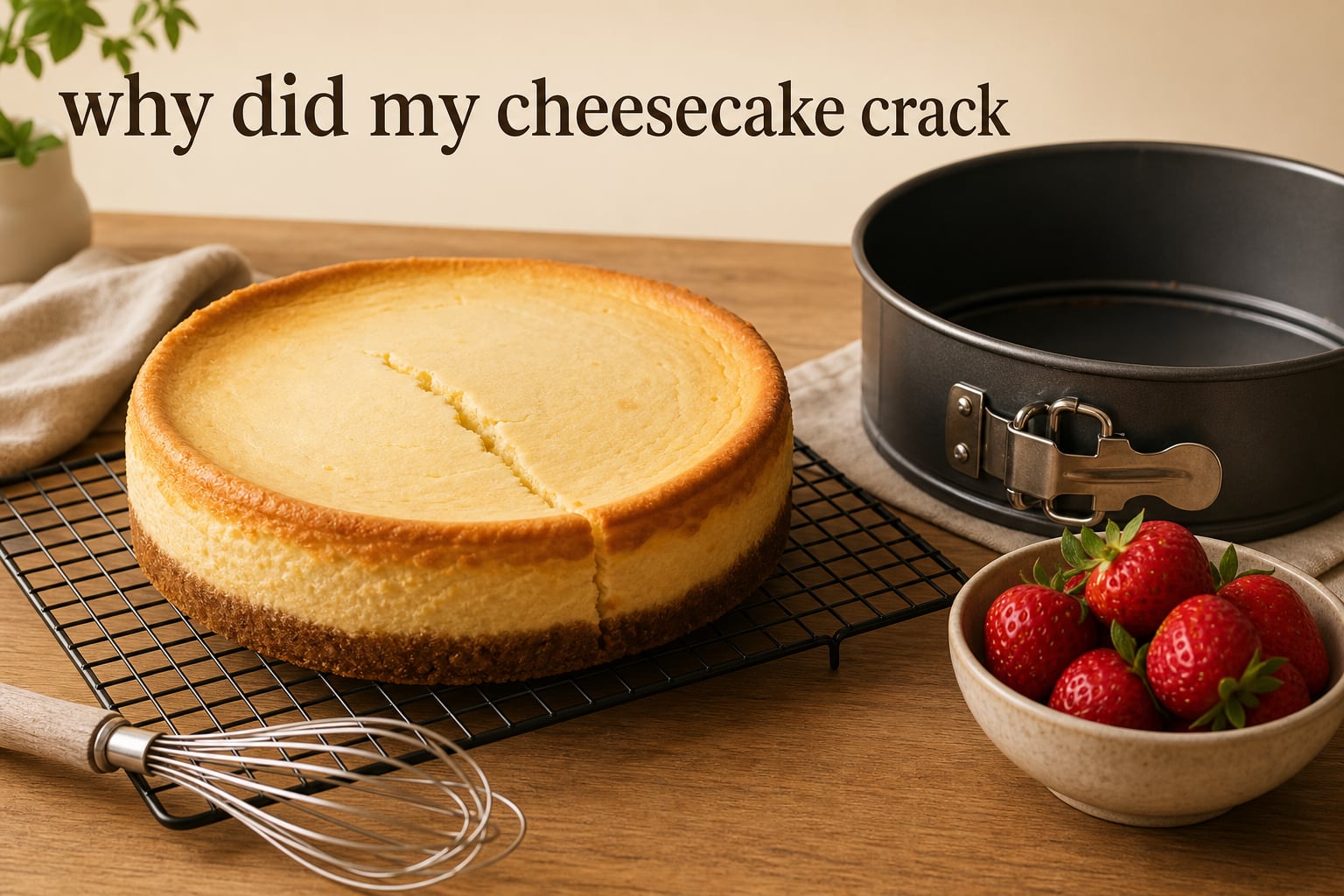
Your cheesecake cracked because the protein network in the custard contracted too quickly or unevenly during baking, cooling, or mixing. The three main culprits are overbaking, sudden temperature changes (thermal shock), and overmixing the batter. The good news: a cracked cheesecake is still completely edible and tastes exactly the same.
If you are staring at a cracked cheesecake wondering what went wrong, you are in the right place. Our team has tested countless cheesecake recipes and troubleshooting methods, and we break down exactly why did my cheesecake crack, how to prevent it next time, and how to hide the evidence if it already happened.
Table of Contents
Why Did My Cheesecake Crack? The Science Explained
Cheesecake is technically a custard, not a cake. The eggs in the batter form a protein network when heated, a process called coagulation. This network gives the cheesecake its silky, structured texture.
If that protein network gets too hot, it tightens and becomes stiff instead of elastic. As the cheesecake cools, it contracts. A stiff, overcooked network cannot flex with the contraction, so the surface splits.
Think of it like a rubber band. A fresh rubber band stretches and snaps back. An old, brittle one tears instead of stretching. Overcooked cheesecake proteins behave like that brittle rubber band.
This is why temperature control matters more than almost anything else when baking cheesecake. Even heat, gentle cooling, and pulling the cake at the right moment keep the protein network supple enough to survive contraction.
Overbaking: The Number One Cause of Cracks
Overbaking causes more cracked cheesecakes than every other factor combined. The center of your cheesecake should reach 150 to 155 degrees F on an instant-read digital thermometer. The edges can be slightly higher, around 165 to 170 degrees F.
Pull the cheesecake when the outer 2 to 3 inches are set but the center 3 to 4 inch circle still jiggles like gelatin when you gently shake the pan. This is the wobble test, and it is the single most reliable doneness indicator.
The center will continue cooking from residual heat after you remove the cheesecake from the oven. If you wait until the center looks fully set before pulling it, you have already overbaked it by the time it finishes carryover cooking.
Signs of an overbaked cheesecake include a puffed, browned top, a dry or grainy texture, and a cracked surface. If the top has browned beyond pale golden, the internal temperature has almost certainly exceeded the safe zone.
Using a digital thermometer removes the guesswork. Insert it halfway between the center and the edge, going straight down to the middle of the filling. If it reads above 160 degrees F, the cake is done right now.
Thermal Shock: Why Temperature Changes Crack Cheesecake
Thermal shock is the second most common reason cheesecakes crack. Think about what happens when you drop an ice cube into a glass of warm water. The ice cracks because the outside expands from heat while the inside stays cold. The uneven expansion creates stress fractures.
Cheesecake does the same thing in reverse. If a hot cheesecake meets cool kitchen air too suddenly, the outside contracts faster than the inside. The surface tears under that uneven stress.
The most common way bakers trigger thermal shock is by opening the oven door mid-bake. A blast of room-temperature air hits the cheesecake, the surface temperature drops several degrees in seconds, and the proteins seize. Do not open the oven door during the first 40 minutes of baking.
Cooling too fast causes the same problem. Pulling a cheesecake straight from a 325 degree F oven to a 68 degree F countertop shocks the proteins. The crack often appears not during baking but 10 to 20 minutes after removal.
To avoid thermal shock, turn the oven off when the cheesecake is done and crack the door open an inch or two. Let it sit in the cooling oven for 30 to 60 minutes before transferring it to the counter.
Overmixing and Air Bubbles
Overmixing is the third major cause of cracks, and it happens before the cheesecake ever enters the oven. When you beat the batter too vigorously, you whip air into it. Those air bubbles expand in the oven and push upward against the surface.
As the cheesecake sets, the expanded bubbles create weak spots. The surface cracks along those weak lines, usually radiating outward from the center or forming concentric rings near the edges.
Mix your cheesecake on low or medium-low speed the entire time. Beat the cream cheese alone first until smooth, then add sugar and other ingredients gently. Add eggs last and mix only until just incorporated.
Room temperature ingredients matter here too. Cold cream cheese forms lumps, and bakers naturally mix longer to get rid of them. Softened cream cheese blends in seconds, so you stop mixing before incorporating excess air.
Scrape the bowl after adding each ingredient. This prevents streaks without requiring extra mixing time. A rubber spatula does a better job than the paddle attachment alone.
How to Prevent Cheesecake Cracks Every Time
Prevention comes down to four habits: use a water bath, cool slowly, never open the oven door, and refrigerate overnight. Master these and your cheesecakes will come out smooth every single time.
Use a Water Bath (Bain-Marie)
A water bath surrounds the cheesecake with gentle, humid heat. The water never exceeds 212 degrees F regardless of oven temperature, which prevents hot spots from overcooking the edges. The steam also keeps the surface moist so it does not dry out and crack.
To set up a water bath, wrap the outside of your springform pan tightly in heavy-duty aluminum foil, using two or three layers to prevent leaks. Place the wrapped pan inside a larger roasting pan. Pour boiling water into the roasting pan until it reaches halfway up the sides of the springform.
An alternative is to place a pan of hot water on the rack below the cheesecake. This creates a humid oven environment without the risk of water seeping into the crust.
Cool Slowly in the Oven
When the cheesecake passes the wobble test, turn the oven off. Crack the door open with a wooden spoon and let the cheesecake sit inside for one hour. This slow cooling prevents thermal shock and lets the proteins relax gradually.
After the hour, transfer the cheesecake to a wire rack at room temperature for another hour. Only then should you move it to the refrigerator.
Refrigerate for 12 Hours
Cheesecake needs a long, slow chill to fully set. Twelve hours in the refrigerator lets the proteins finish firming up and the flavors develop fully. A cheesecake sliced at 4 hours will be softer, wetter, and more prone to cracking when cut.
The overnight rest also gives any hairline surface cracks time to close up as the filling firms and settles into itself. Many minor cracks disappear entirely after a full 12-hour chill.
How to Fix a Cracked Cheesecake After It Happens
A cracked cheesecake is not ruined. Here are three ways to fix or hide the damage so nobody at the table ever knows.
Smooth With an Offset Spatula
While the cheesecake is still warm, run a small offset spatula under hot water, dry it, and gently smooth the cracked surface. The residual heat softens the filling just enough to fill in small cracks. Repeat two or three times for deeper splits.
Use a Sour Cream Topping
Spread a thin layer of sweetened sour cream over the top of the cooled cheesecake. Mix 1 cup sour cream with 2 tablespoons sugar and 1 teaspoon vanilla, then spread it evenly. This classic technique completely covers any cracks and adds a tangy finish.
Cover With Fruit, Ganache, or Whipped Cream
A fruit compote, chocolate ganache, or piped whipped cream rosettes hide every imperfection. Berries, caramel drizzle, or a layer of fruit curd also work. The topping becomes the visual centerpiece, and the cracks vanish underneath.
None of these fixes change the flavor or texture of the cheesecake itself. Your guests will taste the same silky, rich dessert whether or not the surface cracked during baking.
FAQs
Is my cheesecake ruined if it cracks?
No, a cracked cheesecake is not ruined. The crack only affects appearance, not taste or texture. You can smooth the surface with a warm offset spatula, cover it with a sour cream layer, or top it with fruit, ganache, or whipped cream to hide the cracks completely.
How do you fix a cracked cheesecake?
To fix a cracked cheesecake, warm an offset spatula under hot water and smooth the surface while the cake is still warm. For deeper cracks, spread a sweetened sour cream layer (1 cup sour cream, 2 tablespoons sugar, 1 teaspoon vanilla) over the cooled cake. You can also cover the top with fruit compote, chocolate ganache, or whipped cream rosettes.
Is a cracked cheesecake still edible?
Yes, a cracked cheesecake is completely safe to eat. The crack is a cosmetic issue only. The flavor and texture remain identical to an uncracked cheesecake, so you can serve it without any concerns about quality or safety.
Does cracked cheesecake mean overcooked?
A cracked cheesecake often means it was overbaked, but not always. Overbaking is the leading cause because the protein network becomes stiff and tears during cooling. However, cracks can also result from thermal shock, such as opening the oven door or cooling the cheesecake too quickly. Check the internal temperature next time: pull it at 150 to 155 degrees F in the center.
What does it mean when a cheesecake cracks?
When a cheesecake cracks, it means the protein network in the custard filling contracted too quickly or unevenly. This happens from overbaking, sudden temperature changes (thermal shock), or overmixing that introduces air bubbles. The surface splits because the stiffened proteins cannot flex as the cheesecake cools and shrinks.
Conclusion
If you have been asking yourself why did my cheesecake crack, the answer almost always comes down to one of three things: overbaking, thermal shock, or overmixing. Pull the cheesecake at 150 to 155 degrees F, never open the oven door during baking, cool it slowly, mix on low speed, and use a water bath.
A cracked surface does not mean you failed. It means the protein network got too stiff to flex. Next time, control the temperature, mix gently, and let the cheesecake cool at its own pace. Your reward will be a smooth, restaurant-quality cheesecake that tastes even better than it looks.
And if it still cracks after all that, just spread some fruit on top. Nobody will ever know.